
IDP 1968 vs 1949: Which Licence Works in Vietnam?
Facebook X Reddit Table of Contents Learn more: Ha Giang Loop Tours A lot of people arrive in Vietnam knowing they need

Thúy Kiều (Grace) is a travel blogger and content contributor for Loop Trails Tours Ha Giang. She holds a bachelor’s degree in Sustainable Tourism from Vietnam National University, Hanoi, and has a strong passion for exploring and promoting responsible travel experiences in Vietnam’s northern highlands.
Learn more: Ha Giang Loop Tours
Cao Bang gets skipped. Most travelers who fly into Hanoi look at a map, see Ha Giang, and book that loop without realizing there’s a quieter, equally beautiful route a few hundred kilometers east. That’s Cao Bang. And if you don’t want to spend three days white-knuckling a manual motorbike on a road you’ve never seen before, an easy rider tour is the right call.
This guide breaks down what a Cao Bang easy rider tour really involves, what you’ll see, what it costs (in honest ranges), how to spot a bad operator, and how to decide whether Cao Bang or Ha Giang fits your trip better. I’ll keep it practical. No filler.
Learn more: Ha Giang Loop 2 Days 1 Night
An “easy rider” tour means you ride on the back of a motorbike while a local guide drives. You bring a daypack. He brings everything else: the bike, the helmet, the route, the lunch stops, the negotiated room rate at a homestay he’s used twenty times. You sit, you watch the country roll past, and you point at things that make you want to stop.
It sounds simple because it is. But the experience depends entirely on the guide. A good one speaks decent English, knows where the photogenic curves are, knows which homestay grandmother makes the best pork belly with bamboo shoots, and knows when to shut up so you can just listen to the bike and the wind. A bad one rides too fast, takes you to tourist-trap restaurants, and treats the trip like a delivery job.
The point of writing a “guide” article like this one is mostly so you know what to ask before you pay anyone.
Learn more: Cao Bang Loop 3 Days best kept secret
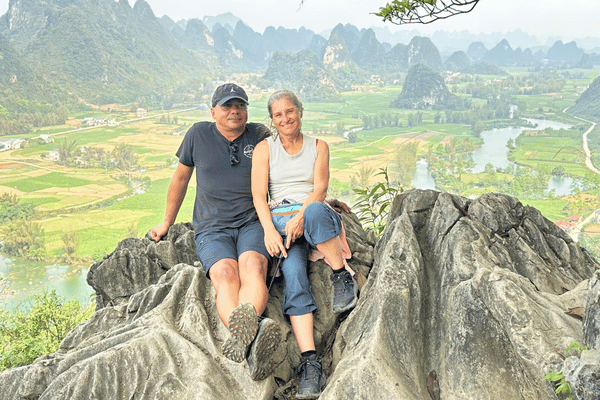
Cao Bang sits in the far northeast of Vietnam, pressed up against the Chinese border. The province is mountainous, mostly limestone, dotted with caves, rivers, waterfalls, and small ethnic minority villages (Tay, Nung, Hmong, Dao). It’s part of a UNESCO Global Geopark, which is a real designation, not a marketing line.
What you notice first when you arrive: there are way fewer foreign motorbikes on the road than in Ha Giang. The locals still wave at you like you’re a novelty. You’ll pass roadside stalls selling smoked sausage, sticky rice in bamboo, and home-distilled corn liquor that you should probably refuse if you’re riding pillion the next morning.
The Non Nuoc Cao Bang Geopark covers a huge area of the province. Most easy rider tours hit a few of the highlight stops: Ban Gioc Waterfall, Nguom Ngao Cave, Phong Nam Valley, Thang Hen Lake. Some venture further into Phia Oac, the old French hill station that locals call “the cloud kingdom” for obvious reasons once you’ve stood there.
Because the geopark is so spread out, the routes are flexible. Two riders going on the same days with the same operator might come back with different stories depending on weather, road conditions, or whether the guide felt like taking the long way around through Bao Lac.
I get this question constantly. Quick honest version:
Neither is “better.” They’re different chapters. If you only have time for one, Ha Giang is the icon. If you’ve already done Ha Giang, or you want something off the standard backpacker track, Cao Bang is the call.
Learn more: Ha Giang Loop 3 Days 2 Nights
Easy rider tours work best for:
If you’re an experienced rider with months of motorbike travel under your belt and you really want to drive yourself, you don’t need an easy rider tour. You need a self-drive guided trip or a motorbike rental with a recommended route. We’ll get to that comparison further down.

Learn more: Ha Giang Loop 4 Days 3 Nights
Cao Bang stretches. There’s no single “loop” that hits everything, so itineraries are built around how many days you have. Here’s roughly what each option covers. Specific routes vary by operator and by the weather that week.
A 2 days tour from Cao Bang City usually focuses on the Ban Gioc corridor. You’ll head east on the morning of day one, stopping at viewpoints, a village or two, and Nguom Ngao Cave. You’ll see Ban Gioc in the late afternoon when the light is at its best and the day-trip buses have left. Sleep in a homestay near the waterfall. Day two heads back via a different route, often through Phong Nam Valley.
This works if you’re tight on time and only want the headline sights. It’s also a solid add-on if you’ve come from Hanoi by sleeper bus and want to be back in time for an onward flight.
This is the most popular Cao Bang easy rider format and honestly the most satisfying. You get Ban Gioc, Nguom Ngao, Phong Nam, and either Thang Hen Lake or a slow afternoon in a Tay village, plus a longer day of pure riding through quiet karst country. Three days is enough to slow down, eat properly, and have at least one of those evenings where you end up drinking tea on a wooden porch with the homestay owner while their kid teaches you how to count to ten in Tay.
Most travelers finish a 3 days trip wishing they’d booked four.
If you have the time, this is what I’d recommend. A 4 or 5 days tour can swing further west toward Bao Lac and Phia Oac, which is where Cao Bang gets genuinely otherworldly. Phia Oac sits at altitude, often draped in cloud, with old French villas slowly being absorbed by moss. The temperature drops noticeably. The homestays in this area are some of the most memorable in northern Vietnam.
A longer trip also lets your guide build in flex days. If it rains hard on day two, he can shuffle the route. You won’t miss the highlights just because the weather had opinions.
Soft CTA: If you already know Cao Bang is what you want, our [Cao Bang Loop tour page] lays out the day-by-day options with current pricing. The 3 days easy rider format is what most travelers book, but tell us what you have time for and we’ll match the route.
Learn more: Ha Giang Cao Bang 5 Days 4 Nights
Itineraries on tour pages list the names. Here’s what they actually feel like.
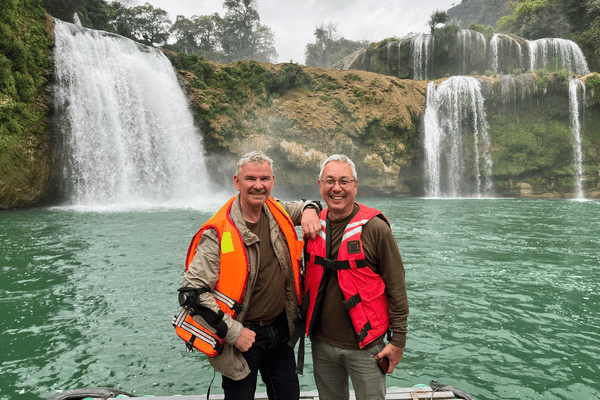
The headline sight. Ban Gioc straddles the Vietnam–China border, which means half the waterfall is technically in another country. It’s wide rather than tall, three tiers of water tumbling over a limestone shelf into a turquoise pool. There’s a bamboo raft that takes you out toward the base for a small fee. The light is best in the late afternoon. In the wet season the falls are thunderous; in the dry season they’re more delicate but the water is clearer.
Skip the busy hours by staying nearby and visiting in the early morning or late afternoon. Easy rider guides know this and time it right.
A few kilometers from Ban Gioc. It’s a long limestone cave, properly lit, walkable on a paved path. You’ll spend maybe 45 minutes inside. It’s one of the more impressive caves in northern Vietnam, but if you’ve already done Phong Nha or Halong’s grottoes, manage your expectations. It’s a good stop, not a destination.
This is probably the photo on the postcard you keep meaning to send. Phong Nam is a flat-bottomed valley surrounded by sharp karst peaks, with rice paddies and a slow river running through it. You ride down into it from a cliffside road and the view opens up the way valleys do in films. Stop, take the photo, then keep going. Tay villages are scattered through the valley and most homestays are family-run.
A series of mountain lakes that mostly fill in the rainy season and partly drain in the dry one. Locals describe the formation through a love story between a young scholar and a fairy. Whether you buy the legend or not, the lakes are quiet, often empty of foreigners, and you can rent a small boat for not much. It’s a good stretch-your-legs stop between long riding stretches.
Higher altitude, cooler air, French colonial ruins, pine forest, fog. Phia Oac is the mood-shift of any Cao Bang loop that includes it. You’ll wear a jacket here even if you’ve been sweating all day. The road up is winding and slow, which is part of the charm if you’re on the back of a bike. A few homestays have started opening here. They’re rustic but worth it.
Where Ho Chi Minh returned from exile in 1941. There’s a cave, a stream he named after Lenin, and a small museum. It’s more historically significant than visually spectacular, but the surrounding area is pretty and worth a stop if your route passes by. Some tours include it; some skip it. Ask if it matters to you.

Learn more: Ha Giang Cao Bang Ba Be Lake 6 Days 5 Nights
The honest part of any easy rider article.
Vietnamese mountain roads are fine, mostly. The pavement on main routes through Cao Bang is generally good. There are stretches that are rougher (potholes, gravel patches, sections under repair), and there are stretches you wouldn’t want to ride yourself but are no problem on the back of a bike with someone who’s done it five hundred times.
Weather changes things. Wet season can mean landslides, flooded crossings, or mud on switchbacks. A good guide will reroute or wait it out. A bad one will push through and stress you out. This is why the operator matters more than the brochure photos.
Riding pillion for hours at a time gets tiring in ways you don’t expect. Your lower back will know it after day two. Bring a small lumbar cushion or roll up a hoodie behind you. Stretch at every stop. Don’t lock your knees on the foot pegs.
A few practical safety points worth saying out loud:
Road rules and licensing requirements in Vietnam can change. Verify the latest before you travel and don’t take any tour operator’s word as gospel on legal points.
Learn more: Things to do in Cao Bang
A typical Cao Bang easy rider tour package includes:
What’s usually not included:
Always read the inclusions on the actual booking page. Operators differ. Some include luggage transfer, some don’t. Some include a rest day, some don’t. Ask before you pay a deposit.

Learn more: Cao Bang Loop 3 Days cost & tips
I’m not going to quote specific prices in this article because rates shift month to month and the last thing I want is a traveler showing up with an outdated number in their head. What I will tell you is how to read a quote properly.
When you compare tour prices, check:
If a tour quote is dramatically cheaper than three other operators, ask why. Sometimes it’s a real promo. More often, the bikes are older, the guides are less experienced, or insurance is being skipped.
Learn more: Ha Giang Loop Easy Rider
Cao Bang has two broad seasons that matter for travelers:
Personal preference: late September through November is my favorite window. Rice is golden, waterfalls are still strong, and the air is crisp at altitude. April is also lovely.
Tet (Lunar New Year, usually late January or February) closes a lot of small businesses for several days. Some homestays shut. Plan around it or expect a quieter, sometimes restricted experience.

Learn more: Ha Giang Packing list
Travel light. You’re on a bike. Anything you don’t need is something you’ll wish you’d left in Hanoi.
Bring:
Skip:
Most operators can store your main luggage in their office in Cao Bang City or in Hanoi, so you only ride with what you need.
Learn more: Ha Giang Motorbike Rental
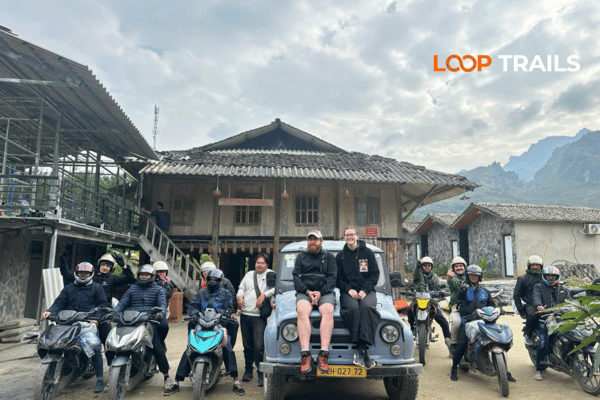
A short list, written in the spirit of “I’ve watched people do this so you don’t have to.”
Learn more: Loop Trails Tour Ha Giang website
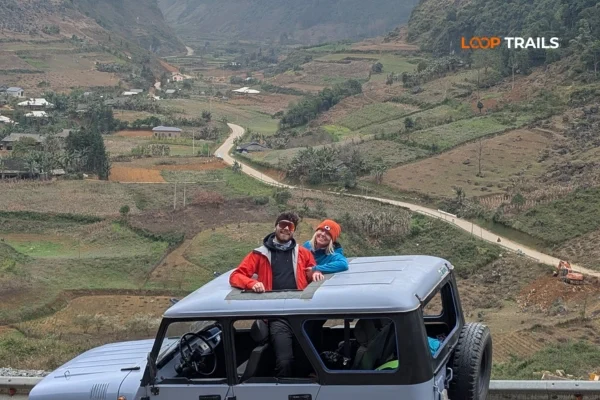
We try to keep this part simple. You message us (WhatsApp is fastest) with your dates and how many days you have. We send back two or three suggested itineraries, usually a 2 days option, a 3 days option, and a 4 to 5 days option. We confirm group size, dietary needs, and any specific stops you care about (Phia Oac, Pac Bo, a particular homestay).
Once you decide, we take a small deposit to lock the dates and assign your guide. Final payment is on arrival, in cash or transfer. We share the guide’s WhatsApp before your trip so you can coordinate the meet-up directly.
What we won’t do:
We do small groups, current-model bikes, English-speaking local guides, and clear inclusions on every tour page. That’s the brand and we keep it boring on purpose.
CTA: Ready to talk routes? Message us on [WhatsApp] with your travel dates and we’ll send you a real itinerary the same day. Or browse the full [Cao Bang Loop tour page] for the standard 3 days easy rider package.
Learn more: Ha Giang Cao Bang 5 Days
A clean way to decide:
| If you want… | Book… |
|---|---|
| The famous one, dramatic roads, lots of fellow travelers | Ha Giang Loop |
| Quieter scenery, water and waterfalls, fewer foreigners | Cao Bang Loop |
| Both, with one continuous ride | Combined Ha Giang and Cao Bang |
| To drive yourself, experienced rider | Self-drive Ha Giang or motorbike rental |
| Zero stress, scenic photos, just enjoy | Easy rider in either province |
The combined Ha Giang and Cao Bang tour is increasingly popular with travelers who have a week or more. You ride the Ha Giang loop first, then continue east into Cao Bang via Bao Lac, finishing in Cao Bang City. It’s a long trip and you’ll be tired, but you’ll have seen most of northern Vietnam’s mountain country in one go.
For comparison details, our [Ha Giang Loop tour page] and [Combined Ha Giang and Cao Bang tour page] lay out the day-by-day differences. If you’re sure you want to drive yourself, the [motorbike rental Ha Giang] page covers what we offer for self-drive riders.
Learn more: Hanoi Sleeper Bus
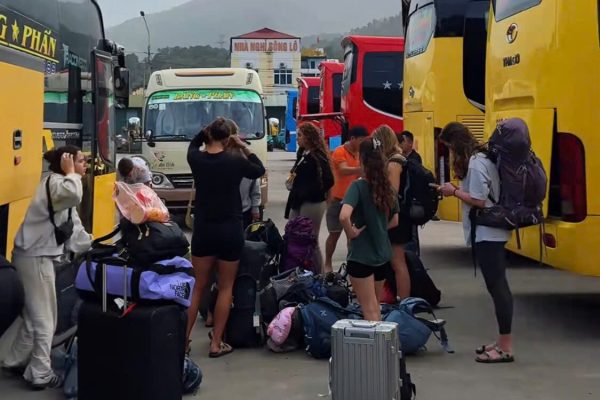
There’s no airport in Cao Bang. Your options from Hanoi:
Most easy rider tours start in Cao Bang City the morning after you arrive. Your guide will meet you at your hotel or homestay. We help arrange the Hanoi to Cao Bang transfer if you book through us, but you can also book it yourself easily on most major travel platforms.
Once your tour ends, you’ll usually return to Cao Bang City and reverse the journey back to Hanoi. Some travelers continue from Cao Bang to Ba Be Lake or to Lang Son near the Chinese border. Ask if you want to plan onward routing.
Learn more: Ha Giang Loop by Jeep for Families & Groups
Cao Bang is where you go when you’ve done the famous loops or when you trust your gut and skip them. The riding is calmer, the people are warmer in that quiet northern way, and the scenery actually looks like the photos rather than feeling like a queue between viewpoints. An easy rider tour takes the stress out of the part most travelers worry about (the bike, the road, the not-knowing) and leaves you with the parts worth remembering (the food, the conversation, the view that opens up on a curve you weren’t expecting).
If you’re ready to plan, message us. If you want to read more first, our other guides on Ha Giang, Cao Bang, and combined routes are all on the site. Either way, ride safe and pack lighter than you think you need to.
Both are generally safe with a reputable operator. Cao Bang has slightly less traffic and slower pace on most routes, which can feel less intense. Safety mostly depends on your guide and the bike, not the province.
No. You’re a passenger. Licensing rules apply to the driver, not the pillion rider. If you choose self-drive instead, licensing rules can change, so verify the latest before you travel.
Three days is the most popular and the best balance for first-time visitors. Two days hits the headline sights. Four to five days lets you go deeper into Phia Oac and the western parts of the province.
Realistically, no. The transfer alone takes most of a day each way. Plan at least one overnight in Cao Bang.
Yes, especially if you visit in the late afternoon when the day buses have left. It’s the centerpiece of most Cao Bang easy rider routes for a reason.
Mostly Vietnamese family cooking at homestays: rice, stir-fried vegetables, grilled or boiled meats, broth-based soups, occasional regional specialties like smoked sausage or sticky rice. Vegetarian and allergy needs are easier to accommodate if you tell the operator before booking.
No. Each traveler rides on the back of their own driver’s bike. If you’re a couple, you’ll each have a separate driver and ride pillion individually. This is standard and safer than three people on one bike.
A good operator reroutes or rearranges the day to keep you safe and out of the worst conditions. Heavy rain or landslides can affect specific roads. Build a flex day into longer trips if you can.
Tipping is appreciated but not mandatory. A common range is roughly the equivalent of a meal per day per traveler, more if the guide went above and beyond. Use your judgment.
Yes. Combined tours cover both provinces with a continuous ride, usually six to eight days. It’s the best option if you want to see the full breadth of northern Vietnam’s mountain country in one trip.
Most are clean and basic. Expect a mattress on a wooden platform with a mosquito net, a shared or private bathroom depending on the homestay, and family-style meals. They’re part of the experience. If you need a private hotel room every night, ask the operator before booking.
Reputable operators have backup plans: a second guide on call, a spare bike, or a quick repair network. Ask about contingency before you book. It rarely happens but it’s a fair question.
Contact information for Loop Trails
Website: Loop Trails Official Website
Email: looptrailshostel@gmail.com
Hotline & WhatSapp:
+84862379288
+84938988593
Social Media:
Facebook: Loop Trails Tours Ha Giang
Instagram: Loop Trails Tours Ha Giang
TikTok: Loop Trails
Office Address: 48 Nguyen Du, Ha Giang 1, Tuyen Quang
Address: 48 Nguyen Du, Ha Giang 1, Tuyen Quang
Facebook X Reddit Table of Contents Learn more: Ha Giang Loop Tours A lot of people arrive in Vietnam knowing they need
Facebook X Reddit Table of Contents Learn more: Ha Giang Loop Tours This is the question that sits in almost every Ha

Facebook X Reddit Table of Contents Learn more: Ha Giang Loop Tours Most people drive past the Quan Ba area twice on