

Thúy Kiều (Grace) is a travel blogger and content contributor for Loop Trails Tours Ha Giang. She holds a bachelor’s degree in Sustainable Tourism from Vietnam National University, Hanoi, and has a strong passion for exploring and promoting responsible travel experiences in Vietnam’s northern highlands.
Learn more: Ha Giang Loop Tours
If you’ve spent any time looking at motorbike trips in Asia, the Ha Giang motorbike loop has probably surfaced. It’s earned its reputation. Six hundred kilometers of mountain road in northern Vietnam, switchbacks that cut into limestone cliffs, ethnic minority villages where the kids still wave at every passing bike, and the deepest river canyon in Southeast Asia falling away on your right as you climb the most photographed pass in the country.
It’s also a real ride, with real consequences. People drop bikes here every week. Most are fine, walk away with bruises, and finish the Loop. A few aren’t. The difference between the version you’ll talk about for years and the one that goes wrong is mostly preparation: the bike you ride, the operator you trust, the skill level you bring, and a handful of honest decisions you make before the first switchback.
This is the rider’s version. Less about what you’ll see on Instagram, more about what you’ll actually deal with on the bike
Learn more: Ha Giang Loop 2 Days 1 Night
The Ha Giang Loop is a circular ride starting and ending in Ha Giang City, in Vietnam’s far north against the Chinese border. The classic 3 days route is roughly 350 km. Add Du Gia and Lung Cu and you push past 400. Combine with Cao Bang and you’re closer to 600 km of riding spread over 5 to 6 days.
You’ll ride through Yen Minh, the Tham Ma Pass, Sa Phin, Dong Van, Meo Vac, Ma Pi Leng, Du Gia, and back. The roads are mostly paved but the surface is variable. Smooth tarmac for long stretches, then loose gravel, then patched asphalt, then a stream running across the road after rain. Mountain riding in every honest sense.
The whole region was effectively closed to foreigners until the early 2000s and saw very few backpackers until around 2018. That’s why it still feels different from anywhere else in Vietnam. It hasn’t been ground down by mass tourism yet. Five years from now it might be. Today, it isn’t.

Learn more: Ha Giang Loop 3 Days 2 Nights
The honest version: the Ha Giang motorbike loop is for riders who are comfortable on a manual or semi auto motorbike on real mountain roads. That doesn’t mean expert. It means you’ve ridden enough to handle a switchback in the rain without panicking, you understand engine braking, you don’t grab a fistful of front brake mid corner, and you know how to read a road surface.
If you’ve only ridden a moped on a beach holiday, this is not the place to upgrade your skills. The Loop has been the place where a lot of inexperienced riders have learned the hard way that mountain roads are different. The mountains don’t care that you watched twenty YouTube videos on twist of the wrist.
If you’re not in the comfortable category, that’s completely fine, the Loop has two excellent options for you: ride pillion behind a guide (easy rider), or do it in a jeep. Both cover the same route. We turn down self drive bookings every season from travelers we don’t think are ready, and the better operators do the same. Don’t take it personally. It’s saved a lot of trips.
Learn more: Ha Giang Loop 4 Days 3 Nights
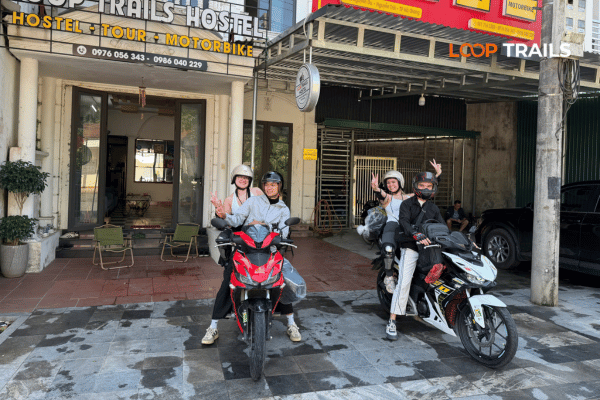
Once you’ve decided motorbike is the format, the next decision is whether you ride yourself or ride pillion behind a local guide.
If most of those apply, self drive is probably the trip you actually want. You’ll get more out of it. The Loop rewards being in command of the bike, not watching someone else drive it.
This is the most popular option for travelers visiting Vietnam for the first time. Easy rider is not a step down. For a lot of people it’s the version that makes the trip work.
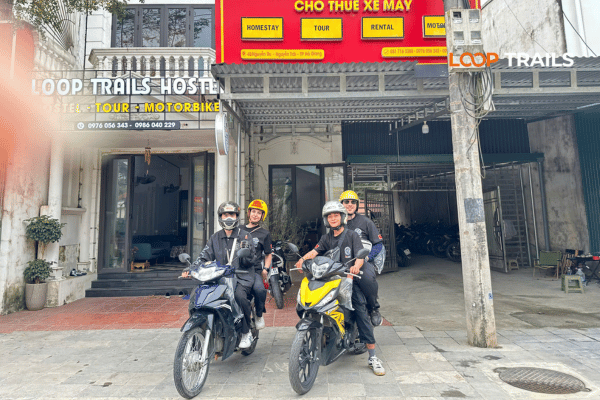
We run easy rider Loop tours from Ha Giang City in 3 days and 4 days formats, with English speaking riders and small groups. If you’re the kind of person who’d enjoy the trip more without navigating Vietnamese highways for the first time on day one, this is the option.
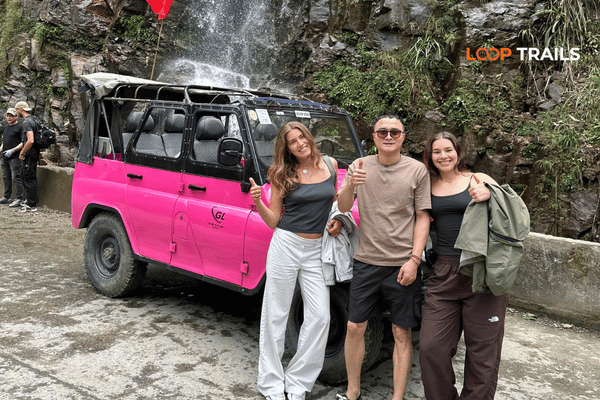
Some riders read this far and realize they actually want to do the Loop without a bike at all. That’s a real category, and it’s growing. Travelers with non riding partners, with kids, with older parents, or who’d rather have rain protection on a 7 hour day in October. Jeep is its own conversation, but it covers the same route with the same stops, and the comfort delta on a wet day is meaningful.
If that sounds more like you, the jeep tour option is worth a look. Otherwise, motorbike it is.
Learn more: Ha Giang Cao Bang 5 Days 4 Nights
The Loop’s difficulty rating depends entirely on the day, the weather, and the bike. Most days, it’s manageable for a competent rider. Some days, it’s genuinely demanding even for experienced riders. Both versions are true.
The minimum for self drive: comfortable on a 150cc manual or semi auto motorbike, comfortable taking switchbacks at slow speed without grabbing the front brake, comfortable riding for 6 to 8 hours a day for 3 days straight, comfortable on rough patches of road.
You don’t need to be a sportbike rider. You need to be a careful, patient rider who reads the road. That’s a different skill set, and it’s the one that matters here.
A few stretches deserve respect:
None of this is unrideable. All of it asks you to slow down. The Loop punishes overconfidence more than it punishes inexperience.
The mountains here generate weather. You can leave Ha Giang City in clear skies and be in dense mist 90 minutes later, with visibility down to 30 meters. In rain, the road surface can change character within a single corner: smooth tarmac one second, slick painted lines the next, gravel washout after that.
The technique is simple and old: slow down, stay smooth, no abrupt brake or throttle inputs, increase your following distance, use your low beam. Don’t try to keep your schedule. The schedule isn’t the point. Getting back on the bike tomorrow is the point.
If conditions get bad enough, your guide (if you’re with one) will pull the convoy off the road. If you’re solo, do the same. Pull into a homestay or a roadside café, drink coffee, wait it out. The Loop is not going anywhere.
Learn more: Ha Giang Motorbike Rental
This is the decision that has the biggest single impact on whether your self drive trip goes well. A good bike makes a manageable trip. A bad bike turns a manageable trip into a series of small emergencies.
A 150cc motorbike has enough power to climb the steeper passes loaded with luggage and a passenger if needed, while being light enough to handle for a less experienced rider. Above 150cc you’re getting into bigger, heavier bikes that are harder to recover from a low speed drop. Below 125cc you’ll be flogging the engine on every climb and overheating on the long ones.
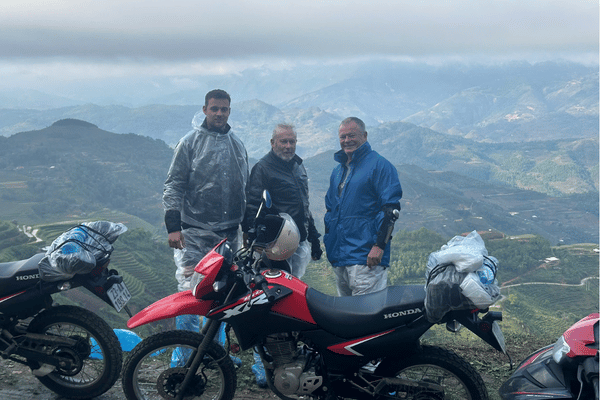
The Honda XR150 is the de facto Ha Giang bike. There are reasons for that. It’s a real off road capable machine, light, durable, simple to fix, and well suited to mixed surfaces. Other 150cc options exist (some semi autos, some Yamahas) and a well maintained example of any of them will serve you fine.
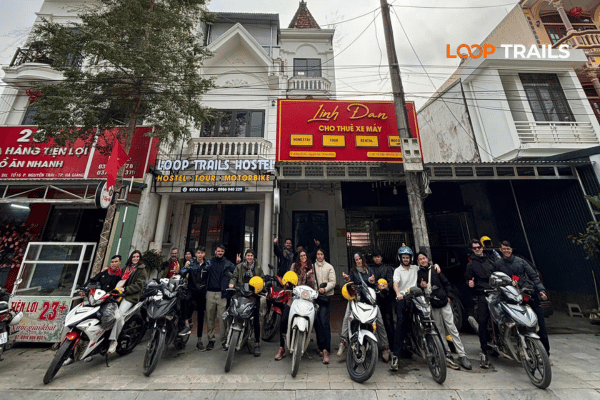
We rent XR150s and well kept 150cc semi autos out of Ha Giang City with full kit (helmet, dry bag, basic tools, paper map). If you want to know what’s available for your dates, just message us.
Manual: full clutch and gear control. Better engine braking, more control on technical sections, what most experienced riders prefer. Slightly steeper learning curve if you’ve never ridden manual.
Semi auto: gear shifts but no clutch lever. Easier for riders coming from automatic scooters, less to think about, still gives you engine braking. Some experienced riders find them limiting on the steeper climbs but a 150cc semi auto is perfectly capable of the Loop.
Pick what you’re more comfortable on. The bike you’ve ridden before always beats the bike you haven’t, no matter what’s nominally “better.”
Two categories not to chase the cheap end of:
If a rental shop’s lowest tier bike is half the price of everyone else’s, ask why. There’s a reason, and it usually shows up around hour four of day one.
The single most important question to ask any rental shop is when the bike was last serviced. The second is whether the brakes have been replaced or adjusted in the last few months. The third is whether you can take it for a 10 minute test ride before signing.
Things to check on the test ride:
Photograph the bike on every panel before you leave the shop. Every panel. This is the standard rental scam protection: shops sometimes bill aggressive repair fees on return for damage that was already there. Time stamped photos solve it. Walk away from any shop that won’t let you photograph the bike.
Learn more: Ha Giang Cao Bang Ba Be Lake 6 Days 5 Nights
Standard 3 days Loop, with notes that matter to riders.
You’ll leave Ha Giang City after a briefing. The first 40 km are gentle, climbing slowly, mostly intact tarmac. Use the time to settle into the bike. Find your rhythm with the gears, get used to how it brakes loaded, let the suspension talk to you.
The first real elevation gain comes before Quan Ba. Quan Ba Heaven Gate is a short scenic stop, easy to find, decent place for a coffee. After Quan Ba the road climbs steadily into Hmong country. Surface is fine for most of the day. By late afternoon you’ll roll into Yen Minh. Park the bike, check it over (chain, oil level, tire pressure if you can), eat, sleep.
Total riding time on day 1 is the easiest of the trip. Use it.
This is the day. You’ll start with the Tham Ma Pass climb out of Yen Minh, a serious switchback section that demands your full attention. Truck traffic is real here. Take wide lines, use your horn on blind corners, never overtake on a curve.
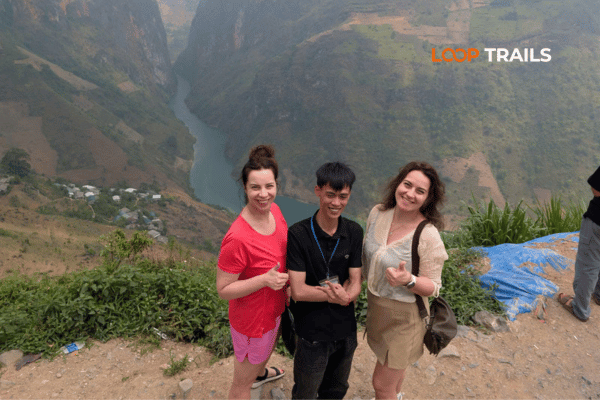
Through Sung La Valley, lunch in Dong Van old town, then the section everyone is here for: the Ma Pi Leng Pass. The road clings to a cliff face for several kilometers, the Nho Que River canyon falling away on your right. The view is genuinely staggering. So is the consequence of an inattentive moment. Ride it slowly. Stop at the viewpoint near the top and the coffee café halfway down. Don’t try to ride this section while looking around.
Descent into Meo Vac is technical, with several long hairpins. Engine brake, don’t ride the brakes the whole way down or they’ll fade. Stay in second or third gear, let the engine do the work.
Sleep in Meo Vac. Day 2 is the longest in the saddle of the standard Loop. You’ll feel it.
The standard 3 days Loop closes back via the Du Gia route. The road from Meo Vac toward Du Gia is one of the most underrated sections of the entire trip: smaller, quieter, with surfaces that vary from fine tarmac to loose gravel. You’ll see almost no other foreign bikes here.
Du Gia itself is a quiet valley with a small waterfall. From there it’s a long stretch back to Ha Giang City through the southern part of the Loop. Surface is rough in places. This is the section where tired riders make mistakes. Slow down on day 3.
You’ll usually arrive in Ha Giang in the late afternoon, in time for a shower and the night bus to Hanoi.
The 4 days Loop slots in an extra night, usually in Du Gia or near Lung Cu (the northernmost point of Vietnam, with a flag tower at the China border). You ride less per day, eat slower, and actually have time to take the boat ride on the Nho Que River at canyon level. The 4 days option is the one we’d recommend if you can spare the time. The Loop rewards going slow, and 3 days, while doable, is the rushed version.
Learn more: Ha Giang Safety Tips
Skip this section if you’re an experienced mountain rider. For everyone else, these are the four techniques that come up daily.
Brake before the corner, not in it. Look through the corner to your exit. Lean the bike (gently, this isn’t a track day). Stay in second or third gear. As the corner opens up, gently accelerate out. The classic mistake is grabbing a fistful of front brake mid corner because you got nervous. That’s how bikes get dropped. Trust your line, slow your inputs, ride out smoothly.
Stand on the pegs if your bike allows. Loosen your grip on the bars (counterintuitive but it works, the bike will self correct over rough surface). Stay in second gear, low constant throttle, no sudden inputs. For water crossings: if you can’t see the bottom, walk it first. If you can see the bottom and it looks shallow, ride it slowly in first gear without stopping.
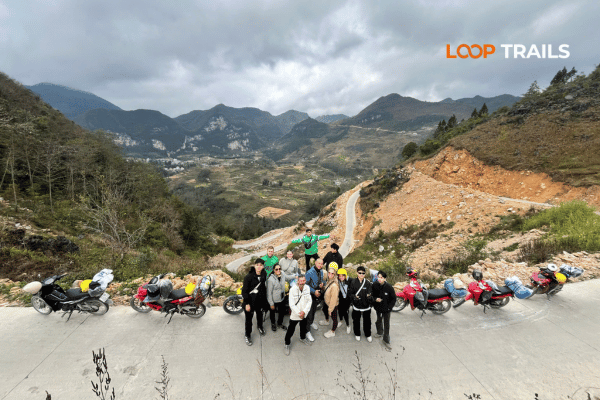
Most self drive groups (and all easy rider groups) ride in loose convoys. Stay back from the bike in front, two seconds minimum, more on technical sections. Don’t try to overtake your group leader, especially on blind corners. If you need to stop (photos, water, mechanical), pull as far off the road as possible, ideally on the inside of a corner where you’re visible. Use your hand signals.
If you can see the next ridge clearly, you have time. If the next ridge is wrapped in cloud and the cloud is moving toward you, you have 10 to 30 minutes. If you’re already in the cloud, slow down, low beam on, double your following distance. If visibility is below 30 meters, get off the road. Coffee shops and homestays exist for this.
Quick CTA: If you’re a first time rider in Vietnam and want zero stress on day one, easy rider tours put you on the back of a guide who’s ridden these passes hundreds of times. If you’re confident and want to ride your own line, self drive motorbike rental gives you a properly maintained 150cc with full kit. Either way, message us on WhatsApp for current dates and rates.
Learn more: Ha Giang Loop Easy Rider
Forget the gear influencer videos. Here’s what actually matters on the Loop.
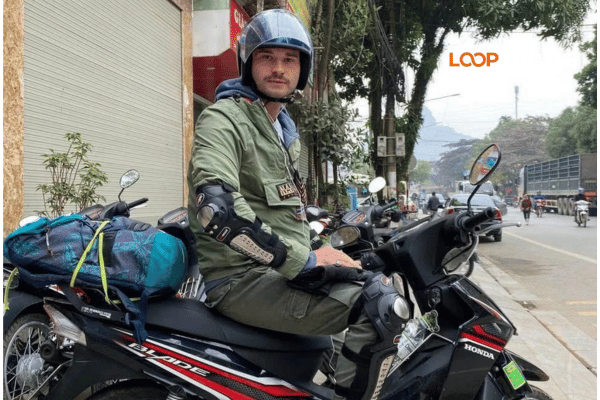
Helmet: A real motorbike helmet, not a half shell rice cooker. Most reputable operators provide one but check before booking. If yours is questionable, buy a better one in Hanoi for $20 to $40. Worth every cent.
Light rain jacket: Compresses small. The mountains here will rain on you. Cheap plastic ponchos rip in the wind by day two.
Riding pants or jeans: No shorts. Road rash on bare legs is brutal and Ha Giang’s rural medical infrastructure is basic.
Closed shoes: Hiking shoes or trainers. No flip flops on a motorbike. This should be obvious. It isn’t always.
Buff or scarf: For dust on the bike, sun on the neck, cold on the passes. Multipurpose.
Light gloves: Even mesh ones are better than bare hands. Wind, sun, and small slides all add up.
Sunglasses: Even in winter, even in mist. Glare off wet tarmac is real.
Dry bag: A small one for valuables (phone, wallet, passport copy). Not a marketing accessory, a genuinely useful piece of kit when the rain comes sideways.
Power bank: You’ll be using your phone for navigation, photos, and translation. Mountain villages don’t always have charging when you need it.
Cash in dong: ATMs only in larger towns. Bring more than you think.
That’s the list. Skip everything else.

Learn more: Quan Ba Heaven Gate
Most Loop trips go fine. A few don’t. Here’s what to do if you’re the unlucky percent.
Most common: chain comes off, tire goes flat, bike won’t start. Reputable rental shops give you a phone number to call. Roadside mechanics exist in every village on the Loop and they’re surprisingly good with the standard bikes. Repairs are cheap. Keep the receipt and ask your rental shop if they reimburse roadside fixes (some do, some don’t, ask before signing).
If you booked through a tour operator, they’ll arrange a swap or repair at their cost. This is a real argument for booking with a real operator vs a no name street agent.
Most Ha Giang accidents are low speed drops on gravel. The standard outcome is a bruised hip and ego, scuffed bike, and a finished trip. If it’s worse:
This is also the strongest argument we can make for travel insurance with a proper motorbike clause. Read your policy before you ride. Some policies cover up to 125cc only, some require an IDP. Don’t ride without coverage.
Police checkpoints in Ha Giang are inconsistent. They appear, they disappear. If you’re stopped, be polite, present whatever licence and passport you have, don’t argue. Most stops are routine. Rules and enforcement can change, so check local advice when you arrive. We don’t fabricate guidance on what’s legal here, this is something to confirm in person at the time of your trip.
It happens. Heavy rain, landslide, or fog so thick that riding is genuinely unsafe. The right call is to wait it out. Most operators have flex built into their itineraries for this. If you’re solo and lose a day, your route compresses but you can still finish. Don’t push through bad weather to keep a schedule. The Loop hasn’t lost anyone to patience yet, only to impatience.
Learn more: Ha Giang Loop Solo Travel
Both are common on the Loop. Both have trade offs.
Solo: You set the pace. You stop wherever you want. You meet people in homestays organically. You learn faster because there’s no one to bail you out. The downside: if you have a mechanical or a small drop, you’re managing it on your own.
Group (self drive convoy): Most self drive operators run small group convoys with a lead rider who knows the route and a sweeper at the back. You’re still riding your own bike but with a safety net. You’ll meet your group at homestays, eat dinner together, and probably finish the Loop with a few new friends. Slightly less freedom, much more support.
If it’s your first multi day ride in Asia, group is the smart pick. If you’ve done this kind of trip before and want the solo version, the Loop is one of the better places in the region for it: clear route, small distances between towns, friendly locals, decent cell signal in towns.
Learn more: Ha Giang Loop Mistake to Avoid
Ha Giang isn’t a scammy place, but a few things come up enough to flag.
The simplest defense is the simplest one: book through a real operator with an online presence, real reviews, and a reachable WhatsApp. Our guests on LoopTrails motorbike tours get a written confirmation, a deposit receipt, and a single point of contact. None of which costs more, all of which protects the trip.
Learn more: Ha Giang Loop Self-Drive
Quick version, since this comes up:
If we had to pick one window, late September to mid October is the consensus answer across our team and our guests. May is underrated and worth considering if you want fewer crowds.

Learn more: Cao Bang Loop 3 Days best kept secret
If you’ve come a long way to ride the Ha Giang motorbike loop, the version with the most upside per day is the one that adds Cao Bang. You ride the Loop, then continue east through Bao Lac into Cao Bang province for the Ban Gioc Waterfall, Nguom Ngao Cave, and the much quieter Cao Bang loop.
The link road from Meo Vac to Bao Lac is a ride in itself: technical in places, almost no other foreign bikes, karst peaks all around. From Cao Bang City you can spend two more days looping out to Ban Gioc and back before catching the night bus to Hanoi. We run a Ha Giang to Cao Bang combine tour over 5 days in easy rider, self drive, and jeep formats. If you have the days, take it.
Learn more: Ha Giang Jeep Tours
Honest version, motorbike audience:
Still on the fence? Message us with your riding experience, group size, and dates. We’d rather steer you to the right format than sell you the wrong one.
Learn more: Ha Giang Road Conditions 2026
For self drive bike rental, 1 to 2 weeks ahead is usually plenty in shoulder seasons. October weekends and Tet shoulder weeks book out earlier, sometimes a month ahead.
For easy rider group tours, 1 to 4 weeks ahead is the standard. Peak season departures fill faster.
Pay a deposit online (20 to 30% is the industry norm). The balance is paid in cash on arrival or by card if your operator offers it. Keep your booking confirmation handy on your phone, signal can be patchy on the Loop.
Avoid operators who demand 100% upfront in cash with no online presence. If you can’t find them on Google with reviews, that’s the warning. Reputable operators are easy to verify.

Learn more: Ha Giang Loop Price
The Ha Giang motorbike loop is one of the great rides in Asia. It’s also a real ride, on real mountain roads, in real weather. The trip you’ll talk about for years and the one that goes wrong are usually divided by three things: the bike you ride, the operator you book through, and the honesty you bring to assessing your own riding skill.
Pick the bike well, pick the operator well, pick the format that matches your skill, and the Loop will deliver. Most travelers we’ve put on bikes up there describe it as the best riding of their lives. That’s a fair description. The mountains do the rest.
Final CTA: Whether you’re riding your own or riding pillion, here’s what we offer with current 2026 pricing and dates: easy rider Loop tours, self drive motorbike rental in Ha Giang City, and the Ha Giang plus Cao Bang combine for riders with more time. Message us on WhatsApp with your dates, group size, and riding experience for an honest answer on which format fits.
Safer than internet horror stories suggest, riskier than a beach holiday. Most accidents are low speed drops on gravel by inexperienced riders. Ride within your skill, slow down on switchbacks, don’t ride at night, and the odds are firmly in your favor. If you’re not confident, easy rider or jeep cover the same route without the risk.
Not as self drive. The Loop is not the place to learn manual or semi auto on mountain roads, you’ll either crash or have a miserable, terrifying trip. Easy rider (back of a guide’s bike) is the right option, and it’s specifically designed for non riders.
A 150cc is the sweet spot. Powerful enough to climb the passes loaded, light enough to handle. The Honda XR150 is the de facto Ha Giang bike for self drive. Below 125cc is underpowered, above 200cc is heavier than most riders need.
Whichever you’re more comfortable on. Manuals give better engine braking and slightly more control. Semi autos are easier for riders coming from automatics. A 150cc semi auto is fully capable of the Loop, don’t let anyone tell you otherwise.
Roughly 350 km for the standard 3 days Loop, 400+ km if you add Du Gia and Lung Cu, closer to 600 km if you combine with Cao Bang.
3 days is standard, 4 days is the sweet spot if you can spare the time. 2 days is technically possible but rushed and not recommended for first time riders. 5 to 6 days lets you combine with Cao Bang.
Officially, yes, either a Vietnamese licence or an International Driving Permit issued under the 1968 Vienna Convention. Enforcement is inconsistent and rules change, so check the latest. Either way, your travel insurance probably requires a valid licence to cover you.
Reputable rental shops give you a contact number and arrange a swap or repair. Roadside mechanics in every village on the Loop handle basic fixes cheaply. If you booked through a tour operator, breakdowns are usually their problem, not yours. This is one of the strongest arguments for booking with a real operator.
Yes, plenty of riders do. If you’re a confident mountain rider, solo gives you the most freedom. If it’s your first multi day ride in Asia, joining a small group convoy is safer and barely less free. Solo non rider is not a category, you’d be in pillion or in a jeep.
Late September to mid October for clear skies and golden rice harvest. March to April for blossoms and mild weather. May is underrated. Avoid July and August (heaviest rain) and late January (Tet, cold and chaotic).
Most of the way, yes. Some sections (around Du Gia, parts near Lung Cu) are rougher with loose gravel and the occasional water crossing after rain. After typhoons in summer, parts can be temporarily closed by landslide. Your operator should reroute if so.
Ha Giang City. Riding from Hanoi to Ha Giang is two days of highway traffic before the actual Loop starts, you’ll be exhausted before the riding gets good. Take the night bus, pick up the bike in Ha Giang.
Contact information for Loop Trails
Website: Loop Trails Official Website
Email: looptrailshostel@gmail.com
Hotline & WhatSapp:
+84862379288
+84938988593
Social Media:
Facebook: Loop Trails Tours Ha Giang
Instagram: Loop Trails Tours Ha Giang
TikTok: Loop Trails
Office Address: 48 Nguyen Du, Ha Giang 1, Tuyen Quang
Address: 48 Nguyen Du, Ha Giang 1, Tuyen Quang

Facebook X Reddit Table of Contents Learn more: Ha Giang Loop Tours Most people drive past the Quan Ba area twice on

Facebook X Reddit Table of Contents Learn more: Ha Giang Loop Tours The Ha Giang Loop has a reputation problem with older