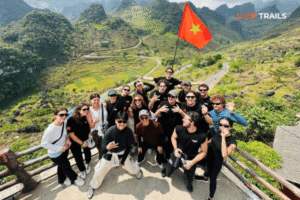


Thúy Kiều (Grace) is a travel blogger and content contributor for Loop Trails Tours Ha Giang. She holds a bachelor’s degree in Sustainable Tourism from Vietnam National University, Hanoi, and has a strong passion for exploring and promoting responsible travel experiences in Vietnam’s northern highlands.

Learn more: Ha Giang Loop Tours
Most people land in Hanoi thinking the Ha Giang road trip is just another item on the Vietnam checklist. By day two of the actual ride, they’re sending voice notes to friends back home saying you have to come here. That isn’t marketing language. It’s just what these mountains do to people.
A Ha Giang road trip is the closest you’ll get in Vietnam to a real frontier experience: empty passes, ethnic minority villages where kids still wave at every rider going past, and switchbacks that drop into the deepest canyon in Southeast Asia. It’s also genuinely demanding, and the gap between a trip you’ll talk about for years and one that goes sideways usually comes down to a few decisions you make before you arrive.
This is the version I wish someone had handed me my first time up there. Routes that actually work, real costs, what’s worth your time, what isn’t, and how to ride safely whether you’ve never touched a motorbike or you’d rather sit back in a jeep and just take photos.
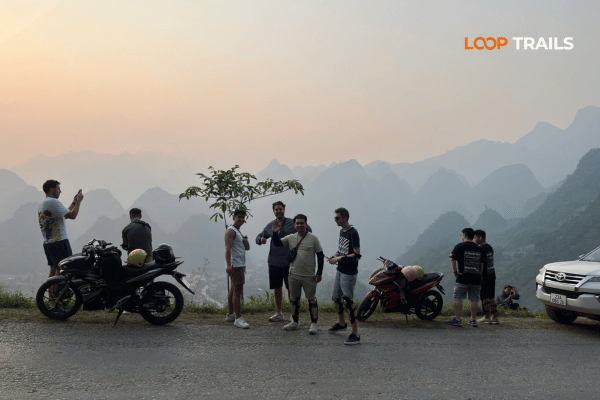
Learn more: Ha Giang Loop 2 Days 1 Night
The Ha Giang road trip, often just called the Ha Giang Loop, is a circular ride through Vietnam’s far north, starting and ending in Ha Giang City. The full Loop runs roughly 350 km depending on which side trips you tack on, and it links the towns of Yen Minh, Dong Van, Meo Vac, and Du Gia before circling back.
You’re up in karst country here. Limestone peaks pulled straight out of a Chinese ink painting, terraced rice fields cut into impossible slopes, and the kind of mountain weather that goes from misty to clear to mist again in twenty minutes. Most of the population is Hmong, Tay, and Dao, and you’ll see traditional clothing in the markets the same way you’d see jeans in Hanoi: not as costume, just as what people wear.
It’s been the headline backpacker route in Vietnam for the last five or six years, and for good reason. There’s nothing in Sapa or Cat Ba that touches it.
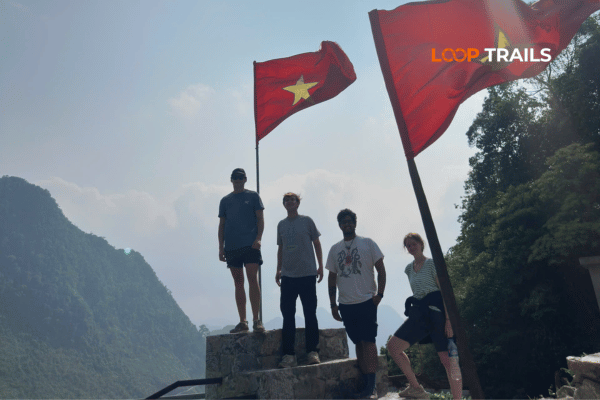
Learn more: Ha Giang Loop 3 Days 2 Nights
| Detail | What to know |
|---|---|
| Total distance | Roughly 350 km full Loop |
| Typical duration | 3 to 4 days riding, 5 to 6 with Cao Bang extension |
| Start / end | Ha Giang City |
| Highest point | Ma Pi Leng Pass, around 1,500 m |
| Skill needed (self drive) | Confident on a manual or semi auto motorbike, comfortable on switchbacks |
| Best months | March to May, September to November |
| Worst months for riding | June to August (rain, landslides), late January (cold and damp) |
| Currency | Vietnamese Dong, bring cash, ATMs only in towns |
If most of those numbers feel doable, you’re good. If “confident on a motorbike” gave you pause, scroll down to the easy rider and jeep options. That’s exactly why they exist
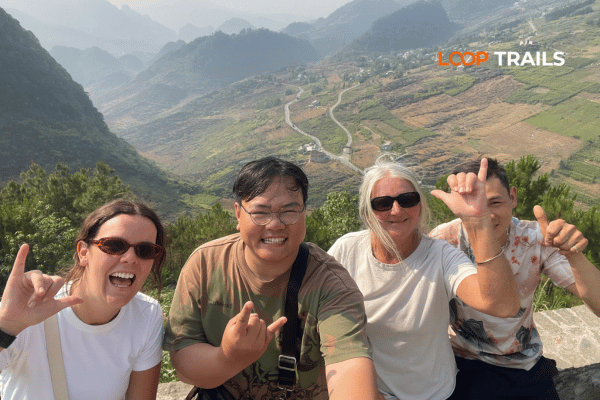
Learn more: Ha Giang Loop 4 Days 3 Nights
There’s no single “official” Ha Giang Loop, but the version below is what almost every reputable operator runs, and what I’d recommend for first time riders. Distances and times are approximate because mountain weather changes everything.
You’ll start in Ha Giang City after a morning briefing, gear check, and (if it’s your first time on this kind of bike) a short test ride around the block. The first hour is gentle, easing you into the rhythm before things get serious.
The morning highlight is Quan Ba Heaven Gate, a viewpoint over the Twin Mountains, two perfectly conical peaks that locals call the “Fairy Bosoms” (yes, really). Lunch is usually in Quan Ba town. After that, the road climbs into Hmong country and you start seeing the textbook Ha Giang scenery: terraces, stone walls, kids selling wild flowers by the roadside.
You’ll roll into Yen Minh in the late afternoon. It’s a small town with a few homestays and a couple of decent restaurants. Nothing flashy. That’s the point.
This is the day people travel for. You’ll climb the Tham Ma Pass, a serious switchback section that’s worth stopping for at the top, then ride through Sung La Valley, which Vietnamese travelers call “the flower valley” and which lives up to it from October to December.
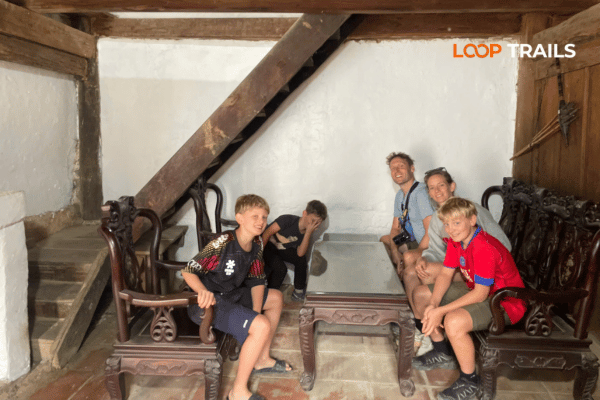
Around midday you’ll hit the Hmong King’s Palace in Sa Phin, a 100 year old wooden mansion that’s become a low key pilgrimage site. Lunch is in Dong Van old town, the highest district capital in Vietnam, and worth a wander even if you only have an hour.
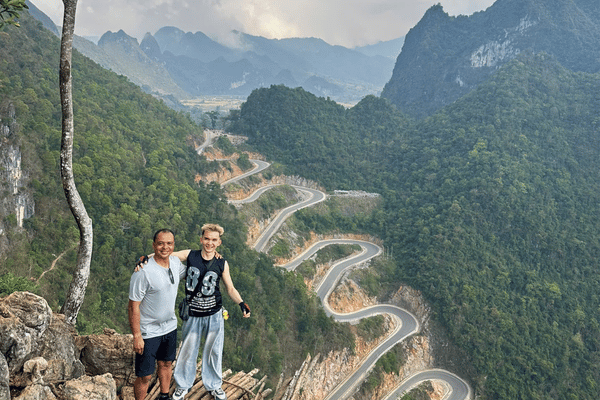
The afternoon is the big one: the Ma Pi Leng Pass. This is the section that ends up on every Ha Giang Instagram post. The road clings to a cliff face above the Nho Que River, the canyon falling away on your right at points where the drop is genuinely vertical. It’s safe if you ride sensibly, but it demands your full attention. Stop at the official viewpoint near the top for photos, and again at the small café halfway down for a coffee with one of the most ridiculous views you’ll get in Asia.
You’ll sleep in Meo Vac, or in a homestay just outside it, depending on where your guide has booked.
This is where most 3 days itineraries make their split. The “shortcut” route goes back via Yen Minh and Quan Ba (the way you came), which is fine but feels like a repeat. The better version, and the one I’d push you toward, is the Du Gia loop: a smaller, less ridden road that winds through villages where you’ll genuinely be the only foreigners that hour.
Du Gia itself is a quiet valley with a cluster of homestays and a small waterfall worth a quick swim if the weather’s warm. From there you’ll thread back to Ha Giang City through a long, beautiful, slightly rougher stretch of road that closes the Loop properly.
You’ll usually arrive back in Ha Giang in the late afternoon, in time for a shower and a beer before catching the night bus to Hanoi if that’s your plan.
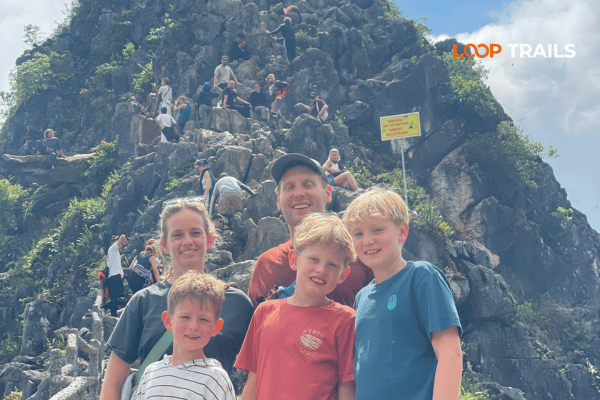
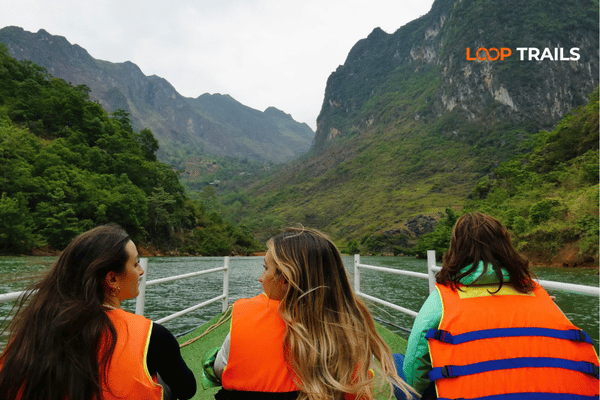
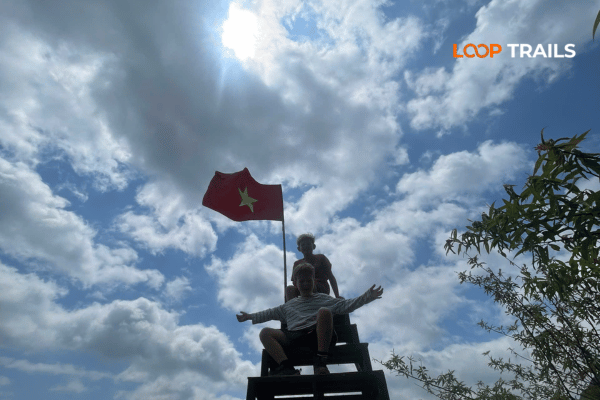
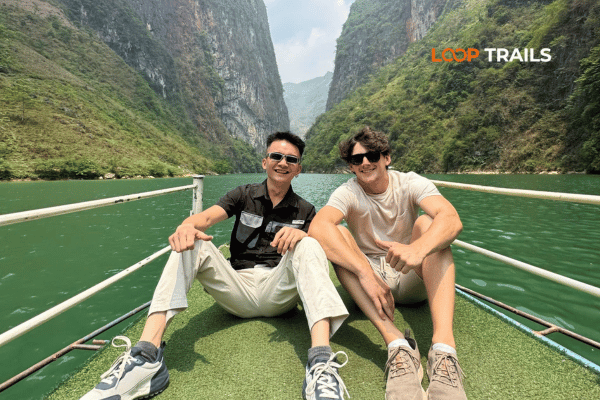
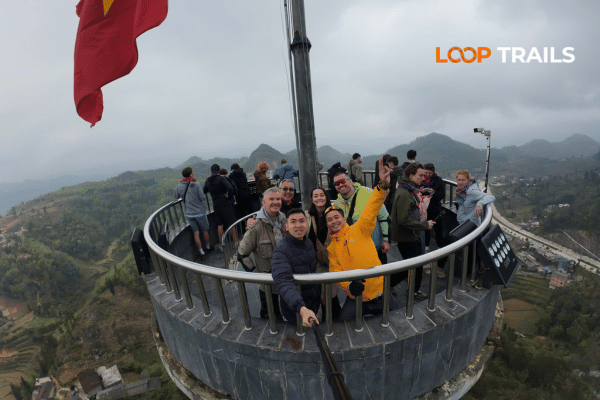
A 4 days Loop slots in an extra night, usually in Du Gia or in a remote Hmong homestay near Lung Cu (the northernmost point of Vietnam, with a flag tower at the China border that’s worth the side trip if you have time). You’ll ride less per day, eat slower, and actually have time to take the boat ride on the Nho Que River, which is hard to fit into 3 days without rushing.
If your schedule allows it, the 4 days version is the one I’d pick. The Loop rewards going slow. Doing it in 2 days, by the way, is technically possible but I’d skip that option unless you’re already an experienced rider in this region.
Learn more: Ha Giang Cao Bang 5 Days 4 Nights
Quick decision tree:
Most travelers underestimate how tiring mountain riding is. Even on the back of someone else’s bike (the easy rider option), you’ll be in the saddle for 6 to 8 hours a day. The 4 days version exists for a reason.
Not sure which length fits your schedule? We run 3 days and 4 days Ha Giang Loop tours in easy rider, self drive, and jeep formats. The booking page lays out exactly what each one includes so you can pick before you arrive.
Learn more: Ha Giang Motorbike Rental
The “how” matters more than people think. Same route, four very different experiences
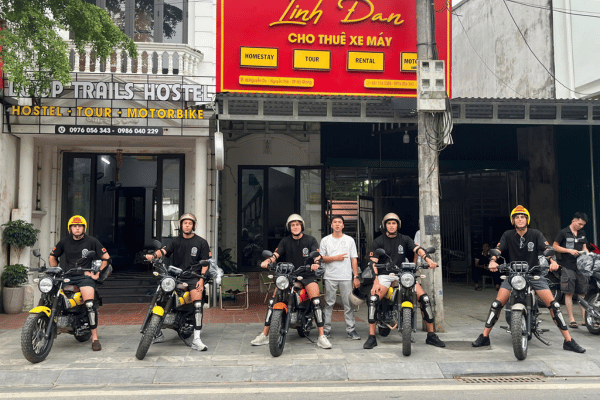
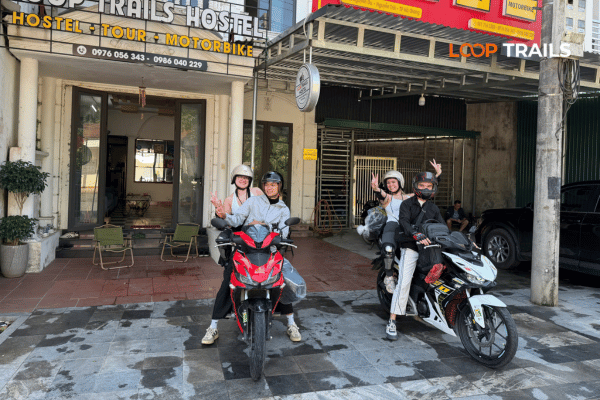
You rent a bike (usually a 150cc semi auto or manual), get a quick safety briefing, and ride the Loop on your own or with a small group. Maximum freedom, lowest cost, and the most memorable version if you have the skills.
The catch: this is genuinely mountainous riding. Switchbacks, gravel patches, sudden weather shifts, occasional water crossings after rain. If your last riding experience was a moped on a Greek island, this is a different category of difficulty. We turn away travelers who are clearly out of their depth, and so do most reputable rental shops in town.
If you’re confident on a manual or semi auto, this is the cheapest and freest way to do it. We rent XR150s and semi auto bikes in Ha Giang City with full kit (helmet, dry bag, basic tools, paper map). Fuel and accommodation are on you.
Learn more: Ha Giang Loop Easy Rider
You ride pillion behind an experienced local rider. They drive, you photograph, they navigate, you actually look around. This is by far the most popular option for travelers who want the motorbike feeling without any of the risk of crashing in a foreign country.
A good easy rider does much more than drive. They’ll stop at viewpoints you’d miss on your own, translate at homestays, point out things you wouldn’t notice (the school built by the Hmong community, the old French border post, the spot where the pho is actually good), and pull you into the dinner conversations at night. The quality of your trip is mostly the quality of your guide.
Learn more: Ha Giang Jeep Tours
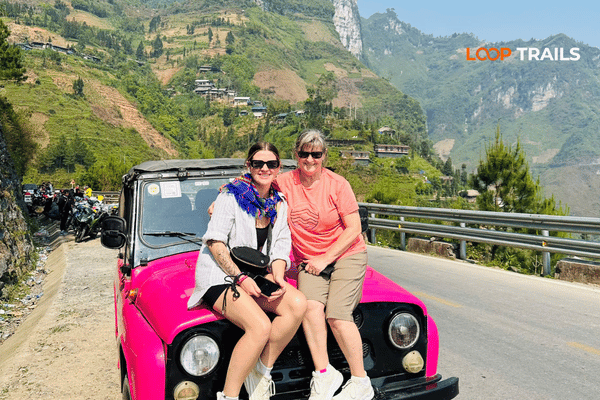
The jeep option is for people who want the route without sitting on a bike at all. Most operators run open sided or convertible jeeps so you still feel the air and get full views, but you’re sheltered from rain, you can carry more luggage, and the comfort gap on a long day is real.
Jeeps are also the answer if you’re traveling with kids, with someone who doesn’t ride, with older parents, or if it’s just been raining for three days and the roads are slick. Don’t think of it as the boring option. The first time I rode shotgun in a jeep up Ma Pi Leng with the doors off, I understood why so many people prefer this version. You see more, because you’re not concentrating on the road.
A few of our jeep guests have told me afterwards they’d have hated doing it on a bike in the weather they ended up with. Worth thinking about.
This is the under the radar choice. You ride the Ha Giang Loop, then continue east through Bao Lac into Cao Bang province for the Ban Gioc Waterfall, the Nguom Ngao Cave, and the much quieter Cao Bang loop. It adds 2 to 3 days, and the through route from Meo Vac to Bao Lac is one of the prettiest stretches in northern Vietnam.
Few backpackers do it because the marketing machine for Ha Giang dwarfs Cao Bang’s. That’s exactly why it’s worth doing.
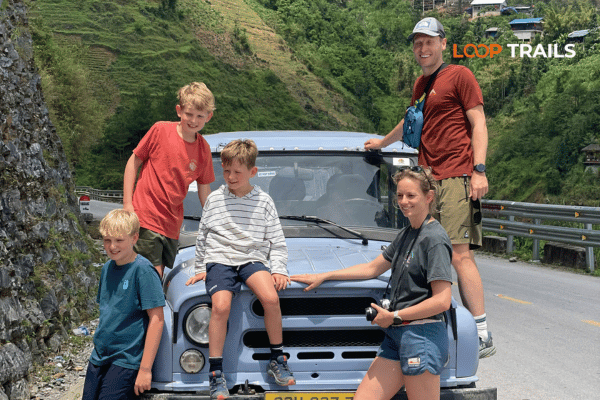
Learn more: Ha Giang Loop with Kids
Honest version:
If you’re still genuinely on the fence, message us on WhatsApp before booking. We’ve talked dozens of people out of the wrong option.
Learn more: Ha Giang Cao Bang Ba Be Lake 6 Days 5 Nights
There’s no perfect month. Each one trades something.
| Season | Months | What you get | What you give up |
|---|---|---|---|
| Spring | March to May | Peach and plum blossoms, mild weather, clearer skies | Some lingering cold mornings in early March |
| Summer | June to August | Lush green rice terraces, dramatic skies | Heat, heavy rain, occasional landslides, slippery roads |
| Autumn | September to November | Golden rice harvest in late Sep, cool clear days, the postcard season | Crowded weekends, books up fastest |
| Winter | December to February | Quiet, atmospheric mist, possible snow at altitude | Cold, sometimes very cold on the bike, fog can ruin viewpoints |
If I had to pick one month, late September to mid October is hard to beat: terraces still gold from the harvest, dry days, comfortable temperatures, and the canyon air at its clearest.
May and early June are also underrated. Most travelers avoid them on rainy season fears, but in practice you often get a few days of clear skies between storms, the rice is just being planted, and the Loop is genuinely quiet.
Avoid the week of Vietnamese Tet (Lunar New Year, usually late Jan or early Feb): half the homestays close, transport is chaos, and the mountains can be brutally cold.
Locked in a date already? Check our Ha Giang Loop tour calendar for guaranteed departures, or message us on WhatsApp if your dates are tight and we’ll tell you straight up whether the weather is likely to play along.

Learn more: Ha Giang Loop Price
Prices change, fuel goes up, the dong moves against the dollar, so treat this as a ballpark, not a fixed quote.
Self drive (3 days):
Easy rider (3 days, all included): Roughly the LoopTrails standard rate, depending on group size and accommodation type. Includes the rider, accommodation, most meals, fuel, fees, water, and rain gear.
Jeep (3 days, all included): Slightly above the easy rider rate per person. Premium for the comfort, the all weather coverage, and the fact that jeep capacity is more limited than motorbikes (which is why we ask jeep guests to book 1 to 3 months ahead).
4 days versions add roughly 25% to the 3 days price.
Ha Giang plus Cao Bang 5 days: Sits at a meaningful step up from the standard 3 days Ha Giang tour, but per day the cost is similar. The extra days are accommodation and fuel, not new fixed costs.
What’s almost never quoted upfront and you should ask about: park entrance fees (small, but they exist), photo ticket at certain Hmong sites, optional Nho Que River boat ride, drinks at dinner, and tips for your guide. None of these break a budget, but they add up.

Learn more: Ha Giang Sleeper Bus
You’re going to start in Hanoi. From Hanoi to Ha Giang City is roughly 300 km north, and there are three sensible ways to do it.
The motorbike “ride from Hanoi” option exists but I don’t recommend it. You’ll spend two solid days on highway traffic before you get to the actual Loop, and you’ll be exhausted before the real ride starts.
For the return trip, almost everyone takes the night bus from Ha Giang back to Hanoi. If you’ve added the Cao Bang extension, you’ll come back from Cao Bang City instead, also via overnight bus.
Learn more: Ha Giang Loop Weather
The Loop is paved most of the way. Some sections, especially around Du Gia and a few stretches near Lung Cu, are rougher: gravel, occasional potholes, the odd water crossing after heavy rain. After a typhoon (June through September), parts of the Loop can be temporarily closed by landslide, and your operator should reroute. If you’re doing it solo, follow local advice that day, not your itinerary.
Things that catch first time riders out:
The Loop has its risks. Most accidents are minor (low speed drops on gravel), but serious crashes happen every season, and the medical infrastructure up there is basic. If you’re not fully confident on a manual or semi auto bike, please don’t make the Loop the place you learn. Either book an easy rider or take the jeep option.
Learn more: Motorbike License IDP Guide 2026
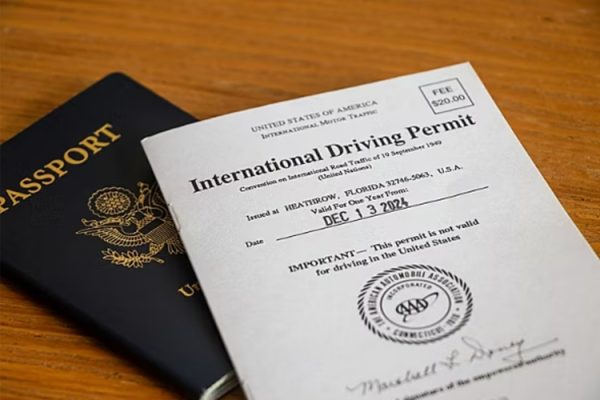
This part is murky and I’m not going to pretend it isn’t. Officially, Vietnam requires a Vietnamese motorcycle licence, or an International Driving Permit (IDP) issued under the 1968 Vienna Convention to ride legally. Many tourists ride without one. Police checkpoints in Ha Giang are inconsistent. Insurance companies in your home country may not cover you if you’re riding without a valid licence in Vietnam, regardless of what local rental shops tell you.
What I can tell you straight up:
Don’t take a stranger’s word for it (including mine). Read your insurance, and decide what risk level you’re comfortable with.

Learn more: Ha Giang Packing list
The Loop teaches everyone something about over packing. Here’s what actually matters.
On the bike:
Off the bike:
Skip:
Learn more: Ha Giang Loop Mistake to Avoid
These are the ones we see again and again, and they’re easy to fix.
Learn more: Corn wine “Happy Water” in Ha Giang
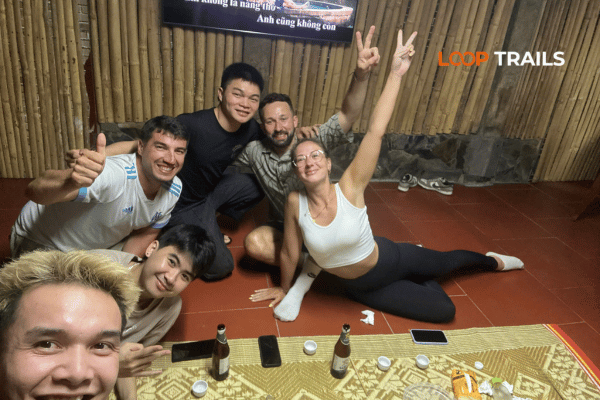
Vietnamese mountain food is its own thing. It’s not the pho and bun cha you ate in Hanoi. Up here it’s smoked buffalo, sticky rice steamed in bamboo, mountain greens, river fish, and a fierce local rice wine called ruou ngo that families produce themselves and bring out at dinner whether you asked for it or not.
The Loop runs almost entirely on homestays. A typical Hmong or Tay homestay has a communal sleeping area (mattresses on a wooden platform, mosquito nets), one or two private rooms for groups who want them, shared bathrooms, and a kitchen where dinner happens family style. Most homestays now have hot water. A few of the more remote ones still don’t, ask your operator before booking if it matters to you.
If you’re picky about privacy or sleep, ask for a private room. They cost more but they exist in most places. If you’re traveling solo or with friends, the dorm style is half the fun. Travelers from six countries at the same long table, sharing rice wine, swapping crash stories, planning where to ride tomorrow.
Learn more: Ha Giang Loop route and itinerary
Years ago, walking into Ha Giang City and arranging a tour the same day worked fine. Those days are mostly gone for high season.
For motorbike rentals or easy rider tours in shoulder seasons (March, May, late November), 1 to 2 weeks ahead is usually plenty. For peak months (October, weekends, public holidays), book at least a month out.
For jeep tours, the rules are different. Jeep capacity is much smaller than motorbike capacity, and the good operators (us included, honestly) sell out fast. Once you have a confirmed travel date, we recommend booking as soon as possible. Most guests book 1 to 3 months in advance. Unlike motorbike tours, jeep availability is limited, so early booking helps us arrange everything properly.
For the Ha Giang plus Cao Bang combo, same rule, book ahead.
Learn more: Cao Bang Loop 3 Days best kept secret
If you have the time, this is where I’d push you. Cao Bang sits east of Ha Giang and gets a fraction of the traffic, even though it’s home to Ban Gioc Waterfall (the biggest waterfall in Southeast Asia), the Nguom Ngao Cave system, and rice valleys around Phong Nam that look like Ha Giang did ten years ago.
The link road from Meo Vac to Bao Lac to Cao Bang City is itself a ride. Quiet, technical in places, lined with karst peaks and almost no other foreigners. From Cao Bang City you can spend two more days looping out to Ban Gioc and back before catching the night bus to Hanoi.
We run a Ha Giang to Cao Bang combine tour over 5 days, in easy rider, self drive, and jeep formats. If you’re already flying halfway around the world for the mountains, do this version, you’ll thank yourself.
Learn more: Hmong’s King Vuong Palace
The Ha Giang road trip earns its reputation. It’s also one of the few places in Southeast Asia where doing it badly can really wreck your week, so the prep matters.
Pick the format honestly: if you’re not a rider, don’t try to become one in the mountains. Pick the duration honestly: 3 days minimum, 4 if you can spare them. Pick the operator honestly: ask what bikes they use, who their guides are, what happens if it rains, whether your insurance covers what they’re offering.
And then go. Most travelers I meet up there describe Ha Giang as the part of Vietnam they didn’t see coming, and the part they’ll come back for. That’s a fair description. The mountains do the rest.
Final CTA: Whether you want to ride, get ridden, or roll through it in a jeep, we run all three formats from Ha Giang City: Easy rider Loop tours, self drive motorbike rental, and jeep tours over 3 or 4 days, plus the Ha Giang plus Cao Bang combine. Message us on WhatsApp with your dates and we’ll tell you what’s actually available and what fits.
Learn more: Ha Giang Loop Hidden Gems
Riskier than a beach holiday, less risky than people on Reddit make it sound. Most accidents are low speed drops on gravel by inexperienced riders. Ride within your skill, slow down on switchbacks, and don’t ride at night, and you’ll almost certainly be fine. If you’re not confident, book an easy rider or a jeep, that’s literally why those exist.
Yes, easily. Easy rider tours (you ride pillion behind a guide) are the most popular option for travelers. Jeep tours are growing fast and cover the exact same route in more comfort. You don’t need any riding skill for either.
3 days is the standard, 4 days is the sweet spot if you can spare the time. 2 days is possible but rushed and a bit risky. 5 to 6 days lets you combine with Cao Bang.
Late September to mid October for the rice harvest and clearest skies. March and April for blossoms. Avoid late January (cold and damp) and the heaviest weeks of the rainy season in July and August.
Officially, yes, either a Vietnamese licence or an International Driving Permit issued under the 1968 Vienna Convention. Enforcement is inconsistent and rules change, so check the latest. Either way, your travel insurance probably requires a valid licence to cover you if anything happens.
Sleeper bus or limousine van overnight is the most popular option, around 6 to 7 hours, and it’s cheap. Daytime limousines and private transfers also exist. Almost no one rides their own motorbike from Hanoi, the highway part isn’t worth it.
Self drive is the cheapest, easy rider sits in the middle, jeep is at the top of the range. A 3 days all included tour typically falls in the LoopTrails standard bracket. Add roughly 25% for the 4 days version. Always confirm what’s included before paying.
Only in the bigger towns: Ha Giang City, Yen Minh, Dong Van, Meo Vac. Pull out enough cash before you leave Ha Giang City. Many homestays don’t take cards.
Surprisingly often yes, even in remote homestays. Cell signal is patchy on the passes themselves but fine in towns. Get a Vietnamese SIM in Hanoi or at the airport, it’s cheap and works fine up there.
Yes, if you’re a confident rider. Solo riders are common, especially on self drive. If you’d like company, easy rider and jeep tours run as small group departures most days in season, you’ll meet other travelers in your group.
Different vibes. Sapa is easier to reach and more developed, with more hiking and clearer English speaking infrastructure. Ha Giang is rawer, harder to access, and rewards travelers who want fewer crowds and more dramatic scenery. If you’ve already been to Sapa, Ha Giang will feel completely different. If you only have time for one, Ha Giang.
Not required, but it’s appreciated and increasingly expected for good service. A reasonable tip is at the discretion of the guest based on how the trip went. Most travelers tip the guide directly at the end.
Contact information for Loop Trails
Website: Loop Trails Official Website
Email: looptrailshostel@gmail.com
Hotline & WhatSapp:
+84862379288
+84938988593
Social Media:
Facebook: Loop Trails Tours Ha Giang
Instagram: Loop Trails Tours Ha Giang
TikTok: Loop Trails
Office Address: 48 Nguyen Du, Ha Giang 1, Tuyen Quang
Address: 48 Nguyen Du, Ha Giang 1, Tuyen Quang
Facebook X Reddit Table of Contents Learn more: Ha Giang Loop Tours Most people drive past the Quan Ba area twice on

Facebook X Reddit Table of Contents Learn more: Ha Giang Loop Tours The Ha Giang Loop has a reputation problem with older