

Thúy Kiều (Grace) is a travel blogger and content contributor for Loop Trails Tours Ha Giang. She holds a bachelor’s degree in Sustainable Tourism from Vietnam National University, Hanoi, and has a strong passion for exploring and promoting responsible travel experiences in Vietnam’s northern highlands.

Learn more: Ha Giang Loop Tours
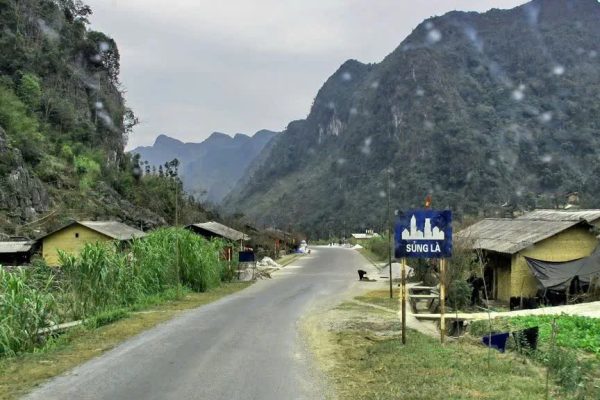
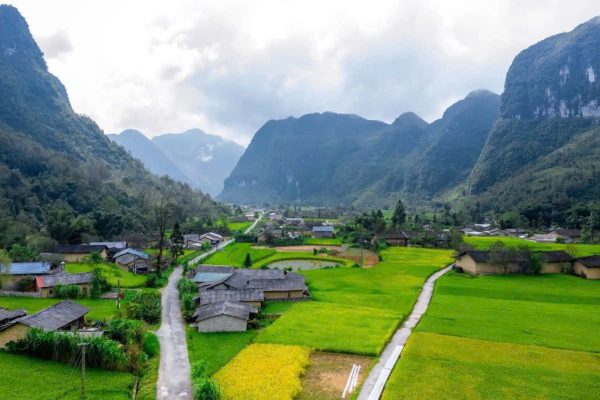
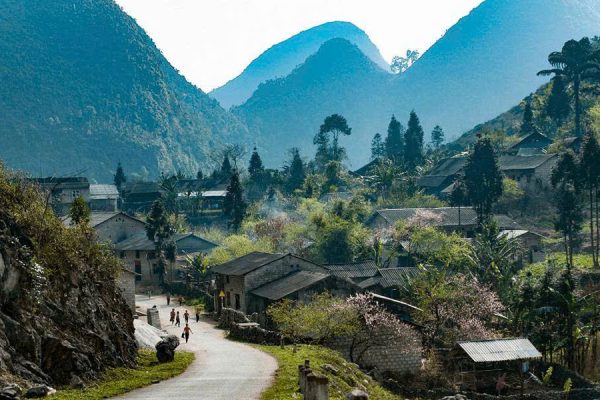
Sung La doesn’t announce itself. You come around a bend somewhere between Yen Minh and Dong Van, and the road just opens. Stone walled homesteads sit in a green basin ringed by rock spires. A few Mong women walk by carrying hemp bundles. You stop for “two minutes” and end up there for two hours.
That’s pretty much the whole story of this valley. There’s more to it, which is what this guide is for.
If you’ve been researching the Ha Giang Loop, you’ve probably seen photos of Sung La Valley without realizing it. The yellow flower fields, the stone walls, the moody pass shots: a lot of them come from this one commune in Dong Van district. Locals call it “the rose among the rocky plateau.” After running tours through here for years, we’d say that’s accurate, but a five word nickname misses what makes it special.
Here’s what you actually need to know.
Learn more: Ha Giang Loop 2 Days 1 Night
The Ha Giang Loop is a string of spectacular moments: Quan Ba Heaven Gate, Ma Pi Leng Pass, the Nho Que River, Lung Cu Flag Tower. Most of them are about scale. Huge passes. Enormous canyons. Sky that goes on forever.
Sung La is different. It’s small.
You can walk the central area in twenty minutes. The dramatic stuff happens in the details: the way the Mong people stack flat stones into chest high walls without any mortar, the courtyard of Pao’s House with its dark wood beams and yin yang roof tiles, the way buckwheat flowers turn from white to soft pink across a single week in late October.
This makes Sung La a different kind of stop. Not a “wow, pull over for photos” moment. More of a “let’s actually get off the bike and walk around” moment. If you treat it like a five minute photo break, you’ll miss what makes it worth the detour.
A few specifics that set Sung La apart:
Learn more: Ha Giang Loop 3 Days 2 Nights
Sung La is a commune in Dong Van district, Ha Giang province, sitting between Yen Minh town and Dong Van old town on Highway QL4C, which is the main road of the Ha Giang Loop.
Most riders hit Sung La on Day 2 of a 3 days Loop, traveling from Yen Minh up to Dong Van in the morning. It’s also a natural stop on Day 1 of the 4 days version if you’re routing through Lung Cu and back to Dong Van for the night.
If you’re going clockwise (the more common direction), the order looks roughly like this:
We won’t pretend to know the exact kilometer count from your starting point because Google Maps tends to underestimate Loop times by about thirty percent. Mountain roads, slow trucks, and the occasional construction stretch all add up. As a working estimate:
For real time road conditions, especially in the rainy season from May to September, it’s worth checking with your guide or rental company the day before. Rules can change and a fresh report from someone who rode the road yesterday is worth more than any article.
Learn more: Ha Giang Loop 4 Days 3 Nights
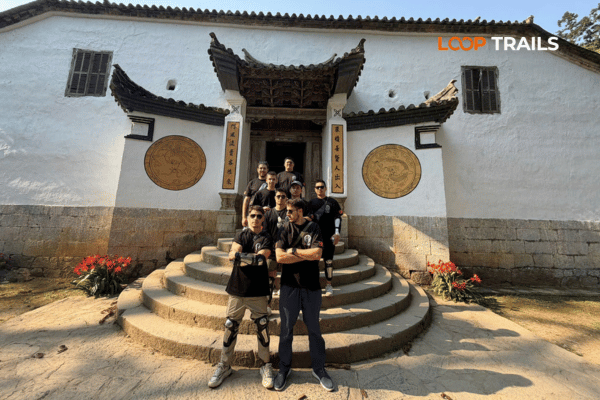
The first thing every visitor wants to see is Pao’s House (Nha cua Pao). Here’s what’s actually going on with it.
The house was built by a Mong family, the Mua family, around eighty years ago in traditional Hmong style: pisé earth walls, dark wood frame, yin yang clay roof tiles, central courtyard. In 2005, Vietnamese director Ngo Quang Hai was scouting locations for “Chuyện của Pao” (Pao’s Story), adapted from a short story by Do Bich Thuy. He chose this house. The film came out in 2006, won several Vietnamese cinema awards, and quietly turned the Mua family’s home into a tourist site.
The family still owns the property. There’s a small entrance fee (a few thousand dong, but the exact amount changes, so just bring small bills). Visitors are welcome to walk the courtyard, peek into the rooms, photograph the architecture. You can usually buy local honey, hemp products, or corn wine from the family.
A few things worth knowing before you go in:
Pao’s House is the obvious highlight of Sung La. It’s also not the only thing worth your time here, and most visitors miss the rest entirely.
Learn more: Ha Giang Cao Bang 5 Days 4 Nights
Timing matters more in Sung La than almost anywhere else on the Loop. Two short windows transform the valley into something else entirely.
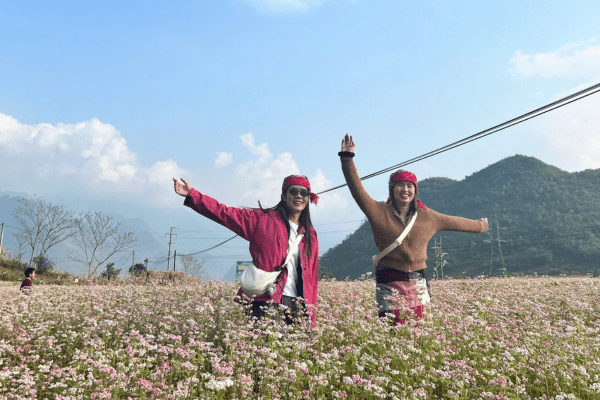
This is the famous one. Buckwheat (tam giac mach in Vietnamese, named for the triangular shape of its seed) blooms across Ha Giang from mid October into November. The flowers start white, deepen to pink, then go to a dusty purple before being harvested.
In Sung La, the buckwheat fields are smaller than the commercial fields at the Tam Giac Mach Festival sites, which is exactly why they photograph better. You get stone walls in the foreground, flowers in the mid ground, karst peaks behind. The classic Ha Giang postcard view.
The exact peak shifts year to year by a week or two depending on rainfall. If you’re traveling specifically for the flowers, build a few days of flex into your dates and check recent photos from local Facebook groups in the week before you go.
Less famous, equally beautiful, far less crowded. After Tet (Lunar New Year), the same fields get planted with rapeseed, which blooms in bright yellow. The contrast against grey karst rock and the lingering winter mist is something else.
The window is shorter than buckwheat: maybe two to three weeks total, often late February through mid March. Cold mornings, dramatic light. Bring layers
If you can’t make either flower window, don’t write Sung La off. Each season has its own thing going for it.
Avoid late July and early August if you can. Typhoon season, washed out roads, big delays. If you’re already locked into those dates, just build flexibility into your itinerary and don’t lock in any “must arrive by 4pm” plans.
If you’re trying to time a trip around the buckwheat flowers, our Ha Giang Loop tours in October and November tend to book out the fastest. Most groups lock in one to three months ahead.

Learn more: Ha Giang Cao Bang Ba Be Lake 6 Days 5 Nights
There’s no way to fly into Sung La. You’re getting here on two wheels, four wheels, or someone else’s two or four wheels.
The first leg is Hanoi to Ha Giang City. Options:
Most of our guests arrive in Ha Giang City between 4 and 6am, grab a coffee, and join the morning departure briefing.
Once you’re in Ha Giang City, you have three main ways to actually reach Sung La.
1. Easy Rider (you ride pillion with a local guide): The most popular option for first time visitors and anyone who doesn’t want to manage a motorbike on mountain roads. Your guide drives, you ride behind, you take photos and breathe. The route through Quan Ba and Yen Minh into Sung La is straightforward but has sharp switchbacks in places.
2. Self Drive: If you have real motorbike experience (an actual license back home, comfortable with manual or semi auto bikes), self drive gives you full freedom. The Loop is fine for confident riders. It’s not the place to learn. Road conditions vary, weather changes fast, and there are sections where pulling over to ask directions isn’t easy.
3. Jeep Tour: Open air or enclosed 4WD jeeps run the same route. This is the comfort option, popular with couples, families, older travelers, anyone who doesn’t ride, and anyone who got rained on once during a planning trip and decided they were done with motorbikes. Same stops, including Sung La, with a driver and guide doing the work.
We run all three on the Loop. The right one depends on your experience and what you want from the trip. There’s a quick decision guide near the end of this post.
Learn more: Ha Giang Motorbike Rental
Pao’s House is the obvious thing. Here’s everything else worth your time.
Plan thirty to forty five minutes here. Longer if you’re into architecture or photography.
This is the underrated activity in Sung La. The stone walls around Mong family compounds are built entirely without mortar, sometimes over a meter thick, often more than a hundred years old. They follow the contours of the land and create natural framing for photos.
Walking the side lanes between compounds (between, not into, the compounds are private) gives you a much better feel for the place than just standing in the parking area at Pao’s House. Most visitors miss this entirely. It’s free, quiet, and you’ll have it mostly to yourself.
Technically not in Sung La but in neighboring Sa Phin commune, about ten minutes by road. This is the former residence of the Vuong family, who acted as local rulers under French colonial rule. The architecture mixes Chinese, French, and Hmong influences. Built in the early 20th century, restored several times since. There’s an entrance fee, English signage is limited but present, and the on site guides will walk you through the history if you ask.
Most Loop itineraries combine Sung La and the Hmong King’s Palace into a single morning stop, which makes sense given how close they are.
A short detour off the main road, Pho Bang is a small Chinese style settlement with mostly Hoa (ethnic Chinese) and Mong residents. Two storey clay walled houses, faded red paper decorations, slow life. Worth the detour if you’re not in a rush.
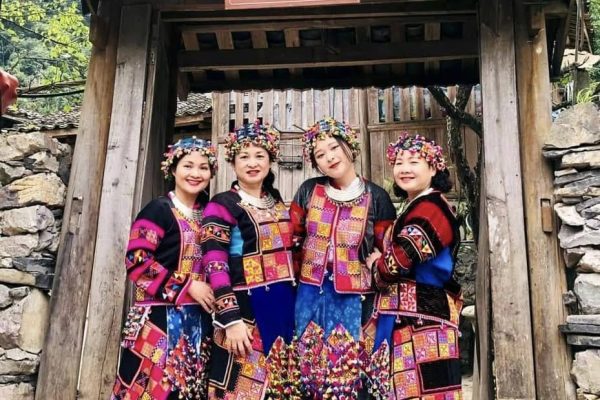
The Mong people are the dominant ethnic group in Sung La. You’ll see traditional dress, especially on women: pleated indigo skirts, embroidered blouses, leg wraps. Hemp is still grown, retted, woven, and dyed locally.
A few unwritten rules:
Learn more: Ha Giang Loop Photography Guide
If you’re carrying a camera (or even just your phone), a few specific things to know about shooting Sung La.
The hero shot most travel photographers go for: a wide of the valley with stone walled compounds in the foreground, fields in the middle, karst peaks behind. There’s a small rise just south of Pao’s House that works for this. Ask your guide.
Learn more: Ha Giang Homestay Guide
Sung La itself doesn’t have a hotel scene. There are a handful of homestays in the commune, but most travelers stay in either Dong Van old town (more accommodation, restaurants, evening atmosphere) or Yen Minh (quieter, fewer tourists, easier base).
About thirty to forty five minutes north of Sung La by road. The old town has French and Chinese colonial architecture, restored hotels, family run homestays, decent restaurants, a Sunday market (one of the best on the Loop), and a coffee culture that has quietly grown into something real.
Most of our 3 days Loop guests stay in Dong Van on the second night.
The opposite direction, about an hour south. Smaller, easier to navigate, less touristy. Fine if you’re coming through on Day 1 or if you want a quieter base.
A few exist. They’re basic, friendly, deeply local. If you specifically want to wake up in the valley itself, ask your tour operator or rental company to coordinate one. We don’t recommend just rolling up unannounced because language gaps and limited capacity can leave you stranded.
Learn more: Ha Giang Loop Mistake to Avoid
A short list of things experienced Loop riders wish they’d known earlier.
Lear more: Lung Cu Flag Tower
If you’re trying to prioritize which stops deserve real time and which can be quick photo breaks, here’s how Sung La compares.
| Stop | What It Offers | How Long to Stay |
|---|---|---|
| Quan Ba Heaven Gate | Wide valley viewpoint, fairy mountains | 15 to 30 minutes |
| Sung La Valley | Culture, architecture, landscape | 1 to 2 hours |
| Hmong King’s Palace | History, mixed architecture | 45 minutes to 1 hour |
| Lung Cu Flag Tower | Northernmost point, symbolic, views | 1 hour |
| Dong Van Old Town | Markets, food, evening atmosphere | Half a day or overnight |
| Ma Pi Leng Pass | The big pass, Nho Que River views | 1 to 2 hours |
| Meo Vac Market (Sunday) | The most authentic ethnic market on the Loop | 1 to 2 hours |
Sung La is the most underrated entry on this list. Most people give it twenty minutes and move on. It deserves at least an hour and rewards two.

Learn more: Ha Giang Jeep Tours
Quick gut check, based on a few thousand guests through the years.
Choose Easy Rider if:
Choose Self Drive if:
Choose a Jeep Tour if:
All three options on our Loop tours hit Sung La with real time to explore, not just a five minute photo break. If you’re not sure which to pick, message us on WhatsApp with your dates and we’ll match you to the right setup.
Learn more: Cao Bang Loop 3 Days best kept secret
Yes, especially if you slow down. It’s the cultural and architectural heart of the Dong Van section of the Loop, and the flower seasons (October to November and February to March) are some of the best photo windows in northern Vietnam. Treat it as a one to two hour stop, not a quick photo break.
Minimum one hour. Two is better. Pao’s House plus a walk through the side lanes plus the Hmong King’s Palace next door easily fills a half day.
Technically yes, but it’s a long day and you’ll miss most of the other Loop stops. Better to do Sung La as part of a 3 days or 4 days Loop tour.
Roughly mid October to mid November, with peak usually in the last week of October or first week of November. The exact window shifts every year by a week or two depending on rainfall. Check recent photos online a week before your trip.
You don’t strictly need one to visit Sung La itself, but for the Ha Giang Loop overall, a guide adds a lot of value: local context, road condition updates, language help, safety. If you’re self driving without a guide, it’s still useful to have a reliable rental shop on call.
No. Bring cash in small denominations. The nearest reliable ATMs are in Dong Van old town and Yen Minh.
The valley itself is safe. The road to get there is a mountain road, so the usual cautions apply: ride at your level, don’t ride after dark if you can avoid it, watch for animals and slow trucks. Crime against tourists is rare.
Drones in the Dong Van Karst Plateau UNESCO Geopark are a grey area, and rules can change. Don’t fly over people’s homes, get current information from your guide or local authorities, and assume “no” unless you have explicit permission.
Yes, with reasonable parents. There’s no climbing, no danger zones. Pao’s House is family friendly. Just plan around mealtimes and don’t expect Western style amenities.
Absolutely. This is one of the easier major stops on the Loop. Mild walking, no required climbing. A jeep tour is the easiest way to reach it without dealing with motorbike fatigue.
Dong Van old town, about thirty to forty five minutes north by road. Yen Minh is the other option, about an hour south. Both are common overnight stops on a 3 days Loop.
All our Loop tours have a private option. If you want a slower pace specifically built around photography and time in the valley, that’s straightforward to arrange. Just mention it when booking.
Contact information for Loop Trails
Website: Loop Trails Official Website
Email: looptrailshostel@gmail.com
Hotline & WhatSapp:
+84862379288
+84938988593
Social Media:
Facebook: Loop Trails Tours Ha Giang
Instagram: Loop Trails Tours Ha Giang
TikTok: Loop Trails
Office Address: 48 Nguyen Du, Ha Giang 1, Tuyen Quang
Address: 48 Nguyen Du, Ha Giang 1, Tuyen Quang
Facebook X Reddit Table of Contents Learn more: Ha Giang Loop Tours Most people drive past the Quan Ba area twice on

Facebook X Reddit Table of Contents Learn more: Ha Giang Loop Tours The Ha Giang Loop has a reputation problem with older