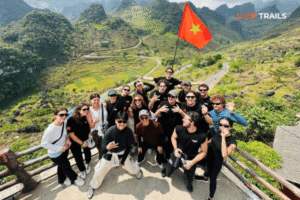


Thúy Kiều (Grace) is a travel blogger and content contributor for Loop Trails Tours Ha Giang. She holds a bachelor’s degree in Sustainable Tourism from Vietnam National University, Hanoi, and has a strong passion for exploring and promoting responsible travel experiences in Vietnam’s northern highlands.
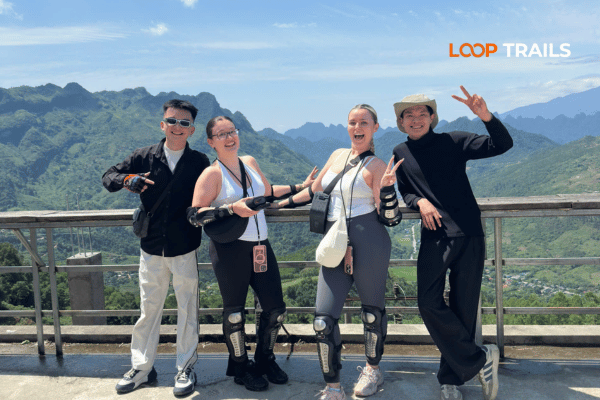
Learn more: Ha Giang Loop Tours
There’s a stretch between Meo Vac and the next major town where phone signal drops, the road curves into a gorge that blocks out the sky, and the last petrol pump you passed was 40 kilometers back. If you didn’t fill up when you had the chance, you’re now doing mental arithmetic with your fuel gauge and hoping the math works out.
It usually does. But “usually” is not a plan.
Fuel on the Ha Giang Loop is one of those logistics questions that doesn’t get enough attention compared to, say, what to pack or which homestay to book. Most of the towns on the route have petrol available — but the gaps between towns can be long, the pumps aren’t always formal stations, and riding in with a near-empty tank in the mountains is a situation easily avoided with a bit of planning.
This guide covers every major fuel stop on the Ha Giang Loop from Ha Giang City through Dong Van, down through Meo Vac, and back via Du Gia. Read it before you ride.
Learn more: Ha Giang Loop 2 Days 1 Night
The Ha Giang Loop covers roughly 350 kilometers in its standard 3 day version, and considerably more if you take the longer variant through Du Gia or extend into Cao Bang. That’s a lot of mountain road and not the kind where you can coast to a gas station on a flat highway shoulder.
The terrain works against you in a few specific ways:
First, the elevation changes are significant. Climbing from river valley to mountain pass and back uses more fuel than flat riding, regardless of engine size or riding style. A tank that gets you 180 kilometers on a straight road may only manage 140 to 150 on the passes.
Second, the distances between towns are real. Between some towns on the northern loop, you’re looking at stretches of 50 to 70 kilometers without a guaranteed refuel point. That’s manageable on most motorbikes with a full tank but becomes stressful if you’ve been letting it run low.
Third, informal “petrol sellers” (local people selling fuel from bottles or jerry cans outside their homes) do exist on some stretches, but their availability is not consistent. Don’t build your fuel plan around finding one.
The practical rule: fill up every time you see a pump, even if you’re only half empty. On the Ha Giang Loop, a half-full tank is the new full tank.
Learn more: Ha Giang Loop 3 Days 2 Nights
Before getting into the fuel stop breakdown, a quick orientation. The standard Ha Giang Loop runs roughly like this:
Day 1: Ha Giang City → Tam Son (Quan Ba District) → Yen Minh → Dong Van Day 2: Dong Van → Ma Pi Leng Pass → Meo Vac → (optional: overnight or continue) Day 3: Meo Vac → Du Gia → Ha Giang City
Some riders do it in two days. Some take four. The route can also be reversed (counterclockwise). The fuel logic is similar regardless of direction — what matters is knowing which towns have reliable petrol points and which stretches require you to top up before setting out.
If you’re doing the extended Ha Giang to Cao Bang route, the fuel considerations shift considerably once you cross into Cao Bang Province. That’s a separate guide this one focuses on the core Ha Giang Loop.
Learn more: Ha Giang Loop 4 Days 3 Nights
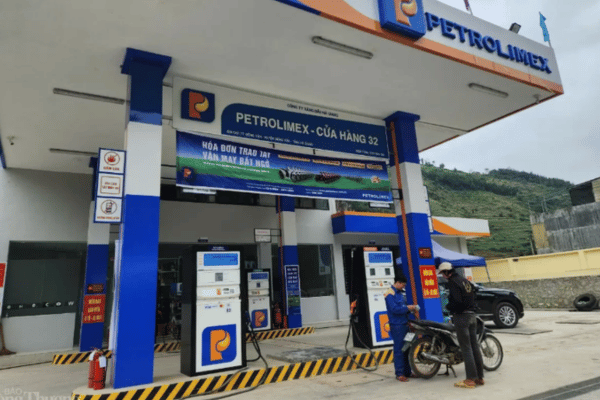
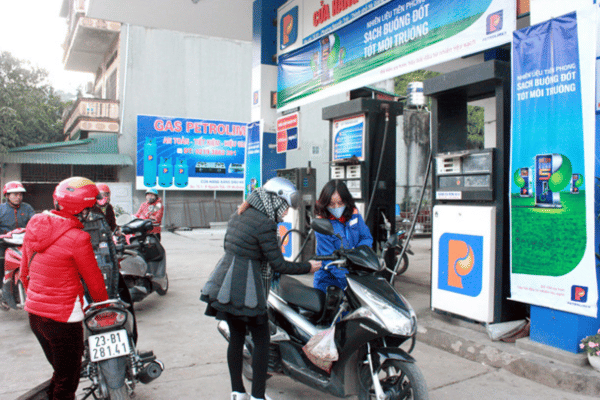
Ha Giang City is your last urban fuel point before the loop begins in earnest. There are multiple proper petrol stations here, including Petrolimex pumps with standard pricing and working nozzles. Fill to the brim before leaving — not because you’ll struggle immediately, but because this is the last place where you can refuel without thinking about it.
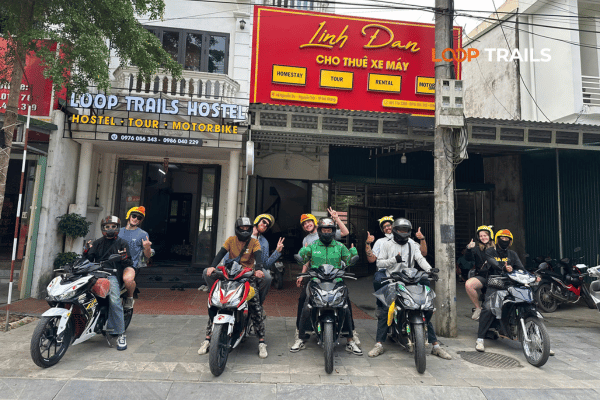
If you’re renting a motorbike in Ha Giang City, your rental shop will typically hand over the bike with a full tank. Confirm this before you head out. If the tank isn’t full, fill it up before you leave town.
Renting a motorbike for the loop? Our [motorbike rental page] has details on bike options, what’s included, and how to pick up in Ha Giang City. Starting with a well-maintained bike makes the fuel stretches a lot less stressful.
The road north from Ha Giang City climbs quickly through the Heaven Gate (Cong Troi) viewpoint and then descends into Quan Ba District. Tam Son, the district town, is your first reliable fuel stop roughly 45 kilometers from Ha Giang City.
There are petrol points in Tam Son, ranging from a proper small station to roadside sellers outside shop fronts. The main road through town makes them easy to spot. If you’re riding at a comfortable pace with a full tank from Ha Giang City, you won’t need to stop here — but it doesn’t hurt to top up, particularly in the rainy season when you might be riding more cautiously and burning fuel less efficiently.
Quan Ba itself (the smaller settlement before Tam Son) has limited services. Don’t count on finding fuel there reliably.
Yen Minh is a proper small town, roughly 50 kilometers past Tam Son, and it’s one of the most important fuel stops on the entire route. Most riders stop here for lunch anyway — it’s the natural midpoint of Day 1 — so a fuel top-up here fits naturally into the schedule.
There are several petrol points in Yen Minh, including at least one Petrolimex-branded station. Prices here are roughly in line with what you paid in Ha Giang City, though like anywhere in rural Vietnam, small variations exist. Fill up here without question. The road from Yen Minh to Dong Van is approximately 50 kilometers and passes through increasingly remote terrain having a full tank leaving Yen Minh is just good practice.
Dong Van is the most significant town on the northern end of the loop and the overnight stop for most 3 day itineraries on Day 1. It has multiple petrol points, including on the main road through town and near the old quarter area.
Petrol in Dong Van tends to cost slightly more than in Ha Giang City — this is standard across rural Vietnam, where transport costs to remote areas are passed on to the buyer. The difference is small and not worth stressing about.
If you’re planning to ride out to Lung Cu Flag Tower (the northernmost point of Vietnam, about 24 kilometers from Dong Van) the following morning before continuing south, fill your tank in Dong Van the night before or first thing in the morning. There are very limited fuel options on the Lung Cu road itself.
The road from Dong Van south toward Meo Vac passes over Ma Pi Leng Pass one of the most spectacular stretches of road in Vietnam and also one of the longest sustained climbs on the loop. Start it with a full tank.
Learn more: Ha Giang Motorbike Rental
Meo Vac is the town at the bottom of the descent from Ma Pi Leng Pass, perched above the Nho Que River valley. It’s a genuine town with a Sunday market (worth planning around if your timing allows), accommodation options, and several petrol points on the main street.
This is one of the most critical refuel stops on the whole loop. The road from Meo Vac south and east toward Du Gia is the most remote stretch of the standard loop, and it’s where riders most commonly run into fuel trouble if they’ve been casual about topping up.
Fill up in Meo Vac. Don’t leave without a full tank regardless of what the gauge says when you arrive.
One practical note: Meo Vac can be busy on Sunday mornings during the market. Petrol points on the main road are accessible, but the town itself gets congested. Build a few extra minutes into your schedule if you’re there on market day.
This is the stretch that catches riders out. The road from Meo Vac toward Du Gia passes through some genuinely remote country deep river valleys, narrow roads carved into cliff faces in sections, and very few permanent settlements of any size.
There are small villages along this route, and some of them have informal petrol sellers (jerry cans or bottles outside a shop door). These are not guaranteed to be there when you need them, and their fuel quality varies. Some riders have used them without issue. Others have found them dry or simply absent.
The practical approach: treat this as a no-fuel zone in your planning and leave Meo Vac full. If you happen to spot a petrol seller in a village along the way and you’re not already at capacity, top up. But don’t count on it.
The total distance from Meo Vac to Du Gia varies depending on the exact route taken — the northern via Khau Vai route and the more direct southern route have different distances and road conditions. Check current route conditions locally before setting out, particularly after the rainy season when landslides can close stretches of road.
Du Gia is the last major stop before the return to Ha Giang City and one of the more beautiful villages on the entire loop — a riverside settlement surrounded by terraced fields that many riders add an extra night to their itinerary for. It has accommodation, food, and petrol.
The road from Du Gia back to Ha Giang City follows the Lo River valley and is considerably flatter and more straightforward than the mountain sections of the loop. It’s a comfortable final leg, and with a full tank from Du Gia, you’ll have more than enough fuel to reach Ha Giang City without concern.
If you’ve taken the direct route back from Meo Vac through Bao Lac or another alternative path (some riders extend toward Cao Bang from here), fuel planning becomes more involved ask your rental shop or guide about fuel points on your specific planned route before you set out.
Learn more: Ha Giang Cao Bang 5 Days 4 Nights
It happens. You misread the map, someone gave you wrong information about where the next pump was, or you’ve taken a detour and the tank is lower than it should be. Here’s how to handle it:
Look for the jerry can sign. In rural northern Vietnam, petrol sellers often hang a piece of rope, a bottle, or a small handwritten sign outside their home or shop. There’s no universal marker you learn to look for any indication of fuel being sold rather than waiting for a branded pump. Slow down through any village and look around.
Ask at a guesthouse or restaurant. Even in villages without a visible petrol seller, someone will usually know who in the village has fuel. A hand signal of “petrol?” combined with pointing at your fuel cap is universally understood.
Turn around if necessary. If you’ve ridden 20 kilometers past your last fuel point and you’re genuinely low, the smartest move is sometimes to turn back rather than gamble on finding something ahead. It’s frustrating, but it’s less frustrating than pushing a motorbike.
Carry a small emergency reserve. Some riders carry a 1 liter plastic bottle of petrol in their bag for genuine emergencies. This isn’t standard practice and it requires careful packing (use a proper sealed container), but on very remote stretches it provides a genuine safety margin. If you’re self-driving the loop for the first time, it’s worth considering.
Learn more: Ha Giang Cao Bang Ba Be Lake 6 Days 5 Nights
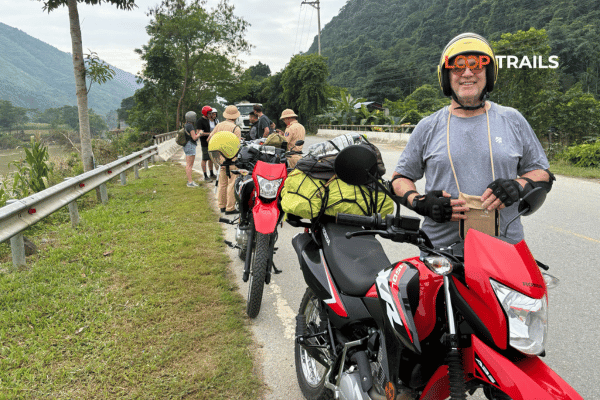
A few specific points for anyone riding the loop independently on a rented or personal motorbike:
Know your bike’s tank capacity and range. Before you leave Ha Giang City, ask your rental shop how large the fuel tank is and approximately how far the bike gets on a full tank under normal riding conditions. These numbers matter. A semi-auto 110cc bike behaves very differently from an XR150 in terms of fuel consumption, particularly on climbs.
Fill up at every town, not every other town. This sounds overly cautious, but the mountain terrain means you burn fuel faster than you expect, and the stops are convenient anyway since you’re stopping for food, photos, and rest at each town.
Watch the gauge, not the kilometers. Fuel consumption on mountain passes varies significantly with gradient and riding style. Aggressive throttle through switchbacks uses more fuel than smooth, consistent riding. Don’t calculate range purely based on distance.
Petrol quality varies. The fuel at branded Petrolimex stations is generally reliable. Fuel from unlicensed roadside sellers varies more. Most riders use it without issue in a genuine emergency, but for regular top-ups, stick to proper stations where available.
Avoid running the engine when the tank is very low. Vietnamese motorbike carburetors (still common on older semi-auto bikes) can draw air and debris from the bottom of the tank when it gets very low, which can cause the engine to run rough or cut out. Keep the tank above a quarter full as a general rule.
Fuel type: Most motorbikes on the Ha Giang Loop run on RON 92 or RON 95 petrol. Check with your rental shop which grade your specific bike requires. Using the wrong grade won’t necessarily destroy the engine, but it’s worth using the right one. E5 RON 95 is now the most commonly sold grade at Petrolimex stations across Vietnam check whether your bike’s engine is compatible if you’re on an older model. When in doubt, ask at the rental shop.
Learn more: Ha Giang Loop Easy Rider
Short answer: yes, completely.
If you’re riding the Ha Giang Loop as a passenger with an easy rider guide where a local guide drives and you sit behind fuel is 100% the guide’s responsibility. They know the route, they know the pump locations, and they’ve ridden it many times. You’ll stop at petrol stations along the way, but you won’t be tracking the gauge or making fuel decisions. It’s one of the significant practical advantages of the guided easy rider format for riders who aren’t confident about navigation and logistics in a remote area.
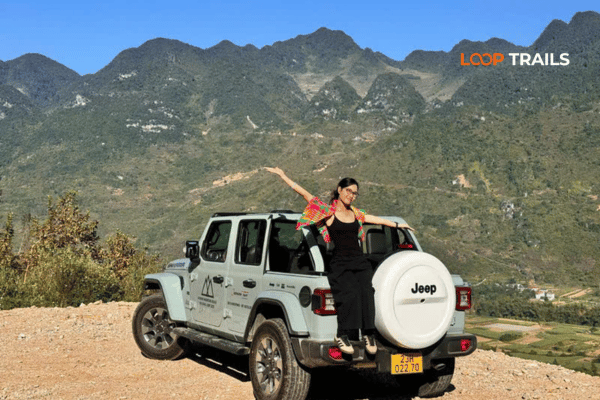
The same applies to jeep tours. The driver handles all fuel — you sit in the open-air vehicle, take in the views of the Dong Van karst plateau and the Nho Que River gorge, and let someone else worry about whether the tank is full.
For first-time visitors to the Ha Giang Loop or anyone who’d rather not spend mental energy on logistics, this is a real quality-of-life difference. You don’t have to think about fuel at all — which means you can spend that headspace on what actually matters: the landscape, the villages, the food, and the experience.
Considering an easy rider or jeep tour? Our [Ha Giang Loop tour page] covers all three formats — easy rider, self-drive, and jeep — with pricing and what’s included. For groups and couples especially, the guided options tend to be the better value once you factor in what you don’t have to manage yourself.
Learn more: Ha Giang Loop Self-Drive
Assuming towns shown on Google Maps have petrol. Not every settlement on the map has a petrol point. Small hamlets of a few houses exist on the Ha Giang Loop route, and they may not have fuel. Towns like Yen Minh, Dong Van, Meo Vac, and Du Gia reliably do. The smaller dots between them: plan as if they don’t.
Trusting online forum posts about specific petrol stations. The information landscape for the Ha Giang Loop on travel forums is a mix of genuinely useful recent reports and posts from several years ago that may no longer be accurate. A station someone mentioned in a 2021 forum thread may have closed, moved, or changed hands. Use forums as general guidance, not as a precise fuel map.
Not asking the rental shop before leaving. Your motorbike rental shop in Ha Giang City knows the current fuel situation on the route better than any online guide, including this one. Ask them specifically about the Meo Vac to Du Gia stretch when you pick up the bike. They ride the route regularly and have current information.
Starting the day without checking the tank. After an overnight stop, your tank should be full before you leave each morning. Don’t assume the guide or someone else topped it up — check it yourself if you’re self-driving.
Filling up with the wrong fuel type in a hurry. If you’re pulling into an unfamiliar roadside seller in a rush, take two seconds to confirm what you’re putting in. Ron 92, Ron 95, and diesel are all sold in rural Vietnam. Diesel in a petrol engine is a bad day.
Learn more: Ha Giang Loop by Army Jeep Tours
If you’re reading a guide about fuel planning on the Ha Giang Loop, you’re probably considering riding it yourself. That’s a great choice self-driving the loop is genuinely one of the best experiences Vietnam has to offer for riders who are comfortable on a motorbike. But it comes with the responsibility of managing your own logistics, and fuel is near the top of that list.
Self-drive: Best for riders with existing experience on mountain roads, ideally in Southeast Asia. You need to be comfortable with basic bike maintenance awareness, navigation, and the kind of independent decision-making this guide is preparing you for. Our [motorbike rental Ha Giang] page covers the bike options and what to expect when you pick up.
Easy rider (guided, you ride pillion): Best for people who want the Ha Giang Loop experience without the riding stress. Your guide drives, speaks English (with LoopTrails guides), and handles all logistics including fuel. You get the full route, all the same stops, and none of the navigation headaches.
Jeep tour: Best for couples, small groups, people who don’t ride motorbikes, or anyone who wants an elevated view of the landscape without the wind and physical effort. Jeeps handle the Ma Pi Leng Pass section in particular very comfortably, and the open-air format means you lose nothing in terms of views. Fuel: handled entirely by the driver.
Not sure which fits your situation? The most useful thing to do is [send us a message on WhatsApp] with your travel dates, group size, and riding experience. We’ll give you an honest answer about which format makes the most sense no pressure either way.
Learn more: Cao Bang Loop 3 Days best kept secret
The first reliable fuel point heading north is Tam Son in Quan Ba District, approximately 45 kilometers from Ha Giang City. There are petrol points on the main road through town. You can easily reach Tam Son on a full tank from Ha Giang City without concern, but it’s a reasonable place to top up if you’re being cautious.
Yes. Dong Van has multiple petrol points on the main road through town and near the old quarter area. It’s one of the most reliable refuel stops on the northern part of the loop. Fill up here before tackling Ma Pi Leng Pass heading south toward Meo Vac.
The section between Meo Vac and Du Gia is the most consistently challenging for fuel. There are no guaranteed petrol stations along this route, and while informal roadside sellers sometimes exist in villages, they can’t be relied upon. Always leave Meo Vac with a completely full tank.
Petrol prices in Vietnam are regulated nationally and change periodically check the current official price before you travel. In practice, Petrolimex-branded stations in Ha Giang City tend to be the baseline price, and remote areas charge slightly more to account for transport costs. The difference is small in absolute terms.
Yes, Ron 95 (E5 RON 95, the blended ethanol version) is available at most Petrolimex stations on the route. The branded stations in Ha Giang City, Yen Minh, Dong Van, and Meo Vac all carry it. Smaller roadside sellers may only have Ron 92 or an unlabeled grade. Check with your rental shop which fuel grade your specific bike requires.
Hailing down a passing vehicle and asking for help is generally effective in Vietnam the local and touring rider community on the loop is friendly and used to helping each other. You can also push or coast to the nearest settlement and ask around for someone who sells petrol. It’s an avoidable situation with good planning, but it’s not stranded-in-the-desert territory.
Completely. On any guided easy rider or jeep tour, fuel logistics are managed entirely by your guide or driver. You don’t need to think about it, track it, or pay for it separately fuel is part of the tour operation.
This varies by model. Most semi-auto and automatic bikes in the 110 to 125cc range have tanks of around 3.7 to 5 liters. The Honda XR150 (a popular choice for the Ha Giang Loop) has a larger tank. Ask your rental shop for the specific tank capacity and approximate range of the bike you’re renting this is the most important number for fuel planning on a self-drive trip.
For most riders on the standard 3 day loop, carrying spare fuel is not necessary if you follow the rule of filling up at every town. Some riders who are taking less-traveled routes or extending into Cao Bang carry a small emergency reserve (500ml to 1 liter) in a sealed container. If you’re doing the Meo Vac to Du Gia stretch on a low-range bike and it’s been raining, the peace of mind is worth the small inconvenience of carrying it.
The fuel points themselves don’t change significantly. What changes is road conditions: landslides or washed-out sections can close stretches of road and force detours, potentially adding significant distance to your day. In the rainy season (roughly May to September), build more buffer into your fuel planning and check road conditions locally each morning before setting out.
Jeeps have larger fuel tanks than motorbikes and generally stop for fuel less frequently than individual riders. Your driver will handle this typically at the same major towns (Yen Minh, Dong Van, Meo Vac) where everyone else stops anyway. As a passenger, you won’t notice the difference between a fuel stop and any other brief pause on the route.
Google Maps shows some but not all fuel points on the Ha Giang Loop, and its accuracy in this area varies. The most reliable current information comes from your motorbike rental shop or tour guide in Ha Giang City they ride the route regularly and know what’s open right now. Use this guide as an orientation framework, and verify current details locally before you set out.
Contact information for Loop Trails
Website: Loop Trails Official Website
Email: looptrailshostel@gmail.com
Hotline & WhatSapp:
+84862379288
+84938988593
Social Media:
Facebook: Loop Trails Tours Ha Giang
Instagram: Loop Trails Tours Ha Giang
TikTok: Loop Trails
Office Address: 48 Nguyen Du, Ha Giang 1, Tuyen Quang
Address: 48 Nguyen Du, Ha Giang 1, Tuyen Quang
Facebook X Reddit Table of Contents Learn more: Ha Giang Loop Tours Most people drive past the Quan Ba area twice on

Facebook X Reddit Table of Contents Learn more: Ha Giang Loop Tours The Ha Giang Loop has a reputation problem with older