

Ba Be Lake Between Ha Giang and Cao Bang: Worth the Detour?
Facebook X Reddit Table of Contents Open any map of northern Vietnam and Ba Be Lake looks like it belongs on your
Thúy Kiều (Grace) is a travel blogger and content contributor for Loop Trails Tours Ha Giang. She holds a bachelor’s degree in Sustainable Tourism from Vietnam National University, Hanoi, and has a strong passion for exploring and promoting responsible travel experiences in Vietnam’s northern highlands.
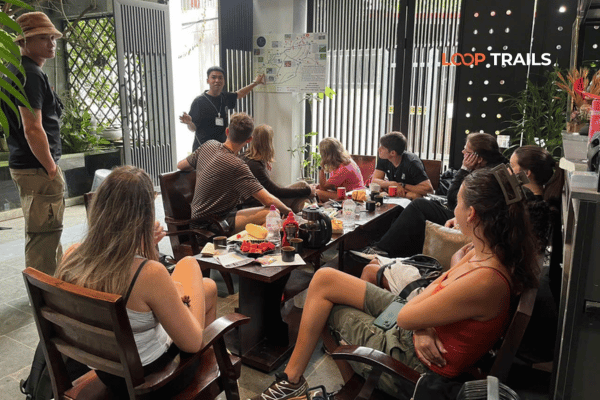
Learn more: Ha Giang Loop Tours
Can you ride the Ha Giang Loop as a vegetarian or vegan? Yes. Will it happen on its own if you just turn up and point at menus in remote villages? Not really.
Here is the honest version, because that is what actually helps you. Planning a Ha Giang Loop vegetarian or vegan trip takes a little forethought, mostly around communication, but it is very doable, and plenty of travelers eat brilliantly up here without touching meat. The food landscape in these mountains is built around pork, smoked meat, and offal, so vegetables and tofu sit on the edge of the table rather than in the middle of it. The good news: rice, tofu, greens, peanuts, and fresh produce are everywhere, and one simple habit sorts out most of the problem before you even arrive.
This guide walks you through what the food is really like, exactly what to order, what to avoid, the Vietnamese phrases that work, and how to make the whole thing effortless.
Learn more: Ha Giang Loop 2 Days 1 Night
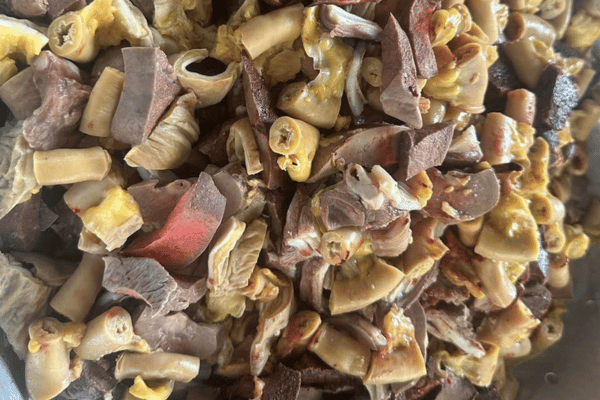
Mountain food up here is meat heavy. Dishes are smoked, stewed, grilled, and dried, and vegetables are supporting players. That is the culture, and it is worth understanding rather than fighting.
The trap is the hidden stuff. A plate of greens that looks completely vegetarian is often stir fried in lard or finished with a splash of fish sauce, and nobody flags it because to a local cook that is just how food tastes. Fish sauce (nuoc mam) is the base note of northern cooking. Lard shows up in the wok without comment. So “no obvious meat on the plate” does not always mean vegetarian, and it definitely does not always mean vegan.
Here is the split you should plan around:
The single biggest thing that makes all of this easy is communication in advance. Tell whoever is cooking, ideally through your guide or tour operator, when you book, not on the morning you show up hungry. That one habit is worth more than any list of dishes.
Learn more: Ha Giang Loop 3 Days 2 Nights
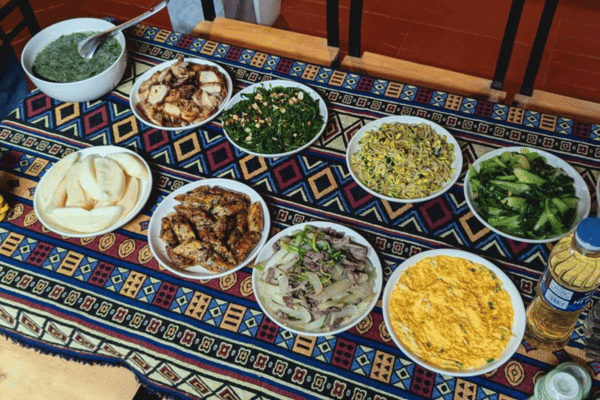
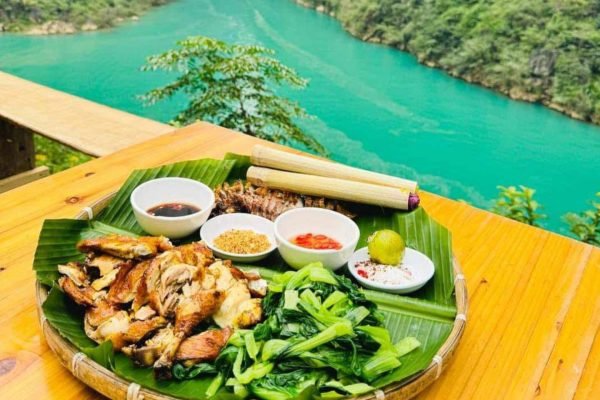
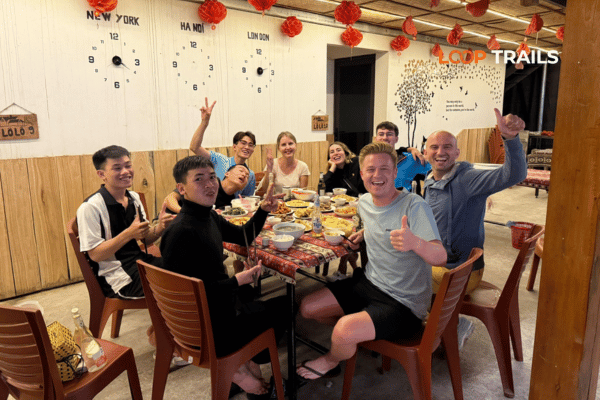
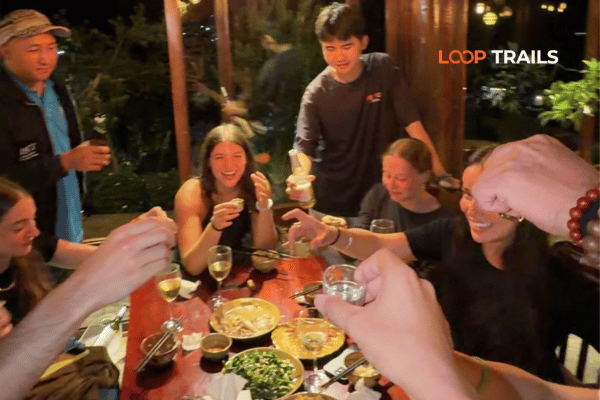
Most nights on the Loop you eat at a homestay, family style. A stack of shared dishes lands in the middle of the table and everyone digs in with rice. On a good night that spread can be genuinely great for a vegetarian: tofu two ways, a mountain of greens, peanuts, corn, and rice.
These are the dishes that are naturally vegetarian or easy to get made without meat. Learn a few names and you will never go hungry:
Worth knowing: Vietnam has a strong Buddhist vegetarian tradition, so the word “chay” (meaning vegetarian) is understood widely, even if the concept of a full vegetarian lifestyle is less common in remote Hmong villages. That single word is your best friend.
Learn more: Ha Giang Loop 4 Days 3 Nights
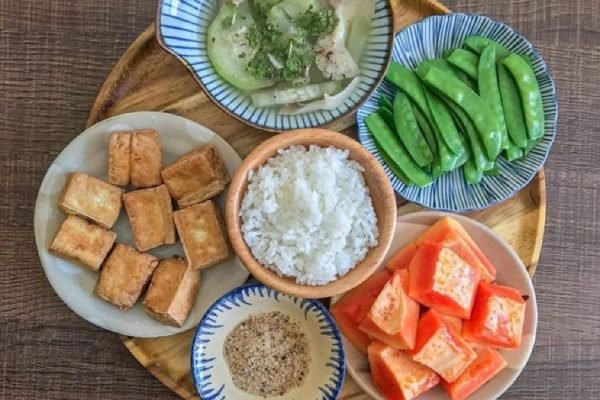
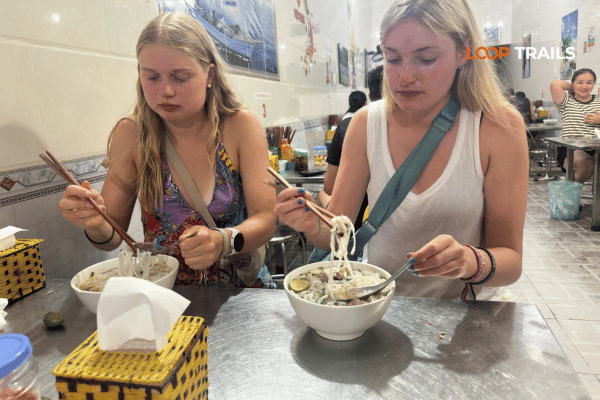
Between homestays, a lot of your lunches happen at simple roadside eateries, the point and choose rice places locals call com binh dan. These are a quiet win for vegetarians. Instead of decoding a menu, you look at the trays of cooked dishes on display and point at what you want: tofu, greens, braised vegetables, an omelette if you eat eggs, all over rice. You can literally see there is no meat in a dish before you commit.
The only thing to watch is the same old suspects, lard in the wok and fish sauce in the seasoning, so if you are strict, still say your phrases. But for flexible vegetarians these places are fast, cheap, and low stress, and they turn up in most towns along the route. They are also a nice way to eat what locals eat rather than a tourist version of it.
Learn more: Ha Giang Cao Bang 5 Days 4 Nights
Everything above still applies, plus a few more things to keep an eye on.
Reliable vegan orders once you know the ropes: fried or tomato tofu (specify no fish sauce and no egg), stir fried vegetables in oil, steamed and sticky rice, fresh spring rolls, fruit, and black coffee or tea. That is a solid rotation for a week.
Breakfast is the meal vegans find hardest on the Loop, so plan for it. Carry your own peanut butter and bread or fruit, ask for plain sticky rice, or track down a vegetable pho without egg. A little backup food in your bag removes almost all the breakfast stress.
One thing experienced vegan riders will tell you: persistence pays off, kindly. Travelers who calmly and clearly repeat that they are vegan, and name the ingredients they cannot have, often go from being told “there is nothing for you” to sitting down to a full spread of tofu, vegetables, rice, and even freshly made vegan spring rolls. Be friendly, be specific, and do not give up at the first shrug.
The easiest fix by far: book a tour and tell us your diet when you book. On a LoopTrails tour we brief your homestay hosts ahead of time and our guides handle the ordering and the translating at every meal, so you are not standing in a kitchen miming “no fish sauce” after a long day of riding. Take a look at our Ha Giang Loop tours, or send us a quick message on WhatsApp and tell us how you eat.
Learn more: Ha Giang Food guide
A short watch list so nothing catches you out:
None of this is meant to scare you off. It is just the stuff that hides in plain sight, and once you know it, you order around it without thinking.
Learn more: Cao Bang Loop 3 Days best kept secret
Six habits that turn a potential daily hassle into a non event:
Learn more: Dong Van Sunday Market
Two towns do the heavy lifting here, and both come before the remote stretches, so use them.
Hanoi is where most people start, and it has a large, easy vegan and vegetarian scene: dedicated restaurants, well stocked supermarkets, and health shops. If you are strict, this is the best place in the whole journey to buy road snacks and anything specialist you cannot live without.
Ha Giang City is your last proper stop before the Loop itself. It has Buddhist vegetarian restaurants (quan chay) for a good meal the night before you ride, plus shops and a market to top up on fruit, nuts, bread, and instant options. Once you climb into the mountains, choice narrows fast, so a ten minute shop here saves you on day two.
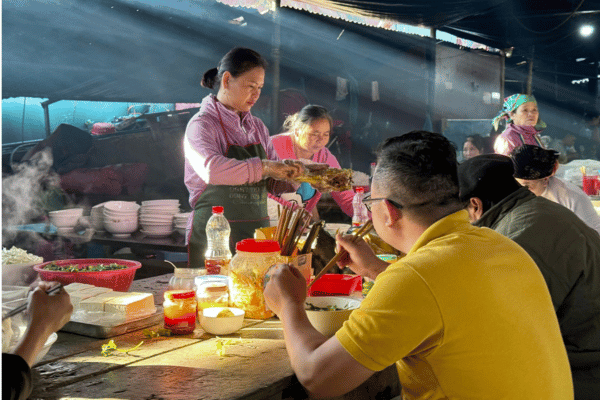
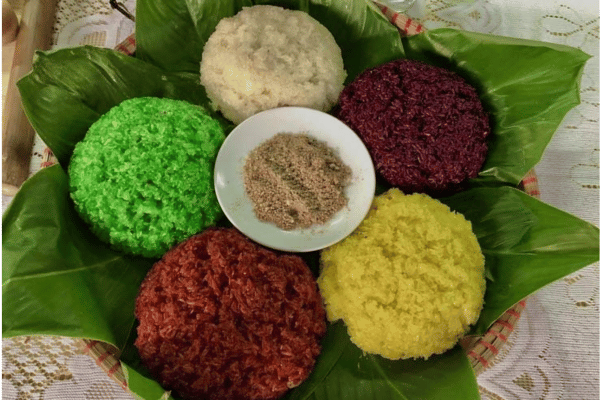
A quick note on market days: if your route lands on a Dong Van or Meo Vac market morning, treat it as both lunch and a highlight. The stalls are full of fresh tofu, greens, fruit, roasted corn, and sticky rice, almost all of it easy to eat vegetarian and much of it vegan. It is some of the best value, most authentic eating on the whole trip.
Learn more: Ha Giang Loop Mistake to Avoid
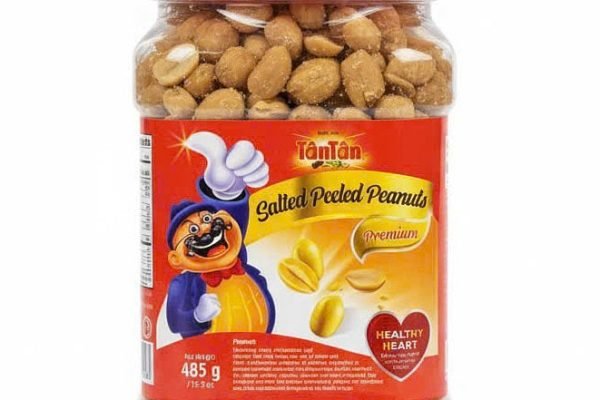
You will not need to live out of your bag, but a small stash removes the stress on breakfast and remote afternoons. A sensible kit:
Pack it in a dry bag with the rest of your gear and you are covered whatever the homestay kitchen can or cannot do.
Learn more: Vietnamese Phrases on Ha Giang Loop
Pronunciation here is only a rough guide, so the safest move is to show the Vietnamese text to whoever is cooking. Rules and dishes vary place to place, so treat these as door openers rather than magic words.
| What you mean | Vietnamese | Rough way to say it |
|---|---|---|
| I’m vegetarian | Toi an chay | toy an chai |
| No meat, no fish | Khong thit, khong ca | khong tit, khong ka |
| No eggs | Khong trung | khong chung |
| No fish sauce | Khong nuoc mam | khong nook mam |
| Only vegetables and tofu | Chi rau va dau phu | chee zao va dow foo |
| Vegetarian food or restaurant | Do chay, quan chay | doh chai, kwan chai |
| Black coffee, no milk | Ca phe den | ka fe den |
Add “khong” (meaning no) in front of any ingredient you want to avoid, and you have a flexible tool for the whole trip.
Learn more: Ha Giang Motorbike Rental
How you ride the Loop changes how easy your meals are, especially if you are a strict vegan. Here is the diet lens on each option.
Which option is best for you?
Not sure which fits your group? Message us on WhatsApp with how each of you eats and we will tell you the easiest setup. If you would rather ride your own bike, we can also sort you out with a motorbike rental in Ha Giang and the phrases to go with it.
Learn more: Ha Giang Homestay Guide
To make it concrete, here is a realistic day that keeps a vegetarian happy and, with the small tweaks noted, a vegan too.
Eat like this for five days and you leave the Loop well fed, not surviving on plain rice. Food up here is cheap, fresh, and better than most first timers expect once they know how to order.
Learn more: Corn wine “Happy Water” in Ha Giang
Fair question, because the honest warnings above can make it sound grim. For most veg and vegan riders the reality is the opposite once they get the hang of ordering. Tofu is fresh and everywhere, greens are picked locally, the fruit is excellent, and a well briefed homestay will often lay on a spread that the meat eaters at the table eye up. You are not resigned to plain rice for a week. You eat properly, cheaply, and with plenty of variety, as long as you communicate and carry a little backup. That is the whole trick, and it is a small one.
Learn more: Ha Giang Packing list
Eating veg does not change the usual travel food sense, it just shifts what you watch. Stick to food that is freshly cooked and served hot, which most homestay and roadside cooking is, go a little easier on raw herbs and salads if you have a sensitive stomach, and drink bottled or filtered water. Tofu, cooked greens, and rice are about as gentle as travel food gets. If you have a serious allergy rather than a dietary choice, be extra clear with your operator well in advance and carry whatever medication you rely on, because kitchens and ingredients vary and you should not assume every ingredient will be flagged. When in doubt, ask, and check current details on the day.
That is the whole game: a bit of planning, a few phrases, some backup snacks, and, if you want it truly easy, a guide who handles the talking. Sort those and the Ha Giang Loop goes from a place vegans worry about to one they rave about.
Ready to ride it without the food stress? Browse our Ha Giang Loop tours, check the Ha Giang and Cao Bang combo if you want to go further, or just message us on WhatsApp and tell us how you eat. We will build the meals around you.
Learn more: Ha Giang Loop by Wrangler Rubicon Jeep
Yes. Rice with tofu and stir fried vegetables is widely available, and homestay spreads usually include several meat free dishes. It takes a little effort and the occasional compromise, but it is very doable, especially if you tell your operator in advance.
Yes, though it is harder than vegetarian. Dairy is barely used in mountain cooking, so the main challenges are eggs, fish sauce, and lard rather than milk or cheese. With advance notice and a few phrases, vegans eat well up here.
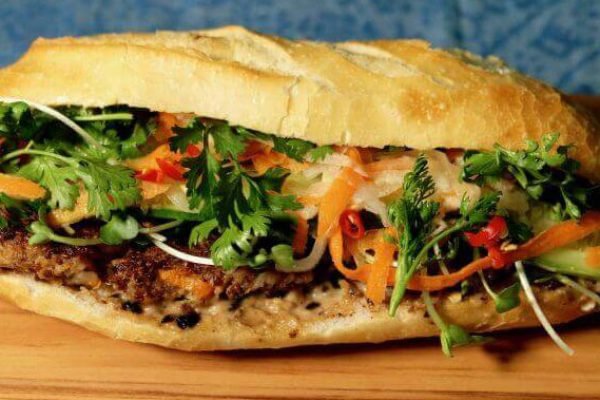
Breakfast. The default is eggs with rice or an egg banh mi, so vegans often struggle first thing. The fix is easy: carry peanut butter and bread or fruit, ask for plain sticky rice, or find a vegetable pho without egg.
Most can, if they know ahead of time. The key is giving notice when you book, not on the morning of. On a guided tour your operator briefs each host in advance, which is the smoothest way to be looked after.
Ha Giang City has Buddhist vegetarian restaurants (quan chay) and is the best place to stock up before you set off. Once you are up on the Loop, you are mostly eating at homestays and roadside spots rather than dedicated vegetarian places.
Often, yes. Many dishes that look vegetarian are stir fried in lard or seasoned with fish sauce without anyone mentioning it. If you are strict, ask how a dish was cooked and specify no fish sauce and oil instead of lard.
Start with “Toi an chay” (I’m vegetarian) and “Khong thit, khong ca” (no meat, no fish). Vegans should add “khong trung” (no eggs) and “khong nuoc mam” (no fish sauce). Saving the text to show your host helps a lot.
A little backup goes a long way, especially for vegans and especially for breakfast. Nuts, peanut butter, fruit, and snacks you have checked will cover the gaps on remote stretches. Stock up in Hanoi or Ha Giang City.
Yes, if you are clear and a bit persistent. Plenty of travelers go from being told there is nothing for them to a full table of tofu, vegetables, rice, and fresh spring rolls simply by explaining their needs politely and specifically.
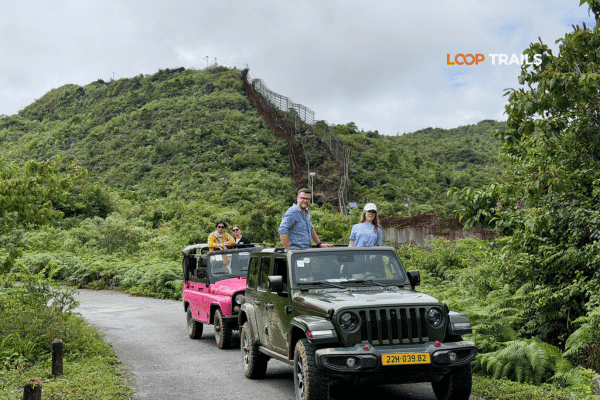
A guided tour, easy rider or jeep, is much easier because your guide orders and translates and briefs the homestays. Self drive is fine for flexible vegetarians but harder for strict vegans in remote areas with no English.
Yes. Order “ca phe den” for black coffee, since the milky version uses condensed milk. Vietnamese black coffee is strong and excellent, so most people do not miss the milk.
Many dishes are rice based and naturally gluten free, though soy sauce and some sauces contain gluten. For any allergy, tell your operator in advance and be specific. Ingredients and menus vary, so check current details with your host on the day.
Contact information for Loop Trails
Website: Loop Trails Official Website
Email: looptrailshostel@gmail.com
Hotline & WhatSapp:
+84862379288
+84938988593
Social Media:
Facebook: Loop Trails Tours Ha Giang
Instagram: Loop Trails Tours Ha Giang
TikTok: Loop Trails
Office Address: 54A Tran Phu, Ha Giang 2, Tuyen Quang
Address: 54A Tran Phu, Ha Giang 2, Tuyen Quang
Facebook X Reddit Table of Contents Open any map of northern Vietnam and Ba Be Lake looks like it belongs on your
Facebook X Reddit Table of Contents Four days on a motorbike across a limestone plateau takes more out of you than the
Facebook X Reddit Table of Contents Two of the best landscapes in northern Vietnam sit about a province apart, and most people