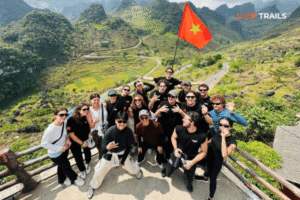


Thúy Kiều (Grace) is a travel blogger and content contributor for Loop Trails Tours Ha Giang. She holds a bachelor’s degree in Sustainable Tourism from Vietnam National University, Hanoi, and has a strong passion for exploring and promoting responsible travel experiences in Vietnam’s northern highlands.
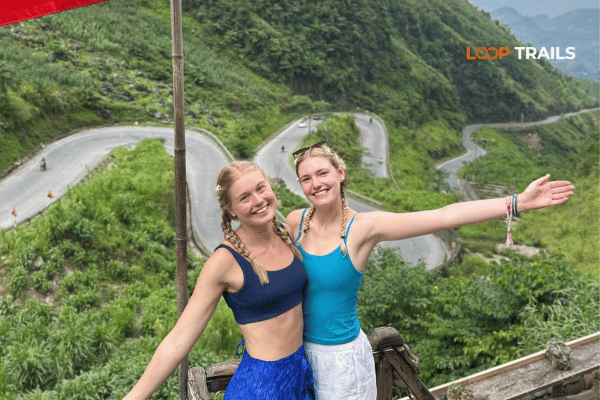
Learn more: Ha Giang Loop Tours
Here is the honest truth about language on the Ha Giang Loop: you can ride the entire thing without speaking a single word of Vietnamese, and thousands of travelers do exactly that every month. But the moment you learn even five phrases, something shifts. The grandmother running the corn wine stall laughs instead of just nodding. The mechanic in Yen Minh stops treating you like a walking wallet and starts treating you like a guest. Your homestay host brings out the good rice wine. A little language buys you a different trip, and it costs you about twenty minutes of practice on the bus up from Hanoi.
This guide gives you the Vietnamese phrases that actually come up on the Loop, sorted by the real moments you will use them: ordering thang co at a market, asking where the toilet is at a homestay above Dong Van, finding fuel before a long stretch, or asking a Hmong elder if you may take her photo. No filler, no phrases you will never say. Just the words that make the road warmer and a few notes on how to say them without butchering the tones too badly.
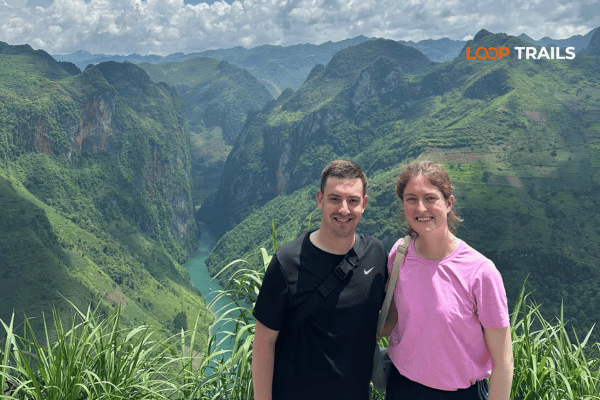
Learn more: Ha Giang Loop 2 Days 1 Night
Short answer: no, but yes.
Outside the tour bubble, English is patchy. In Ha Giang City and in places used to travelers, plenty of younger people and most tourism staff speak some English, and your guide will speak it fluently. But once you are in a tiny roadside eatery in Meo Vac, or buying water from a stall on a back road near Du Gia, English mostly runs out. The person in front of you may not even speak Vietnamese as a first language. Ha Giang is home to Hmong, Tay, Dao, Nung, Lo Lo and other groups, and in remote spots their own language comes first, with Vietnamese as the shared bridge between everyone.
So Vietnamese is the practical middle ground. It will not unlock every conversation, but it unlocks far more than English does, and it signals that you came to visit rather than to consume. That goes a long way in the highlands.
If you are riding with us on a guided Ha Giang Loop tour, your guide handles the heavy lifting: bargaining, directions, ordering food, explaining your vegetarian request to a confused cook. Learning a few phrases on top of that is pure bonus, the kind of thing that turns a polite dinner into a long one. If you are riding solo and self driving the Loop, these phrases stop being a nice extra and start being genuinely useful, sometimes important.
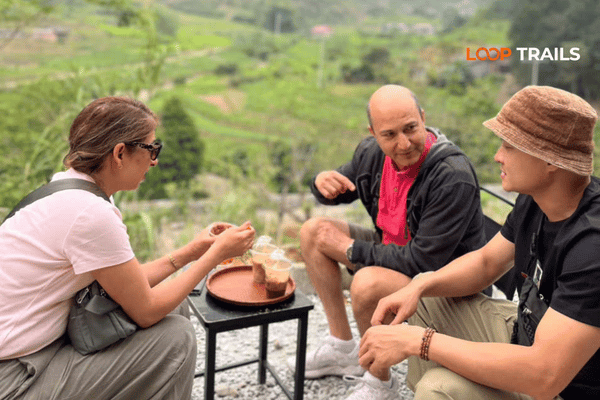
Learn more: Ha Giang Loop 3 Days 2 Nights
Before the phrases, you need to know the one thing that makes Vietnamese tricky and the one thing that makes it forgiving.
The tricky thing is tones. Vietnamese is a tonal language, which means the same string of letters can mean six completely different things depending on the pitch you say it with. Northern Vietnamese, which is what you will hear across Ha Giang, uses six tones. The classic teaching example uses the syllable “ma”:
| Written | Tone | Roughly means |
|---|---|---|
| ma | flat, steady | ghost |
| mà | low, falling | but |
| má | rising, like a question | cheek |
| mả | dipping then rising | tomb |
| mã | broken, creaky | horse / code |
| mạ | low and heavy, cut short | rice seedling |
You do not need to master this. You just need to know it exists, so that when a local repeats your word back to you with a slightly different melody, you understand they are correcting your pitch, not just being slow. For a deeper look at the sounds, this overview of Vietnamese phonology is a solid rabbit hole for the bus ride.
A few sounds also trip up English speakers, especially in the northern dialect you will hear here:
The forgiving thing: nobody expects you to get it right. The respellings below get you close, not perfect. Locals on the Loop hear mangled Vietnamese from travelers every day and they are remarkably kind about it. Worst case, you smile, point at the phrase on your phone, and everyone moves on happy. Effort counts far more than accuracy.
Learn more: Ha Giang Loop 4 Days 3 Nights
If you learn nothing else, learn these. “Thank you” and “hello” alone will change how people treat you.
| Vietnamese | Say it like | Meaning |
|---|---|---|
| Xin chào | sin chow | Hello |
| Cảm ơn | kahm uhn | Thank you |
| Cảm ơn nhiều | kahm uhn nyew | Thank you very much |
| Không có gì | khom kaw zee | You’re welcome / no problem |
| Xin lỗi | sin loy | Sorry / excuse me |
| Vâng | vung | Yes |
| Không | khom | No |
| Tạm biệt | tam byet | Goodbye |
| Tôi tên là… | toy ten la | My name is… |
| Rất vui được gặp bạn | zut vui duok gap ban | Nice to meet you |
I always tell guests to over use “cảm ơn.” Say it when someone pours your tea, hands you change, points you to the toilet, anything. It is the single highest value word in your vocabulary up here.
Vietnamese does not have one simple word for “you.” The right word depends on who you are talking to, mostly their age relative to yours. This sounds intimidating but you only need a handful:
When in doubt, bạn (ban) means “friend” and works as a safe, warm catch all for people roughly your own age. Adding the right word makes a phrase friendlier: “Cảm ơn chị” (thank you, to an older woman) lands warmer than a bare “cảm ơn.” Get it wrong and nobody will be offended, a smile patches over everything.
Learn more: Ha Giang Cao Bang 5 Days 4 Nights
After greetings, money is where you will reach for Vietnamese most. Markets, water stops, souvenirs, fuel, tips. Learn your numbers and you can handle almost any small transaction.
| Number | Vietnamese | Say it like |
|---|---|---|
| 0 | không | khom |
| 1 | một | moht |
| 2 | hai | hai |
| 3 | ba | bah |
| 4 | bốn | bohn |
| 5 | năm | nam |
| 6 | sáu | sow |
| 7 | bảy | bye |
| 8 | tám | tahm |
| 9 | chín | cheen |
| 10 | mười | muh ee |
For bigger numbers, which you will need because Vietnamese dong comes in big denominations:
| Amount | Vietnamese | Say it like |
|---|---|---|
| 100 | một trăm | moht cham |
| 1,000 | một nghìn | moht ngin |
| 10,000 | mười nghìn | muh ee ngin |
| 100,000 | một trăm nghìn | moht cham ngin |
| 1,000,000 | một triệu | moht chew |
Note that “nghìn” (thousand) is the northern word. In the south you will hear “ngàn” instead, but up here stick with “nghìn.” Prices on the Loop are almost always quoted in thousands, so when someone says “hai mươi” (twenty) for a bottle of water, they mean twenty thousand dong, not twenty.
The phrases that go with the numbers:
| Vietnamese | Say it like | Meaning |
|---|---|---|
| Bao nhiêu tiền? | bow nyew tien | How much (money)? |
| Cái này bao nhiêu? | kai nai bow nyew | How much is this? |
| Đắt quá | dat kwa | Too expensive |
| Giảm giá được không? | zam za duok khom | Can you lower the price? |
| Tôi lấy cái này | toy lay kai nai | I’ll take this one |
Learn more: Ha Giang Cao Bang Ba Be Lake 6 Days 5 Nights
A word on bargaining, because travelers ask about it constantly. In markets and with souvenir sellers, a little gentle back and forth is normal and expected, and “đắt quá” said with a smile is a fine opening move. But food at a small eatery, fuel, and most everyday goods usually have a set price, and haggling over a bowl of pho that costs a couple of dollars reads as mean, not savvy. Stay friendly, keep it light, and remember that the few thousand dong you might save means far more to the seller than to you. The goal is a fair price and a good interaction, not a win.
Riding with us? On any guided Loop tour or easy rider trip, your guide handles prices, orders, and directions all day, so you can spend your energy on the views instead of doing mental currency math at every stall. Prefer to handle it all yourself? Grab a bike from our motorbike rental in Ha Giang and these phrases will earn their keep.
Eating on the Loop is half the experience, and a few phrases make it smoother, especially if you have dietary needs.
| Vietnamese | Say it like | Meaning |
|---|---|---|
| Tôi đói | toy doy | I’m hungry |
| Cho tôi… | chaw toy | I’d like… / Give me… |
| Tôi ăn chay | toy an chai | I’m vegetarian |
| Không cay | khom kai | Not spicy |
| Ngon quá! | ngon kwa | Delicious! |
| No rồi, cảm ơn | naw zoy kahm uhn | I’m full, thanks |
| Nước | nuok | Water |
| Bia | bia | Beer |
| Cà phê sữa đá | ka fe sua da | Iced coffee with milk |
| Trà đá | cha da | Iced tea |
| Tính tiền | ting tien | The bill, please |
“Tôi ăn chay” (I’m vegetarian) is worth memorizing if it applies to you, though be aware that “vegetarian” in rural Vietnam can be loosely interpreted, so a dish may still arrive with a little meat broth. If you are strict, your guide can explain in detail, which is one quiet advantage of a guided trip.
Learn more: Ha Giang Food guide
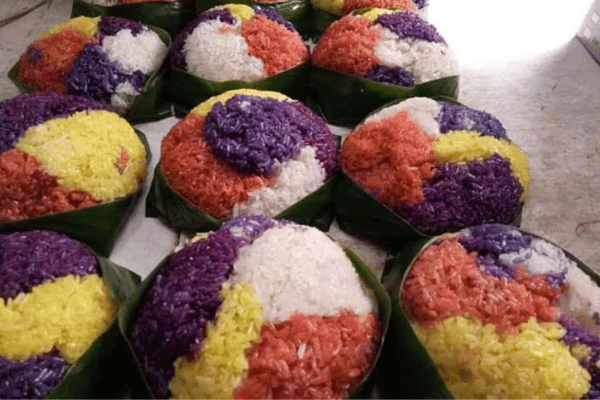
Half the fun is ordering the local stuff. A few names to recognize on the Loop:
For the full eating tour, the kind of thing worth reading before you go, see our Ha Giang food guide. Learn the names, order boldly, and “ngon quá” said with a thumbs up will make any cook’s day.
Homestays are where you will use Vietnamese in the most everyday way, and where a few phrases make the evening flow better. Mountain homestays can be basic, cold at night, and shared, so these come up:
| Vietnamese | Say it like | Meaning |
|---|---|---|
| Tôi đặt phòng rồi | toy dat fong zoy | I have a booking |
| Nhà vệ sinh ở đâu? | nya ve sin uh dow | Where is the toilet? |
| Có nước nóng không? | kaw nuok nong khom | Is there hot water? |
| Mật khẩu wifi là gì? | mat khow wifi la zee | What’s the wifi password? |
| Lạnh quá | lang kwa | It’s very cold |
| Mấy giờ ăn sáng? | may zuh an sang | What time is breakfast? |
| Cảm ơn đã cho tôi ở đây | kahm uhn da chaw toy uh day | Thank you for having me |
That last one is my favorite. “Cảm ơn đã cho tôi ở đây,” roughly “thanks for hosting me,” is the kind of thing hosts rarely hear from travelers, and it tends to land. The nights up here get genuinely cold from roughly autumn into early spring, so “có nước nóng không?” (is there hot water?) is a fair question to ask before you commit to a shower. If you want the full picture of when to expect cold, rain, or mud, our guide on the best time to visit Ha Giang breaks it down month by month.
This is the section that matters most if you are riding your own bike. Phones lose signal, maps get vague, and sometimes the only way forward is to ask the person at the next house.
Directions:
| Vietnamese | Say it like | Meaning |
|---|---|---|
| …ở đâu? | uh dow | Where is…? |
| Đi thẳng | dee tang | Go straight |
| Rẽ trái | ze chai | Turn left |
| Rẽ phải | ze fai | Turn right |
| Bao xa? | bow sah | How far? |
| Gần không? | gun khom | Is it near? |
| Tôi bị lạc | toy bee lac | I’m lost |
Fuel, because the stretches between stations can be long and you do not want to learn this the hard way:
| Vietnamese | Say it like | Meaning |
|---|---|---|
| Cây xăng ở đâu? | kay sang uh dow | Where’s the gas station? |
| Đổ đầy bình | doh day bing | Fill up the tank |
| Hết xăng rồi | het sang zoy | Out of gas |
Plan your fuel stops rather than guessing. We mapped the reliable spots in our guide to finding fuel on the Loop, worth a read before day one.
Learn more: Ha Giang Motorbike Rental
Flats and minor breakdowns happen on these roads. Knowing how to ask for help calmly is worth more than any tool kit:
| Vietnamese | Say it like | Meaning |
|---|---|---|
| Xe của tôi bị hỏng | se kua toy bee hong | My bike is broken |
| Xe bị thủng lốp | se bee tung lop | I have a flat tire |
| Sửa xe ở đâu? | sua se uh dow | Where can I get it fixed? |
| Giúp tôi với! | zup toy voy | Can you help me? |
Roadside repair shops, often just a family with an air compressor and a patch kit, are scattered along the main route, and locals will usually point you to the nearest one. We wrote up exactly what to do if your bike breaks down so you are not improvising at the side of a pass.
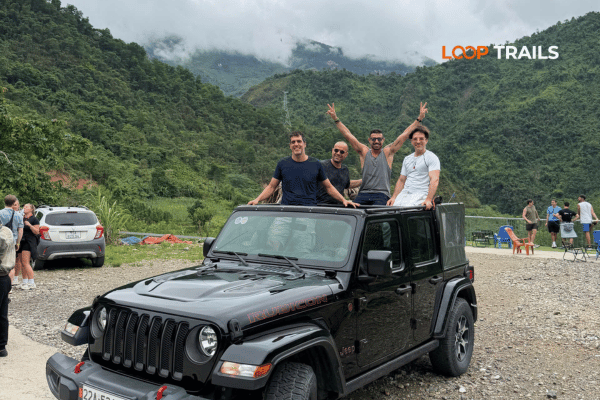
Here is the honest counterpoint, though. If the idea of patching a tire in the rain on a mountain road sounds like the opposite of a holiday, you do not have to do any of this. On an easy rider tour you ride on the back while an experienced local handles the machine, the road, and every breakdown. On a jeep tour you skip the riding entirely and watch the same passes roll by from a comfortable seat. Same stops, same views, none of the roadside Vietnamese required.
Learn more: Cao Bang Loop 3 Days best kept secret
The phrases you hope to never use, but should know anyway:
| Vietnamese | Say it like | Meaning |
|---|---|---|
| Cứu với! | kuu voy | Help! |
| Gọi bác sĩ | goy bak see | Call a doctor |
| Bệnh viện ở đâu? | beng vien uh dow | Where’s the hospital? |
| Nhà thuốc ở đâu? | nya thuok uh dow | Where’s the pharmacy? |
| Tôi bị ốm | toy bee ohm | I feel sick |
| Tôi cần thuốc | toy kun thuok | I need medicine |
| Tôi bị đau ở đây | toy bee dow uh day | It hurts here (point to it) |
Vietnam’s nationwide emergency numbers are 113 for police, 114 for fire and rescue, and 115 for an ambulance. Save them, but also save your guide’s number and your homestay’s, because mobile signal can drop out completely in remote parts of the Loop, and a local you already know is often faster than an emergency line. If you booked through an operator, keep their contact handy too. Rules and services can change, so it is always worth checking the latest before you travel.
Learn more: Ha Giang Loop Photography Guide
The Loop is one of the most photogenic places in Vietnam, and the people are part of why. A simple rule makes you a better guest: ask first.
| Vietnamese | Say it like | Meaning |
|---|---|---|
| Tôi chụp ảnh được không? | toy chup anh duok khom | May I take a photo? |
| Đẹp quá! | dep kwa | So beautiful! |
| Cảm ơn anh / chị | kahm uhn anh / chi | Thank you (to him / her) |
Asking before you photograph someone, especially elders and children, is the difference between a portrait and an intrusion. A smile, the phrase, and a quick show of the photo afterward usually turns the whole thing into a small moment of connection. “Đẹp quá” works on landscapes, babies, embroidery, and dinner alike, and it never gets old.
You will notice that Vietnamese is not everyone’s first language up here. Many Hmong, Tay, and Dao people, particularly older folks and those in remote villages, speak their own language at home and use Vietnamese as the shared tongue when they need it. I am not going to print a list of Hmong or Tay phrases here, because pronunciation varies between communities and the worst thing you can do is butcher a language you do not understand. The lovely move instead: ask a local, or your guide, to teach you how to say hello or thank you in their language, in the moment, by ear. People light up when a visitor wants to learn even one word, and learned that way it actually sticks.
Learn more: Ha Giang Loop Mistake to Avoid
A few things that go beyond vocabulary but make you a smoother traveler on the Loop:
Screenshot this before you go. These are the phrases that cover ninety percent of real Loop moments:
| Vietnamese | Say it like | Meaning |
|---|---|---|
| Xin chào | sin chow | Hello |
| Cảm ơn | kahm uhn | Thank you |
| Xin lỗi | sin loy | Sorry / excuse me |
| Vâng / Không | vung / khom | Yes / No |
| Bao nhiêu tiền? | bow nyew tien | How much? |
| Đắt quá | dat kwa | Too expensive |
| Cho tôi… | chaw toy | I’d like… |
| Tôi ăn chay | toy an chai | I’m vegetarian |
| Ngon quá! | ngon kwa | Delicious! |
| Tính tiền | ting tien | The bill, please |
| Nhà vệ sinh ở đâu? | nya ve sin uh dow | Where is the toilet? |
| Có nước nóng không? | kaw nuok nong khom | Is there hot water? |
| …ở đâu? | uh dow | Where is…? |
| Cây xăng ở đâu? | kay sang uh dow | Where’s the gas station? |
| Tôi bị lạc | toy bee lac | I’m lost |
| Giúp tôi với! | zup toy voy | Help me! |
| Tôi chụp ảnh được không? | toy chup anh duok khom | May I take a photo? |
| Đẹp quá! | dep kwa | So beautiful! |
Learn more: Ha Giang Loop by Army Jeep Tours
How much of this Vietnamese you actually need depends on how you ride. Here is the quick way to choose:
Want to go further than the standard loop? You can pair it with Cao Bang’s waterfalls and caves on a Ha Giang and Cao Bang combo tour, or focus entirely on the east with a Cao Bang Loop tour.
Whichever way you ride, learning a handful of these phrases will make the trip warmer. And if you would rather have a local handle the language, the logistics, and the route while you enjoy the ride, that is exactly what we do. Message us on WhatsApp with your dates and we will help you find the right way to ride the Loop.
Learn more: Tu San Canyon & Nho Que River Boat Trip
No. Plenty of people ride the whole Loop with zero Vietnamese, and on a guided tour your guide handles everything. But learning a few phrases makes interactions friendlier and is genuinely useful if you are self driving.
It is limited outside tourism. Guides and younger people in town often speak some English, but in remote eateries and villages you will mostly meet Vietnamese, and sometimes a local ethnic language first.
Groups like the Hmong, Tay, and Dao speak their own languages, with Vietnamese as the shared tongue between communities. Vietnamese is your practical bridge, and asking a local to teach you a word of their language is always welcome.
The tricky part is the tones, since pitch changes meaning. The respellings in this guide get you close enough to be understood, and locals on the Loop are very forgiving of travelers’ attempts.
“Cảm ơn” (thank you) and “xin chào” (hello). After that, learn your numbers, since money comes up at every stall, market, and fuel stop.
“Tôi ăn chay.” Pair it with “không cay” (not spicy) if needed. Be aware that interpretations of vegetarian can be loose in rural areas, so a guide helps if you are strict.
Gently, at markets and with souvenir sellers, yes. Food, fuel, and everyday goods usually have set prices, so haggling there comes across as rude. Keep it friendly and remember the small sums mean more to the seller.
Only if you download the Vietnamese language pack before you go. Signal drops out across much of the route, so an offline pack is worth setting up in advance. Pointing at written phrases also works well.
113 for police, 114 for fire and rescue, and 115 for an ambulance. Save your guide’s and homestay’s numbers too, since mobile coverage can be weak in remote areas. Services can change, so check the latest before you travel.
“Tôi chụp ảnh được không?” Always ask first, especially with elders and children, and show them the photo afterward. It turns a snapshot into a small connection.
Not at all. The effort is what people appreciate. Worst case they smile, repeat it correctly, and you point at the phrase to be sure.
Contact information for Loop Trails
Website: Loop Trails Official Website
Email: looptrailshostel@gmail.com
Hotline & WhatSapp:
+84862379288
+84938988593
Social Media:
Facebook: Loop Trails Tours Ha Giang
Instagram: Loop Trails Tours Ha Giang
TikTok: Loop Trails
Office Address: 48 Nguyen Du, Ha Giang 1, Tuyen Quang
Address: 48 Nguyen Du, Ha Giang 1, Tuyen Quang
Facebook X Reddit Table of Contents Learn more: Ha Giang Loop Tours Most people drive past the Quan Ba area twice on

Facebook X Reddit Table of Contents Learn more: Ha Giang Loop Tours The Ha Giang Loop has a reputation problem with older