
Ha Giang in November: Buckwheat, Cool Air, Fewer Crowds
Facebook X Reddit Table of Contents Learn more: Ha Giang Loop Tours If you could pick one month to see the Ha

Thúy Kiều (Grace) is a travel blogger and content contributor for Loop Trails Tours Ha Giang. She holds a bachelor’s degree in Sustainable Tourism from Vietnam National University, Hanoi, and has a strong passion for exploring and promoting responsible travel experiences in Vietnam’s northern highlands.

Learn more: Ha Giang Loop Tours
If you are a Southeast Asian rider wondering whether the Ha Giang Loop is worth the trip from Bangkok, Manila, or Jakarta, the answer is yes: and by a wide margin. The Ha Giang Loop for Southeast Asian riders has quietly become one of the most exciting adventure routes in the region, drawing Thai backpackers, Filipino travel groups, and Indonesian riders in growing numbers every season. The karst plateau roads, the ethnic minority villages, the mountain passes that look like they belong on a movie poster: none of it is on the typical beach resort circuit, and that is exactly why riders keep coming back.
This guide covers everything specific to travelers coming from Thailand, the Philippines, and Indonesia: how to get to Ha Giang, what visa and license documents you actually need (this part matters a lot), which tour format fits your riding style, and what the loop looks like day by day. No fluff. Just the practical details that save you from showing up unprepared.

Learn more: Ha Giang Loop 2 Days 1 Night
There are hundreds of motorbike routes in Southeast Asia. So what makes Ha Giang worth the extra leg of travel?
First, the scenery is genuinely unlike anything else in the region. The Dong Van Karst Plateau Geopark, a UNESCO recognized geological formation, is a landscape of jagged limestone peaks, deep river canyons, and terraced fields carved into near vertical slopes. The Nho Que River running through Tu San Canyon, one of the deepest canyons in Asia, is a shade of turquoise you will not forget. Ma Pi Leng Pass, which connects Dong Van and Meo Vac across a 20-kilometer ridge above the canyon, is consistently listed among Vietnam’s most dramatic roads.
Second, Ha Giang sits close to home. Bangkok, Manila, and Jakarta all have direct or one stop flights to Hanoi, and Hanoi is the gateway city for the loop. Total travel time from Bangkok to Ha Giang, including the overnight bus from Hanoi, can be as short as 12 to 15 hours door to door.
Third, the riding itself suits experienced Southeast Asian riders well. The roads on the loop are mostly paved: not perfectly smooth, but not technical dirt tracks either. For Thai, Filipino, and Indonesian riders who grew up on motorbikes in busy city traffic, the loop’s mountain roads feel challenging in the right way: big elevation changes, sweeping bends, dramatic views, and passes that reward effort without punishing inexperience too harshly. You are not fighting Jakarta traffic. You are on open mountain roads with almost no other vehicles.
And the culture adds a layer that beach destinations cannot offer. The H’Mong, Lo Lo, Dao, and Giay minority groups who live in the villages along the loop have traditions, architecture, and daily rhythms entirely different from lowland Vietnamese or mainstream tourist Vietnam. Stopping in a village like Lo Lo Chai or Lao Xa feels like a genuine discovery, not a staged attraction.
Learn more: Ha Giang Loop 3 Days 2 Nights
The standard route for all three nationalities follows the same path: fly to Hanoi, then travel overland to Ha Giang city.
From Bangkok (Suvarnabhumi or Don Mueang), direct flights to Hanoi run frequently with VietJet, AirAsia, Thai AirAsia, and several carriers. Flight time is around two hours.
From Manila (Ninoy Aquino), direct and one stop options to Hanoi are available with Cebu Pacific, Philippine Airlines, and Vietnam Airlines. Flight time ranges from roughly two hours direct to four or five hours with a connection.
From Jakarta (Soekarno Hatta), flights to Hanoi typically involve a connection in Kuala Lumpur, Singapore, or Ho Chi Minh City, with total travel time around five to seven hours depending on the layover.
Ha Giang city is around 300 kilometers north of Hanoi. The standard options:
Overnight sleeper bus: The most popular choice for budget and mid range travelers. Several bus companies run nightly departures from Hanoi’s My Dinh Bus Station or from dedicated pickup points near the Old Quarter. The trip takes around five to six hours. Loop Trails can arrange pickup from your Hanoi hotel or hostel and drop you at Loop Trails Hostel in Ha Giang city the next morning.
Limousine bus: A step up in comfort, with wider seats and fewer passengers. Good for those who want more sleep.
Cabin sleeper bus: Individual curtained pods: the closest thing to a private bed on a bus. Popular with travelers who value privacy.
Private car: The most flexible and comfortable option, available on request through Loop Trails. Suits families, larger groups, or travelers arriving with heavy gear.
The bus cost and schedule varies by season and provider. Loop Trails can arrange the transfer for you as part of your tour booking, which simplifies the logistics considerably if you are arriving from abroad for the first time.

Learn more: Ha Giang Loop 4 Days 3 Nights
Vietnam has expanded its visa policy significantly in recent years, and many ASEAN nationals now benefit from visa free or simplified entry arrangements. However, the specific duration and conditions of these agreements change, so the most reliable source is always the official Vietnam Immigration Department website or your country’s Vietnamese embassy.
As a general guide for planning:
Thai citizens: Vietnam has a bilateral visa exemption agreement with Thailand. Confirm the current allowed stay duration before you travel, as it has been updated multiple times in recent years.
Filipino citizens: Vietnam extended visa free access to Philippine passport holders in 2023. Check the current allowed stay at the Vietnamese embassy website for the Philippines or the official Vietnam e visa portal.
Indonesian citizens: Vietnam and Indonesia also have a visa exemption arrangement. Confirm the current terms directly with the Vietnamese embassy in Jakarta or through the official immigration portal.
If your stay exceeds the visa free window, or if you want a longer trip, the Vietnam e visa is the standard solution. Available online at the official Vietnam e visa website, it covers 90 days and allows a single entry. Apply at least a week before travel to avoid any processing delays.
One additional note specific to the Ha Giang Loop: foreign visitors entering the border zone near Lung Cu Flag Tower, the northernmost point of Vietnam, require a border area permit. The fee for this permit is 260,000 VND per person, and Loop Trails arranges it on your behalf as part of the tour. You do not need to organize this separately.
Learn more: Motorbike License IDP Guide 2026
This section is critical if you want to ride a motorbike yourself on the loop. Read it carefully before you assume your home license is enough
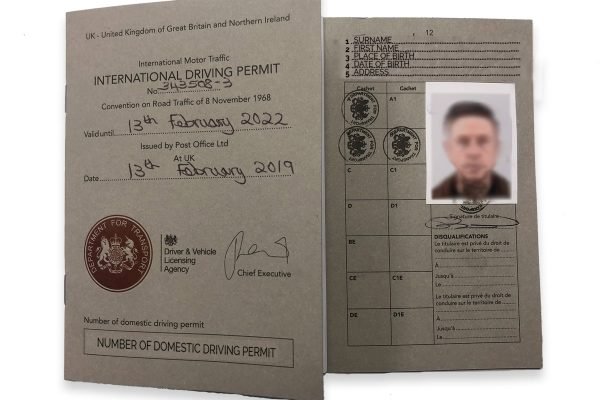
Vietnam is a signatory to the 1968 United Nations Convention on Road Traffic, which means the country accepts International Driving Permits issued under that convention. If your permit was issued under the 1949 convention, an older version still used in some countries: it is not legally valid for riding in Vietnam.
This distinction matters because not all countries issue the 1968 version by default. When you apply for your IDP at home, specifically request the IDP 1968 (sometimes labeled “Convention of 1968”). The 1949 version looks similar on the cover but is marked with its year internally.
For Thai riders: IDPs in Thailand are issued by the Department of Land Transport (Krom Khon Song). Visit a local DLT office and confirm you are applying for the 1968 convention IDP. You need your Thai driver’s license, ID card, and passport photos.
For Filipino riders: The Land Transportation Office (LTO) issues IDPs in the Philippines. Bring your valid Philippine driver’s license. Confirm with the LTO branch that the permit issued is for the 1968 convention.
For Indonesian riders: IDPs in Indonesia are issued through Polri (the Indonesian National Police). The process and requirements vary by location, so check with your nearest Polri office. Again, confirm the convention year.
To legally ride a rented motorbike yourself on the Ha Giang Loop, you need all three of the following:
Your valid home country motorbike license (not just a car license), your passport, and an IDP 1968.
If you are missing any one of these, Loop Trails cannot put you on a self drive tour. This is not arbitrary: it is to protect you. Riding without the correct documents in Vietnam can result in fines ranging from 2,000,000 VND to 6,000,000 VND, and in a police check on a mountain road, being fined is the best case scenario. Uninsured riding on a mountain pass is a situation you do not want to be in.
Not having an IDP 1968 does not mean missing the loop. Far from it.
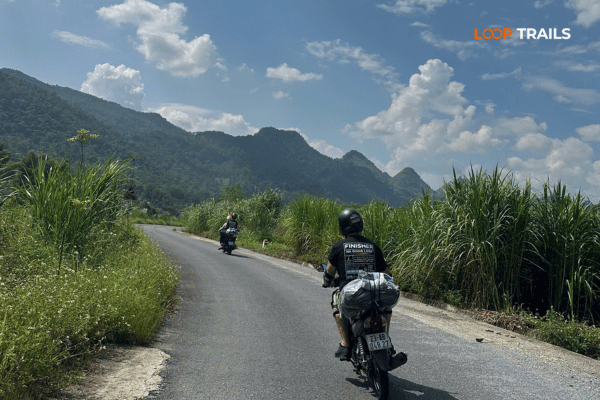
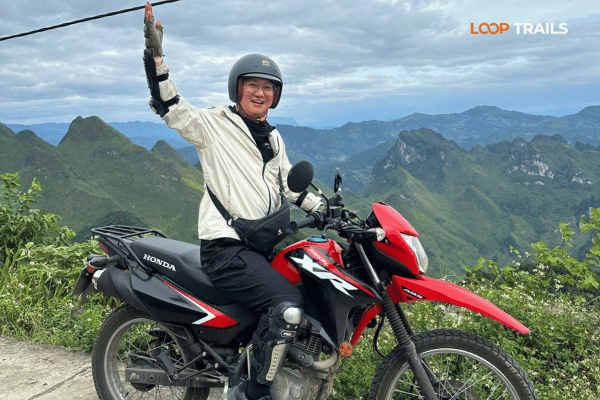
Easy Rider tour: You ride as a passenger behind a professional local guide who knows every corner of the route. The guide handles the riding, the navigation, the local language, and the village introductions. You sit back, take photos, and enjoy the scenery. Many experienced riders actually choose this format because the guide adds so much context.
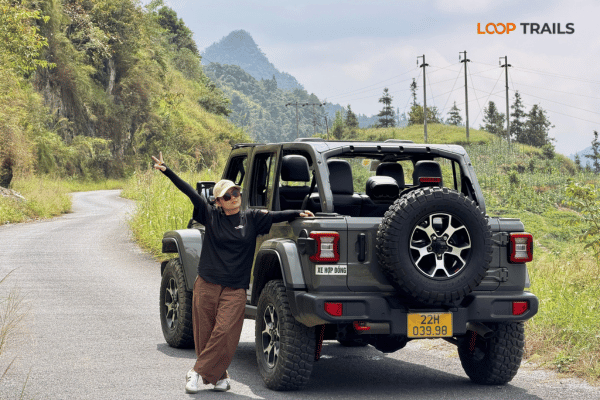
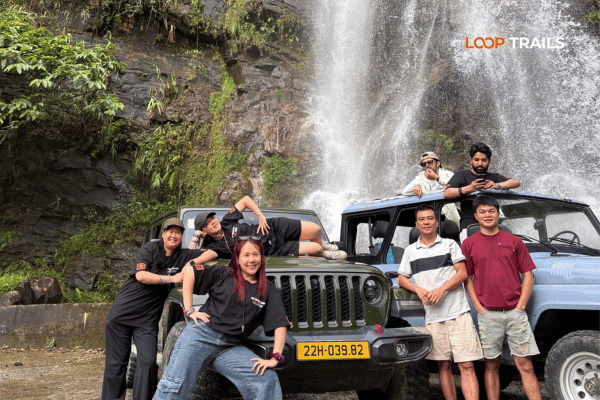
Jeep Wrangler Rubicon tour: A fully guided, air conditioned tour in a purpose built off road vehicle. Perfect for couples, families, groups, or anyone who wants comfort without sacrificing access to viewpoints. The jeep can reach all the main stops on the loop including Ma Pi Leng, Lung Cu, and the village homestays.
50cc scooter option: For riders who want to try riding without an IDP, a 50cc engine category falls under different regulations. However, rules here can change, so always confirm the current requirement with Loop Trails before assuming this applies to your situation.
Learn more: Ha Giang Loop Easy Rider
Here is a practical breakdown for Southeast Asian travelers specifically.
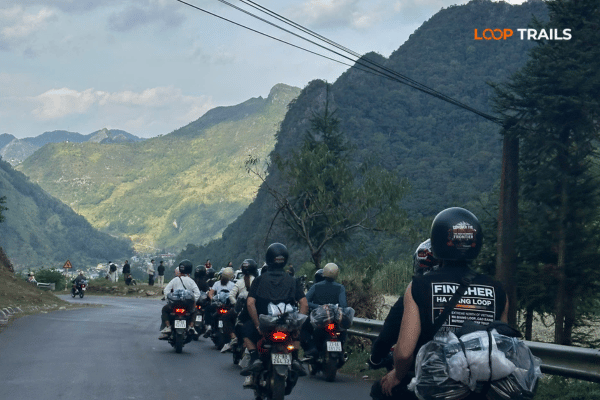
The Easy Rider format is what most visitors to Ha Giang choose, and for good reason. Your guide is a local rider who has covered this route hundreds of times. They know which viewpoints are worth stopping at, when to leave early to beat the fog at Ma Pi Leng, which village in Lo Lo Chai serves the best local rice wine, and how to introduce you to a family homestay host so the evening feels genuine rather than scripted.
For Thai, Filipino, and Indonesian travelers on a first visit, the Easy Rider format also removes the stress of navigation on mountain roads with Chinese script signage and limited data coverage. You focus entirely on the experience.
Easy Rider pricing at Loop Trails:
Prices include accommodation in local homestays and guesthouses, meals (breakfast, lunch, dinner as listed per day), and all guide fees.
Learn more: Ha Giang Loop Self-Drive
If you have your IDP 1968 sorted and you are a confident mountain rider, the self drive option gives you freedom. You set your own pace, stop when you want, and ride your own machine the whole way.
Loop Trails provides a fully briefed route plan, local contacts along the way, and support if anything goes wrong. You are independent but not unsupported.
Self drive pricing:
No self drive option for the 2 day 1 night tour: the loop is too tight for that format without a guide.
Learn more: Ha Giang Loop by Wrangler Rubicon Jeep
The Jeep Wrangler Rubicon tours are increasingly popular with Southeast Asian travel groups and family travellers. You get the full route, all the same stops, guide narrated cultural context, and air conditioned comfort between viewpoints. The jeep can park at every main viewpoint and you walk the last few hundred meters to the edge.
For Thai, Indonesian, or Filipino groups of three or four, the jeep tour becomes surprisingly cost efficient per person. Pricing scales with the number of passengers:
Ha Giang Loop 4 days 3 nights (Jeep Wrangler Rubicon):
Ha Giang to Cao Bang 5 days 4 nights (Jeep):
See the full jeep tour pricing page on the Loop Trails website for all durations and group sizes.
Learn more: Ha Giang Cao Bang 5 Days 4 Nights
The 4 day 3 night loop is the most popular format and covers the full circuit. Here is what to expect.
The day starts at Loop Trails Hostel in Ha Giang city with breakfast and a route briefing. The first section climbs through Bac Sum Pass and Heaven Gate, two panoramic viewpoints where the landscape opens up suddenly and you understand immediately why people come here. After lunch in Tam Son town, the group visits Lung Khuy Cave near Quan Ba, a limestone cavern with impressive formations, before arriving in Yen Minh for the first homestay night. Evenings on the loop typically involve a communal dinner, local games, and a glass of corn wine around the fire.
Day two covers some of the most culturally significant ground on the loop. Stops include Tham Ma Pass with views across the karst plateau, the H’Mong village of Lao Xa near the Chinese border, and Vuong Palace, the well preserved former residence of the H’Mong king built in the early 20th century. In the afternoon, the group continues to Lung Cu Flag Tower: the northernmost point of Vietnam: before heading back south to Dong Van for the second homestay night. The sunset party and dinner at the Dong Van homestay is a highlight for most travelers.
This is the day most people talk about for years afterward. The route crosses Ma Pi Leng Pass, one of Vietnam’s four great mountain passes, with the Nho Que River visible far below in Tu San Canyon. After stopping at the Ma Pi Leng Skywalk, a glass floored walkway cantilevered above the cliff, the group descends to take a boat tour on the Nho Que River through the canyon. After lunch, the route continues through M Pass (named for the shape it traces on the map) and the Lung Ho viewpoint before arriving at Du Gia village for the third and final homestay night.
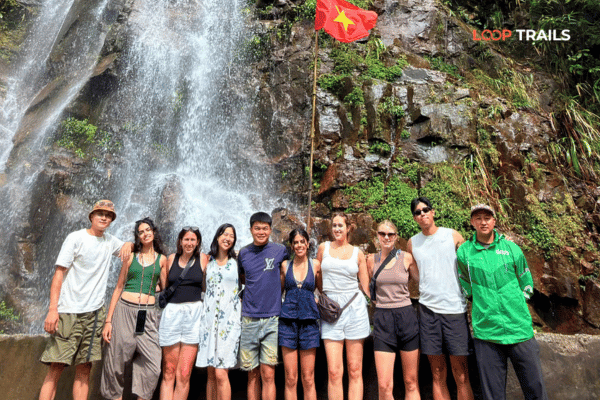
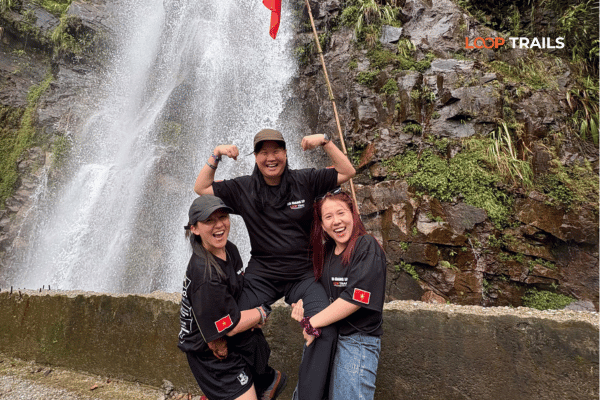
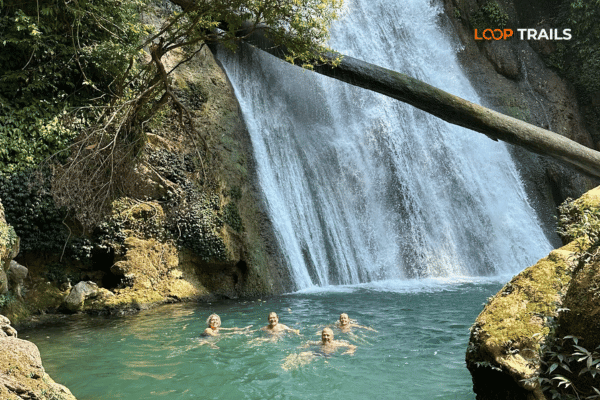
The final morning starts with a swim in Du Gia waterfall before the ride back toward Ha Giang. The route passes through Duong Thuong valley, an H’Mong farming valley tucked high in the mountains, before stopping for lunch in Thai An. In the afternoon, the group visits Lung Tam linen village, where local women practice traditional flax weaving techniques passed down for generations. The route back to Ha Giang follows a forest road along the Mien River. Arrival in Ha Giang by late afternoon allows time to catch the overnight bus to Hanoi or to book an extra night.

Learn more: Northern Viet Nam Itinerary 2026
For travelers from Thailand, the Philippines, or Indonesia, some parts of Ha Giang will feel instantly recognizable and others will feel entirely new.
If you have visited hill tribe regions in northern Thailand, the Chiang Rai highlands, or ethnic minority villages in Sulawesi or the Philippines Cordillera, the community scale of Ha Giang villages will feel somewhat familiar. Small stone and wood houses, families working fields by hand, children running to greet visitors, evenings lit by candlelight and conversations that cross the language barrier through gesture and shared laughter.
The communal eating culture at homestays also resonates quickly with Southeast Asian travelers. Meals are shared, plates arrive continuously, rice wine is poured without ceremony, and hospitality is expressed through food rather than conversation. Thais, Filipinos, and Indonesians tend to settle into this rhythm immediately.
The karst limestone landscape has no equivalent in maritime Southeast Asia. The sheer scale of the formations, the way passes rise to 1,500 meters and drop into river canyons 800 meters below, the near total absence of flat ground: it is a landscape your eyes have to recalibrate to. The cold at high altitude in the dry season (October to April temperatures can drop to single digits Celsius at night) is also a surprise for travelers from tropical climates: pack accordingly.
Lean more: Ha Giang in October
The peak season for Ha Giang is October to April. This is the dry season, with clear skies, good road conditions, and the most reliable weather for riding. November to January brings the buckwheat flowers that turn the terraces pink purple across the plateau: a spectacle that has driven a surge in visitors from across Asia in recent years. If you are planning a first visit and have flexibility on dates, aim for November or March.
May to September is the water season. Rain is frequent, some roads develop mud sections, and visibility at the passes can be reduced. However, the rice terraces are vivid green, the waterfalls are at full volume, and the landscape has a lush intensity that the dry season cannot match. Many experienced riders prefer this season for the reduced crowds and the visual drama. Loop Trails runs tours year round: just be prepared for rain gear in the wet months.
For travelers flying in from Bangkok, Manila, or Jakarta specifically: check the Vietnamese national holiday calendar before booking. The days around Tet (Vietnamese Lunar New Year, usually January to February) see massive internal travel volumes and accommodation books out months in advance. Booking at least six to eight weeks ahead is recommended for peak season dates.

Learn more: Ha Giang Packing list
You are coming from a tropical climate to a mountain environment. The gap in temperature is larger than it looks on a map.
Layers are essential. At Ma Pi Leng Pass on a clear November morning, it can be 10 to 12 degrees Celsius. At the same altitude in June after a rain shower, it can feel even colder with the wind. Bring a mid layer fleece or light down jacket even if you are visiting in May.
Rain gear. A lightweight rain poncho or a waterproof jacket and pants are non negotiable in the wet season and strongly recommended even in the dry season, when afternoon showers can appear without warning at altitude.
Footwear. Closed toe shoes or trail shoes are better than sandals. The Ma Pi Leng Skywalk and village paths are not sandal terrain.
Sun protection. At 1,500 meters with limited tree cover on the passes, UV exposure is intense. Bring SPF 50 sunscreen, a buff or face covering, and sunglasses.
Cash. Ha Giang has ATMs in the city and in Dong Van, but village homestays are entirely cash. Bring sufficient Vietnamese Dong before departing Ha Giang city. Your hostel or bank in Hanoi is the best place to exchange Thai baht, Philippine pesos, or Indonesian rupiah for VND at a reasonable rate.
Data and communication. Vietnamese SIM cards are cheap and widely available at Hanoi airport. A local SIM with data covers most of the loop, though high passes sometimes drop to no signal. Download the route offline on maps.me or Google Maps before departing.
Learn more: Ha Giang Loop Hidden Gems
Here is a realistic cost summary for a 4 day 3 night loop from Ha Giang, excluding the flight to Hanoi.
| Item | Estimated Cost (VND) |
|---|---|
| Overnight bus Hanoi to Ha Giang (one way) | 200,000 to 400,000 |
| Easy Rider tour 4D3N (per person, all inclusive) | 5,690,000 |
| Self drive tour 4D3N (per person, all inclusive) | 4,890,000 |
| Border area permit (Lung Cu zone) | 260,000 |
| Personal spending, souvenirs, drinks | 300,000 to 600,000 |
| Room upgrade at homestay (optional) | 100,000 to 300,000 per night |
Tour prices include accommodation, all listed meals, and guide fees. They do not include the overnight bus or room upgrades from dorm to private room. See the Loop Trails tour pages for the full inclusions list and jeep pricing by group size.
Learn more: Ha Giang Loop route and itinerary
The easiest starting point is to message Loop Trails directly on WhatsApp with your preferred dates, group size, and tour format. The team responds in English and can confirm availability, suggest the right itinerary length for your time in Vietnam, and arrange the Hanoi bus connection as part of your booking.
Bookings can also be made through the tour pages on the Loop Trails website. If you are unsure whether to choose Easy Rider or self drive, or whether the 3D2N or 4D3N loop is right for your schedule, the team can walk you through the differences in a few minutes of chat.
For Southeast Asian travelers arriving via Hanoi without a fixed onward plan, Ha Giang fits cleanly as a four to six day detour from the standard Vietnam backpacker trail. It connects naturally with Hanoi before or after, and for the more adventurous traveler, the Ha Giang to Cao Bang 5D4N combined route continues northeast to Ban Gioc Waterfall and the Cao Bang karst plateau: a region even fewer international visitors have reached.
Learn more: Ha Giang Motorbike Rental
No. For self drive motorbike riding in Vietnam, you need your home country license PLUS an International Driving Permit issued under the 1968 United Nations Convention. The 1949 convention IDP is not valid in Vietnam. Without the correct IDP, choose the Easy Rider or Jeep tour instead
In Thailand: Department of Land Transport (DLT) offices. In the Philippines: Land Transportation Office (LTO). In Indonesia: through Polri (National Police). Confirm in each case that the permit covers the 1968 convention, not the 1949 version
Vietnam has visa free arrangements with all three countries, but the allowed duration and conditions change periodically. Check the current terms on the Vietnam Immigration Department website or at your nearest Vietnamese embassy before traveling. The Vietnam e visa is available as an alternative for stays up to 90 days
Yes. Foreign visitors who enter the border zone near Lung Cu Flag Tower (the northernmost point of Vietnam) need a border area permit. The fee is 260,000 VND per person. Loop Trails arranges this permit for you as part of the tour: you do not need to organize it separately
The loop involves mountain roads with significant elevation and some narrow sections, but it is not a technical off road trail. Riders with standard motorbike experience from city riding in Bangkok, Manila, or Jakarta will find the conditions manageable, especially with a guide. Easy Rider tours remove the safety concern of navigation and unfamiliar roads entirely. Loop Trails guides are locals who know every section of the route
The shortest tour is 2 days 1 night, but it covers only the first half of the circuit and misses Ma Pi Leng Pass and Du Gia. The 3 day 2 night tour is the minimum to complete the full loop. The 4 day 3 night is the most popular and comfortable option. If you can spare five days, the Ha Giang to Cao Bang extension is worth considering
All Loop Trails guides speak English. No Thai, Filipino, or Indonesian language support is available, but English is sufficient for the full tour experience, and most practical communication happens through the guide’s local expertise rather than language
Homestay meals are simple northern Vietnamese mountain food: rice, vegetable dishes, grilled meat, local herbs, and soup. The flavors are milder than Thai food and less sweet than much Filipino cooking, but the food is filling and genuinely local. Travelers with strong dietary restrictions should discuss with Loop Trails at booking time to arrange alternatives where possible
Yes. The Jeep Wrangler Rubicon tour is specifically designed for families, couples, and non riders who want to experience the full loop in comfort. It covers all the same viewpoints, villages, and cultural stops as the motorbike tours, with an air conditioned vehicle and a guide who explains the landscape and culture along the way
October to April for clear skies and peak scenery. November is especially recommended for the buckwheat flower season. March and April offer warm days with mostly clear skies and fewer crowds than November. If you are coming from Thailand during the Songkran period (mid April), note that Ha Giang can be busy with Vietnamese domestic travelers at Tet, which falls at a different time: plan your dates accordingly
Contact information for Loop Trails
Website: Loop Trails Official Website
Email: looptrailshostel@gmail.com
Hotline & WhatSapp:
+84862379288
+84938988593
Social Media:
Facebook: Loop Trails Tours Ha Giang
Instagram: Loop Trails Tours Ha Giang
TikTok: Loop Trails
Office Address: 54A Tran Phu, Ha Giang 2, Tuyen Quang
Address: 54A Tran Phu, Ha Giang 2, Tuyen Quang
Facebook X Reddit Table of Contents Learn more: Ha Giang Loop Tours If you could pick one month to see the Ha

Facebook X Reddit Table of Contents Ha Giang in August does not look like the photos most people have in their heads.
Facebook X Reddit Table of Contents Most of the Ha Giang Loop is about the landscape: passes, canyons, karst peaks that go