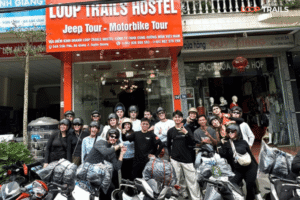


Thúy Kiều (Grace) is a travel blogger and content contributor for Loop Trails Tours Ha Giang. She holds a bachelor’s degree in Sustainable Tourism from Vietnam National University, Hanoi, and has a strong passion for exploring and promoting responsible travel experiences in Vietnam’s northern highlands.
Learn more: Ha Giang Loop Tours
Everyone talks about Ha Giang. The hairpin bends, the turquoise river, the buckwheat flowers in October. And yes, all of it is real and all of it is worth it. But there’s a province sitting just to the east that most travelers fly straight past on their way back to Hanoi, and it’s quietly one of the most spectacular places in Southeast Asia.
Cao Bang doesn’t have Ha Giang’s Instagram fame. It has something better: genuine remoteness, waterfalls that fall thirty meters into misty forest valleys, a national park so undiscovered that you might not see another foreign traveler for two days, and a border waterfall so large that it straddles two countries.
This guide covers everything you actually need to know about the Cao Bang Loop, written for people who want the real picture, not a brochure.
Learn more: Ha Giang Loop 2 Days 1 Night
The Cao Bang Loop is an overland circuit through Cao Bang province in Vietnam’s far north, starting and ending in Cao Bang city (or connecting from Ha Giang, depending on your route). The loop takes in Ban Gioc Waterfall and Nguom Ngao Cave near the Chinese border, the cloud forests of Phia Oac National Park, mountain roads through Tay and Dao minority villages, and a stretch of backcountry between Nguyen Binh and the provincial capital that most travelers have never heard of.
It’s not a single fixed route. The Cao Bang Loop can be done as a standalone trip from Hanoi (via Cao Bang city) or as an extension of the Ha Giang Loop, which is how most serious northern Vietnam travelers approach it. Either way, the core circuit covers roughly the same key stops, with the flexibility to adjust based on your time and interests.
The short answer: different in almost every way except the quality.
Ha Giang is exposed, dramatic, and almost lunar in sections. The landscape is defined by limestone karst, high passes, and vertiginous canyon views. It’s the kind of scenery that makes your jaw drop on the first day and keeps doing it on the fifth.
Cao Bang is lush, enclosed, and ancient-feeling. The landscape is dominated by forest, waterfalls, and river valleys rather than open passes. The roads run through denser vegetation. The altitude is variable: some sections are mid-mountain, others dip into humid lowland forest. It feels less like a highlight reel and more like a deep cut — the kind of destination that rewards travelers who actually show up.
If you’ve done the Ha Giang Loop and are wondering whether Cao Bang is worth adding: it is. They don’t repeat each other at all.
A focused Cao Bang Loop covering the main stops needs 5 to 7 days from Cao Bang city. If you’re coming directly from Hanoi, add a day each way for transit. If you’re connecting from Ha Giang as part of a combined route, the logistics shift slightly — ask about current road conditions between the two provinces, as the connecting roads vary by season.
Trying to squeeze Cao Bang into 3 days exists as a category of trip but not as a good one. The distances between key stops are real, the roads aren’t fast, and the experience suffers when you’re always trying to make the next checkpoint before dark.
Learn more: Ha Giang Loop 3 Days 2 Nights
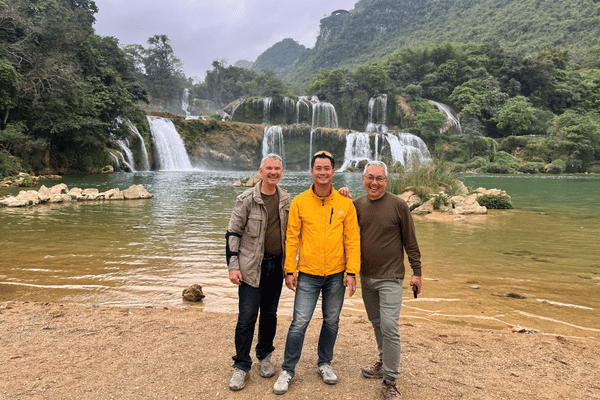
Ban Gioc is the centerpiece of the Cao Bang Loop and one of the genuinely unmissable sights in northern Vietnam. It’s the largest waterfall in the country by volume and one of the largest waterfalls on any international border in the world — the boundary with China runs through the middle of the falls.
The Vietnamese side offers the best viewing angles, with tiered drops feeding into a wide, misty pool. At peak volume (August through October), the sound and scale are extraordinary. In dry season the falls narrow considerably, though the surrounding landscape and the boat rides into the spray zone are still worthwhile.
A practical note: Ban Gioc sits in a border zone. There have historically been restrictions on accessing certain viewing areas and on photography in some directions. Local guides navigate this without issue; solo travelers should be aware that rules in border areas can be enforced differently from what you expect.
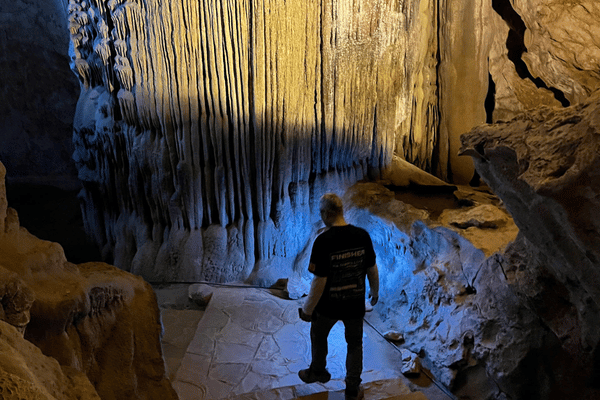
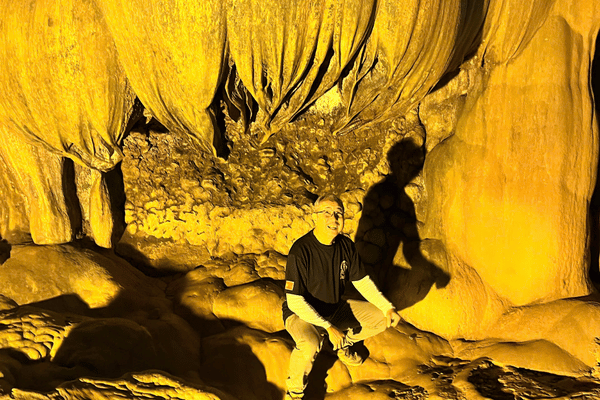
Directly adjacent to Ban Gioc is Nguom Ngao Cave, a cave system that runs for several kilometers and contains some of the most elaborate stalactite and stalagmite formations in northern Vietnam. It’s genuinely impressive, and unlike some tourist caves in Vietnam, the formations here are dense and varied enough to hold your attention for the full tour. Allow an hour to an hour and a half.
This is the stop that travelers who’ve done the Cao Bang Loop always mention when asked what surprised them most. Phia Oac National Park sits in Nguyen Binh district, a couple of hours from Cao Bang city, and it covers a mountain range that rises through multiple distinct ecological zones: subtropical forest at the base, temperate broadleaf in the middle sections, and something close to cloud forest near the 1,931-meter peak of Phia Oac mountain itself.
The road up to the park entrance and summit is one of the better mountain roads in northern Vietnam: paved in most sections, narrow, winding, and with enough forest cover to keep things cool even when the lowlands are hot. At the top, on a clear day, you can see across ridgelines into China. On a cloudy day, which is frequent, the mist rolls through the trees in a way that makes the whole place feel slightly unreal.
The park is home to a range of endemic species, including several bird species and orchid varieties not found elsewhere in Vietnam. Serious wildlife observers and botanists have it on a very short list. Most travelers just find it beautiful and surprisingly cold.
Learn more: Ha Giang Loop 4 Days 3 Nights
Cao Bang city is the provincial capital and the practical hub for the loop. It’s not a destination in itself no traveler comes to Cao Bang for the city but it’s a useful and underestimated base. The morning market is lively, the local food scene is genuinely good, and the streets are calm enough that you actually notice things rather than navigating around crowds.
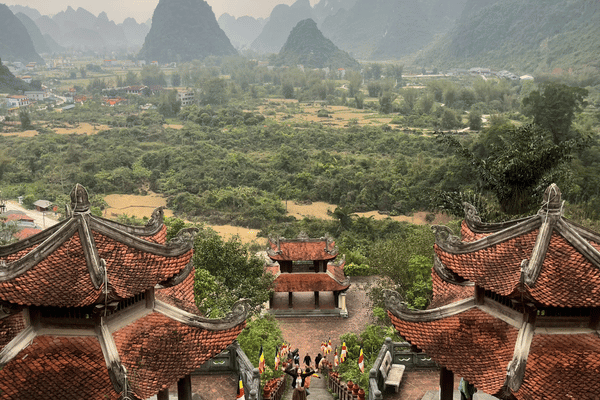
Just above the city, built dramatically into the cliffside overlooking the Nam Ngan River valley, is Truc Lam Phuc Linh Pagoda. It’s a modern Buddhist monastery rather than an ancient ruin, but the setting is extraordinary: tiered pavilions ascending the cliff face, with panoramic views across Cao Bang’s valley landscape. The walk up is short. The views are worth the stop.
Here’s something most Cao Bang travel content misses entirely: the roads between the headline attractions are often as good as the attractions themselves.
The stretch between Nguyen Binh and the Bang Giang River valley passes through backcountry that sees almost no foreign traffic. Villages are small, signage is minimal, and the forest presses close to both sides of the road. It’s the kind of riding that reminds you why you came to northern Vietnam in the first place rather than staying in Hanoi and looking at photos.
The road from Phia Oac back toward Cao Bang city descends through a series of curves with valley views that are, on a clear morning, as good as anything on the Ha Giang Loop. They’re just not famous yet.
This is a framework, not a contract. Weather and road conditions should always influence the actual pacing.
| Day | Route | Overnight |
|---|---|---|
| 1 | Arrive Cao Bang city, explore city, Truc Lam Pagoda | Cao Bang city |
| 2 | Cao Bang → Ban Gioc Waterfall (full day) | Ban Gioc area |
| 3 | Nguom Ngao Cave (morning) → begin route toward Nguyen Binh | Nguyen Binh |
| 4 | Phia Oac National Park (full day) | Nguyen Binh / Phia Oac |
| 5 | Phia Oac → explore backcountry roads → return toward Cao Bang | Cao Bang city |
| 6 | Flexible: local market, additional stops, or transit south | — |
If you’re connecting onward to Hanoi or back to Ha Giang, Day 6 becomes a transit day. If you’re doing the full Ha Giang Cao Bang combined tour, this itinerary slots into the larger circuit [see our Ha Giang Cao Bang Combined Tour page] for how the two loops connect.
Learn more: Ha Giang Cao Bang 5 Days 4 Nights
Cao Bang has a different climate dynamic from Ha Giang. It’s further east, receives more Pacific moisture, and the forests hold humidity differently from Ha Giang’s open karst plateau. That means a slightly different seasonal calculus.
January and February: Cold in the highlands, particularly around Phia Oac where temperatures can drop significantly after dark. The lowland sections around Ban Gioc are cool but manageable. Lunar New Year (Tet) brings local closures and increased domestic tourism at Ban Gioc worth planning around. The forest is stark but beautiful in places. Roads are dry and relatively quiet.
March and April: The temperature starts to come up. Forest greenery intensifies. These are good months for Phia Oac in particular, when the cloud forest is lush and visibility from the summit is better than during peak humidity. Fewer foreign tourists than Ha Giang receives in the same period.
May and June: Getting warmer. The rainy season starts to build. Ban Gioc begins to fill with water. Road conditions in remote sections can start to deteriorate particularly unpaved sections toward minority villages. Worth checking conditions before heading to Phia Oac’s upper reaches.
July and August: Peak rainy season. Ban Gioc is at or near maximum volume genuinely thunderous, especially in August. The roads around Phia Oac can be difficult, with wet mountain tracks requiring careful handling. This is not the moment to self-drive if you’re inexperienced on mountain roads in wet conditions. Guided tours with experienced local drivers handle this period much better.
September and October: The sweet spot. Water volume at Ban Gioc remains high from the rainy season but the worst of the rains have passed. The forest is intensely green. Temperatures are pleasant. This period overlaps with Ha Giang’s famous buckwheat flower season, making it the ideal time for the combined Ha Giang Cao Bang tour if you can manage the schedule.
November and December: The forest starts to turn at Phia Oac the mountain range has some of the best autumn color in northern Vietnam, which almost nobody knows about. Ban Gioc quiets down. The air is clean and cool. One of the most underrated times to visit Cao Bang.
Learn more: Ha Giang Loop Easy Rider
Getting to Cao Bang is straightforward enough: buses and private vehicles connect it to Hanoi (roughly 5–6 hours by road, check current schedules). Getting around the loop itself is where your choice of format matters.
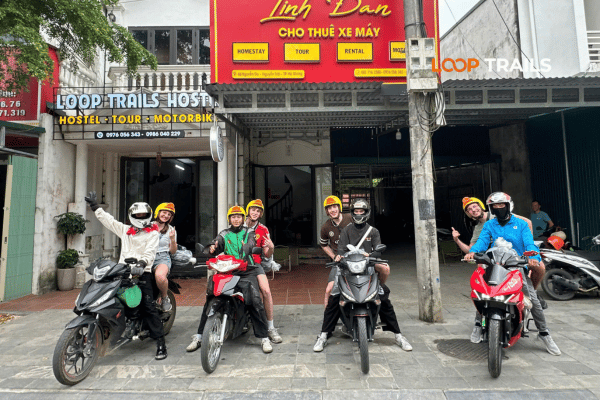
You ride pillion behind a local guide on a motorbike. Your guide handles navigation, accommodation, meals as specified, translation, and the cultural context that makes the difference between seeing things and understanding them.
Best for: First-time northern Vietnam visitors, anyone unfamiliar with mountain road driving, travelers who want to actually learn something about the Tay and Dao communities they’re passing through, and anyone who wants the physical experience of being on a motorbike without the responsibility of navigating unmarked roads in a province where GPS reliability is inconsistent.
The practical upside in Cao Bang specifically: many of the best stops on the loop are slightly off the main road, and a local guide who knows the area will take you to places that don’t appear on any travel blog. That’s not marketing language. The loop genuinely rewards local knowledge more than Ha Giang does, because Cao Bang has less tourist infrastructure pointing the way.
If you’re leaning toward a guided option, [browse our Cao Bang Loop Tour page] for current itineraries and departure dates.
Learn more: Ha Giang Loop Self-Drive
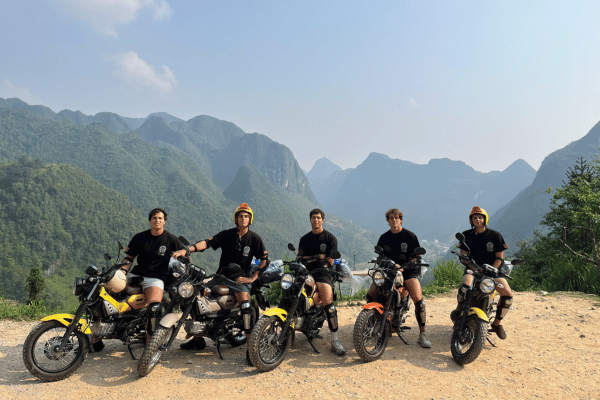
You rent a motorbike and navigate the loop yourself. The Cao Bang Loop is doable for competent riders, but it comes with specific challenges that differ from Ha Giang.
The roads in Cao Bang are more varied in quality. Paved sections alternate with gravel and dirt tracks, particularly near Phia Oac and on detour roads into villages. Signage is minimal, and Google Maps’ road data for remote Cao Bang sections is inconsistent — you’ll encounter paths that don’t appear, and roads marked as paved that aren’t. An offline mapping app (Maps.me is particularly useful for northern Vietnam) is essential, and even then, expect to ask locals for directions occasionally.
Riding license requirements for foreign nationals in Vietnam can change — verify current regulations before renting, as this is not an area where assumptions serve you well.
For motorbike availability, [check our Ha Giang motorbike rental page] for current fleet options and long-distance rental conditions. We can advise on which bike suits a route that includes Phia Oac’s mountain sections.
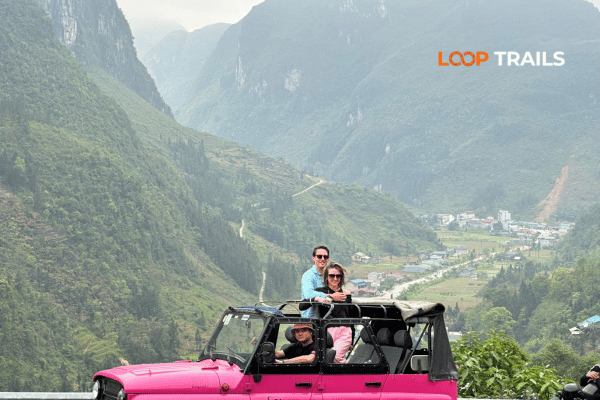
Learn more: Ha Giang Loop by Jeep for Families & Groups
A 4WD vehicle with driver and guide covers the same route with more comfort and significantly more protection from weather variability. For Cao Bang specifically, the jeep option has a practical argument that it doesn’t quite have on the more exposed Ha Giang Loop: some of the best sections near Phia Oac involve forest roads where a vehicle actually provides a better viewing platform than a motorbike. You’re looking up into forest canopy, not trying to keep the bike stable.
Best for: Small groups (2–4 people), older travelers, anyone visiting during rainy season, families, and travelers who want to cover more ground per day without the fatigue of a long motorbike day.
What you give up: The specific sensation of the road. Motorbike travelers often feel a deeper connection to the pace and detail of the landscape. Whether that matters to you is a personal call.
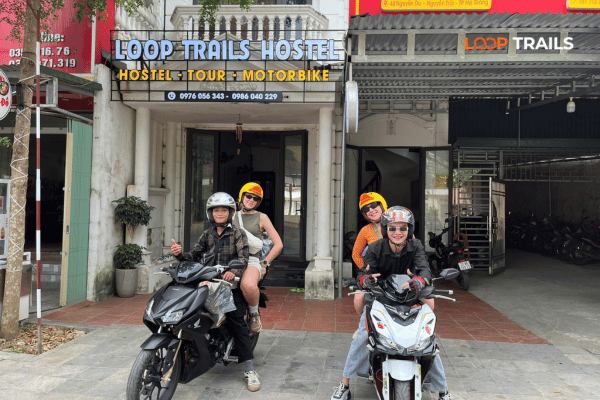
Learn more: Ha Giang Motorbike Rental
Think honestly about what you’re after:
Not sure yet? [Send us a message on WhatsApp] with your travel dates, experience level, and group size. We’ll give you an honest recommendation — including telling you if a simpler option might suit you better.

Learn more: Ha Giang Cao Bang Ba Be Lake 6 Days 5 Nights
Pricing depends on tour format, group size, duration, and season. Rather than post numbers that go out of date, here’s the honest structure of what’s typically included and what isn’t.
What a guided Cao Bang Loop tour typically includes:
What’s typically not included:
Self-drive travelers who manage their own accommodation will spend less overall, but factor in bike rental, fuel across the full loop distance, and the reality that guesthouses near Ban Gioc and Phia Oac have very limited budget options. Cheaper doesn’t always mean cheaper once the full cost is totaled.
For current tour pricing, [visit our Cao Bang Loop Tour page] where rates are listed transparently with no hidden additions.
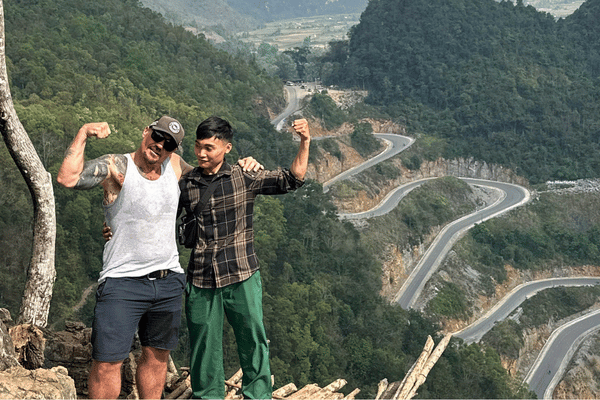
Learn more: Ha Giang Road Conditions 2026
The Cao Bang Loop deserves honest treatment here rather than reassuring generalities.
The good news: The main roads between Cao Bang city, Ban Gioc, and Nguyen Binh are in generally good condition and asphalted. They are mountain roads, which means curves, climbs, and occasional tight sections, but they’re not technically extreme for experienced riders.
The more nuanced picture: Sections of the Phia Oac approach road and the backcountry roads between Nguyen Binh and smaller villages range from good gravel to genuinely rough tracks. In dry season these are manageable. In wet season, some become slippery clay or washed-out sections that require specific handling. Local guides who drive these roads regularly will know which ones are passable after rain and which ones to avoid.
Border zone awareness: The area around Ban Gioc is a border zone with China. Stay on marked tourist paths and follow all local guidance. Photography restrictions in certain directions exist and are enforced. Your guide will brief you on this; if you’re self-driving, research current border area regulations before your visit as these can change.
General safety principles:
Road conditions and regulations in Vietnam can change. Always ask locally before heading into a remote section, and treat your guide’s advice on road status as the primary source rather than any app.
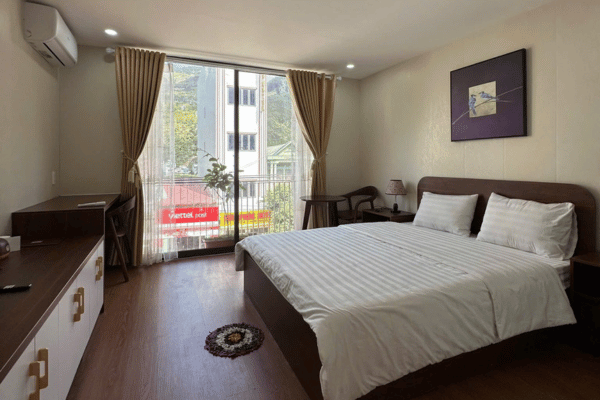
Learn more: Explore just the Cao Bang Loop
Accommodation on the Cao Bang Loop is local, simple, and generally good value. You’re not going to find boutique hotels or international chains — and that’s exactly the point.
Cao Bang City:
The widest range of accommodation on the loop, including some mid-range hotels with reliable hot water, Wi-Fi, and comfortable beds. This is the best base for anyone who wants a bit more comfort while day-tripping to Ban Gioc or Phia Oac. The city has a good morning market, decent restaurants, and enough infrastructure to feel like a real town rather than a stopover.
Ban Gioc Area:
Guesthouses are small and limited in number. Most are family-run, with basic but clean rooms. The experience of staying near the falls — waking up before the day-visitors arrive and having the waterfall to yourself in the early morning — is worth the basic accommodation. Book ahead during Vietnamese national holidays, when Ban Gioc is a popular domestic destination and guesthouses fill quickly.
Nguyen Binh / Phia Oac:
The most limited accommodation on the loop. Options range from basic town guesthouses in Nguyen Binh to simple rest stops near the park. If you’re visiting Phia Oac, some travelers prefer to base in Nguyen Binh and day-trip up, keeping a slightly more comfortable overnight. Others embrace the minimal and stay near the park. Go in with no expectations on amenities and you’ll be fine.
For guided tours through Loop Trails, accommodation is arranged as part of the package, which removes the most time-consuming logistics of the trip.
Learn more: Ha Giang Loop ATM & Money Guide
Food:
Cao Bang has a distinct food culture that doesn’t get nearly enough attention. The province’s cuisine reflects its Tay, Dao, and Nung minority communities rather than lowland Vietnamese cooking, and the differences are noticeable.
Things to eat:
In smaller villages, menus don’t exist. You eat what the family is cooking, which is usually excellent. Vegetarians should communicate clearly and specifically; “no meat” can be interpreted loosely in rural kitchens where pork fat is a standard cooking medium.
Cash:
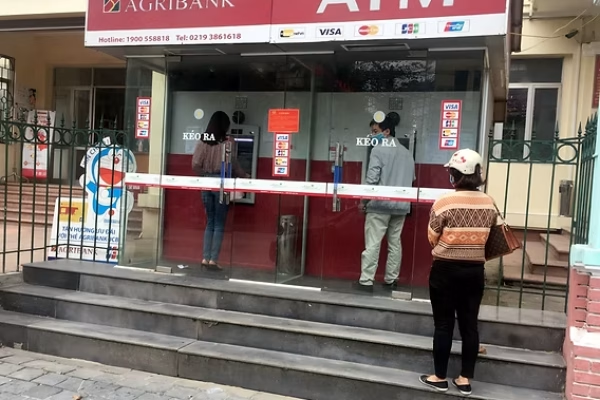
This is non-negotiable: bring enough cash from Cao Bang city before heading out. ATMs exist in the city and in Nguyen Binh town but are not reliably available anywhere else on the loop. Guesthouses near Ban Gioc, roadside food stalls, local market vendors, and the cave entrance at Nguom Ngao — none of these will accept card. Carry more than you think you’ll spend.
Connectivity:
Viettel tends to have the best signal coverage in remote northern Vietnam, including areas of Cao Bang province. Data speeds drop significantly once you leave Cao Bang city and become patchy near Phia Oac. Download offline maps before you leave the city. Consider this a feature rather than a problem: the periods of no connectivity on the Cao Bang Loop are some of the best parts.
Learn more: Ha Giang Packing list
The Cao Bang Loop covers varied terrain and temperature ranges. What you bring matters more than on a city-focused trip.
Riding and outdoor essentials:
Practical items:
Clothing:
Leave behind:
Learn more: Ha Giang Loop Mistake to Avoid
Treating it like a day trip from Hanoi. Ban Gioc appears on some organized day-tour itineraries from Hanoi. A day trip that’s almost all driving, with 30 minutes at the falls, is not the Cao Bang Loop. You can’t do justice to Phia Oac, the local culture, or the backcountry roads without sleeping here.
Skipping Phia Oac. Ban Gioc gets all the attention and Phia Oac gets skipped. This is a mistake. The national park is, for many travelers, the more memorable part of the loop — quieter, more unusual, and completely unlike anything else in northern Vietnam.
Underestimating the roads after rain. The Cao Bang Loop includes sections that become genuinely difficult after sustained rainfall. Self-drive travelers who haven’t driven mountain roads in wet conditions should either adjust timing or switch to a guided format during the wetter months.
Not having enough cash. Already covered above, but it’s the most practical mistake and the most avoidable. Leave Cao Bang city with a full wallet.
Booking a random guide from the bus station. Guides who approach arriving buses vary enormously in quality, local knowledge, and what happens if something goes wrong on the road. Booking a vetted tour in advance removes this variable. If you do arrange something on the ground, ask directly about their experience on the specific road to Phia Oac and the border zone protocols at Ban Gioc.
Ignoring travel insurance fine print. Many standard travel insurance policies exclude motorcycle riding, or require a license in the appropriate category. Check before your trip, not after an incident.
Learn more: Phia Thap Insense Village
Loop Trails runs small-group and private tours covering the Cao Bang Loop as a standalone trip and as part of the Ha Giang Cao Bang combined route. Tour formats include guided (Easy Rider style) and jeep options, with self-drive motorbike rental available for experienced riders.
What we’re actually about: small groups, well-maintained vehicles, guides with genuine local knowledge of both provinces, and itineraries built with enough flexibility to respond to conditions on the ground. No overselling. If the road to Phia Oac is closed after rain, we take the alternative route and tell you why. That’s the approach.
To get started:
Booking conditions and deposit requirements are clearly listed on the tour pages.
Learn more: Nguom Ngao Cave
Cao Bang province itself doesn’t require a special permit for foreign visitors in the same way Ha Giang has historically. However, the area around Ban Gioc is a border zone, and some access restrictions apply particularly near the falls and in certain photography areas. Your guide will handle this; if self-driving, check current border zone regulations before your visit as rules can be updated.
Yes, with the right format. The Cao Bang Loop on a guided tour or jeep is accessible to first-time Vietnam travelers and doesn’t require any riding experience. The route is less physically demanding than Ha Giang’s passes and the accommodation, while basic, is well within the range of most independent travelers who’ve done budget trips in Southeast Asia.
You could, but there’s not much reason to. Ban Gioc is the centerpiece of the loop and the most impressive single sight in Cao Bang province. Skipping it would be like doing the Ha Giang Loop and missing Ma Pi Leng. Build your itinerary around it, not around it.
Regular buses connect Hanoi to Cao Bang city, with journey times varying check current schedules as these change. Private vehicles and minibuses are also available and offer more flexibility on departure times. From Ha Giang, the route east to Cao Bang is a half-day ride depending on road conditions and your starting point within Ha Giang province.
It’s one of the best stops in northern Vietnam that almost nobody knows about, so the answer is yes. If you’re doing the Cao Bang Loop and skip Phia Oac for time reasons, you’re cutting the most distinctive and surprising part of the trip. Adjust your schedule to include it rather than the other way around.
The route connecting Ha Giang and Cao Bang provinces passes through mountain terrain and takes a significant part of a day depending on your exact starting and ending points. Road quality is generally decent on the main route but varies on secondary roads. If you’re doing the combined Ha Giang Cao Bang tour, your guide will know the current state of the connecting roads conditions vary by season. Check local updates before making this crossing independently.
Cao Bang is considered one of the safer and more hospitable provinces in northern Vietnam for solo travelers, including women. The minority communities along the route are accustomed to visitors and generally welcoming. As with any remote mountain region, booking a guided tour rather than navigating entirely independently adds a practical safety layer alongside the cultural and logistical benefits.
August through October, when monsoon rainfall has filled the river system to maximum volume. The falls in this period are genuinely extraordinary: wide, thunderous, and misting the surrounding area heavily. In dry season (November through April) the falls are narrower but the surrounding scenery is still beautiful and the visit is less crowded.
Some longer itineraries continue south from Cao Bang through Bac Kan before looping back toward Hanoi, passing Ba Be Lake — one of Vietnam’s most beautiful natural lakes and a genuinely excellent stop. This extension adds 2–3 days to the overall trip and is worth considering if your schedule allows. Ask about combined itineraries that include Ba Be when inquiring about tour options.
Foreign nationals are subject to Vietnamese traffic law on driving licenses and permissible vehicles. The rules can change and are enforced differently in different situations always verify current requirements with your motorbike rental company and, if possible, with local authorities before your trip. Don’t rely on secondhand information from other travelers on this specific point.
It depends heavily on the children’s ages and the format. Jeep tours are the most practical with younger children, as the roads are long and the terrain variable. Some families with older children (10+) who are comfortable with long drives have done the jeep version successfully. Motorbike with young children is not recommended on mountain road sections. Talk through your specific situation before booking.
During September and October (peak season for both Cao Bang and Ha Giang), 4–6 weeks ahead is wise. For other months, 2–3 weeks is generally sufficient, though booking earlier never hurts. If you’re planning a combined Ha Giang Cao Bang tour, earlier booking is strongly recommended as the logistics of connecting both loops requires more coordination.
Contact information for Loop Trails
Website: Loop Trails Official Website
Email: looptrailshostel@gmail.com
Hotline & WhatSapp:
+84862379288
+84938988593
Social Media:
Facebook: Loop Trails Tours Ha Giang
Instagram: Loop Trails Tours Ha Giang
TikTok: Loop Trails
Office Address: 48 Nguyen Du, Ha Giang 1, Tuyen Quang
Address: 48 Nguyen Du, Ha Giang 1, Tuyen Quang

Facebook X Reddit Table of Contents Learn more: Ha Giang Loop Tours This is the question that sits in almost every Ha
Facebook X Reddit Table of Contents Learn more: Ha Giang Loop Tours Most people drive past the Quan Ba area twice on