

Thúy Kiều (Grace) is a travel blogger and content contributor for Loop Trails Tours Ha Giang. She holds a bachelor’s degree in Sustainable Tourism from Vietnam National University, Hanoi, and has a strong passion for exploring and promoting responsible travel experiences in Vietnam’s northern highlands.
Learn more: Ha Giang Loop Tours
Every few weeks someone messages us with a version of the same question. They have fallen in love with the idea of the Ha Giang Loop, they have seen the photos of the switchbacks and the Nho Que River, and there is one detail they cannot let go of: the dog at their feet. Can they bring their dog on the Ha Giang Loop, or do they have to leave the little one behind?
We run tours up here for a living, so we are not going to give you a soft, feel good answer that ends with everyone winning. Traveling the Ha Giang Loop with a dog is possible. It is also harder than most people expect, and for a lot of travelers it is not the right call. This guide walks through what actually happens when you bring a pet into these mountains, what to plan for, and how to do it in a way that keeps your dog calm and safe rather than exhausted and scared.
If you are an expat living in Hanoi or Da Nang with a dog you cannot bear to kennel, this is for you. If you are flying into Vietnam and dreaming of doing the Loop with your pet in tow, read the transport sections carefully, because that is where most plans quietly fall apart.
Learn more: Ha Giang Loop 2 Days 1 Night
Yes, you can travel the Ha Giang Loop with a dog. No, you cannot do it well on a motorbike.
That single sentence solves about eighty percent of the confusion. The Loop is a mountain motorbike route at heart, and a dog on a bike through three or four days of switchbacks is not a realistic or a kind plan for the vast majority of pets. The version that works is a private car or a jeep, with a driver, a flexible schedule, and a bit of planning around where your dog eats, sleeps, and waits while you explore.
So the real question is not “can I bring my dog,” it is “am I willing to do the Loop by jeep or private car, at a slower pace, with a few compromises on which stops the dog joins.” If the answer is yes, this can be a genuinely lovely trip. If your heart is set on riding a motorbike yourself with your dog somewhere on board, we would gently steer you away from that idea.
Rules, homestay policies, and transport options change often up here, so treat everything below as a planning framework rather than a fixed rulebook, and confirm the specifics close to your travel date.
Learn more: Ha Giang Loop 3 Days 2 Nights
Before you decide, it helps to picture what your dog actually experiences out here. The scenery that makes the Loop unforgettable for you is the same scenery that makes it demanding for a pet.
The Loop is built almost entirely from switchbacks. You climb, you descend, you climb again, hour after hour, and the road rarely runs straight for long. Plenty of humans get motion sickness on these passes. Dogs get it too, and a nauseous, drooling, anxious dog on a winding mountain road is miserable for everyone, including the dog.
Some dogs travel beautifully in cars and barely notice. Others turn green within twenty minutes. If you have never taken your dog on a long, twisty drive, the Ha Giang Loop is a bad place to find out how they cope. Test them on a few hours of hill roads at home first.
Up on the high passes it can be cool and windy even when the valleys are warm, and the temperature can drop fast once the sun goes behind a ridge. In the wet months, roughly May to September, sudden rain and mist are normal, and mornings can be genuinely cold in the winter months. A short coated dog can get chilled quickly at altitude, and a thick coated dog can overheat in a hot vehicle in summer. You are managing both ends of the thermometer, sometimes on the same afternoon.
A typical Loop day involves several hours of driving broken up by stops. That rhythm is fine for a relaxed, well settled dog and stressful for a nervous one. New smells, new people, chickens and buffalo by the road, other dogs at every homestay, and a different bed every night. Confident dogs take this in stride. Anxious dogs do not, and there is nowhere quiet to retreat to when the whole trip is movement.
None of this is meant to scare you off. It is meant to help you be honest about your specific dog. A calm, road tested, socially easy dog can do this. A reactive, car sick, or highly strung dog will have a hard time, and so will you.
Learn more: Ha Giang Loop 4 Days 3 Nights
This is the decision that shapes the entire trip, so let us take the three modes one at a time.
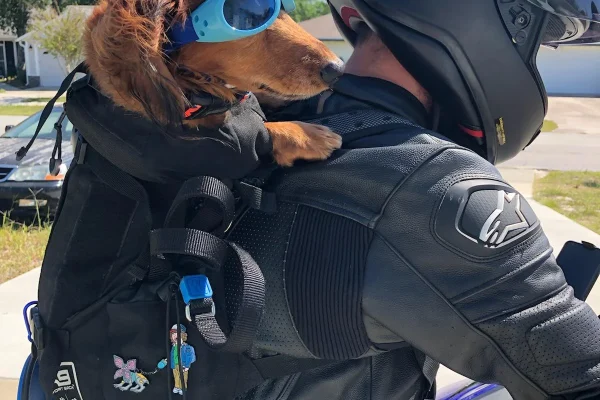
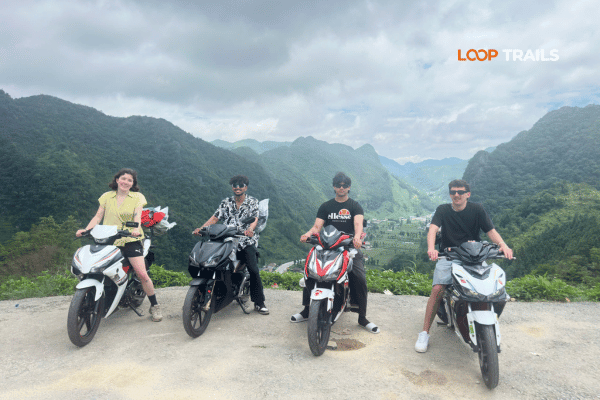
We say this as people who love motorbikes and run motorbike tours. A dog on a motorbike through the Ha Giang Loop is not something we will help arrange, because we do not believe it is safe.
Front carriers and back carriers exist, and you will see local dogs riding on bikes around town. Town is not the Loop. Out here you have long descents, gravel patches, sudden weather, cliff edge roads with no barrier, and hours in the saddle. If the dog panics, shifts weight, or tries to jump at the wrong moment, the consequences are severe for both of you. Even a perfectly calm dog is exposed to cold, wind, exhaust, and exhaustion for far longer than is fair. This is the one firm no in this whole guide.
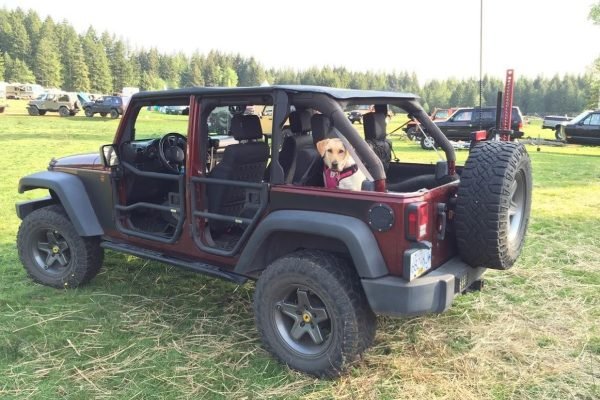
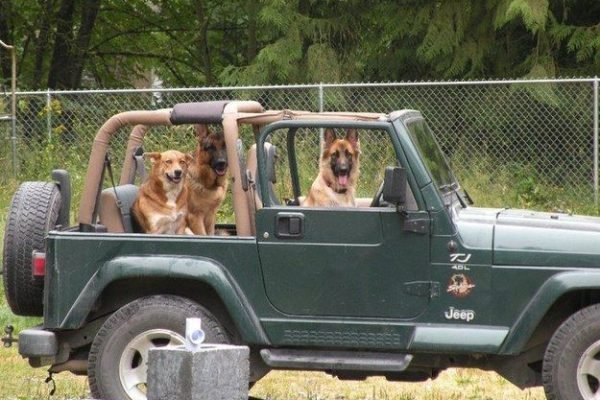
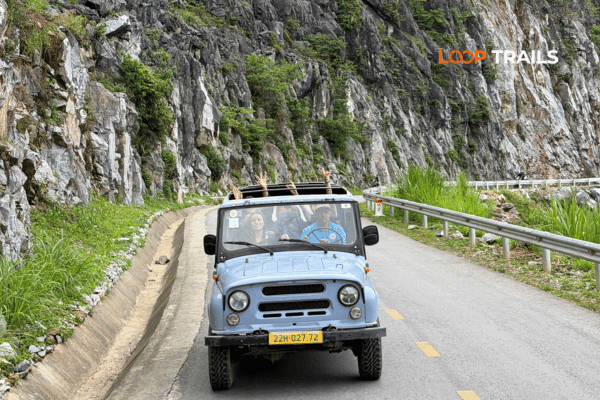
A jeep or a private car with a driver is the realistic, humane way to bring a dog on the Loop. Your dog rides in an enclosed, weather protected space. You control the pace, so you can pull over when the dog needs a break, water, or a chance to stretch. You are not fighting the elements, and you have room for a travel crate, a water bowl, and a familiar blanket.
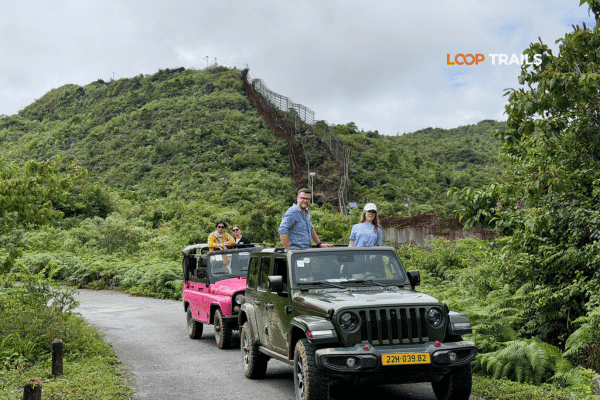
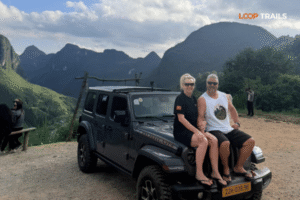
A jeep in particular gives you the open air Loop feeling that people come for, with far more comfort and stability than a motorbike, and a proper cabin to shelter the dog when the weather turns. For travelers who want the views without putting their pet at risk, this is the sweet spot.
If you are weighing your options, our [Ha Giang Loop jeep tours] are built around comfort and a relaxed pace, which happens to be exactly what traveling with a dog requires. A private car works too, and for pet trips we usually recommend going private rather than joining a shared group, so the schedule bends around your dog instead of the other way around.
If you are an experienced expat driver planning to bring your own vehicle, self drive gives you total control over the schedule, which is a real advantage with a pet. Just be honest about the roads. These are demanding mountain routes, and adding a dog to the mix means more stops, more attention split, and less margin for error. If you are confident on Vietnamese mountain roads and your dog is a settled traveler, it can be done. If either of those is shaky, hire a driver and let yourself focus on your pet and the view.
Learn more: Ha Giang Cao Bang 5 Days 4 Nights
Here is where a lot of pet trips run into trouble, so read this part slowly.
Most travelers reach Ha Giang from Hanoi by sleeper bus or limousine van overnight, then start the Loop from Ha Giang city. That standard route is the problem for pet owners, because sleeper buses and shared vans usually do not accept dogs, and even when a driver says yes on the phone, policies vary from operator to operator and can change without notice. A cramped sleeper bus is also a rough environment for a dog and the other passengers.
The workable route is a private transfer. Book a private car or a private van from Hanoi to Ha Giang so your dog travels with you in a controlled space, with stops when needed. It costs more than a bus seat, but for a pet trip it is really the only reliable way to cover that first stretch, and it sets the tone for the whole trip being on your terms.
If you are flying into Vietnam from abroad with your dog, there is a whole separate layer to sort out before any of this matters. International pet import into Vietnam involves paperwork, vaccination records, and airline requirements that change and that we are not qualified to advise on. Check the current rules with the Vietnamese authorities, your airline, and a vet well before you travel, and do not assume anything based on an old blog post. Get that part confirmed first, because the Loop logistics are the easy half compared to an international pet import.
Learn more: Ha Giang Cao Bang Ba Be Lake 6 Days 5 Nights
Accommodation is the second big planning point, and it is one where you cannot cut corners or wing it.
Ha Giang runs heavily on homestays, which are family run places, often with their own resident dogs, chickens, and a very local rhythm. Many are warm and welcoming to a polite guest dog. Some are not set up for it at all, and a few have territorial dogs of their own that will not appreciate a stranger arriving. Hotels in the towns are a mixed picture too. Some accept pets, many do not, and the ones that do may have conditions.
The rule is simple: confirm before you arrive, every single night. Do not show up hoping for the best. When you plan a pet trip with us, sorting pet friendly stays in advance is part of the job, because a dog and a nowhere to sleep is the fastest way to ruin a trip. Policies here shift with the season and the owner, so anything you read online should be treated as a starting point and checked directly close to your dates.
A few things that make you an easy guest to say yes to: bring your own bedding or a travel crate so the dog has its own spot, keep the dog leashed around the property and around the family’s animals, and never assume your dog has the run of the place. Homestays that see one respectful, well managed guest dog are far more likely to welcome the next one.
Learn more: Cao Bang Loop 3 Days best kept secret
Not every stop on the Loop works with a dog, and knowing this ahead of time saves you stress in the moment. Here is the honest breakdown of the big ones.
Viewpoints and passes. Most of the famous roadside viewpoints, including the Ma Pi Leng Pass overlooks, are open air and easy to enjoy with a leashed dog. These are some of the best moments to bring your pet out of the vehicle, stretch, and take the photos you came for. Keep the leash short near the edges. There are real drops and no barriers.
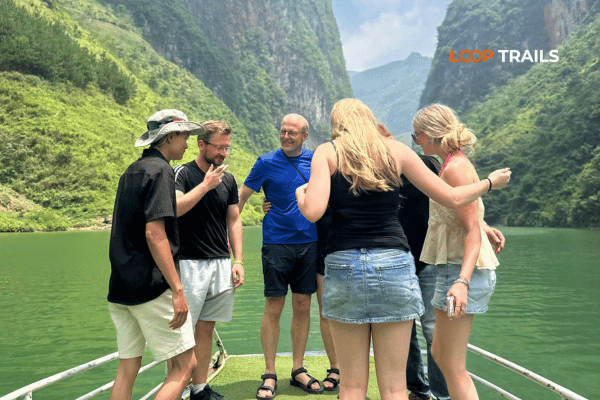
The Nho Que River boat trip. The boat ride through the Tu San canyon is a highlight, and whether your dog can come aboard depends entirely on the boat operator on the day. Some may allow a small, calm dog, many will not, and a dog that is nervous around water or engines should not be on a boat regardless. Plan for the likelihood that this is a stop where the dog waits in the vehicle with the driver, or where one person stays behind. Confirm on the spot and do not push it.
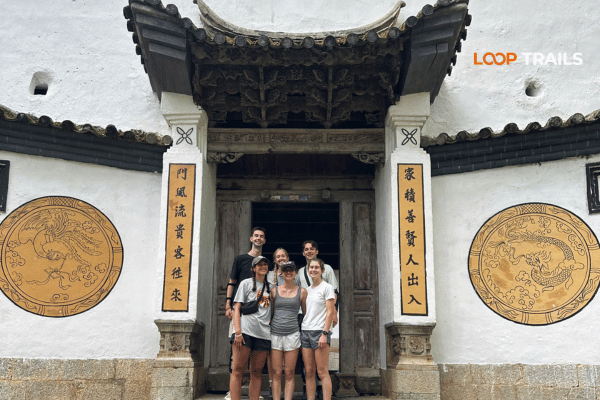
Caves and indoor sites. Caves, museums, and indoor attractions such as the old Vuong family mansion generally are not places to bring a dog inside. Treat these as stops where the dog stays with your driver in a shaded, ventilated vehicle for a short visit, never a long one, and never in a hot car.
Local markets. The rotating markets are wonderful and also crowded, loud, and full of livestock and other dogs. A confident dog on a short leash can manage a quick pass through. A reactive dog is better left resting. Read the situation and your dog honestly.
The pattern across all of it: outdoor and open means the dog can usually join, indoor or crowded or on water means the dog usually waits. This is exactly why going private matters, because a private driver can stay with your dog during the stops it sits out, which you simply cannot arrange on a shared group tour.
Learn more: Ha Giang Motorbike Rental
You are heading into a remote region where you cannot pop out for supplies. Pack like it. Here is what earns its place in the bag.
If your dog gets motion sick, talk to your vet before the trip about what they recommend. Do not improvise with human medication.
Learn more: Ha Giang Loop Mistake to Avoid
This is the part people skip and then regret, so we will be direct. Ha Giang is a remote, mountainous region, and veterinary care is limited, especially once you are deep on the Loop. Do not travel on the assumption that a good vet is a short drive away, because often they are not.
Before you go, take your dog for a check up and make sure they are genuinely fit for a demanding few days of travel. An older dog, a very young puppy, a dog with a heart or breathing condition, or a heavily brachycephalic breed that struggles with heat and stress is not a good candidate for this trip, full stop. If you have any doubt about your dog’s fitness, that doubt is your answer.
Carry your vet’s number, keep vaccination records handy, and know that in a real emergency you may be several hours from meaningful care. That reality alone is why a calm, healthy, road tested dog is the only kind we would encourage bringing, and why we plan pet trips with shorter driving days and more margin than a standard Loop.
Learn more: Ha Giang Loop Coporate Retreat
You will meet a lot of dogs on the Loop. Homestays have them, villages have them, and many roam freely and are not used to a leashed newcomer on their turf. Most encounters are fine if you manage them, and most problems come from an owner who assumes their friendly dog will be welcomed everywhere.
Keep your dog leashed and close, especially arriving at a new homestay where a resident dog may be protective. Read the local dog’s body language and give it space rather than letting your dog march up to say hello. Ask the family before letting your dog into shared areas. And clean up after your pet without being asked. You are not only shaping your own trip, you are shaping whether the next traveler with a dog gets a warm welcome or a closed door.
Treat the whole thing as being a guest, because that is exactly what you are. A little humility here goes a long way.
Learn more: Ha Giang Loop by Wrangler Rubicon Jeep
Let us make this simple. Match yourself to the description that fits and you will know what to do.
If you are somewhere in the middle and genuinely not sure, message us and describe your dog honestly. We would rather talk you out of a trip that will not work than sell you one that goes wrong on day two.
Learn more: Ha Giang Loop Price
Bringing a dog on the Ha Giang Loop is a planning job, not a booking job. The difference between a lovely trip and a stressful one is almost entirely in the details that get sorted before you set off: the right vehicle, a private schedule that bends around your dog, transport from Hanoi that actually accepts pets, and homestays confirmed in advance rather than hoped for.
That is the part we can take off your plate. Tell us about your dog, your dates, and how you imagine the trip, and we will put together a private jeep or private car option built around traveling with a pet, at a pace that keeps everyone comfortable. If we think your specific dog is not suited to it, we will tell you that honestly too.
Reach out on WhatsApp or through our contact page and let us help you get it right. The Loop is worth doing properly, dog or no dog.
Yes, but realistically only by jeep or private car, not on a motorbike. With the right vehicle, a private schedule, and pet friendly stays arranged in advance, a calm and healthy dog can do the Loop comfortably.
We strongly advise against it and will not arrange it. The Loop has long, winding, cliff edge roads with no barriers and unpredictable weather, and a dog on a bike in that environment is not safe for the dog or the rider.
Some do, some do not, and many have their own dogs. Policies vary a lot and change, so every night needs to be confirmed in advance. When we plan a pet trip, sorting pet friendly accommodation ahead of time is part of the service.
Book a private transfer. Sleeper buses and shared vans usually do not accept pets and are a rough environment for a dog anyway, so a private car or van is the reliable way to cover that first stretch.
It is common because the roads are almost entirely switchbacks. Test your dog on long hill drives before committing, and talk to your vet about motion sickness options. Never use human medication without veterinary advice.
It depends on the boat operator on the day, and many will not allow it. Plan for the boat being a stop your dog sits out, ideally waiting with your private driver while one person stays back or takes turns.
Veterinary care in the region is limited, and deep on the Loop you may be hours from real help. Get a vet check before you go, carry a pet first aid kit and your vet’s contact, and only bring a genuinely fit, healthy dog.
International pet import into Vietnam involves paperwork, vaccinations, and airline rules that change. Confirm the current requirements with Vietnamese authorities, your airline, and a vet well ahead of time. Sort that out before you worry about the Loop itself.
Usually no. Older dogs, very young puppies, dogs with heart or breathing conditions, and heavily flat faced breeds that struggle with heat and stress are not good candidates for the demands of
For many dogs, honestly yes. If your dog is anxious, reactive, car sick, or not in solid health, leaving them with a trusted sitter and doing the Loop unencumbered is the kinder choice for everyone. It is good judgment, not a failure.
Contact information for Loop Trails
Website: Loop Trails Official Website
Email: looptrailshostel@gmail.com
Hotline & WhatSapp:
+84862379288
+84938988593
Social Media:
Facebook: Loop Trails Tours Ha Giang
Instagram: Loop Trails Tours Ha Giang
TikTok: Loop Trails
Office Address: 48 Nguyen Du, Ha Giang 1, Tuyen Quang
Address: 48 Nguyen Du, Ha Giang 1, Tuyen Quang
Facebook X Reddit Table of Contents Learn more: Ha Giang Loop Tours Most people drive past the Quan Ba area twice on
Facebook X Reddit Table of Contents Learn more: Ha Giang Loop Tours The Ha Giang Loop has a reputation problem with older