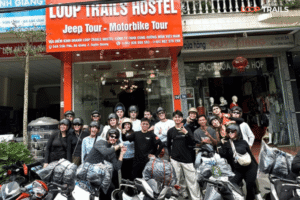


Thúy Kiều (Grace) is a travel blogger and content contributor for Loop Trails Tours Ha Giang. She holds a bachelor’s degree in Sustainable Tourism from Vietnam National University, Hanoi, and has a strong passion for exploring and promoting responsible travel experiences in Vietnam’s northern highlands.

Learn more: Ha Giang Loop Tours
You’ve just finished the Ha Giang Loop. Your legs are heavy, your camera roll is full, and somewhere between Ma Pi Leng Pass and that bowl of pho in Meo Vac, you’ve used up most of your energy reserves. Now you need to get back to Hanoi.
This is the part most people don’t think about until the last day of their loop. And then they’re frantically messaging guesthouses asking whether the overnight bus is safe, or trying to figure out if they can sell their motorbike in Ha Giang without losing half its value.
This guide covers every realistic option for getting from Ha Giang to Hanoi after the loop, with honest pros and cons for each. No invented prices or departure times — those change and you should always check current schedules directly — but everything you need to understand your choices before you make them.

Learn more: Ha Giang Loop 2 Days 1 Night
This matters more than it sounds. The Ha Giang Loop is a loop, but not everyone finishes it in Ha Giang city. Depending on your route and pace, you might end up in:
This is the most common scenario and gives you the most transport options. Ha Giang city has bus stations, guesthouses with booking services, and a reasonable variety of departure options for Hanoi. If you have flexibility, timing your loop finish to arrive in Ha Giang city by late afternoon gives you the option to catch an evening bus the same night.
If you’ve done a partial loop, a side route through Du Gia or Bac Me, or a combined itinerary that ends further east, you might be finishing in a town that has fewer direct transport options. Meo Vac, for example, has transport connections but fewer options for Hanoi-bound services than Ha Giang city. In these cases, the most practical first step is usually getting yourself to Ha Giang city first, then taking transport to Hanoi from there.
The exception is if you’re extending your trip eastward toward Cao Bang — which we’ll cover in Option 6.

Learn more: Ha Giang Loop 3 Days 2 Nights
The sleeper bus is how most budget travelers and backpackers make the Ha Giang to Hanoi journey, and for good reason. It runs overnight, so you’re not burning a full travel day, and it’s generally the most affordable option.
Sleeper buses on this route use the standard Vietnamese “limousine sleeper” format: reclining pod seats arranged in rows, usually two or three columns wide. They’re not flat beds, but they recline far enough that most people can sleep, especially if you’re tired from the loop (which you will be).
The journey from Ha Giang to Hanoi takes roughly 5 to 7 hours depending on road conditions, stops, and traffic approaching the city. Buses typically depart in the late afternoon or evening and arrive in Hanoi in the early morning hours. Exact schedules change by season and operator — check with your guesthouse or a booking platform like Baolau or 12go.asia for current departures.
What to expect on board:
The biggest variable is bus quality. Not all operators running Ha Giang to Hanoi are equal. The cheapest tickets sometimes mean older buses with less comfortable seating. Booking through a guesthouse or a reputable platform gives you slightly more predictability, though even then, conditions on the night vary.
Your guesthouse in Ha Giang can usually book a seat for you, which is the easiest route. Alternatively, check Baolau or 12go.asia for current operators and pricing. Book at least a day ahead during peak season (October and November especially), as seats fill up quickly when the loop is busy.
Learn more: Ha Giang Loop 4 Days 3 Nights
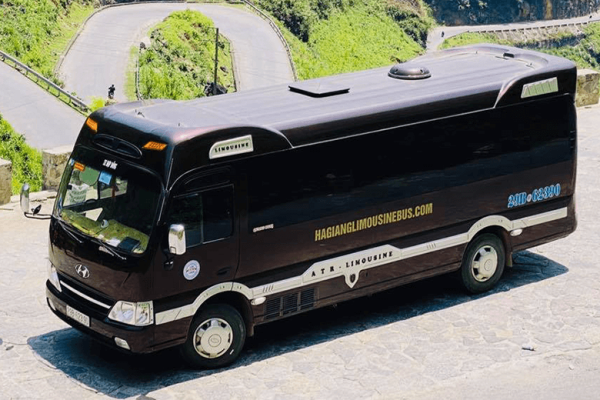
Confusingly, “limousine bus” in Vietnam doesn’t mean what you’d picture. It refers to smaller, higher-quality minibuses — usually 9 to 16 seats — with more comfortable seating than the standard sleeper bus, better suspension, and often more reliable departure times.
For the Ha Giang to Hanoi route, a VIP limousine option costs more than the standard sleeper but can offer a noticeably more comfortable experience. The vehicles are smaller, which helps on mountain road sections, and many operators in this category offer door-to-door or hotel pickup services.
If you’re traveling as a couple or in a small group and comfort matters more than saving a few dollars, the limousine option is worth checking. Availability changes by season and demand, so ask specifically for this when you’re booking rather than assuming the first result you see is the best option.
One thing to clarify before booking: confirm the actual vehicle type. “Limousine” is used loosely by different operators and the experience can vary significantly. Ask how many seats the bus has, whether it’s a dedicated minivan service, and what the drop-off location in Hanoi is.

Learn more: Ha Giang Cao Bang 5 Days 4 Nights
A private vehicle from Ha Giang to Hanoi is the most comfortable daytime option and makes sense in several situations: you’re traveling in a group, you have a lot of gear, you want to stop for photos on the way back, or you simply don’t want to spend the night on a bus.
Private cars and minivans are worth considering when:
The journey by private car is similar in duration to the bus — roughly 5 to 7 hours depending on stops and traffic. The difference is you control the schedule, the stops, and the comfort level.
Your guesthouse or a local tour operator in Ha Giang can arrange a private vehicle. Loop Trails can also help coordinate transport logistics, particularly if you’re finishing one of our Ha Giang Loop tours and need a clean, pre-arranged return to Hanoi. Reach out via WhatsApp to discuss what you need before your last day on the loop.
Pricing for private vehicles varies significantly depending on the vehicle type, the operator, and whether it’s high season. Get a quote in advance and confirm what’s included (fuel, tolls, drop-off location in Hanoi).
Learn more: Ha Giang Motorbike Rental
If you’ve been riding your own motorbike on the loop — either a rental or a bike you bought in Hanoi — the question of what to do with it on the return is one you’ll need to answer before you start, not at the end.
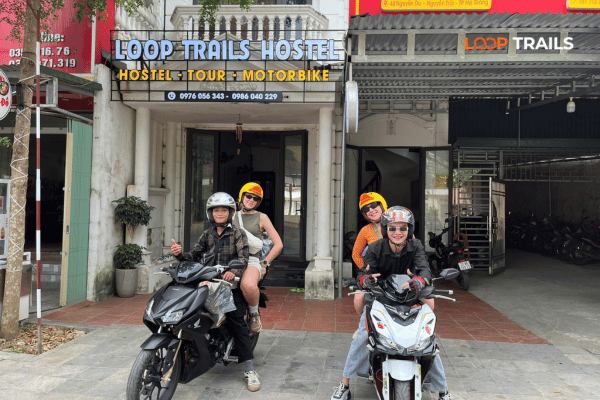
If you rented a motorbike in Ha Giang, your rental agreement will specify where the bike needs to be returned. Most Ha Giang rental operators expect the bike back in Ha Giang — not Hanoi. Riding a Ha Giang rental to Hanoi and leaving it there typically incurs extra fees or is simply not allowed under the rental terms. Read your agreement carefully and clarify this with the rental company before you leave.
If you rented from a Hanoi-based company that allowed you to pick up in Hanoi and drop off in Hanoi (with Ha Giang as part of the journey), then riding back makes more sense. The Hanoi to Ha Giang road is a long day’s ride — roughly 300 kilometers — and the return journey adds another full travel day to your trip. Factor this in when planning your overall itinerary.
At Loop Trails, our motorbike rental terms are clear upfront — check our Ha Giang motorbike rental page for the specifics on pickup, drop-off, and what’s covered.
If you bought a motorbike for a longer Vietnam trip and the Ha Giang Loop is part of it, Ha Giang is a reasonable place to sell before taking a bus or car back to Hanoi. There’s a market for used motorbikes among travelers in Ha Giang city, particularly at guesthouses that facilitate these transactions. Prices depend on the bike’s condition, age, and how motivated you are to sell quickly.
Leaving a bike at a guesthouse to be sold later while you travel on is also possible but requires trust in the arrangement. If this is your plan, set clear terms in advance.
Learn more: Ha Giang Cao Bang Ba Be Lake 6 Days 5 Nights
There is no commercial airport in Ha Giang. The nearest domestic airports are in Hanoi (Noi Bai) and depending on where you’re ending your trip potentially in other northern cities.
This means flying home from Ha Giang isn’t a direct option. What some travelers do is arrange a private car from Ha Giang to Noi Bai airport directly, bypassing Hanoi city center and heading straight to the airport if they have an onward flight. This is efficient if your flight departs in the late afternoon or evening after a morning departure from Ha Giang.
If you’re connecting to an international flight from Hanoi, plan your Ha Giang departure with enough buffer. The road from Ha Giang to Hanoi takes multiple hours, and traffic approaching the city can add time unpredictably. Missing an international flight because you underestimated the journey from Ha Giang is a real risk give yourself more time than you think you need.

Learn more: Ha Giang Loop by Jeep for Families & Groups
This is the option most people don’t consider because they’re already mentally in “returning mode.” But if you have time, the northeastern route from Ha Giang toward Cao Bang is one of the best decisions you can make.
The road east from Ha Giang (or from Meo Vac via Bao Lac) takes you into Cao Bang province, which has its own extraordinary landscape — and significantly fewer tourists than Ha Giang. Ban Gioc Waterfall, the largest waterfall in Southeast Asia by some measures, sits on the Chinese border near Trung Khanh. Phia Oac mountain offers a cooler, forested alternative to the rocky karst scenery of Ha Giang. The whole area is genuinely undervisited relative to its quality.
If you’re finishing your Ha Giang Loop and have 2 to 4 extra days, adding Cao Bang before heading to Hanoi is one of the most rewarding ways to extend a northern Vietnam trip. Our Ha Giang and Cao Bang combined tour covers both regions in one itinerary, with transport and logistics handled end to end.
From Cao Bang city, the road to Hanoi is a long but straightforward journey — roughly 270 kilometers by the main route. Sleeper buses and private vehicles run this route regularly. Check current schedules when you’re in Cao Bang.
If you’re considering the full combined route — Ha Giang Loop, then Cao Bang, then Hanoi it’s worth planning the whole thing before you start rather than figuring it out as you go. The logistics are manageable, but transport connections in remote northeastern Vietnam work best when they’re arranged in advance.

Learn more: Ha Giang Loop Mistake to Avoid
A few things worth knowing before you commit to any option:
Book before your last day on the loop. During October and November, sleeper bus seats on the Ha Giang to Hanoi route fill up. If you’re finishing the loop on a Friday or Saturday, competition for seats is higher. Your guesthouse on the last night of the loop can often book for you — ask them the evening before you need to travel.
Confirm your drop-off point in Hanoi. Buses and minivans don’t all terminate at the same location in Hanoi. Some drop at My Dinh bus station (western Hanoi), some at Giap Bat (southern), and some run closer to the Old Quarter. Confirm this before you board, and check how far it is from where you’re staying. A taxi or Grab from the bus station may add another 30 to 60 minutes depending on Hanoi traffic.
Don’t leave transport planning until the morning you need to travel. This sounds obvious but it catches people out regularly. Especially if you’ve had a long final day on the loop and arrive in Ha Giang city in the late afternoon already tired, having a confirmed bus or car seat waiting is worth the small effort of planning a day ahead.
Check whether your guesthouse has a commission relationship with specific operators. Most do, which isn’t inherently a problem — they’ll usually point you toward reliable options. But it means you might not get the full picture of what’s available if you only ask one person. Cross-reference with Baolau or 12go.asia if you want to compare options independently.
Road conditions affect journey times. After heavy rain or during construction seasons, the road from Ha Giang toward Hanoi can slow significantly. If you have a flight or a tight connection in Hanoi, always build in buffer.
Learn more: Ha Giang Loop Easy Rider
The right answer depends on your priorities, group size, budget, and how much of your trip is left.
You want the cheapest option and don’t mind an overnight bus: the standard sleeper bus is your answer. Book through your guesthouse or online, confirm the departure time and Hanoi drop-off point, and bring a layer for the air conditioning.
You want more comfort without paying private car prices: look specifically for a limousine minibus service. Fewer seats, better ride quality, sometimes door-to-door. Worth the modest price difference if comfort matters.
You’re in a group of 3 or more, or you have a lot of gear: a private car or minivan often works out comparable in per-person cost to a limousine bus, with the added benefit of schedule control and stops where you want them. Contact us to help arrange transport if you’re finishing a Loop Trails tour.
You want to keep riding and have the flexibility: if your motorbike situation allows it and you have another day or two, there’s something satisfying about riding the Hanoi road yourself. Just make sure your rental terms allow it and your body is actually up for another long day in the saddle.
You have extra time and haven’t been to Cao Bang: seriously, consider the extension. The Ha Giang and Cao Bang combined route is one of northern Vietnam’s best-kept secrets among independent travelers, and it solves the “how do I get back to Hanoi” question by building it into a bigger itinerary rather than treating it as a logistics afterthought. Take a look at our combined Ha Giang Cao Bang tour if you want a structured option for this.

Learn more: Ha Giang Packing list
By bus or private car, expect roughly 5 to 7 hours depending on the route, stops, and traffic approaching Hanoi. Departure times and road conditions affect this significantly. Always check current schedules rather than assuming fixed times.
Yes, multiple operators run overnight buses on this route. Your guesthouse in Ha Giang can book a seat, or check platforms like Baolau or 12go.asia for current schedules and operators. Book at least a day ahead during peak season.
A private car or VIP limousine minibus gives you the most comfort. For groups splitting the cost, a private vehicle is often the most practical premium option. Sleeper buses vary in quality depending on the operator.
It depends on your rental terms. Most Ha Giang-based rentals require the bike returned to Ha Giang. If you rented from a Hanoi company with a return-to-Hanoi arrangement, riding back is possible — but it adds a full travel day. Check your rental agreement before planning this.
No. The nearest commercial airport is Noi Bai International Airport in Hanoi. Some travelers arrange a direct private car from Ha Giang to the airport if they have an onward flight, bypassing Hanoi city. Build in significant buffer time if connecting to an international flight.
It depends on the operator. Common arrival points include My Dinh bus station and Giap Bat bus station. Some limousine services drop passengers closer to the Old Quarter. Always confirm the Hanoi drop-off point when you book.
During peak season (October to November) yes — book at least a day ahead, ideally two. During quieter periods, same-day booking is often possible, but advance booking is always lower stress.
Yes, and it’s a great option if you have extra time. The route east from Ha Giang (or via Meo Vac and Bao Lac) connects to Cao Bang, which has Ban Gioc Waterfall and Phia Oac among its highlights. From Cao Bang you can then take transport back to Hanoi. We run a combined Ha Giang and Cao Bang tour if you want logistics handled.
Stay another night in Ha Giang and book the following day’s bus. Ha Giang city has plenty of guesthouses and there’s no penalty for spending an extra night. The loop rewards people who don’t rush.
Yes, this is common. Your guesthouse can arrange it, or you can ask around on the morning of travel. For a stress-free experience, arrange the vehicle at least the evening before you need it — last-minute private car bookings can be harder to arrange on short notice during busy periods.
The Ha Giang to Hanoi road is a major route in decent condition for Vietnam’s north. Traffic is heavier than on the loop roads, and the driving style requires some adjustment if you’re riding yourself. For passengers on buses or private cars, the main variables are driver quality and weather conditions — both of which are hard to control, which is why choosing a reputable operator matters.
Your most practical move is to take local transport from Meo Vac back to Ha Giang city first, then connect to Hanoi from there. Direct Meo Vac to Hanoi transport options are much more limited. If you’re on a combined route heading toward Cao Bang instead, Meo Vac to Bao Lac to Cao Bang is a viable continuation.
Contact information for Loop Trails
Website: Loop Trails Official Website
Email: looptrailshostel@gmail.com
Hotline & WhatSapp:
+84862379288
+84938988593
Social Media:
Facebook: Loop Trails Tours Ha Giang
Instagram: Loop Trails Tours Ha Giang
TikTok: Loop Trails
Office Address: 48 Nguyen Du, Ha Giang 1, Tuyen Quang
Address: 48 Nguyen Du, Ha Giang 1, Tuyen Quang

Facebook X Reddit Table of Contents Learn more: Ha Giang Loop Tours This is the question that sits in almost every Ha

Facebook X Reddit Table of Contents Learn more: Ha Giang Loop Tours Most people drive past the Quan Ba area twice on