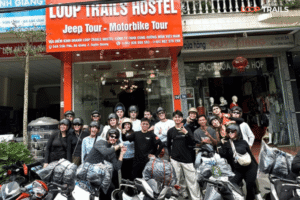


Thúy Kiều (Grace) is a travel blogger and content contributor for Loop Trails Tours Ha Giang. She holds a bachelor’s degree in Sustainable Tourism from Vietnam National University, Hanoi, and has a strong passion for exploring and promoting responsible travel experiences in Vietnam’s northern highlands.
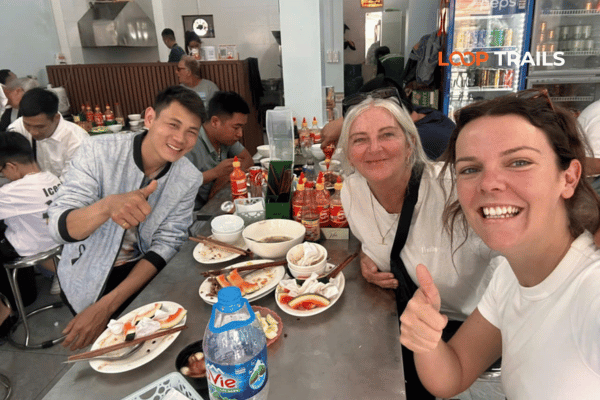
Learn more: Ha Giang Loop Tours
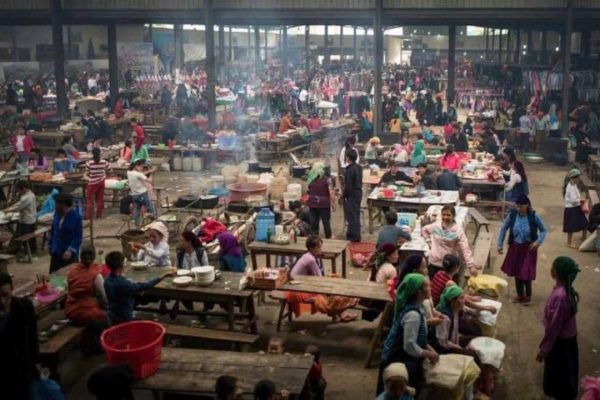
There is a large iron pot sitting over a wood fire at almost every Sunday market in Ha Giang Province. It has been simmering since before dawn. By the time the market fills up around mid-morning, a queue has usually formed — H’mong farmers, Lo Lo women in embroidered jackets, the occasional curious traveler hovering nearby trying to figure out what exactly is in the pot.
What is in the pot is Thang Co.
If you are planning a trip to Ha Giang and you have done any research at all, you have probably seen the name come up. It gets mentioned alongside Ma Pi Leng Pass and Dong Van Old Quarter as one of the things you are supposed to do. But unlike a viewpoint or a mountain road, a dish comes with questions. What is it actually made of? Is it something a first-time visitor can realistically eat? Where do you find it? Is it worth the hype?
This guide answers all of that directly, without overpromising or talking around the parts that might genuinely surprise you.
Learn more: Ha Giang Loop 2 Days 1 Night
Thang Co is a traditional stew that has been eaten in the mountainous regions of northern Vietnam for centuries. The name comes from the H’mong language and roughly translates to something like “broth with meat,” though that description undersells how specific and culturally significant the dish actually is.
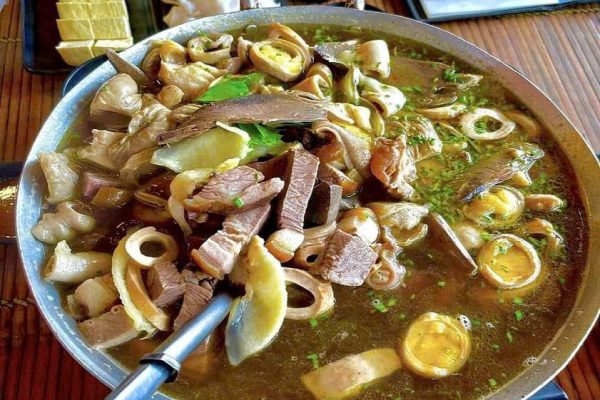
At its core, Thang Co is a slow-cooked stew made from horse meat and offal, simmered for hours in a single pot with spices. The version most commonly served at markets today can also use buffalo or other meats depending on the region and the vendor, but horse remains the most traditional and most associated with the H’mong community specifically.
It is a cold-weather food, a market food, a social food. It is not something eaten alone at home for a quick weeknight dinner. Thang Co is eaten at gatherings, at markets, at the end of a long week of farming. The social context is as much a part of the dish as the ingredients.
Thang Co has roots in the H’mong community, who have lived in the high mountain regions of what is now Ha Giang, Lao Cai, and neighboring provinces for generations. The dish evolved as a way to use the whole animal, horse in particular, which was both a working animal and a food source in a subsistence farming context.
Nothing was wasted. Meat, organs, bones, blood — all of it went into the pot. The long simmering process and the spice blend (which includes ingredients like star anise, cardamom, and various local herbs depending on the family recipe) served a practical purpose as much as a culinary one: it made tough cuts edible and extended the life of perishable parts.
Over time, Thang Co became inseparable from the culture of the highland Sunday markets, which are themselves major social events. Market day was when communities gathered, traded, arranged marriages, caught up with relatives from distant villages. Thang Co was the communal pot you sat around while doing all of that.
The H’mong are most closely associated with Thang Co, and you will find the most traditional versions at markets in areas with large H’mong populations — Dong Van, Meo Vac, Yen Minh, and the Bac Ha area in neighboring Lao Cai Province.
The dish has spread and been adapted by other highland communities including the Lo Lo, Giay, and Tay people, each with slight variations in spicing and sometimes in the choice of meat. In some areas you will find versions made primarily with beef or buffalo, especially in markets where horse meat is less common.
In Ha Giang specifically, the strongest Thang Co culture sits in the Dong Van Karst Plateau area, which includes Dong Van town and Meo Vac. These are also the most dramatic sections of the Ha Giang Loop, which is not a coincidence — this is the heartland of the H’mong highlands.
Learn more: Ha Giang Loop 3 Days 2 Nights
Let’s be specific, because this is the part most travelers want to know before deciding whether to try it.
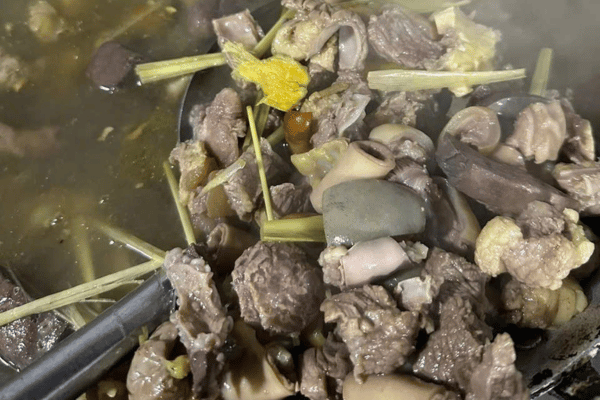
A traditional Thang Co uses:
No two pots of Thang Co taste exactly alike. The spice blend is part of what individual vendors and communities take pride in.
The cooking starts early, sometimes the night before a market. Bones go in first to build the base, then meat and offal are added in stages depending on cooking time required. The pot simmers continuously over a wood fire, and as pieces are ladled out for customers, more ingredients are added throughout the day.
The result is a broth that is deeply savory, quite dark in color, and rich in a way that is difficult to describe if you have not had something similar before. It is not spicy in the chili-forward way of some Southeast Asian dishes. The heat is present but measured. The dominant notes are the spice blend and the depth from long-simmered bones and offal.
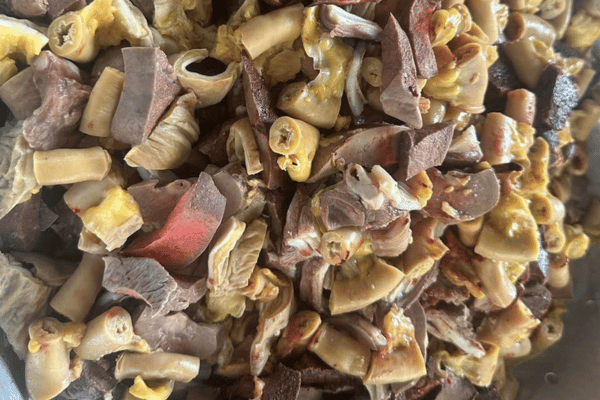
The texture of the meat in the bowl ranges from tender chunks of muscle to softer offal pieces, depending on what you get in your serving. You can usually indicate a preference for more or less offal if there is a language bridge available, though at a busy market stall this is not always straightforward.
Learn more: Ha Giang Loop 4 Days 3 Nights
This is the section most people scroll to first, so here is an honest answer.
If you like offal, or if you have eaten things like menudo, haggis, or pho with tendons and tripe, Thang Co will be familiar in concept and probably enjoyable. The flavor is bold and earthy, with a complexity from the long simmer and the spice blend that makes it genuinely interesting rather than just intense.
If you are not an offal eater, the experience is more challenging. The smell of the pot before you taste anything is strong. The pieces in the bowl are varied and not all of them are identifiable at a glance. The broth itself is rich enough that your palate needs a moment to calibrate.
A few honest observations from people who have tried it:
The spice blend is the saving grace for uncertain first-timers. Even if the offal aspect is unfamiliar, the flavors from star anise, cardamom, and the other aromatics give the dish a frame of reference. It is warming and complex in a way that rewards eating slowly.
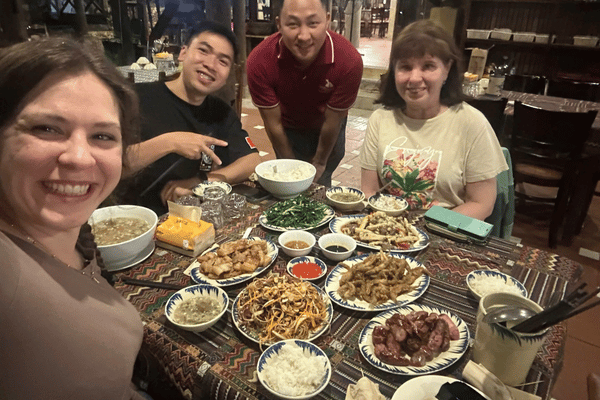
The experience of where you eat it matters as much as the food itself. Sitting at a low table at a Sunday market, surrounded by the activity of the market, drinking corn wine from a small cup, with a bowl of Thang Co in front of you — that context makes the dish make sense in a way that is hard to replicate anywhere else.
You do not have to finish the bowl. Nobody will be offended if you try it and decide it is not for you. Ordering and engaging with the food is already a genuine cultural gesture.
Timing your Ha Giang Loop around the Sunday markets takes some planning. If you want to make sure you hit Dong Van or Meo Vac on the right day with enough time to actually sit down at the market, a guided tour handles that automatically. See our Ha Giang Loop tour options — we build market days into the itinerary so you do not miss the best stops.
Learn more: Ha Giang Cao Bang 5 Days 4 Nights
Thang Co is a market food. You can occasionally find it at small restaurants in Dong Van or Meo Vac town, but the proper experience happens at the outdoor Sunday markets where vendors have been maintaining their pots since before you woke up.
The market setting also matters for the dish culturally. Thang Co eaten at a market means eating alongside the communities for whom this is a weekly ritual. That context is not available at a restaurant table.
Dong Van Sunday Market takes place weekly (check current days locally, as market schedules can occasionally shift). The old quarter of Dong Van has a market area that draws H’mong, Lo Lo, and other highland communities from surrounding villages. This is one of the most atmospheric markets on the loop and the Thang Co vendors here are usually easy to find — follow the smoke and the crowd.
Meo Vac Sunday Market is similarly significant and draws a large H’mong crowd. Meo Vac sits at the end of the famous stretch of road past Ma Pi Leng Pass, making it a natural stop on any loop itinerary. The market has a raw, unpolished energy that some travelers prefer to the slightly more tourism-aware atmosphere of Dong Van.
Yen Minh Market is smaller but worth knowing about if your itinerary passes through mid-week.
Can Cau Market in Lao Cai Province (not Ha Giang proper, but accessible via some loop extensions) is known for its Saturday market and strong Thang Co culture. Rules and access can vary, so check current information before building this into a tight schedule.
Bac Ha Market in Lao Cai is one of the most famous in the region and also excellent for Thang Co, but it requires extending your trip beyond the standard Ha Giang Loop.
At a market stall, you sit on a low plastic stool at a communal table or a shared bench. You point at the pot, indicate how much you want, and a bowl is ladled out in front of you. Payment is in cash, amounts are small, and there is usually no menu. Corn wine (ruou ngo) is often available to drink alongside.
At a restaurant in Dong Van or Meo Vac town, Thang Co is sometimes available as a menu item. The version here tends to be slightly more refined and more accessible for first-timers — less offal-heavy, cleaner presentation, and you can ask questions more easily. The trade-off is that you lose the market atmosphere entirely.
For a first-time visit, the market experience is worth the slight unfamiliarity. It is the real thing, and it is not as intimidating once you are actually there.
Learn more: Ha Giang Market Day
Thang Co cannot be fully separated from the Sunday markets, and the markets cannot be fully separated from the Ha Giang Loop experience. So it is worth understanding what these markets actually are and why they matter.
The highland Sunday markets of northern Vietnam are not shopping events in the contemporary sense. They are weekly community gatherings that predate any kind of modern commerce. Villages scattered across valleys and high ridges converge on a central location once a week to trade goods, see family and friends, exchange news, arrange deals, and in many cases, simply be in community with people from the same ethnic group who live too far away for daily contact.
For visitors, they offer an unscripted window into highland life that no heritage site or museum can replicate. The colors of traditional clothing, the sound of different languages being spoken simultaneously, the smell of the food stalls, the sight of a grandfather drinking corn wine at 9am next to a teenage kid on a smartphone — it is complicated and alive in a way that makes Ha Giang feel genuinely different from tourist-circuit Vietnam.
Dong Van’s market takes place in and around the old quarter, a cluster of traditional houses with tiled roofs that has been recognized as a heritage site. The market spreads through narrow lanes and into a central open area. H’mong women sell embroidered textiles, vegetables, and medicinal herbs. Men gather around the Thang Co pots and the corn wine tables.
The best time to arrive is before 10am. By late morning the market is at full capacity and by early afternoon it begins to wind down. If you are riding the loop and spending a night in Dong Van, timing your arrival the evening before a Sunday market is very much worth it.
Meo Vac’s market has a slightly rougher atmosphere and draws heavily from the surrounding valleys and the communities that live above the Nho Que River gorge. The approach to Meo Vac from Ma Pi Leng is one of the most dramatic on the entire loop, and if you time your arrival correctly, the market adds a cultural dimension to what might otherwise be a primarily scenic day.
Thang Co vendors at Meo Vac are prominent and the portions are generous. The market also has a livestock section that is worth walking through if you want to understand the agricultural economy of the plateau.
Learn more: Corn wine “Happy Water” in Ha Giang
Thang Co arrives in a bowl or sometimes in a small individual pot that stays warm over a tiny flame. It is eaten with chopsticks and a spoon. There is usually bread (banh mi) or rice available nearby to eat alongside, which is a good idea both for flavor balance and for practical reasons if you have a sensitive stomach.
Eating slowly is the norm. Nobody rushes through Thang Co at a market. Take your time, drink some corn wine between bites, watch the market around you.
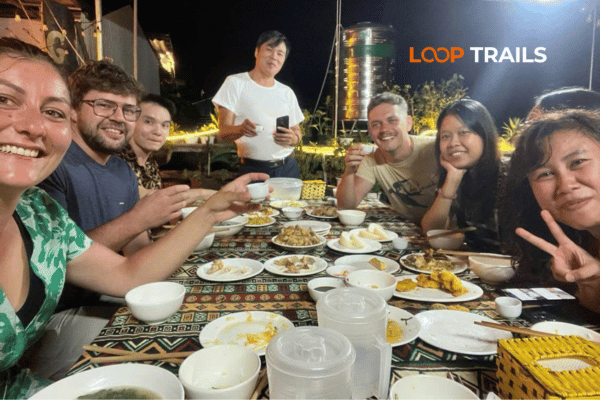
Ruou ngo, corn wine, is the traditional accompaniment. It is a clear spirit made from fermented corn and it is potent — the alcohol content varies but it is not a slow-sipping wine in the casual sense. Small cups are the norm. Drinking alongside local men at the market table is a social gesture that will usually be met warmly.
If corn wine is not for you, that is completely fine. Nobody will be offended if you wave it off. Water or warm tea is available at most stalls.
A few practical points:
The easiest way to experience the Dong Van or Meo Vac markets properly is with someone who knows the area. Our Easy Rider guides are local, know which vendors to trust, and can help you navigate the market without the guesswork. See our Ha Giang Easy Rider tours or get in touch on WhatsApp to talk through your itinerary.
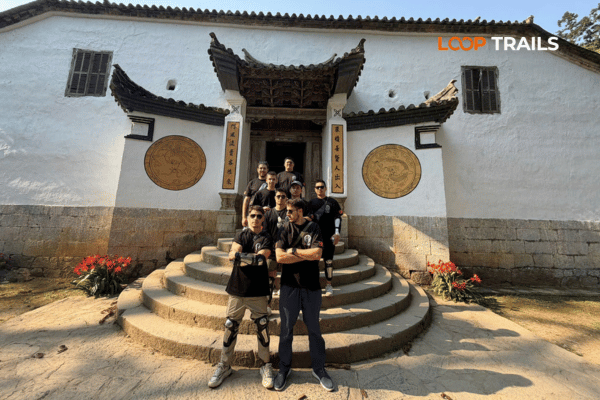
Learn more: Hmong’s King Vuong Palace
This is where trip planning gets practical, and it is worth thinking through before you book anything.
The markets in Ha Giang Province do not all fall on Sunday despite the name “Sunday market” being used as a general term in English. Different markets operate on different days of the week, and they often follow a traditional calendar cycle rather than a fixed day. This means the same market might fall on different days of the Gregorian calendar from month to month.
The general pattern for the main markets most relevant to loop travelers:
Always cross-reference market days with your tour operator or a recent traveler report. Building an entire day’s itinerary around a market and arriving to find it does not run that day is a frustrating and avoidable mistake.
This is the practical question. Getting to Dong Van or Meo Vac on the right day requires either good planning or a guide who has already done that planning for you.
With a guided tour (Easy Rider or Jeep): Your itinerary is already built around the market days. A competent Ha Giang loop operator knows which days the main markets run and schedules accordingly. You do not need to do the calendar math yourself.
Self-drive with a rental motorbike: You have full control over your timing, which is both the advantage and the responsibility. You will need to plan your market days in advance and adjust your pace accordingly. This is completely manageable but requires more preparation than a guided trip.
Completely independent: Same as self-drive in terms of planning requirements, with the added challenge of navigating unfamiliar mountain roads on your own schedule. Possible for experienced riders, but getting the timing right for market days adds one more variable to manage.
If market culture is a priority for your Ha Giang trip — and Thang Co is really only worth seeking in that context — then building your itinerary around market days from the start is the right move.

Learn more: Ha Giang Loop by Jeep for Families & Groups
Not everyone who reads about Thang Co will want to try it, and not everyone who wants to try it will be on the same kind of trip. Here is a quick breakdown by traveler type.
The food-focused traveler: You are here specifically to understand Ha Giang culture through food. You want the full market experience, ideally with someone who can explain what you are seeing. Easy Rider tours are the best fit. Your guide can take you directly to the best vendors, provide real-time context about the dish and the market, and help you communicate with vendors if needed.
The independent rider who wants to experience everything: You are riding your own bike, probably with a planned itinerary, and you want to fit the market in without breaking your pace. Self-drive with good pre-trip research works well here. Book a rental bike in good condition, know your market days, and budget a few hours for each market rather than treating it as a quick stop.
The traveler who is curious but uncertain about the food: Try a small bowl at the market. You do not have to commit to finishing it. The market experience itself, even without eating Thang Co, is worthwhile. Consider a jeep tour if riding does not appeal to you — you can still hit the markets and enjoy the scenery without being on a motorbike.
Groups with mixed preferences: Jeep tours handle mixed groups well because they remove the physical demands of riding while still covering all the key stops. One person in your group can go straight for the Thang Co while another grabs some local fruit from a nearby stall. Everyone wins.
Ready to plan a Ha Giang Loop trip that actually gets you to the right places at the right time? Browse our tour options — Easy Rider, self-drive, and jeep tours available with different itinerary lengths. Or reach out on WhatsApp if you want to talk through your dates before booking.

Learn more: Ha Giang Loop Mistake to Avoid
Do not expect Thang Co at a restaurant to taste the same as at a market. It rarely does. The continuous simmer of the market pot, the wood fire, the hours of development — that is not something a restaurant kitchen replicates. If you only eat Thang Co at a tourist-facing restaurant, you will have an easier but incomplete experience.
Do not skip the corn wine entirely if you are open to it. The combination of Thang Co and ruou ngo is the full picture. They balance each other in a way that is genuinely interesting from a food pairing standpoint.
Do not over-romanticize the dish. Thang Co is working food, market food, practical food. It was not designed with tourism in mind. Approaching it with curiosity and openness rather than a food-tourism checklist mentality makes the experience much better.
Do not assume all markets are the same. Dong Van and Meo Vac have different characters. Can Cau and Bac Ha have different characters again. If you have time for more than one market, each one is worth visiting on its own terms.
Do not go to a market and photograph people aggressively without any social engagement. The markets are real community events. Sitting down, ordering food, making eye contact, smiling — these basic acts of participation change how people interact with you and result in much better photos as a natural by-product.
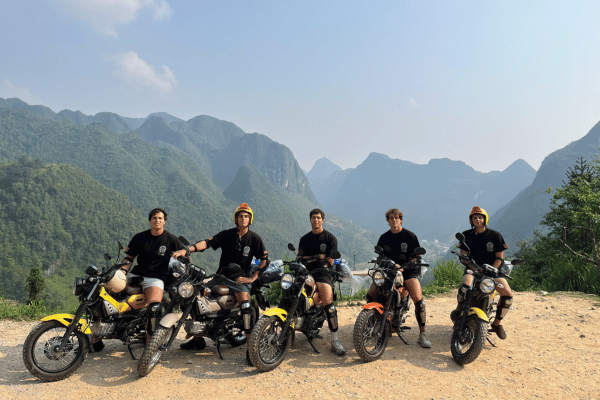
Learn more: Ha Giang Motorbike Rental
Thang Co is a traditional H’mong stew made from horse meat and offal, slow-cooked in a large pot with a blend of local spices including star anise, cardamom, and other aromatics. Some versions use buffalo or beef, and the exact spice blend varies by vendor and region.
That depends heavily on your relationship with offal and rich, earthy flavors. People who enjoy dishes like tripe, liver, or bone marrow tend to find Thang Co genuinely interesting and satisfying. First-timers often find the spice blend and the warming richness more accessible than they expected, even if the offal aspect is unfamiliar.
The best place is at the Sunday markets in Dong Van and Meo Vac. You can sometimes find it at restaurants in Dong Van town, but the market experience is significantly more authentic and culturally meaningful. The Bac Ha market in Lao Cai is also excellent if your itinerary extends that far.
The continuous high-heat simmering of the Thang Co pot is thorough. This is a traditional method that has been used safely for generations. Standard food safety awareness applies choose vendors with an active, hot pot and a good crowd — but this is not a particularly high-risk dish compared to cold market foods.
Horse meat is the most traditional ingredient but not universal. Some vendors use buffalo or beef. If this matters to you, ask before ordering, or use a translation app to check. Market vendors are generally straightforward if you ask clearly.
Corn wine (ruou ngo) is the traditional accompaniment. It is a clear spirit made from fermented corn and it is strong. Small cups are the norm. If you prefer not to drink alcohol, water or tea is available at most stalls and no social pressure applies.
Dong Van and Meo Vac both have weekly markets, typically on Sundays, but market schedules follow traditional cycles and can vary. Always verify current market days with your tour operator or a recent local source before planning your itinerary around them.
Prices are very low by any international standard. Check current pricing locally as amounts vary by vendor and portion size. Carry small denomination Vietnamese dong since large bills are difficult to change at market stalls.
The markets have plenty of vegetable dishes, fruit, and other food options beyond Thang Co. You will not go hungry as a vegetarian, but Thang Co itself is not an option. The market experience is fully worth attending regardless of diet.
Most standard Ha Giang Loop itineraries of three to four days include at least one Sunday market stop, either Dong Van or Meo Vac. These markets fall naturally on the route and most tour operators build them into the schedule. If you are self-driving, plan your pace to arrive at the market town the night before.
Yes, significantly. It is not comparable to pho, bun bo Hue, or other Vietnamese broth dishes in terms of ingredients or method. Thang Co is specific to the H’mong highlands and reflects the food culture of high-altitude farming communities. It stands alone as a dish.
Versions exist in other highland market areas in northern Vietnam, including Lao Cai Province around Bac Ha and Sapa, and in some areas of Cao Bang Province. But Ha Giang, particularly Dong Van and Meo Vac, is the place most closely associated with it and the place where the experience is most concentrated and culturally intact.
Contact information for Loop Trails
Website: Loop Trails Official Website
Email: looptrailshostel@gmail.com
Hotline & WhatSapp:
+84862379288
+84938988593
Social Media:
Facebook: Loop Trails Tours Ha Giang
Instagram: Loop Trails Tours Ha Giang
TikTok: Loop Trails
Office Address: 48 Nguyen Du, Ha Giang 1, Tuyen Quang
Address: 48 Nguyen Du, Ha Giang 1, Tuyen Quang
Facebook X Reddit Table of Contents Learn more: Ha Giang Loop Tours This is the question that sits in almost every Ha

Facebook X Reddit Table of Contents Learn more: Ha Giang Loop Tours Most people drive past the Quan Ba area twice on