
Thúy Kiều (Grace) is a travel blogger and content contributor for Loop Trails Tours Ha Giang. She holds a bachelor’s degree in Sustainable Tourism from Vietnam National University, Hanoi, and has a strong passion for exploring and promoting responsible travel experiences in Vietnam’s northern highlands.
Learn more: Ha Giang Loop Tours
Most people ride the Ha Giang Loop for the road, the cliffs, the river bends. What they remember a year later is something smaller: a wedding procession blocking the highway near Yen Minh, an old man playing the khen flute outside a stilt house, a crowded market morning where everyone, somehow, knew everyone else.
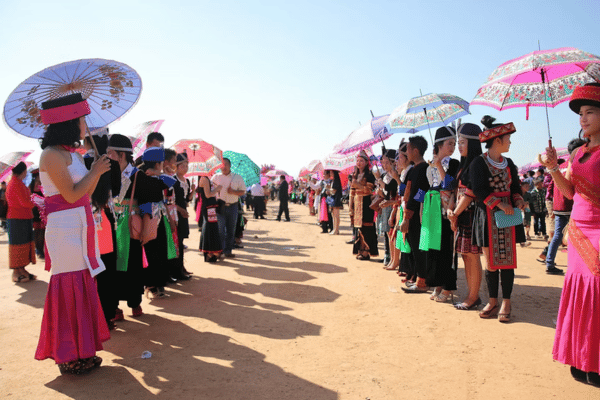
Ha Giang’s calendar is busier than the postcards suggest. Twenty plus ethnic groups live across this province, and most of them keep their own celebrations. Some are sacred and almost private. Others are loud, public, and full of corn wine. A few have been polished into official tourism events; many haven’t.
This guide walks you through what’s happening when, which festivals are actually worth structuring a trip around, and how to time your loop so you stumble into the right kind of week. I’ll tell you what I’d recommend after years of running tours up here, and where the real thing is hiding when the official schedule looks quiet.
Learn more: Ha Giang Loop 2 Days 1 Night
Almost every traditional festival in Ha Giang follows the lunar calendar, not the Western one. That means the dates shift by two to four weeks every year. Khau Vai Love Market, for example, is on the 27th day of the 3rd lunar month: sometimes that lands in late April, sometimes early May.
A few things to keep in mind:
If a specific festival is the entire reason you’re coming, leave a two or three day buffer on either side of the published date. Things start late, end early, or move because of weather.
Learn more: Ha Giang Loop 3 Days 2 Nights
This is the rough rhythm of the year. Treat it as a planning skeleton, not a fixed schedule.
The biggest stretch of the year for celebrations in Vietnam, and Ha Giang is no exception. Vietnamese Tet (Lunar New Year) usually falls in late January or early February. For about a week before and after, life slows down: shops close, families travel home, and many tours pause. If you visit during this window, expect quieter roads but a few practical headaches: some homestays close, transport gets booked solid, and prices climb.
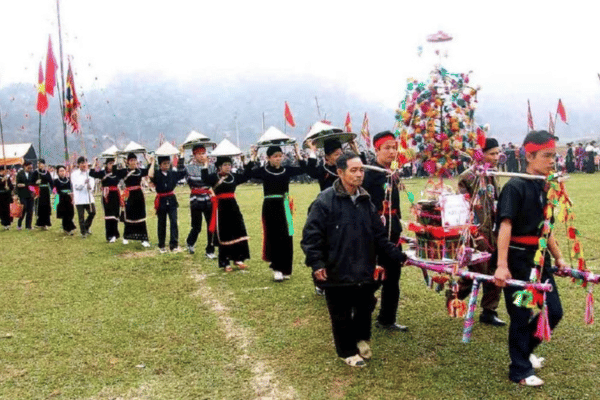
Right after Tet, the Long Tong Festival (sometimes called Lồng Tồng) is held by the Tay and Nung communities, mostly in valleys around Bac Me and Vi Xuyen. The name translates roughly as “going down to the fields.” Villagers gather to bless the land before the new planting season, with offerings of sticky rice, roast pig, and a lot of singing. The fun part for visitors is the games: tug of war, stick pushing, and the cong throwing contest where teams try to land a colorful cloth ball through a high bamboo ring.
The Gau Tao Festival of the H’mong runs around the same time, often in the first lunar month. Originally a ritual to pray for children, it’s now a broader new year celebration. Look for a tall pine pole erected in the festival ground: that’s the center of it all.
A quieter month officially, but the markets come alive. After Tet, families travel between villages to visit relatives, and the Sunday markets in Meo Vac, Dong Van, and Hoang Su Phi fill up. This is also when several smaller ethnic communities hold spring rituals: the Pu Peo in Yen Minh, the Lo Lo in Meo Vac. These are mostly forest worship ceremonies, intimate and not staged for tourists.
The weather is unpredictable in March: clear blue mornings can flip into cold drizzle within hours. Roads are usually fine.
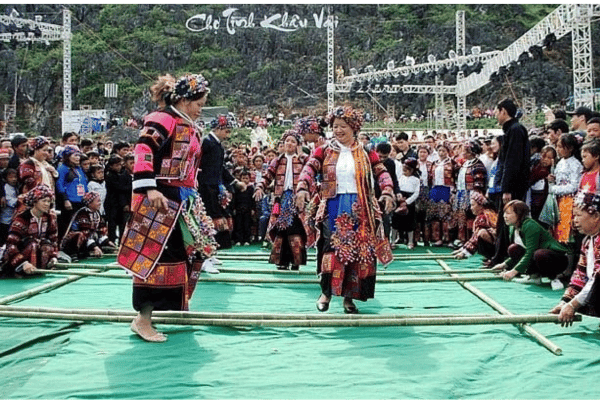
The big one. The Khau Vai Love Market (sometimes spelled Khau Vai Romance Market) happens on the 27th day of the 3rd lunar month, which usually lands in late April. This is the most famous traditional event in Ha Giang, and it deserves the attention.
Around it, several minority groups hold spring festivals tied to planting. Some H’mong villages still hold smaller versions of Gau Tao through April.
May is one of the calmer festival months. Villagers are busy in the rice paddies and corn fields. The exception: occasional New Rice planting ceremonies in some Tay communities, usually small and family scale.
Worth noting: late May is when the rains start. Roads in remote sections (Du Gia loop, Hoang Su Phi back roads) get slick. If you ride your own motorbike, plan for waterproofs.
Learn more: Ha Giang Loop 4 Days 3 Nights
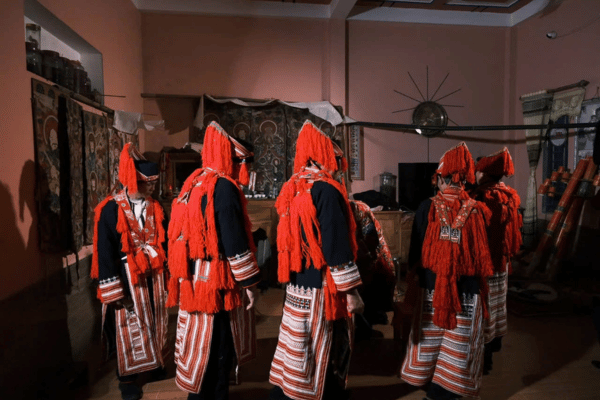
The Cap Sac ceremony of the Dao people doesn’t have a fixed date. Families hold it when their sons reach the right age, often in fall or winter when farm work eases, but some happen in early summer. It’s a multi day spiritual ordination ritual involving shamans, dances, and complex offerings. You can’t book this one. If you’re lucky enough to be invited or to pass through a village during one, treat it with respect.
July is hot and wet. Few major festivals. Some Buddhist temple events happen in towns like Ha Giang City, but those aren’t really the highlands tradition you came for. If you’re traveling now, focus on landscapes and markets instead.
As the early rice harvest comes in, several ethnic groups, the La Chi, Tay, Pu Peo, hold New Rice Festivals. Families pound the first harvest into flat rice cakes, make offerings to ancestors, and share meals. These are mostly family or hamlet scale events, but you can witness them if you stay with a local family during this window. Your homestay host will know.
Not strictly a festival, but worth flagging. From mid September to early October, the rice terraces of Hoang Su Phi turn gold. The province now holds an annual Hoang Su Phi Rice Festival to promote tourism, with cultural performances, weaving demos, and ethnic food markets in towns like Thong Nguyen and Ban Phung. If photography is your reason for coming, this is your window.
October is when Ha Giang gets visually loud. The Tam Giac Mach (Buckwheat) Flower Festival opens, usually around the third or fourth week of October, depending on bloom timing. Fields across Dong Van Plateau turn pink and white. The festival itself rotates between Dong Van, Meo Vac, Quan Ba, and Yen Minh districts, with an official opening ceremony, ethnic costume parade, and food fair.
October also marks the start of Pa Then Fire Dancing season in Hoang Su Phi. After the harvest finishes, the Pa Then community holds fire dancing rituals, recognized as national intangible cultural heritage. They run through to February.
This is, in my opinion, the best month to visit Ha Giang if festivals matter to you. Buckwheat is at full bloom in most fields. The buckwheat festival activities continue. Toward late November, some H’mong communities begin their new year celebrations (they follow their own calendar, about a month ahead of Vietnamese Tet).
Pa Then Fire Dancing is in full swing.
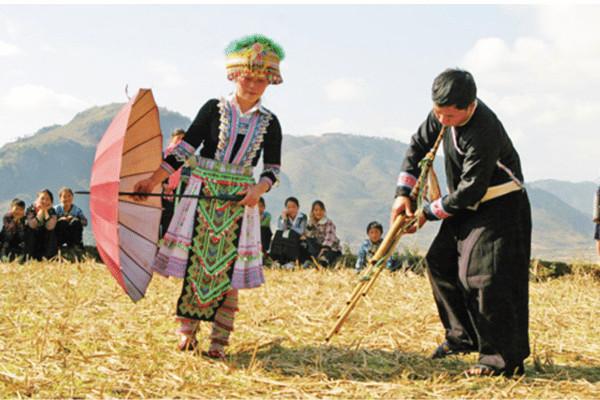
H’mong New Year is one of the most powerful festival experiences in the highlands, and it happens just as most tourists assume the season is over. Villages celebrate at slightly different times, but most fall in early to mid December. You’ll see traditional games (the Tu Lu spinning top, Pao throwing), young people in full traditional dress, ancestral offerings, and a lot of corn wine.
Late December is also when buckwheat is mostly gone, but the colder, drier weather makes for some of the clearest mountain views of the year.
Learn more: Ha Giang Cao Bang 5 Days 4 Nights
If you only have one trip and you want to time it well, these are the five I’d build a calendar around. Each has its own logic.
The legend behind Khau Vai is genuinely strange and tender. Two lovers from different ethnic groups couldn’t marry because of clan rules. They agreed to meet once a year at this remote crossroads. Locals turned the place into an annual gathering, and over centuries it became a market where former lovers, separated by life and circumstance, could see each other once a year without judgment.
It’s now an official cultural tourism event, which means it’s bigger and more polished than it used to be. The “official” stage shows can feel staged. But the surrounding market, the food stalls, the H’mong and Giay couples in full traditional dress, the older people who clearly still come for the original reason, are deeply moving if you slow down. Go a day early, stay a day after, and walk the side paths.
Practical note: Meo Vac homestays book out months in advance for this week. Plan ahead.
This one is the easiest to plan around because it lasts roughly six weeks. The flowers are the main event; the festival is the dressing. Highland fields fill with pink and white blooms, and almost every village along the loop has at least a patch of them.
The official festival rotates districts year by year. The opening ceremony usually has performances, costume parades, and food markets, and it draws domestic tourists by the busload, so the central town gets crowded that weekend. If crowds aren’t your thing, skip the opening, ride out to the fields between Pho Cao and Sung La instead. That’s where the photos most people see actually come from.
Mid October to mid November is the sweet spot.
Learn more: Ha Giang Cao Bang Ba Be Lake 6 Days 5 Nights
If you want to see the highlands at their most local and least polished, come for H’mong New Year. Communities don’t hold a single coordinated festival; each village picks its own time within a roughly three week window. That means you can hop between villages and catch celebrations at different stages.
What to look for: ancestral offerings on family altars, the Tu Lu spinning top contest, the Pao ball game (young men and women toss a cloth ball back and forth in a courtship ritual), and traditional dress that’s reserved for this one event of the year.
It’s cold. Bring layers. Some homestays raise prices slightly, but availability is usually fine because most international tourists don’t realize this is happening.
This isn’t a single event but a season of rituals held in Pa Then villages around Hoang Su Phi and Bac Quang. After a fire is built and burned down to glowing coals, shamans go into trance and dance, barefoot, on the embers. It’s a real ritual, not a performance for tourists, and it’s the kind of thing that stays with you.
You can’t always plan exact timing. The best approach: contact a homestay in Pa Then villages near Tan Bac commune, ask when the next fire dance is scheduled, and build your route around it. Or ask a tour operator who knows the area to keep you posted.
If you’re already in northern Vietnam after Tet, these post new year festivals are worth a detour. Long Tong (Tay and Nung) is the more accessible one, often held in valley villages where roads are easy. Gau Tao (H’mong) tends to be in higher villages and can require more effort to reach.
What makes these worth the trip is that they’re agricultural, communal, and slightly chaotic. Tug of war contests get genuinely competitive. The food spreads are huge. People want to share corn wine with you.
If you want help building your dates around any of these, we run Ha Giang Loop tours year round and can adjust itineraries to land you in the right village on the right day. Our easy rider and jeep options work especially well for festival trips because you’re not stuck managing the road yourself.
Learn more: Cao Bang Loop 3 Days best kept secret
A travel article will tell you “the village comes alive with music and color.” That’s true, sort of. Here’s what a festival day actually feels like on the ground.
You’ll arrive earlier than you expected. Most rituals start at first light, especially anything tied to ancestor worship. By 8am the village is already busy. By 11am, the official ceremony part is over and people are eating and drinking. By 3pm, the most photogenic part of the day is winding down, but the social part is just getting started.
The market is the spine of everything. Even on festival days, the market is where you’ll find the energy. Traders come from villages two or three days away. You’ll see things you wouldn’t see in regular markets: ceremonial silver jewelry, hand woven indigo cloth, thang co (a horse meat stew that’s not for everyone), bamboo tubes of sticky rice, and corn wine sold by the liter from plastic jugs.
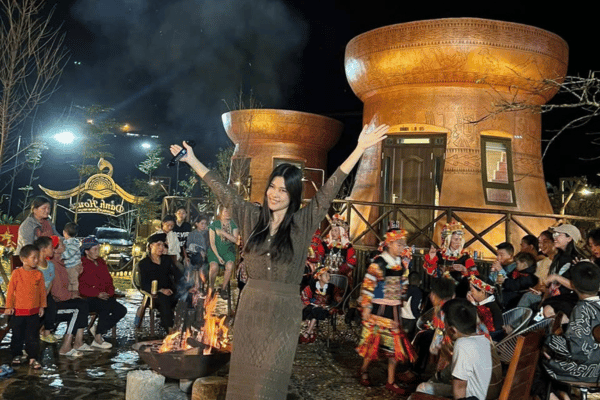
Music is mostly informal. You might see a stage event with amplified microphones (the official side), but the real music happens in homes and yards: the khen flute, the dan moi (a Jew’s harp like instrument), and singing in dialects you won’t recognize.
About the corn wine: someone will offer it to you. Possibly many people. Saying no entirely is fine and respected, but saying yes and then drinking moderately is the more enjoyable path. Pace yourself. It’s stronger than it tastes.
A few etiquette things, learned the slow way:
Learn more: Ha Giang Motorbike Rental
The first decision is whether the festival is your anchor or just a bonus. If it’s the anchor, you build everything else around its date. If it’s a bonus, you go in your preferred season and accept what you stumble into.
For anchor trips:
For bonus trips, just talk to your guide or hosts. Local festivals you weren’t aware of will come up.
Learn more: Ha Giang Loop route and itinerary
This is a real world example built around the peak Buckwheat Flower season. The idea is to land you in the best fields at the best time without rushing.
Day 1: Ha Giang City to Yen Minh via Quan Ba Leave Ha Giang City around 8:30am. The first stretch climbs through the Quan Ba pass: stop at Heaven’s Gate viewpoint to look down at the Twin Mountains. By late morning you’ll start seeing the first buckwheat patches. Lunch in Tam Son. Continue toward Yen Minh through some of the highest buckwheat fields. Overnight in Yen Minh or a homestay near Du Gia turnoff.
Day 2: Yen Minh to Dong Van via Sung La This is the buckwheat day. Sung La valley has the most photographed fields in Ha Giang, and they’re at their best around the third or fourth week of October. Spend the morning shooting and walking the small lanes between fields. Lunch at the H’mong King’s Palace area, then ride through Pho Bang (an old French era town worth ten minutes), and continue to Dong Van Old Quarter for the evening. If the Buckwheat Flower Festival opening is happening that weekend, check whether it’s in Dong Van this year.
Day 3: Dong Van to Meo Vac via Ma Pi Leng The Ma Pi Leng Pass is the headline of the entire Loop, with the Nho Que River cutting deep below. Take your time, ride slowly, stop often. Reach Meo Vac for lunch. From here, you can either loop back toward Ha Giang City the same day or extend a fourth day to Du Gia.
If your trip dates overlap with the Buckwheat Flower Festival opening weekend, add an extra night in Dong Van to catch the ceremony and night market.
This is the kind of itinerary that’s easiest to do with a guide if you want to actually look around instead of watching the road. Our 3 days Ha Giang Loop covers exactly this route and we’ll adjust timing for peak buckwheat weeks on request.

Learn more: Ha Giang Packing list
Festival travel adds a few items to the usual loop packing list:
Learn more: Ha Giang Loop Mistake to Avoid
These come up over and over, and most of them are avoidable.
Showing up the wrong week. This is the single most common mistake. People plan months in advance based on a year old blog post, fly all the way to Hanoi, and arrive to find the festival was last week. Always confirm dates closer to your departure.
Treating sacred rituals as photo content. Some festivals are deeply spiritual. Fire dancing, ancestor worship, Cap Sac coming of age, these aren’t performances. Lower your camera. Ask before shooting. Be willing to walk away if asked.
Drinking too much corn wine on day one. You will be offered drinks. Many of them. The mistake isn’t accepting; it’s accepting all of them. Take small sips. Sit down. Eat with the drink. You want to remember day three.
Missing the real celebration. The official festival ground with the stage and the speakers is the smallest, least interesting part of any traditional festival. The real life happens in the surrounding hamlets, in family yards, and at the market. Walk further than the brochure suggests.
Treating a festival village like a theme park. Homestays, even during big festivals, are people’s homes. Buying handicrafts and tipping generously is welcomed. Showing up uninvited at family ceremonies isn’t.
Overpacking the schedule. Festivals are slow events disguised as exciting ones. The reward is in lingering. Don’t try to fit two villages and a hike into a festival day.
Riding tired or hung over. The roads up here are not forgiving. If you partied at a festival, take a rest day before getting back on the bike. Or, honestly, just hire a driver for the morning after.
Learn more: Ha Giang Jeep Tours
Festival trips work with all our tour modes, but some pair better than others.
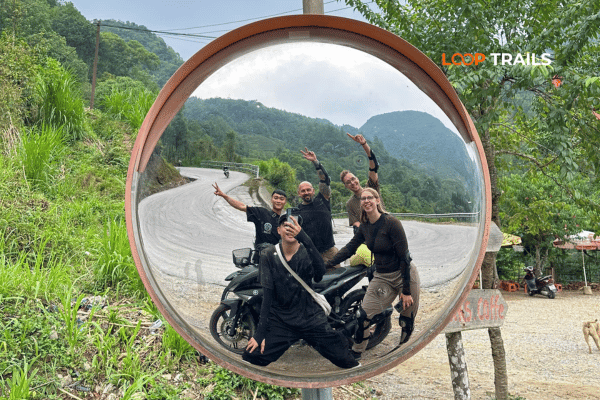
Easy Rider tours are the most popular festival option. You ride pillion behind an experienced local rider, which means you can drink corn wine at lunch, focus on the people and the scenery, and let someone else handle the wet roads. If you’re traveling for the culture and not the riding, this is the one. Good for couples, photographers, and travelers over forty.
Self drive motorbike tours are best if you want maximum flexibility, especially during multi day festival seasons like the Buckwheat Flower Festival. You can stop when you want, detour into side villages, and chase whatever your homestay host tells you about. You’ll need a real motorbike license and recent experience riding manuals; the roads aren’t a place to learn. We also rent motorbikes separately if you’d rather build your own trip independently. Rent a motorbike in Ha Giang for details.
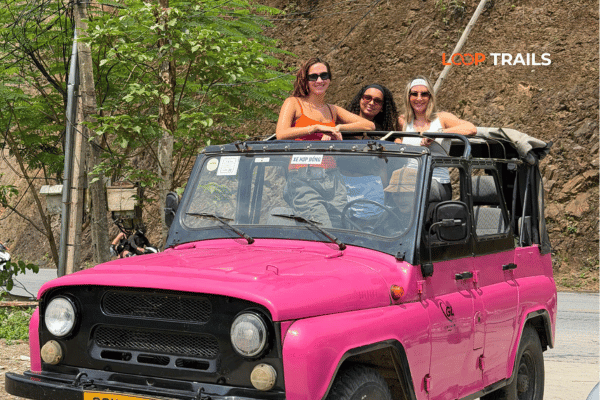
Jeep tours are the comfort and weather option. If you’re traveling during cold festival months (H’mong New Year in December, Pa Then Fire Dancing in winter), a jeep means you arrive warm and dry. They also work better for groups of three or four, families, and travelers who don’t want to think about the road at all. Same stops, same villages, more comfort.
Combo with Cao Bang is worth considering if you have five or six days and want to pair the Ha Giang highlands with Ban Gioc Waterfall and the Cao Bang loop. Several ethnic groups in Cao Bang have their own festival calendars, and the combination of the two provinces in a single trip gives you a much fuller picture of northern Vietnam’s cultural map. Our Ha Giang Cao Bang combo tour covers both in one continuous itinerary.
If you’re not sure which option fits your group, just message us. We’ve planned hundreds of festival timed trips and we’ll be honest about what works for your dates, your group, and your tolerance for mud.
Learn more: Ha Giang Loop Easy Rider
October and November are the most reliable, with the Buckwheat Flower Festival running and the buckwheat fields in full bloom across Dong Van Plateau. December is excellent for H’mong New Year. Late April is the window for Khau Vai Love Market if that’s your priority.
Most are. Public events like Khau Vai Love Market and the Buckwheat Flower Festival are explicitly designed for visitors. Sacred rituals like Cap Sac (Dao coming of age) or some forest worship ceremonies are more private. Always ask before entering ceremonial spaces, and follow your guide’s lead.
No. Most festival days are visual and social, and food, music, and games translate fine. A guide or homestay host who speaks English will help you understand what’s actually happening, which is where the depth is.
Most traditional festivals follow the lunar calendar, so dates shift two to four weeks year by year on the Western calendar. Confirm your festival date four to six weeks before your trip. Don’t rely on dates from older articles.
Usually yes, but festival weeks coincide with weather extremes in some seasons (cold fog in December, late rain in May). Pass closures happen but are rare. Build a one or two day buffer into your schedule and you’ll be fine.
Strongly recommended. Guides know which village is hosting this year’s main events, when ceremonies actually start (often earlier than published), and how to introduce you respectfully. They also speak the local languages, which opens doors that English alone won’t.
Yes. It’s an open public event and welcomes outside visitors. Be respectful, dress modestly, and walk beyond the central stage to find the more authentic side of the market. Book Meo Vac accommodation months in advance.
You’ll still have a great trip. The landscapes are the main reason most people come, and the cultural texture (markets, homestays, ethnic villages) is present year round. A missed festival is rarely a wasted trip.
Yes. December is one of the richest festival months thanks to H’mong New Year. Pa Then Fire Dancing runs through February. The weather is cold but clear, which often makes for better photography than the misty shoulder seasons.
Yes, that’s part of the planning process. Tell us your dates as early as possible and we’ll route you toward whatever’s happening in the right villages. Some festivals require extra accommodation lead time, so the earlier you book, the more flexibility we have.
Most festival weeks see a small bump in homestay prices, especially around Khau Vai and the Buckwheat Festival opening. Tour prices don’t change much. The bigger constraint is availability, not cost.
Ask before photographing people, especially elders and children. Don’t photograph altars, ceremonies, or family rituals without explicit permission. Wide shots of crowds and markets are fine. When in doubt, smile, hold up the camera, and wait for a nod.
Contact information for Loop Trails
Website: Loop Trails Official Website
Email: looptrailshostel@gmail.com
Hotline & WhatSapp:
+84862379288
+84938988593
Social Media:
Facebook: Loop Trails Tours Ha Giang
Instagram: Loop Trails Tours Ha Giang
TikTok: Loop Trails
Office Address: 48 Nguyen Du, Ha Giang 1, Tuyen Quang
Address: 48 Nguyen Du, Ha Giang 1, Tuyen Quang
Facebook X Reddit Table of Contents Learn more: Ha Giang Loop Tours Most people drive past the Quan Ba area twice on
Facebook X Reddit Table of Contents Learn more: Ha Giang Loop Tours The Ha Giang Loop has a reputation problem with older