

Thúy Kiều (Grace) is a travel blogger and content contributor for Loop Trails Tours Ha Giang. She holds a bachelor’s degree in Sustainable Tourism from Vietnam National University, Hanoi, and has a strong passion for exploring and promoting responsible travel experiences in Vietnam’s northern highlands.
Learn more: Ha Giang Loop Tours
Most travelers do the Ha Giang Loop in three days. They ride out of Ha Giang city, climb past Quan Ba, sleep in Yen Minh, push through Dong Van on day two, take their Ma Pi Leng photos the next morning, then loop back via Du Gia or Bac Me. It’s a great trip. The views alone justify the bus ride up from Hanoi.
But the main road only shows you part of the picture. The real Ha Giang lives in the offshoots: a single lane road that drops eight hundred meters down to a hidden village, a Sunday market most foreign riders skip because it’s a twenty minute detour, an old French era town tucked behind a ridge that almost nobody stops at.
This guide is for two kinds of travelers. First, repeat visitors who’ve already done the standard loop and want more. Second, first timers wondering whether to stretch three days into four or five (the answer is almost always yes if you can swing the time). We’ve put together twelve side trips worth taking, organized by where they fit on the loop, with honest notes on how much time each one adds and which kind of trip it suits.
A small warning before we start. Mountain roads in northern Vietnam change. Bridges wash out in storm season, new homestays open in villages that didn’t have one last year, market days occasionally shift. Anything time critical (permits, road closures, fuel past Lung Cu) should be checked with your operator or guide a few days before you ride. We’ll flag the spots where this matters most.
Learn more: Ha Giang Loop 2 Days 1 Night
The standard three days itinerary is built for efficiency. Group tours run on it because it covers the postcard moments (Quan Ba twin peaks, Ma Pi Leng, the upper Nho Que) without anyone falling behind schedule.
The trade off is depth. On a packed three days you’ll see Dong Van Old Quarter for an hour, maybe two. You’ll roll past Sung La without stopping. You’ll never see Pho Bang. You’ll catch Ma Pi Leng with forty other riders at the main overlook and not have time to walk down to the better one.
Side trips fix this. They give you time at the places that reward a longer look, and they get you off the road where group tours all stop at the same time of day.
A few honest reasons to add detours:
If you only have three days locked in and you can’t extend, this guide can still help. Pick one detour, drop one of the more touristy stops to make room, and you’ve already changed the texture of your trip.

Learn more: Ha Giang Loop 3 Days 2 Nights
Realistic timing matters because the loop’s mountain roads are slower than they look on Google Maps. A 30 km detour can easily eat ninety minutes if it involves a steep descent and climb back.
Here’s a rough breakdown of what each category of detour costs you:
| Detour type | Extra time | Best fit |
|---|---|---|
| Village stop (Sung La, Lung Tam) | 30 to 60 minutes | Even on a 3 days loop |
| Half day cultural site (Pho Bang, Hmong King’s Palace, Lung Cu) | 2 to 4 hours | 3 days loop with a tight schedule, or 4 days |
| Boat trip (Nho Que River) | 3 to 4 hours including the descent and climb | Add on day two, possible on 3 days if you’re efficient |
| Overnight detour (Lo Lo Chai, Du Gia for a second night) | A full added day | 4 days minimum |
| Multi day excursion (Hoang Su Phi, Tay Con Linh trek) | 2 to 3 added days | 5 days plus, or its own separate trip |
The sweet spot for most travelers is 4 days. Four days lets you add two or three substantial detours without burning yourself out. We see a lot of guests who originally booked three days and added a day after talking to their guide on day one. If you have the flexibility, build it in from the start.
Thinking about extending? Most of our 4 days Ha Giang Loop tours are designed exactly for this: same northern highlights as the 3 days, plus two side trips and a slower pace. Message us on WhatsApp if you want help choosing.
Learn more: Ha Giang Loop 4 Days 3 Nights
This stretch is where most of the loop’s best detours live. You’re inside the Dong Van Karst Plateau Geopark, which is a UNESCO listed limestone landscape, and the side roads here lead to villages, viewpoints, and small towns that the main route skips
About 25 km past Yen Minh, the road drops into a wide green basin: Sung La. The valley is dotted with traditional Hmong homes built behind walls of stacked stone, and one of them, Nha Cua Pao, became famous as the location of a popular Vietnamese film.
The actual house is worth thirty minutes. There’s a small entry fee (cash, small denomination), the courtyard has flower beds, and you can walk through the rooms to see how a wealthy Hmong family lived a century ago. The real value of the stop, though, is the valley itself. Park your bike on the road above the village and walk down the path between the buckwheat fields. Wedge yourself onto a stone wall. Stay for ten minutes. The light is good here all afternoon.
Time cost: 30 to 45 minutes. Best for: Everyone. Easy stop, easy parking, low effort, big visual payoff.
This is one of our favorite detours and almost no group tours visit. Pho Bang sits about 5 km off the main road, on a dead end branch between Sung La and the Hmong King’s Palace turnoff. It’s a small market town with yellow and ochre painted shop houses, wooden shutters, and stone paved alleys that haven’t really changed in eighty years.
Most days it’s quiet. A few old women sit on doorsteps. A blacksmith sometimes works in the back of one of the buildings. There’s a small market square at the center, and on market days (which rotate, ask your guide) it fills up with Hmong, Hoa, and Tay traders.
Bring small cash if you want coffee. There’s usually one place open near the square that does Vietnamese drip coffee for almost nothing. You won’t find English menus.
Time cost: 1 to 1.5 hours including the 10 km round trip detour. Best for: Photographers, slow travelers, anyone tired of crowded stops.
Learn more: Ha Giang Cao Bang 5 Days 4 Nights
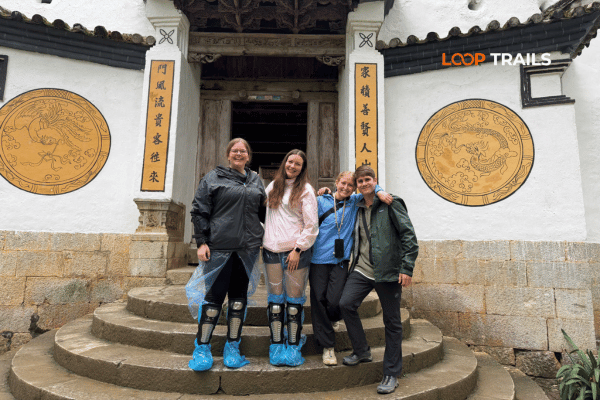
Officially called Dinh Vua Meo or the Vuong Family Mansion, this fortified compound was built in the early 1900s for the Vuong family who ran the local opium trade and effectively governed the region under both French and later Vietnamese rule. The architecture mixes Chinese, French, and Hmong influences: stone walls, carved wood beams, a central courtyard, and pine trees planted in a deliberate pattern that’s supposed to resemble a turtle shell from above.
There’s an entry fee, the on site signage is decent enough in English to follow, and the whole visit takes about forty five minutes. It’s right off the main road, so the “detour” is really just a parking stop.
Pair this with Sung La and Pho Bang to fill a full morning between Yen Minh and Dong Van.
Time cost: 45 minutes. Best for: Anyone interested in history or architecture.
The flag tower marks Vietnam’s northernmost point and you can see China on a clear day. The detour from Dong Van runs about 25 km each way and the road is paved but climbs steadily, so plan on roughly two hours round trip just for the riding.
Once you arrive there’s a parking area, then a path with several hundred steps up to the base of the tower itself. You can climb the inside of the tower for the panoramic view, although it’s also worth it just to stand at the base and look out over the patchwork of fields below.
Honest opinion: the tower itself is fine. The real reward is the road there, especially the last 5 km, which winds through dramatic karst peaks with very little traffic. Many of our guests rate the ride to Lung Cu as one of their favorite stretches of the whole loop, even more than Ma Pi Leng.
Time cost: 3 to 4 hours including travel time, the climb, and a coffee stop. Best for: Anyone with extra time on day two of a 3 days loop, or built into a 4 days itinerary.
Lo Lo Chai is a small village near the base of the Lung Cu hill, home to the Lo Lo ethnic minority, one of the smallest groups in Vietnam. The village has invested in modest tourism: a few homestays, some small cafes (the cafe known for its yellow rapeseed flower season is here), and craft workshops.
The interesting thing about Lo Lo Chai is the option to stay overnight. Most loop itineraries push from Yen Minh through to Dong Van in one day, but an overnight in Lo Lo Chai changes the entire shape of your trip. You arrive in the late afternoon, walk the village while local kids are coming home from school, eat dinner with a host family, and leave the next morning before the day tour buses arrive at Lung Cu.
Time cost: A full extra day if you stay overnight. Otherwise 1 to 1.5 hours for a stop on the way to or from Lung Cu. Best for: Slow travelers, photographers, anyone doing 4 days or longer.
Learn more: Ha Giang Cao Bang Ba Be Lake 6 Days 5 Nights
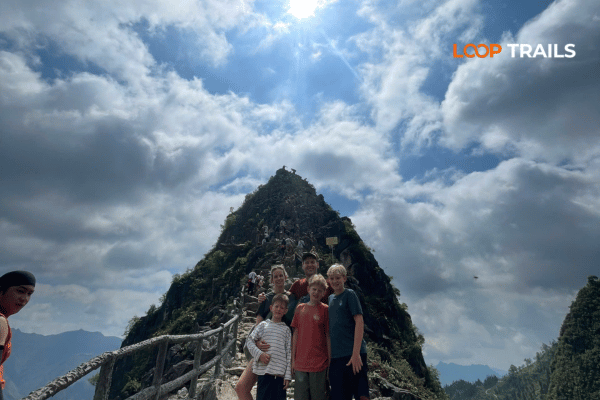
Day two of the standard loop runs from Dong Van to Meo Vac via Ma Pi Leng Pass. It’s the most spectacular single stretch on the loop, only about 22 km long, but it deserves a half day at minimum if you want to actually see it instead of just photograph the parking lot.
Most visitors pull into the main paved viewpoint on Ma Pi Leng Pass, take photos, get back on the bike. The view from there is genuinely incredible. Below you is the Nho Que River, a thin turquoise ribbon at the bottom of the Tu San Canyon, which is one of the deepest in Southeast Asia.
But there are actually a few lesser known viewpoints worth seeking out. There’s a footpath that runs along the ridge for several kilometers, and walking even ten minutes away from the parking lot puts you somewhere quieter with a different angle on the canyon. The so called “skywalk” structures along this path have come and gone over the years and we won’t claim to know which are currently safe or open (check locally before walking out onto any of them), but the natural ridge path itself is the real attraction.
Time cost: Add 45 minutes to your Ma Pi Leng stop. Worth it.
This is a detour, but one most loop tours now include because it has become so popular. From a turnoff on the Meo Vac side of Ma Pi Leng, a narrow paved road switchbacks down toward the river, dropping roughly 800 meters in elevation over about 6 km. At the bottom there’s a small dock where you can board a wooden boat (with motor) for a 90 minute trip through the canyon.
What makes it worth doing: you’re floating between two limestone walls that rise more than 700 meters straight up, in water that’s an unreal shade of teal blue. The boat ride itself is calm, you can chat with the boatman, and there’s almost no other noise.
Two honest cautions. The road down is steep and the climb back up is harder than it looks, especially on a self drive motorbike if you’re inexperienced. And the boat trips have become busy enough that during peak season (October to December weekends) you might wait 30 to 60 minutes for your boat. Going early in the day helps a lot.
Time cost: 3 to 4 hours including descent, boat time, and climb back. Best for: Almost everyone. This is one detour we recommend adding even on a tight schedule.
Want this built into your trip? Our easy rider Ha Giang Loop tours and Ha Giang jeep tours both include the Nho Que boat option on day two. The jeep can drive all the way down to the dock, which removes the steep ride entirely.
This one is a wildcard. Khau Vai is a small village east of Meo Vac, and once a year (on the 27th day of the third lunar month, which usually falls in late April) it hosts a festival traditionally where past lovers who married other people can meet again for a single day. It has become a major regional event with thousands of attendees from across the Hmong, Tay, Nung, and Dao communities.
Outside of that one day, Khau Vai is mostly a quiet hill village. There’s a smaller weekly market that runs on certain days and is interesting in its own right but won’t blow you away.
So this is a detour that’s only worth planning your trip around if you can hit the date. If you can, it’s unforgettable.
Time cost: Half day to a full day depending on what’s on. Best for: Travelers who can time the visit to the annual festival.
The weekly ethnic markets in this region are one of the best reasons to visit Ha Giang at all. Each market has its own day:
What to expect: livestock pens, fabric sellers, traditional clothing, herbal medicine, hot food stalls (try thang co, the Hmong horse meat stew, if you’re game), and crowds of locals from a dozen villages who walk for hours to attend.
If your loop dates coincide with a Sunday and you happen to be in or near Dong Van or Meo Vac, do not skip the market. It’s almost a different country from a midweek visit.
Time cost: 1 to 2 hours. Best for: Everyone, but only if you’re there on the right day. Check market days when planning.

Learn more: Du Gia Waterfall
The southern half of the loop gets less attention because it doesn’t have the dramatic karst peaks of the north. What it does have is forests, river valleys, and a quieter texture that’s a nice change of pace after two days of switchbacks.
Du Gia became popular over the last few years for its homestays and the small waterfall pool a short walk from the village center. Many 4 days loop tours now spend night three here instead of riding straight back to Ha Giang on day three.
The village itself is small, set in a wide green valley, with a strong homestay culture that means most evenings end with shared dinners on the floor of a stilt house. The waterfall is more of a swimming hole than a thundering cascade. After a long day of riding, it’s exactly what you want.
Time cost: An extra day if you stay the night. Otherwise an hour stop. Best for: Anyone doing 4 days or longer. This is the most popular added night on the loop.
Between Meo Vac and Ha Giang there’s a stretch of road that climbs through pine forest near Mau Due. The shift from open limestone landscape to dense cool pine is sudden and unexpected. There are a few good pull off spots where you can stop, walk into the trees, and take a break from the wind.
Time cost: 15 to 30 minutes for a stop. Best for: Easy add on for anyone on day three.
About an hour outside Ha Giang city, Lung Tam is a Hmong village built around a women’s cooperative that hand weaves traditional indigo linen. You can watch the entire process: hemp stalks being soaked, fibers being spun, fabric being dyed in indigo vats, finished pieces being embroidered. The cooperative was founded as a development project decades ago and the products are some of the highest quality traditional textiles in Vietnam.
This is the rare souvenir stop that doesn’t feel like a tourist trap. The work is real, the prices are fair, and the women are happy to demonstrate.
Time cost: 45 to 60 minutes. Best for: Anyone interested in crafts, slow travelers, last day of the loop.
Learn more: Ha Giang Loop Trekking
These aren’t really detours, they’re separate trips that share a starting region with the standard loop. We mention them because we get asked about them often.
Hoang Su Phi sits to the southwest of Ha Giang city, on a completely different route from the standard loop. The rice terraces here are arguably more spectacular than anywhere else in Vietnam, and the area has none of the tour bus traffic of Sapa.
Best time: the terraces are flooded and reflective in May, then bright green through July to August, then golden ready for harvest in September to early October. Most travelers visit in late September.
To do Hoang Su Phi properly you need at least 2 to 3 extra days, and you’d typically go before or after the loop, not as a detour from it. Combining it with the loop into one trip works best with at least seven days total.
Tay Con Linh is the second highest peak in northern Vietnam at over 2,400 meters. It’s a serious 2 to 3 days trek through cloud forest, with porters carrying supplies and most groups camping at altitude. Not for casual visitors, and not something we would recommend tacking onto a loop trip on a whim. Worth knowing about if you’re a serious hiker.
This isn’t really a detour, it’s a route extension. Instead of looping back to Ha Giang city, you continue east from Meo Vac through Bao Lac into Cao Bang province, then ride south to Ban Gioc waterfall and the Phia Oac region. This adds 2 to 3 days but turns a single province loop into a much richer multi region trip.
We run several Ha Giang and Cao Bang combine tours on exactly this route, and for travelers with five or six days available it’s one of the strongest itineraries in northern Vietnam. The roads are quieter, the landscapes shift from karst peaks to waterfalls and tea hills, and Ban Gioc itself is one of the most beautiful waterfalls in Southeast Asia.
Learn more: Ha Giang Motorbike Rental
Not every detour works equally well on every kind of trip.
Easy rider: The most flexible option. You’re riding pillion with a local driver who knows every side road, so spontaneous detours are easy. Your driver will probably suggest a few stops you wouldn’t have found yourself. The Nho Que descent is easy on the back of an experienced rider. Lung Cu is no issue.
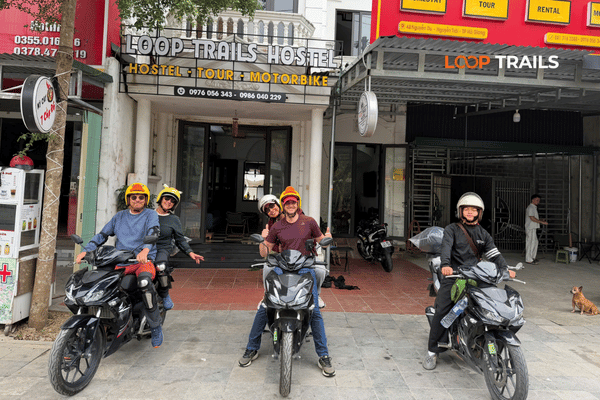
Self drive motorbike: Great if you’re already a confident rider on mountain roads. Limitations come on the steepest detour roads (the Nho Que descent in particular) and on dirt tracks during the rainy season. A semi auto bike like the popular models we rent is fine for almost every paved detour. Avoid trying to take a small scooter onto unpaved village roads in mud.
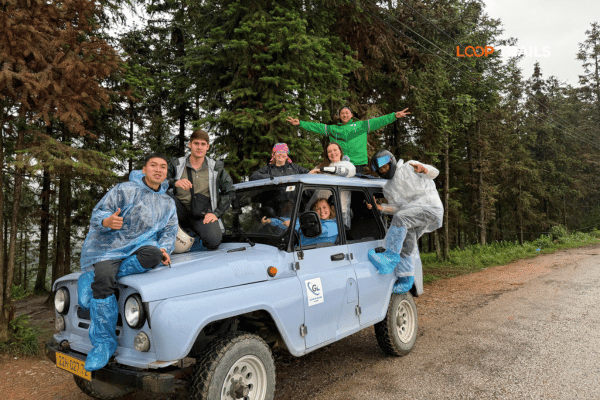
Jeep tour: Most comfortable for groups of 3 or more, families, or anyone who doesn’t want to deal with rain, fatigue, or steep descents. The jeep can handle Nho Que all the way to the dock. It can also handle Lo Lo Chai, Pho Bang, and basically every paved detour mentioned in this guide. The only limitation is some of the smaller village tracks that are too narrow.
If you’re undecided, we’ve broken down easy rider vs self drive vs jeep in another post.

Learn more: Cao Bang Loop 3 Days best kept secret
Here are two practical itineraries that use side trips well. Both start and end in Ha Giang city.
Day 1: Ha Giang → Quan Ba → Yen Minh. Stop at Bac Sum Pass viewpoint, Heaven Gate viewpoint, lunch in Tam Son. Add Lung Tam linen village on the way out of Ha Giang if you have time.
Day 2: Yen Minh → Sung La → Pho Bang → Sa Phin (Hmong King’s Palace) → Lung Cu → Lo Lo Chai or Dong Van. This is the side trip heavy day. Start early.
Day 3: Dong Van → Ma Pi Leng (with longer ridge walk) → Nho Que boat trip → Meo Vac. Plan for a full day, you won’t be rushed.
Day 4: Meo Vac → Du Gia (lunch and waterfall) → Mau Due forest → Ha Giang.
Day 1: Ha Giang → Quan Ba → Yen Minh, with Lung Tam village stop.
Day 2: Yen Minh → Sung La → Pho Bang → Sa Phin → Dong Van.
Day 3: Dong Van → Lung Cu → Lo Lo Chai (overnight in Lo Lo Chai homestay).
Day 4: Lo Lo Chai → Dong Van → Ma Pi Leng → Nho Que → Meo Vac.
Day 5: Meo Vac → Du Gia → Ha Giang.
Either of these can be ridden easy rider, self drive, or by jeep. The 5 days version is the more relaxed of the two and the one we’d suggest for first time visitors who want a “real Ha Giang” experience instead of just the headline sights.
A few things to keep in mind once you start straying from the main road:

Learn more: Ha Giang Loop Mistake to Avoid
Honest patterns we’ve seen over the years:
Trying to fit everything into 3 days. You can’t. If you’re locked into three days, pick one or two detours and accept that you’re missing the rest. Don’t try to do Lung Cu, Nho Que, Pho Bang, and Du Gia all on the same trip. You’ll be exhausted and will rush through everything.
Going to Khau Vai outside the festival. Without the annual event, Khau Vai itself isn’t worth the long detour. Save it for the right date or skip.
Renting too small a bike for the terrain. Some of the smaller scooters available in Ha Giang city can technically make the loop, but they struggle on the climbs and brakes get hot on long descents. For side trips that involve steep grades (Nho Que descent, the climb to some villages off the main road) you want a proper semi auto or manual bike with good brakes.
Hiring an unverified “easy rider” off the street. A few travelers each year still try to save money by booking with someone who approached them at the bus station. Some of these are fine. Many are not, and there’s no recourse if something goes wrong. Book through a real operator. (We’re biased but the reasoning holds: insurance, vetted drivers, a real office.)
Skipping the homestay nights in favor of hotels. Hotels in Dong Van are fine but they’re not the heart of the experience. A night in a Lo Lo Chai or Du Gia homestay, with a shared dinner and rice wine that someone’s grandmother distilled, is what people remember.
Learn more: Ha Giang Jeep Tours
A quick decision guide.
Choose an easy rider tour if: You want to focus on the experience, photography, and conversation with a local driver. You don’t want to navigate. You’re okay riding pillion for several hours a day. This is by far the most popular option and the most flexible for detours.
Choose self drive if: You’ve ridden motorbikes on mountain roads before, you want full freedom over your pace, and you’re comfortable handling rain and traffic. Side trips are easy on self drive as long as you’ve got a capable bike. We rent bikes well suited to the loop and recommend skipping the cheapest scooters even if you ride often back home.
Choose a jeep tour if: You’re traveling as a couple or small group and want comfort, all weather coverage, and the ability to ride together. You’re not a rider, or you just don’t feel like dealing with mountain motorbike traffic. Jeeps handle every detour mentioned in this guide except a few of the narrowest village lanes.
If you’re still not sure, message us. We’ve helped a few thousand travelers pick between the three, and a five minute chat is faster than reading another comparison article.
Ready to plan? Browse our Ha Giang Loop tours or our motorbike rentals in Ha Giang. For tailored itineraries that include the side trips above, message us on WhatsApp and we’ll send back a sample plan within a day.
Learn more: Ha Giang Loop Photography Guide
Most worthwhile side trips add somewhere between 30 minutes and a half day each. A loop with two or three detours fits comfortably in 4 days. Deeper detours, like an overnight in Lo Lo Chai or Du Gia, need 5 days.
You can add one to two short detours on a 3 days loop without breaking the schedule. Realistically that means choosing between Lung Cu, the Nho Que boat trip, or a Pho Bang stop. Trying to do all three in 3 days will burn you out.
The Nho Que River boat trip through Tu San Canyon. It’s now included in most loop tours and is the one detour we recommend even if you only have time for one.
Yes, easily. It’s the standard structure on day two of the loop: Dong Van to Ma Pi Leng to the Nho Que descent to the boat tour to Meo Vac in the evening. Start by 8am to avoid the busy midday boat queues.
If your dates align with one, yes. Sunday markets in Dong Van and Meo Vac are some of the most memorable experiences on the loop. Check current market days when you plan, since they occasionally shift.
Yes for slow travelers and photographers. Staying the night gets you the village in early morning light, before any day tour buses arrive at Lung Cu. For travelers in a hurry, a 60 minute stop is fine.
Yes, but it adds 2 to 3 days and is on a different route. Most travelers either visit Hoang Su Phi before the loop or skip it. Doing both well needs about seven days total.
Almost all of them. The Nho Que descent is actually easier in a jeep than on a motorbike. The only limitations are some very narrow village tracks that don’t accommodate a full sized vehicle.
Vietnamese motorbike licensing rules have shifted over the years and depend on your home country’s license, the bike size, and whether you have a valid IDP. Check current rules with your operator before you book a self drive trip. If you’d rather not deal with the paperwork, an easy rider or jeep tour avoids the issue entirely.
September to November has the most reliable weather, dry roads, and beautiful light. March to early May is also excellent and includes the Khau Vai festival window. Avoid June to August if you can: the rain affects the side roads more than the main loop.
If you’re an experienced mountain rider and have time to research, you can do it on your own. The advantage of a guided tour is that a good guide knows the current road conditions, the right time to hit each viewpoint, and the homestays that are actually good versus the ones that aren’t. For most travelers, a guided tour with a flexible side trip plan is the easier path.
The loop is generally safe but the roads demand respect. Mountain motorbike accidents do happen, mostly to inexperienced riders going too fast, in rain, or after drinking at homestays. A vetted operator, a proper bike, and sensible pacing handle 99 percent of the risk. Travel insurance that explicitly covers motorbike riding is a smart idea.
Contact information for Loop Trails
Website: Loop Trails Official Website
Email: looptrailshostel@gmail.com
Hotline & WhatSapp:
+84862379288
+84938988593
Social Media:
Facebook: Loop Trails Tours Ha Giang
Instagram: Loop Trails Tours Ha Giang
TikTok: Loop Trails
Office Address: 48 Nguyen Du, Ha Giang 1, Tuyen Quang
Address: 48 Nguyen Du, Ha Giang 1, Tuyen Quang
Facebook X Reddit Table of Contents Learn more: Ha Giang Loop Tours Most people drive past the Quan Ba area twice on

Facebook X Reddit Table of Contents Learn more: Ha Giang Loop Tours The Ha Giang Loop has a reputation problem with older