
Driving in Vietnam with a US License: What Americans Must Know
Facebook X Reddit Table of Contents Learn more: Ha Giang Loop Tours This is the part of Vietnam trip planning that catches

Thúy Kiều (Grace) is a travel blogger and content contributor for Loop Trails Tours Ha Giang. She holds a bachelor’s degree in Sustainable Tourism from Vietnam National University, Hanoi, and has a strong passion for exploring and promoting responsible travel experiences in Vietnam’s northern highlands.
This is one of the most common planning questions for northern Vietnam travelers, and it deserves a real answer rather than a vague “both are great.”
Ha Giang and Sapa are both mountain destinations in the north. Both have ethnic minority communities. Both have rice terraces and dramatic scenery. But they are fundamentally different experiences, and the kind of traveler who loves one is often not the same person who loves the other.
This comparison is going to be direct. By the end, you should know exactly which one fits your trip.

Learn more: Ha Giang Loop Tours
People end up comparing Ha Giang and Sapa for one of a few reasons. They have limited time and need to choose. They have heard about both and cannot tell what makes them distinct. Or they have been to Sapa and want to know if Ha Giang is worth adding.
The comparison is worth taking seriously because the experiences are genuinely different at every level: the landscape, the physical format of the trip, the crowd density, the cultural access, and the kind of memories you come home with.
Sapa is a town in Lao Cai province, about five hours by overnight train from Hanoi, built at altitude on the edge of a dramatic valley. Ha Giang is the name both of a provincial capital city and of the broader karst plateau region that stretches north to the Chinese border. Ha Giang takes longer to reach, is less developed for tourism, and requires more active planning. In exchange, it offers something that Sapa cannot match: the sense that you have gone somewhere genuinely remote.
Learn more: Ha Giang Loop 2 Days 1 Night
| Category | Ha Giang | Sapa |
|---|---|---|
| Landscape type | Karst rock plateau, canyon, river | Mountain valley, terraced rice fields |
| Main activity | Motorbike or jeep loop (2 to 5 days) | Trekking, day hikes, cable car |
| Physical demand | Moderate (riding) or low (jeep) | Moderate to high (walking) |
| Crowd level | Low to moderate | High (especially weekends) |
| Cultural access | Deep, extended village stays | Variable, depends on guide and route |
| Distance from Hanoi | Overnight bus (approx 6 to 7 hours) | Overnight train (approx 5 hours) |
| Development level | Low, raw, local | More developed, more tourist infrastructure |
| Who it suits best | Adventure seekers, couples, small groups | First timers, hikers, anyone with less time |
This table is a starting point. The nuance is in the details below.
Learn more: Ha Giang Loop 3 Days 2 Nights
Ha Giang is not a single place. It is a journey.
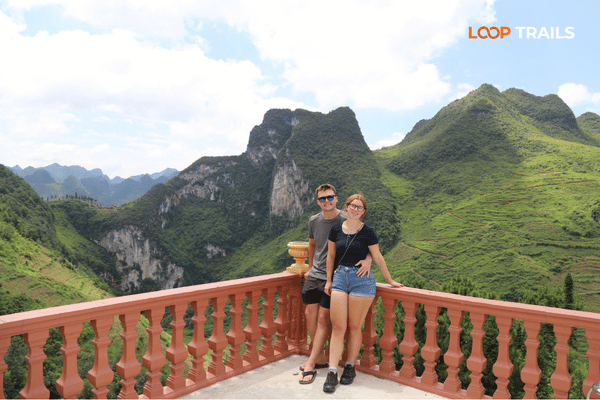
The Ha Giang Loop is a mountain circuit that takes you north from Ha Giang city up through the Quan Ba district, across the Dong Van Karst Plateau (a UNESCO Global Geopark), past the Lung Cu Flag Tower at the northernmost point of Vietnam, over the legendary Ma Pi Leng Pass, down through the Meo Vac canyon and along the Nho Que River, and back through the Du Gia valley to Ha Giang city.
The loop typically takes three to five days, depending on how far you go and how much you want to see. The landscape is defined by vertical limestone karst formations, deep river canyons, and a plateau that feels like another country entirely. The ethnic communities along the route include H’Mong, Lo Lo, Nung, Tay, and Giay people, many of whom have had very limited contact with mass tourism.
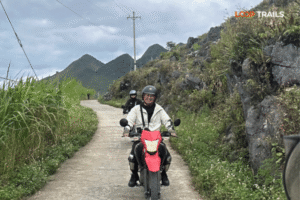
You cover the Ha Giang Loop on a motorbike (either riding yourself or riding pillion behind a guide) or in a jeep. There is walking involved at specific stops, but the primary experience is movement through landscape.
Thinking about doing the Ha Giang Loop? Loop Trails runs jeep tours, easy rider tours, and self drive tours covering the 2-day, 3-day, and 4-day routes. Check the tour pages or message us on WhatsApp to find the right option for your group.
Learn more: Ha Giang Loop 4 Days 3 Nights
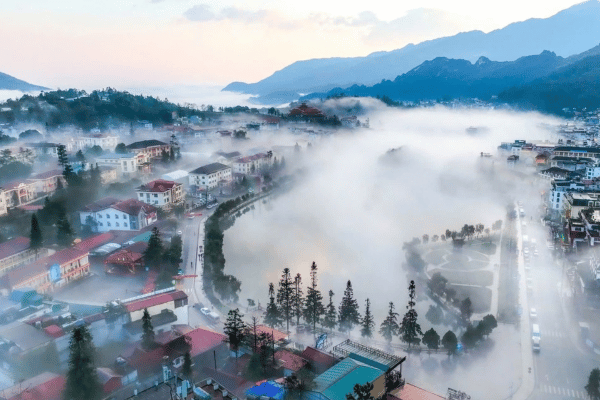
Sapa is a hill station town that the French built in the early twentieth century to escape the heat of the lowlands. It sits at roughly 1,600 metres above sea level in Lao Cai province, on the edge of the Muong Hoa valley, with Fansipan (Vietnam’s highest peak) visible on clear days above the cloud line.
The town itself is the most developed tourist destination in northern Vietnam: hotels, restaurants, tour agencies, a cable car, and a market that caters primarily to visitors. The surrounding villages, home to Black H’Mong, Red Dao, and Tay communities among others, are accessible by foot, motorbike taxi, or day tour from town.
The primary activity at Sapa is trekking. Most visitors walk down into the valley and the surrounding rice terrace areas over one or two days, with an overnight in a village homestay on the longer versions. Summiting Fansipan is a separate option either by trail (serious hiking) or by cable car (accessible to anyone).
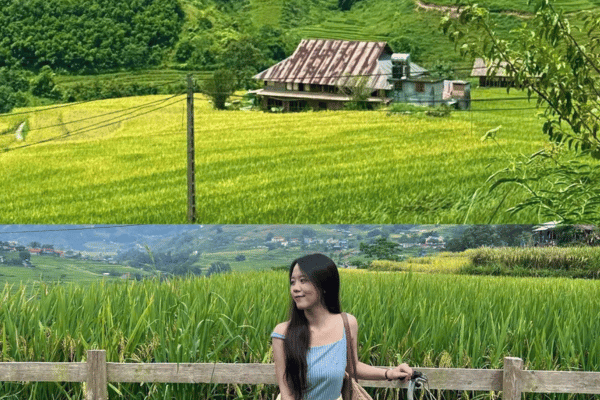
Sapa’s landscape at its best is extraordinary: the terraced rice fields of the Muong Hoa valley, green and gold depending on the season, with mist rolling through the ridges in the early morning, is a genuinely beautiful thing. But the experience of getting there and moving through it has changed significantly in the past decade.
Learn more: Sapa vs Ha Giang
Both destinations are visually spectacular. But the visual language is completely different.
Sapa is about organic softness: the curved lines of rice terraces following the hillside contours, the valley fog, the green of paddy fields. It is the classic northern Vietnam mountain photograph. When you have a clear morning at Sapa and the terraces are lit by low sun with mist in the valley below, it is genuinely one of the more beautiful sights in Southeast Asia.
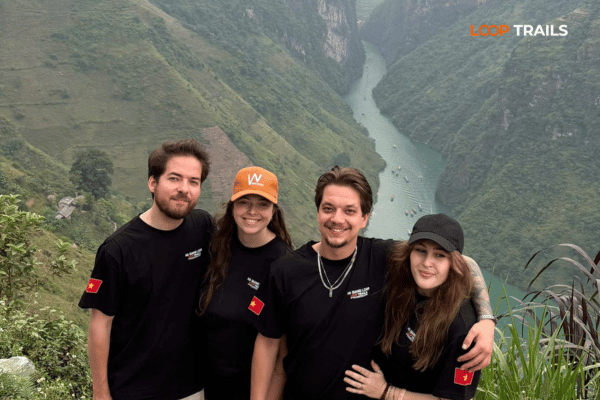
Ha Giang is about geological drama: raw limestone karst rising vertically from the earth, canyon walls dropping hundreds of metres to a turquoise river, plateau landscapes that feel lunar and enormous. The scale is different. The colours are different. The rock is the dominant element in a way that rice terraces are not.
A useful way to think about it: Sapa is soft landscape. Ha Giang is hard landscape. Both are beautiful. Which visual register excites you more?
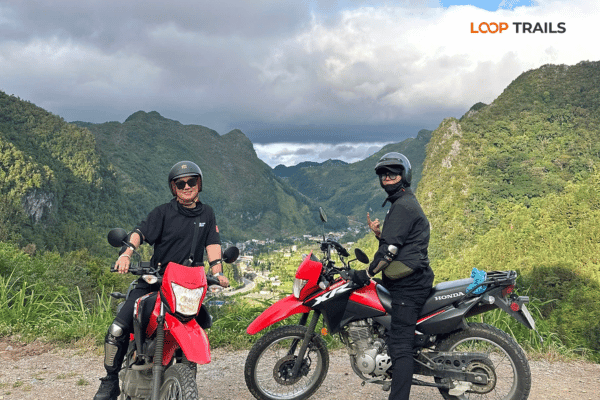
At Ma Pi Leng Pass, you ride a road carved into the cliff face above Tu San Canyon, which drops roughly 700 metres to the Nho Que River below. There is nothing comparable to this anywhere in Sapa.
At Sapa, the Muong Hoa valley on a clear morning in October, with golden rice ready for harvest and mist still holding in the lower sections of the valley, has a quality that photographs poorly and lands differently in person. There is nothing quite like this in Ha Giang either.
They are both exceptional. They are not the same.
Learn more: Ha Giang Motorbike Rental
This is where most people actually make their decision, once they think about it properly.
Sapa is primarily a walking destination. A standard Sapa trek from the town down into Cat Cat village, through the valley to Ta Van and back, covers somewhere around 15 to 20 kilometres depending on the route. Village homestay treks add another day and extend the distance. The terrain is not flat: the paths move up and down the valley slopes, and in wet conditions the trails can be muddy and slippery. People with knee problems or limited walking fitness should be realistic about what the standard trekking routes demand.
Ha Giang is primarily a riding destination. On a motorbike tour (easy rider or self drive) you cover large distances each day through the mountain landscape, stopping at villages, viewpoints, caves, and historical sites. The physical demand on an easy rider tour is low: you sit behind the guide and take in the scenery. On a self drive tour, you ride yourself, which requires both the licence and the experience to handle mountain roads. On a jeep tour, the physical demand is minimal: you are in a comfortable 4×4 with an experienced driver.
The result: Ha Giang is more accessible for people with walking limitations or fitness constraints. Sapa requires genuine walking fitness for the main attractions. A traveler in a wheelchair, or recovering from an injury, can still have a full experience in Ha Giang on a jeep tour. That is not true of Sapa’s core trekking routes.
Conversely, if you are someone who feels the most alive when moving through a landscape on your own two feet, Sapa’s trekking format will suit you better than sitting in a jeep or on a bike.
Learn more: Ha Giang Cao Bang 5 Days 4 Nights
This is the question that most comparison articles avoid because the honest answer is complicated. Both destinations have ethnic minority communities and both offer some form of cultural encounter. But the depth and authenticity of that encounter varies enormously.
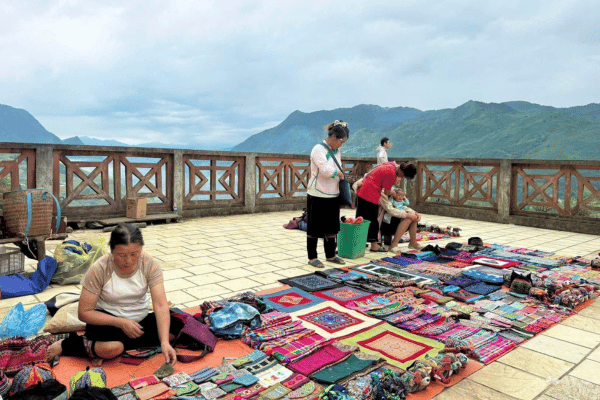
At Sapa: The H’Mong and Red Dao women selling embroidered goods outside the market, or following trekking groups to villages, are a familiar part of the tourist landscape. The village homestays closest to town have adapted significantly to visitor expectations: English is spoken, the meals are international friendly, and the experience is comfortable. Further out from town on multi day treks, the villages are less adapted and the encounters feel more genuine. But the baseline in Sapa is a managed cultural experience designed around visitor comfort and commercial exchange.
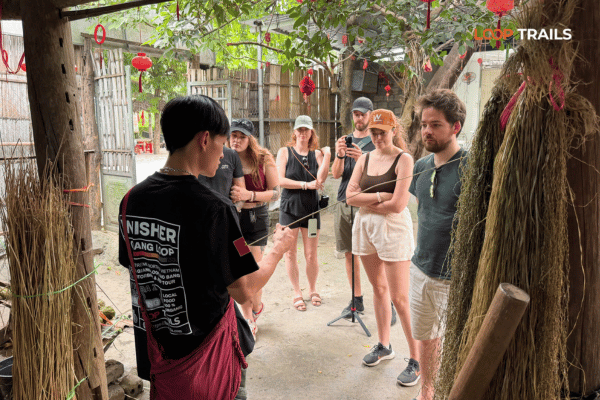
At Ha Giang: The villages you visit on the loop, particularly Lao Sa village, Lo Lo Chai, and the communities along the Meo Vac to Bao Lac section on the extended route, are significantly less adapted to tourism. The homestay evenings on a guided Ha Giang tour typically involve a real dinner with the host family, corn wine, and some form of music or games that emerges naturally from the evening rather than being performed as a programme. The guide’s role in facilitating genuine introductions matters a great deal here: a good Ha Giang guide speaks the local languages and has relationships with the families along the route.
Vuong Palace (the former residence of the H’Mong king in Dong Van) and Lo Lo Chai village offer a level of historical and architectural context that has no equivalent in Sapa. The Dong Van Karst Plateau was a centre of H’Mong governance and culture for centuries. There is a depth of history in that landscape that the Sapa valley, as beautiful as it is, does not carry in the same way.
If cultural authenticity and depth matter to you, Ha Giang generally delivers more. This is partly about development level and partly about the structure of the guided tour: a multi day homestay loop with a knowledgeable guide gives you a different quality of access to minority community life than a single day trek with a turnstile culture stop.
Learn more: Northern Viet Nam Itinerary 2026
Sapa is Vietnam’s most visited mountain destination and the crowds reflect that. The town centre is busy most of the time, the cable car queues can be long, and the most famous trekking routes in the Muong Hoa valley are not remote experiences on peak weekends. The town has a full commercial tourist infrastructure: multiple hotels at every price point, tour desks, restaurants, souvenir shops.
This is not necessarily a criticism. Sapa works well as a destination precisely because it is well set up. First time visitors to Vietnam are not going to feel lost or unsupported in Sapa. The infrastructure exists.
Ha Giang is noticeably less crowded than Sapa for most of the year, though the peak months (October and November, when the buckwheat flowers bloom on the plateau and the light is extraordinary) do bring a genuine influx of both domestic and international visitors. The roads and villages still carry an atmosphere of genuine remoteness that Sapa’s main corridors have largely lost. You will encounter other traveler groups on the loop, but you will not feel like you are sharing a popular national park circuit.
The atmosphere is different in a way that matters. Ha Giang feels like an adventure. Sapa feels like a well managed mountain experience. Both are valid. Which one do you want?
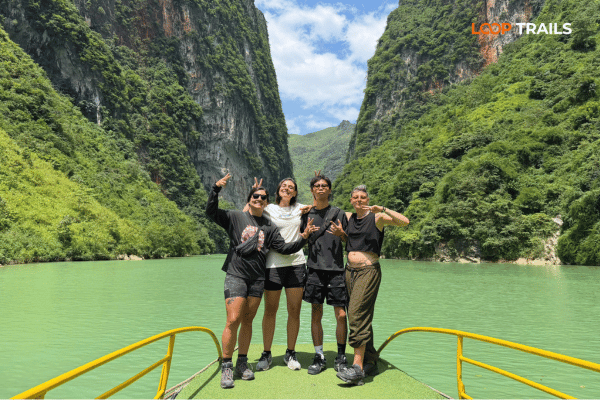
Learn more: Tu San Canyon & Nho Que River Boat Trip
Sapa: The standard route from Hanoi is an overnight train to Lao Cai station, then a bus or taxi up to Sapa town. Total journey time is roughly eight to nine hours door to door. Day buses also run from Hanoi to Sapa. The town itself is compact and walkable. Getting around to villages is by foot, motorbike taxi, or organised day tour.
Ha Giang: The standard route is an overnight sleeper bus from Hanoi to Ha Giang city, approximately six to seven hours. From Ha Giang city, you join the loop tour. There is no quick day trip version of Ha Giang: the minimum meaningful visit is two days and one night on the loop. The road to Ha Giang is mountain road in its northern sections, which matters in bad weather.
Sapa is slightly easier to reach and works better as a short trip addition to a wider Vietnam itinerary. Ha Giang requires more commitment in time and planning but rewards that commitment in kind.
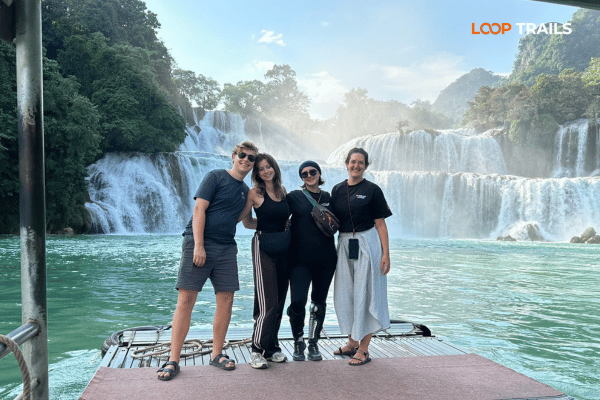
Learn more: Cao Bang Loop 3 Days best kept secret
Sapa: September and October are the most celebrated months, when the rice terraces are at their golden harvest peak. March and April bring the rice planting season with a different, vivid green. The summer months (June to August) bring heavy rain and poor visibility. Winter (December to February) can be genuinely cold at altitude and sometimes brings frost or even sleet at the highest points.
Ha Giang: October and November are widely considered the best months, when the buckwheat flowers cover the plateau in pink and the weather is clear and cool. March and April also offer good conditions and the spring light is excellent. The rainy season (July and August) brings challenging road conditions in the mountain sections, reduced visibility, and some landslide risk. December through February can be very cold at altitude, particularly at Dong Van and Lung Cu.
If you can only travel in one specific month, check the specific conditions for that month at each destination before deciding. Both places have peak and off peak seasons that genuinely affect the experience.
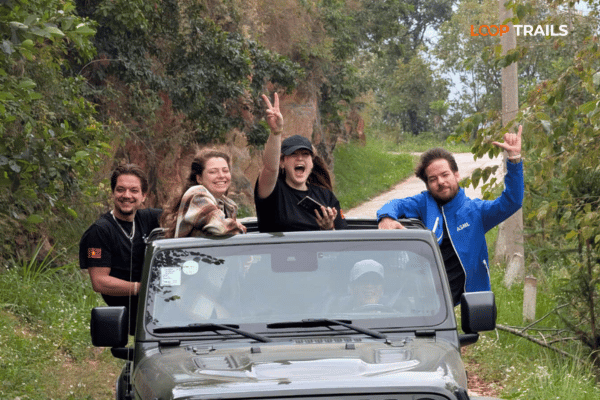
Learn more: Ha Giang Loop by Wrangler Rubicon Jeep
The honest answer is that this depends on what you are actually looking for. Here is a direct guide.
Choose Ha Giang if:
You want to feel like you are going somewhere genuinely off the standard tourist path. You are energised by large landscapes and geological drama rather than pastoral softness. You want to spend multiple days moving through the countryside with a guide who can introduce you to villages properly, rather than a structured day tour. You are traveling with a small group, a couple, or a family and want an experience you will all remember without needing to be physically fit. You want your trip to have real momentum and narrative arc across several days.
Choose Sapa if:
You have limited time in the north (a long weekend or three to four days from Hanoi). You are a strong hiker and the physical act of trekking through a landscape is specifically what you want. You are a first time visitor to Vietnam who wants a mountain experience that is well set up and supported. You are primarily interested in photography, and the visual of rice terraces in valley mist is the image you are after. You are travelling with someone who cannot handle a long bus or who needs a certain level of hotel comfort.
Do both if:
You have three weeks or more in Vietnam and are covering the north thoroughly. You want to compare the experiences firsthand. You are making return trips and have already done one destination.
For Ha Giang: Loop Trails runs easy rider, self drive, and jeep tours from 2 days to 5 days or more, including the combined Ha Giang to Cao Bang route. If you are not sure which format fits your group, send us a message on WhatsApp and we will help you work it out before you book.
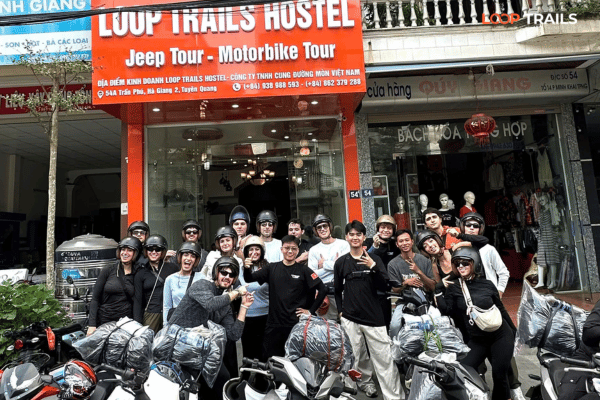
Learn more: Ha Giang Loop Easy Rider
Yes, and it is one of the better northern Vietnam itineraries for travelers with two to three weeks.
A practical version: fly into Hanoi, spend two nights in the city, then take the overnight train to Sapa for two to three days of trekking and village exploration, return to Lao Cai and back to Hanoi, rest a night, then take the overnight bus to Ha Giang for a four or five day loop, returning to Hanoi at the end.
This gives you both mountain experiences with different physical formats, good visual contrast, and a clear narrative arc through the north. The total time from Hanoi is approximately ten to twelve days.
One honest note: doing both in rapid succession can feel like a lot of transit. The Sapa experience and the Ha Giang experience are sufficiently different that they do not feel repetitive. But if your energy budget is limited, it is worth considering which one means more to you and giving it the full time it deserves rather than rushing both.
If you want to extend further, the Ha Giang to Cao Bang combined route adds another dimension entirely: Ban Gioc waterfall, the Cao Bang karst landscape, and a set of villages and passes that almost nobody outside the region has heard of. That version becomes a full two week northern Vietnam mountain itinerary on its own.
Learn more: Ha Giang Loop Photography Guide
Not better or worse: different. Ha Giang has more geological drama, fewer crowds, and deeper cultural access on a multi day loop. Sapa has stronger trekking infrastructure, easier access from Hanoi, and the most famous rice terrace scenery in the country. The right choice depends on what kind of experience you are looking for
Sapa is significantly more crowded for most of the year, particularly on weekends and during the rice harvest in October. Ha Giang sees a peak influx in October and November (buckwheat flower season) but remains less crowded than Sapa’s main corridors outside those months
Yes. The easy rider option places you as a passenger behind your guide, requiring no licence. The jeep tour requires no licence at all. Only the self drive option requires a valid international driving permit in the 1968 format. If you do not have the right licence, easy rider or jeep is the way to go
A minimum of two days and one night covers the core of the loop (Dong Van, Ma Pi Leng). Three days and two nights gives you more breathing room. Four days and three nights is the version that covers the full route including Lung Cu, Lo Lo Chai, and the Du Gia valley. Five days and four nights extends into Cao Bang
Two full days covers the main valley trek with a village homestay overnight. Three days gives you time to also go up toward Fansipan or explore a further village. A single day from Hanoi is possible but leaves most of what makes Sapa worthwhile on the table
Ha Giang by jeep is excellent for families: the driving is done by a professional driver, the stops are interesting and accessible, and the homestay evenings are memorable for children in a way that trekking routes are not. Sapa can work for families with older, active children who are comfortable on longer walks
Both can be cold, especially from December through February. Ha Giang’s plateau (Dong Van, Lung Cu) sits at higher altitude than Sapa town in many sections and can be genuinely cold in winter, including frost at the northernmost points. Pack warm layers for either destination if you are visiting in winter.
Yes, and many travelers do exactly this. A common itinerary runs Hanoi, Sapa (overnight train), back to Hanoi, then Ha Giang by overnight bus. The contrast works well: you see two completely different mountain landscapes within one northern Vietnam trip
Both destinations are affordable by international standards. Ha Giang loop tours range from approximately 3,490,000 VND per person for a 2 day easy rider tour to higher for jeep options with more passengers. Sapa costs depend heavily on your trekking guide and homestay choices. As a rough comparison, a well organised multi day Ha Giang loop tour typically costs more than a basic Sapa trek, but the Ha Giang experience covers more ground and more days
Ha Giang Loop tours run by reputable operators with experienced guides are safe for most travelers. The mountain roads require respect, which is why the quality of your guide and operator matters. Loop Trails uses experienced local guides with strong route knowledge and keeps group sizes small for safety and quality. See our dedicated safety guide for more detail
Contact information for Loop Trails
Website: Loop Trails Official Website
Email: looptrailshostel@gmail.com
Hotline & WhatSapp:
+84862379288
+84938988593
Social Media:
Facebook: Loop Trails Tours Ha Giang
Instagram: Loop Trails Tours Ha Giang
TikTok: Loop Trails
Office Address: 54A Tran Phu, Ha Giang 2, Tuyen Quang
Address: 54A Tran Phu, Ha Giang 2, Tuyen Quang
Facebook X Reddit Table of Contents Learn more: Ha Giang Loop Tours This is the part of Vietnam trip planning that catches

Facebook X Reddit Table of Contents Learn more: Ha Giang Loop Tours The Ha Giang to Cao Bang combined tour ends in

Facebook X Reddit Table of Contents Learn more: Ha Giang Loop Tours Two weeks is enough time to do northern Vietnam properly.