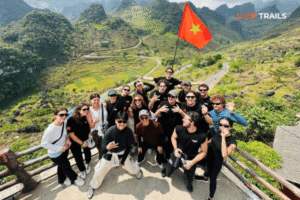


Thúy Kiều (Grace) is a travel blogger and content contributor for Loop Trails Tours Ha Giang. She holds a bachelor’s degree in Sustainable Tourism from Vietnam National University, Hanoi, and has a strong passion for exploring and promoting responsible travel experiences in Vietnam’s northern highlands.

Learn more: Ha Giang Loop Tours
The first thing nobody tells you about solo adventure travel in Vietnam is how quickly the fear evaporates. You spend weeks before the flight running worst case scenarios in your head, and then you are sitting on a plastic stool in Hanoi at seven in the morning, eating pho next to a man reading a newspaper, and the whole thing feels ordinary in the best possible way.
The second thing nobody tells you is that “Vietnam” is not one trip. It is a thin, 1,650 km country with a mountain north, a beach and heritage middle, and a delta south, and the mistake most first time solo travelers make is trying to swallow all three in two weeks.
This guide is written for people who want the adventure version, not the resort version. Motorbike passes, limestone karst, homestays where dinner arrives on a shared mat, boat rides on rivers that look fake in photographs. We run tours in the far north, so we see solo travelers arrive every week, and we have a good sense of what works for them and what leaves them exhausted and grumpy in Da Nang on day nine.
Here is where to start.
Learn more: Ha Giang Loop 2 Days 1 Night
If this is your first big solo trip, Vietnam does a lot of quiet work in your favour.
The traveler infrastructure is enormous. Sleeper buses, hostels, guided loops, motorbike rentals, night trains, cheap domestic flights. You do not have to be a hardened backpacker to move around. You mostly have to show up and ask.
You are never the only foreigner. Even in small mountain towns like Dong Van or Bao Lac, there are other travelers around. That matters when you are alone: it lowers the social cost of asking for help, and it means you can be solo without being isolated.
The country is set up for short commitments. You can book a bed for one night, a tour for three days, a bike for a week. Nothing locks you in. For solo travelers, who often change plans mid trip because they met someone or fell in love with a town, that flexibility is worth more than any discount.
Food is a solo traveler’s friend here. Street food culture means eating alone is completely normal. No awkward table for one, no waiting for a group to form. You sit, you point, you eat, you leave.
The adventure is genuinely accessible. You do not need technical skills or expensive gear to ride a mountain pass, sleep in a village homestay, or kayak into a limestone bay. The barrier to a real adventure day is startlingly low.
What Vietnam asks in return is a bit of adaptability. Roads change, weather changes, buses leave when they leave. If that sounds like a problem, this is the wrong country. If it sounds like the point, keep reading.

Learn more: Ha Giang Loop 3 Days 2 Nights
Three things that are true and rarely said out loud.
The first 48 hours are the hardest, and then it flips. Landing alone in Hanoi’s Old Quarter is sensory overload: scooters flowing around you like water, horns that mean “I am here” rather than “get out of the way”, nobody to check the map with. Almost everyone feels a small wobble on night one. Almost nobody still feels it on night four. If you can design your itinerary so day one is easy and low stakes, the rest of the trip inherits that confidence.
You will not be alone much unless you work at it. This surprises people. Hostels, group tours and shared transport in Vietnam throw travelers together constantly. Plenty of solo travelers arrive worried about loneliness and end up needing to actively schedule time by themselves. If real solitude is what you came for, you can find it, but you have to choose it: private rooms, self drive days, quieter towns like Du Gia or Bao Lac instead of the main backpacker corridor.
Decision fatigue is the real enemy, not danger. When you travel with someone, decisions get split. Alone, every meal, bus, hostel, route and price check is yours. By day eight that adds up. The travelers who enjoy solo trips the most are the ones who deliberately hand over a few decisions: joining a guided section, booking two or three legs in advance, taking a tour for the hardest stretch of road. It is not a failure of independence. It is energy management.

Learn more: Ha Giang Loop 4 Days 3 Nights
Vietnam does not have one national season. It has at least three climates running at the same time, which is why “when should I go to Vietnam” is a badly formed question. Ask instead: when should I go to the part of Vietnam I actually want to see.
Broad shape for the north, where the mountain adventure lives:
| Period | What it feels like in the northern mountains |
|---|---|
| Spring | Fresh green terraces, flowers on the passes, mild days, occasional damp mornings and low cloud |
| Summer | Warm to hot, the heaviest rain of the year, dramatic skies, waterfalls at full power, mud on unsealed sections |
| Autumn | Widely considered the sweet spot: clearer views, rice harvest gold in the valleys, comfortable riding temperatures |
| Winter | Cold in the highlands, sometimes properly cold at altitude, thick fog possible, quieter roads, buckwheat flowers around Ha Giang late in the year |
Two practical notes. First, weather in mountain terrain is local and stubborn: it can be clear in Ha Giang city and thick fog on the pass an hour later, in any month. Second, big domestic holiday periods, especially Lunar New Year and the late April holiday cluster, change everything about transport availability and pricing. Check current dates for the year you are traveling and book earlier than you think you need to.
Central Vietnam has its own rhythm, with a wetter stretch in the later part of the year that can bring flooding around Hue and Hoi An. The south is more binary: a dry season and a wet season, where wet mostly means a heavy afternoon downpour rather than a ruined day.
If you only remember one thing: pick the region first, then the month.
Learn more: Ha Giang Cao Bang 5 Days 4 Nights
Skip the “Hanoi to Ho Chi Minh City in 12 days” fantasy. Here are four shapes that leave you with actual memories instead of a bus seat imprint.
Hanoi → Ninh Binh → Ha Giang → back to Hanoi → Cat Ba and Lan Ha Bay.
This is the one we recommend most often to solo travelers who want adventure without constant transit. Ninh Binh gives you limestone karst and bicycle days. Ha Giang gives you the mountain passes, the ethnic minority villages, the part of the trip you will still be describing to people two years later. Cat Ba gives you water, kayaking and a decompression ending.
Distances stay manageable, and the north has the country’s densest concentration of landscapes per hour of travel.
Hanoi → Ha Giang → Ninh Binh → Phong Nha → Hue → Hai Van Pass → Hoi An → Da Lat → Mui Ne → Ho Chi Minh City → Mekong Delta.
The classic. Genuinely great if you have the time. Genuinely punishing if you do not, because the middle of the country involves long transport legs. Do this if you have three weeks minimum, and build in two or three places where you stay put for three nights.
Hanoi → Ha Giang → Cao Bang → Hanoi.
The connoisseur’s choice, and increasingly popular with second time visitors and solo riders who liked the north so much they came back for more of it. Ha Giang brings Ma Pi Leng Pass, Dong Van, Meo Vac, Lung Cu and the Nho Que River. Cao Bang brings Ban Gioc waterfall, Nguom Ngao cave, Phia Oac’s cold pine forests and roads with almost no tourist traffic on them.
The two regions connect through Bao Lac, which is a beautiful stretch of road and one of the most underrated sections in northern Vietnam. Our Ha Giang and Cao Bang combine tours exist precisely because that link is awkward to organise alone and spectacular once organised.
Pick two or three bases, stay four to seven nights in each, take day trips. Sounds unadventurous. Is often the best trip people have.
For solo travelers this is quietly powerful: staying longer means you become a regular somewhere, which is how you meet locals rather than only meeting other travelers. Ha Giang, Hoi An, Da Lat and Cat Ba all work well as bases.
Not sure which shape fits your dates? Send us your rough plan and travel window on WhatsApp and we will tell you honestly whether it fits, including if the answer is “cut one region”. We would rather you have a good trip than a full one.
Learn more: Cao Bang Loop 3 Days best kept secret
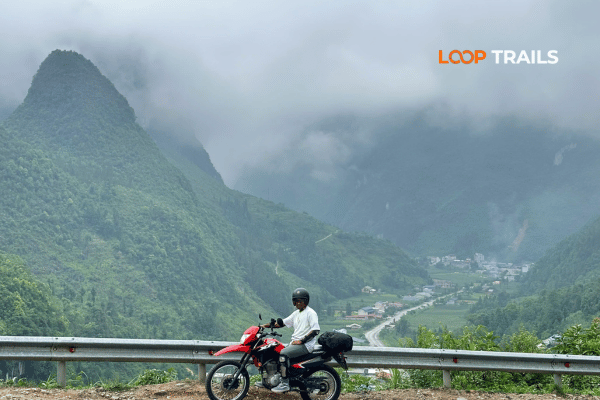
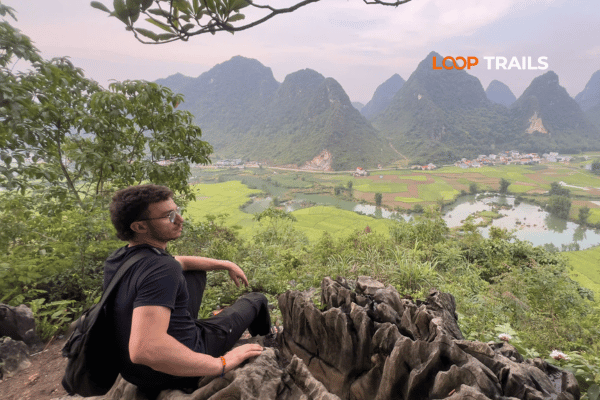
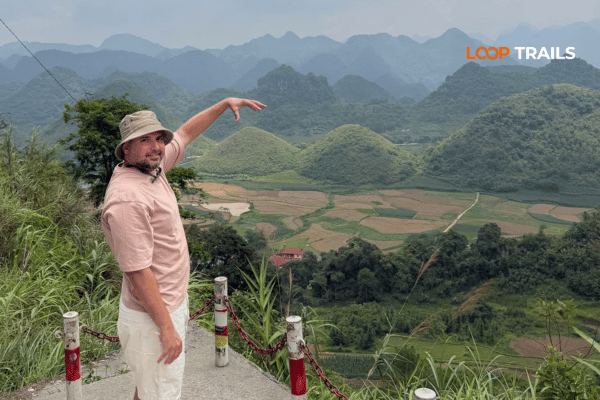
If there is one region that turns a Vietnam trip into an adventure trip, it is this one. Ha Giang sits against the Chinese border in the far north, a landscape of limestone towers, terraced valleys and roads carved along cliff faces. It is now the country’s most talked about overland route, and it earns the attention.
Most itineraries run in a rough circle from Ha Giang city:
Two days covers the essentials at pace. Three days is the standard and the most popular for good reason. Four days adds Du Gia, more village time and less clock watching. Our Ha Giang Loop tours run in all three lengths, so the question is really how much of your total trip you want to spend up here.
Because you arrive alone and immediately stop being alone. Groups form at the start point, you ride together, you eat dinner together at the homestay, and by day two the group has its own jokes. Then it dissolves and you go back to your own trip, having lost none of your independence.
It is also the section of Vietnam where going guided makes the most obvious sense. Mountain roads, weather, fuel stops, homestay bookings, market days, landslide sections after heavy rain: this is a lot to solve alone in a language you do not speak, and solving it badly costs you the good parts.
Learn more: Ha Giang Motorbike Rental
Three ways to do the Loop. None is more legitimate than the others, whatever anyone tells you in a hostel bar.
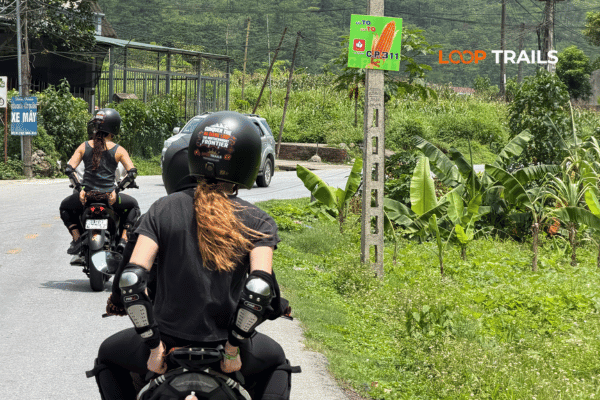
Easy rider. You ride on the back, a local driver handles the bike. Overwhelmingly the most common choice for solo travelers, and the most sensible one if you have limited riding experience. You look at the view instead of the road surface. You get a local companion for three days who knows which viewpoint is worth stopping at. Your hands stay free for the camera.
Self drive. You ride your own bike. Requires real experience with manual or semi automatic bikes on mountain terrain, not just a scooter around a beach town. The freedom is unmatched: stop where you want, ride at your own pace. It is also the option with the least margin for error, and mountain roads punish overconfidence. Be honest about your level. If you have never ridden a loaded bike downhill on wet tarmac with a truck coming the other way, the Loop is not the place to learn.
Jeep. Open sided or enclosed 4×4, driver included. The comfort option, and increasingly the one solo travelers over 40 choose. Also the answer for anyone who cannot ride, does not want to ride, is traveling with an injury, or simply wants to sit down for three days and look at mountains. You see exactly the same route, stop at the same viewpoints, sleep in the same homestays.
A note on paperwork, because there is a lot of noise online: licence requirements, permits and insurance validity for foreign riders can change, and they are enforced differently in different provinces. Do not take anyone’s forum post as fact, including this one. Check the latest official guidance before you travel, and confirm with your travel insurer in writing what they will and will not cover for motorbike riding. If there is any doubt at all, take an easy rider or a jeep. The trip is not diminished by it.
Learn more: Ha Giang Loop Easy Rider
A short, honest decision guide.
| If this sounds like you | Book this |
|---|---|
| First time in Vietnam, want the mountains, limited riding experience | Ha Giang Loop easy rider, 3 days |
| Confident rider, want maximum freedom, comfortable with mountain roads | Self drive Loop, or motorbike rental if you are building your own route |
| Do not ride, or traveling with a knee, back or shoulder that says no | Jeep tour, 2 to 4 days |
| Want the north’s two best regions in one go, have 8 or more days | Ha Giang and Cao Bang combine tour |
| Coming back for a second northern trip, want quiet roads | Cao Bang Loop |
| Have your own route in mind and just need a reliable bike | Motorbike rental in Ha Giang |
If you are still unsure, the fastest way to sort it is a two minute message. Tell us your dates, your riding experience and how many days you have for the north, and we will tell you which of the above fits. No pressure to book on the spot.
Learn more: Ha Giang Border Area Permit 2026
Vietnam is, for most solo travelers, an unremarkable place to be safe. The risks that matter are not the ones people worry about before they arriver
Road safety deserves your full attention, and it is the area where good decisions matter most.
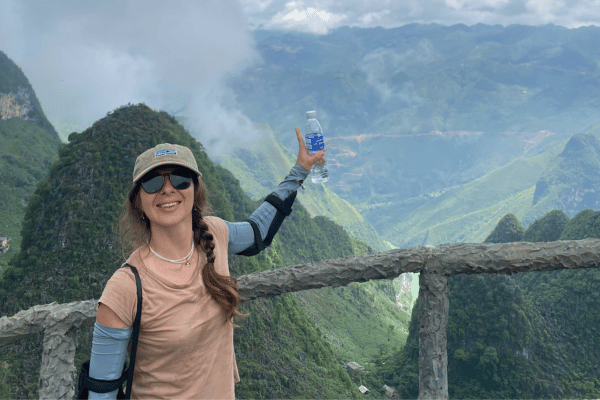
Vietnam has a strong reputation among solo female travelers, and the usual sensible habits apply here as anywhere: share your route with someone at home, keep a backup of key documents, do not walk home alone very late in unfamiliar areas, trust your instincts about people and situations.
The most common issues reported are not violent: they are money related and mild harassment, and both are manageable with the basics. Agree prices before rides. Use registered transport apps where they operate. Keep a hostel or hotel business card in your bag for taxi drivers.
Group tours are a good tool here. Three days on the Loop with a group and a guide gives solo female travelers company on the least familiar part of the trip, which is exactly when it is most useful.
Learn more: Ha Giang Loop ATM & Money Guide
Get travel insurance that explicitly covers what you are actually going to do. Read the motorbike clause twice. Many standard policies exclude riding, or exclude it above a certain engine size, or exclude it unless you hold specific licence categories.
Carry copies of your passport and visa, keep the originals secure, and know where the nearest real hospital is on any multi day route. Entry requirements, eVisa rules and permit requirements for border areas can change, so verify the current rules on official sources close to your departure date rather than trusting older travel articles.
Solo travel costs more per person than travel with a partner, because accommodation and private transport do not split. That is the main structural difference. Plan around it rather than being surprised by it.
Instead of quoting numbers that go stale, here is what actually moves your budget:
The big levers
The small stuff that barely matters
Practical habits
For current tour and rental rates, ask us directly rather than trusting an aggregator page. Prices shift with season, group size and what is included, and we would rather give you an accurate number than have you plan around a wrong one.
Learn more: Ha Giang to Cao Bang
Sleeper buses. The backbone of budget travel here. Beds rather than seats, overnight legs, wildly variable quality. They save you a night of accommodation and cost you a night of proper sleep. Fine occasionally, exhausting as a system.
Limousine vans. Smaller vehicles, more comfortable, usually faster on the Hanoi to Ha Giang run. Worth the difference for most solo travelers, particularly if you are arriving and starting a tour the next morning.
Trains. Slower, steadier, more comfortable than buses, and the Hanoi to Hue and Hue to Da Nang stretches are legitimately scenic. Book sleeper berths in advance in busy periods.
Domestic flights. The right answer when the alternative is a 20 hour bus. Buying back two days of your life for the price of a night out is usually good value.
Private transfers. Sometimes the smart choice for awkward connections, especially in the mountains where public routes are indirect.
Local rides. Ride hailing apps work well in cities. In smaller towns, agree the price first, in writing on a phone screen if needed.
One planning tip that saves solo travelers a lot of grief: never schedule a long overnight bus arrival on the same morning your tour starts, unless the tour operator has told you that timing works. Arrive the day before if you can. The mountains are better when you are not running on three hours of sleep
Learn more: Corn wine “Happy Water” in Ha Giang
Hostels are the fastest social route, and Vietnam has good ones. Look for places with a communal dinner or a bar area rather than just cheap beds.
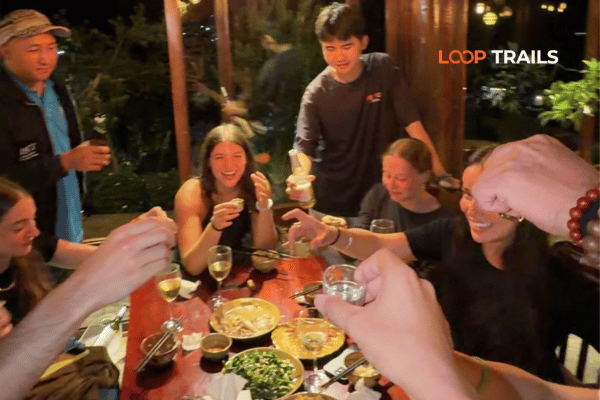
Homestays, particularly in the northern mountains, are the ones people remember. Shared dinner, shared table, families who have hosted travelers for years. You will end up in a conversation with someone from four countries away over a plate of grilled pork.
Guesthouses and small hotels give you the private room without the price of a resort. A good middle option for longer trips, and the standard solution for solo travelers who want quiet after a social stretch.
The reliable ways to meet people, in order of how well they work:

Learn more: Ha Giang Loop Mistake to Avoid
Not to scare you. These are ordinary, low grade annoyances, and awareness removes most of them.
The itinerary is too full. The single most common mistake. Cut one region. You will thank yourself.
Booking everything before you arrive. Book the pieces that genuinely need it: arrival night, tours in busy season, transport during holiday periods. Leave the rest breathing room.
Renting a bike you cannot handle. Confidence is not experience. Mountain roads are not a place to discover the difference.
Not checking the bike before you ride it. Brakes, tyres, lights, horn, chain. Photograph the bike from every angle before you take it, including existing scratches. This one habit prevents most rental disputes.
Vague prices. Any transport, tour or service where the price has not been stated clearly before you commit is a problem waiting to happen. Get it in writing, even if writing means a number typed into a phone.
Cheap tours that are cheap for a reason. In a competitive market, an unusually low price usually means something has been removed: driver experience, bike condition, group size, insurance, or the honesty of what is included. Ask what is included and what is not, in a written list. A good operator will send it without hesitation.
Losing your documents. Keep digital copies in two places. Keep the physical passport somewhere that is not your day bag.

Learn more: Ha Giang Packing list
Pack light. You will carry it up homestay stairs at some point.
Riding and mountain days
Everyday
Tech and admin
Leave behind
Learn more: Ha Giang Border Area Permit 2026
One workable shape. Adjust freely.
| Days | Where | The idea |
|---|---|---|
| 1 to 2 | Hanoi | Land, sleep, walk the Old Quarter, eat everything. Do not plan anything ambitious for day one |
| 3 to 4 | Ninh Binh | Bicycles, limestone karst, river boats, an easy introduction to rural Vietnam |
| 5 | Travel to Ha Giang | Limousine van or night bus, arrive the day before the tour starts |
| 6 to 8 | Ha Giang Loop | Three days of passes, homestays, Ma Pi Leng and the Nho Que gorge |
| 9 | Back to Hanoi | Rest. Laundry. A proper meal that is not on a plastic stool |
| 10 to 12 | Cat Ba and Lan Ha Bay | Kayaking, boat day, swimming, a slower gear |
| 13 to 14 | Hanoi | Buy the things you told yourself you would buy later. Fly out |
Two variations worth knowing. If you want more mountains and fewer beaches, drop Cat Ba and extend into Cao Bang for Ban Gioc waterfall and Nguom Ngao cave. If you want more beach and heritage, drop Ninh Binh and fly to Da Nang for Hoi An and the Hai Van Pass instead.
Learn more: Things to do in Cao Bang
Solo travel rewards a small amount of advance structure and punishes both extremes. Nothing booked means decision fatigue and sold out buses in high season. Everything booked means you cannot follow the good detour you find on day five.
The version that works for most solo travelers:
For the Loop itself, once you have a confirmed travel date we recommend booking as soon as you can. Most guests book one to three months ahead. Jeep availability in particular is limited compared to motorbikes, so early booking helps us arrange everything properly rather than telling you what is left.
Ready to sort the mountain part of your trip? Message us on WhatsApp with your dates and how many days you have. We will tell you which option fits, send you exactly what is included, and answer the questions you have not thought of yet. If a different route suits you better than ours, we will tell you that too. Adventurous but safe, and honest about both.
Learn more: Ha Giang Loop Coporate Retreat
For most travelers it is a comfortable country to travel alone, with a large traveler community and good infrastructure. The most common problems are money related rather than violent. Traffic is the risk that deserves the most attention, particularly on riding days.
It has a strong reputation among solo female travelers, and many do the northern mountain routes alone. Standard precautions apply: share your plans with someone, agree prices in advance, use registered transport where available. Joining a group tour for the mountain sections adds company at the point where it is most useful.
Ten to fourteen days is enough for a satisfying northern trip including the Ha Giang Loop. Three weeks or more if you want to cover north, centre and south without living on buses. Under ten days, pick one region and go deep.
Yes, and many people do. You can join a group tour as a solo traveler, take an easy rider, ride your own bike, or travel by jeep. Solo travelers are a normal part of almost every departure, so you will not be the odd one out.
Only for self drive, and for that you need real experience on mountain roads, not just a scooter on flat ground. If you are unsure, take an easy rider or a jeep. You see the same route and the same viewpoints.
Licence, permit and insurance requirements for foreign riders can change and are applied differently across provinces. Check current official guidance before your trip and confirm coverage with your insurer in writing. If there is any uncertainty, choose an easy rider or jeep option.
Autumn is widely considered the best window for the northern mountains, with clearer views and comfortable riding conditions. Spring is also good. Summer brings the heaviest rain, winter brings cold and fog at altitude. Since regional climates differ, choose the region first and then the month.
It varies with accommodation type, transport choices and how much you go guided, and solo travelers pay more per person because rooms and transfers are not shared. Rather than relying on outdated figures online, check current rates close to your travel dates and ask operators directly for what is included.
Rarely, unless you want to be. Hostels, group tours and shared transport bring people together constantly. Many solo travelers end up scheduling time alone rather than searching for company.
Common options are a night bus, a limousine van or a private transfer. Journey times and schedules vary by operator and season. Where possible, arrive the day before your tour starts rather than going straight from the bus to the bike.
Yes, and it is one of the best routes in northern Vietnam. The two regions link through Bao Lac, and combine itineraries typically run five to six days. It suits travelers who want mountains, waterfalls and much quieter roads than the standard Loop.
Book the pieces with real capacity limits, particularly the Ha Giang Loop in autumn and around Vietnamese holidays, plus your arrival night. Leave the rest flexible so you can follow the trip as it develops
Contact information for Loop Trails
Website: Loop Trails Official Website
Email: looptrailshostel@gmail.com
Hotline & WhatSapp:
+84862379288
+84938988593
Social Media:
Facebook: Loop Trails Tours Ha Giang
Instagram: Loop Trails Tours Ha Giang
TikTok: Loop Trails
Office Address: 54A Tran Phu, Ha Giang 2, Tuyen Quang
Address: 54A Tran Phu, Ha Giang 2, Tuyen Quang
Facebook X Reddit Table of Contents Learn more: Ha Giang Loop Tours Most people drive past the Quan Ba area twice on
Facebook X Reddit Table of Contents Learn more: Ha Giang Loop Tours The Ha Giang Loop has a reputation problem with older