
UK Driving Licence in Vietnam: IDP and Motorbike Rules
Facebook X Reddit Table of Contents If you are a UK traveler planning to ride a motorbike in Vietnam, the most important

Thúy Kiều( Grace) is a travel blogger and content contributor for Loop Trails Tours Ha Giang. She holds a bachelor’s degree in Sustainable Tourism from Vietnam National University, Hanoi, and has a strong passion for exploring and promoting responsible travel experiences in Vietnam’s northern highlands.
Learn more: Ha Giang Loop Tours
Most people doing northern Vietnam’s mountain circuit stop at Ha Giang. They ride the loop, hit Ma Pi Leng Pass, float down Nho Que River, and head back to Hanoi satisfied. And honestly, that’s a great trip.
But there’s another version of this journey — one that keeps going east after Meo Vac, pushes deeper into the mountains, crosses into Cao Bang Province, and ends at Ban Gioc Waterfall, one of the largest and least-touristed waterfalls in all of Southeast Asia. Fewer travelers know this route exists. Even fewer do it.
This guide is for the ones who want to.
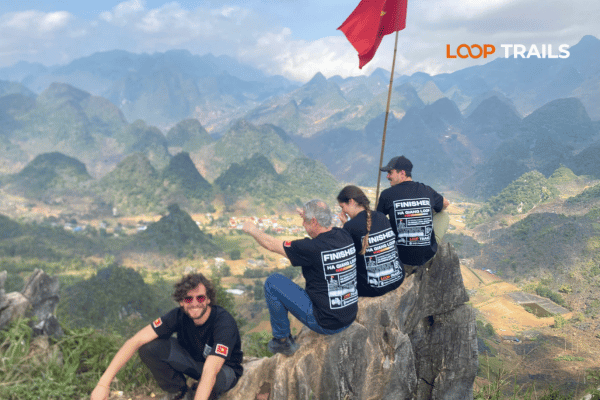
The Ha Giang to Cao Bang route combines two of northern Vietnam’s most dramatic provinces into a single 5-day journey. You get everything the Ha Giang Loop offers — the karst plateau, Ma Pi Leng, the H’Mong villages, Vuong Palace — and then you keep riding into a landscape that most travel itineraries never mention: the deep valleys of Bao Lac, the passes of Cao Bang, and the thundering white curtain of Ban Gioc.
Learn more: Ban Gioc Waterfall Guide
The honest answer: because they’re both spectacular, and doing them back-to-back makes more logistical sense than most people realize.
Ha Giang and Cao Bang share a border in the far northeast of Vietnam, separated by some of the country’s most remote mountain roads. The classic Ha Giang Loop ends (or passes through) Meo Vac. From there, the Cao Bang route continues east through Bao Lac — a town most travelers have never heard of — and into a different kind of mountain province entirely.
Where Ha Giang is dramatic and sharp — all limestone teeth and vertical canyon walls — Cao Bang is wider, greener, more layered. The ethnic minorities change (Nung and Tay communities become more prominent alongside the H’Mong). The landscapes open up. And Ban Gioc, on the Vietnam-China border, is the kind of waterfall that stops you mid-sentence.
The other reason to combine them: transport logic. If you’ve taken a sleeper bus from Hanoi to Ha Giang, doing the loop and flying straight back is fine. But if you continue to Cao Bang, you end up in a city with direct overnight connections back to Hanoi — meaning you’ve made a complete circuit through the northeast without backtracking.
Learn more: Ma Pi Leng Pass
The full route runs roughly like this:
Ha Giang City → Quan Ba → Yen Minh → Dong Van/Lao Xa → Lung Cu → Ma Pi Leng Pass → Meo Vac → Bao Lac → Khau Coc Cha → Ha Quang/Pac Po → Tra Linh → Trung Khanh → Ban Gioc → Cao Bang City
Total distance is substantial — this is a multi-day mountain route, not a day trip. The terrain between Meo Vac and Bao Lac is some of the most remote on the entire itinerary. Road quality varies. The scenery is consistently extraordinary.
Key waypoints travelers ask about:
Thinking about doing just the Ha Giang Loop first? → See the full Ha Giang Loop guide here before deciding whether to extend into Cao Bang.
Learn more: Ha Giang Cao Bang 5 Days
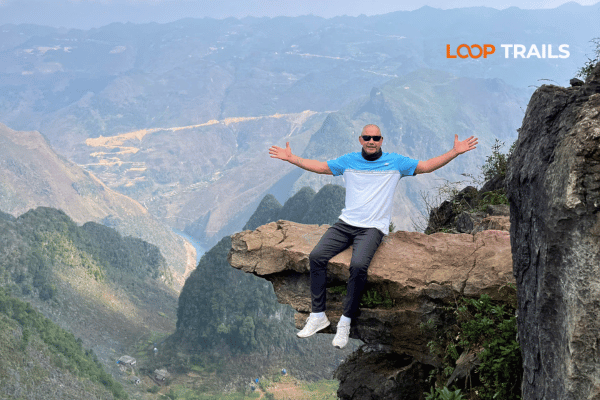
This is the itinerary Loop Trails runs for the Ha Giang–Cao Bang 5D4N tour, covering both provinces in a single trip. Whether you join a guided tour (Easy Rider or Jeep) or self-drive, this is the logical route sequence.
Take the overnight sleeper bus from Hanoi. Buses depart in the evening and arrive in Ha Giang early morning — typically around 5–6am. Check in at Loop Trails Hostel and rest for a few hours before Day 1 kicks off.
This is how nearly all Ha Giang tours work: you arrive rested, have breakfast, get your briefing, and start riding by 9am. No wasted travel day.
Breakfast + Loop briefing at 8:00am. Your guide walks you through the route, road conditions, safety basics, and what to expect over the next five days.
9:00am — Hit the road north. The first section climbs through Bac Sum Pass before reaching Heaven Gate (Cong Troi) — the dramatic mountain gateway where the Dong Van Plateau begins and Ha Giang Province’s scenery turns properly extraordinary.
From Heaven Gate, you descend into Tam Son town in Quan Ba, passing the iconic Twin Mountains (Nui Doi) — two perfectly rounded karst mounds rising from the valley floor that have become one of Ha Giang’s most photographed scenes.
Lunch stop in Yen Minh, then continue into the geopark. Key stops on this day include:
Arrive at Lao Xa (near Dong Van) for the first night homestay. Dinner, traditional music, games, happy water.
The biggest day in terms of landmark density.
8:00am — Breakfast and check out.
9:30am — Vuong Palace (if skipped or rushed on Day 1, revisit here for more time).
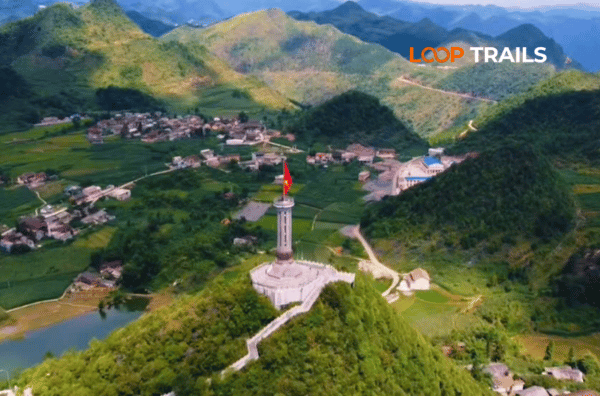
11:30am — Lung Cu Flag Tower, the northernmost point of Vietnam. At 1,700 meters elevation, the Vietnamese flag here is technically the highest point of the country’s territory on the northern border. The climb to the tower is short; the view is long.
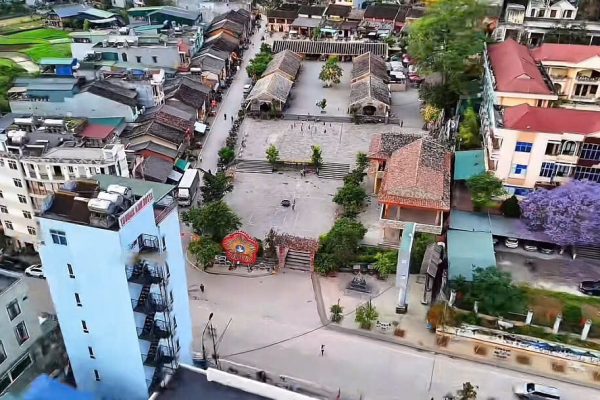
Lunch in Dong Van town — one of the few genuinely preserved old-quarter towns in the far north, with 19th-century merchant houses built by Chinese traders.
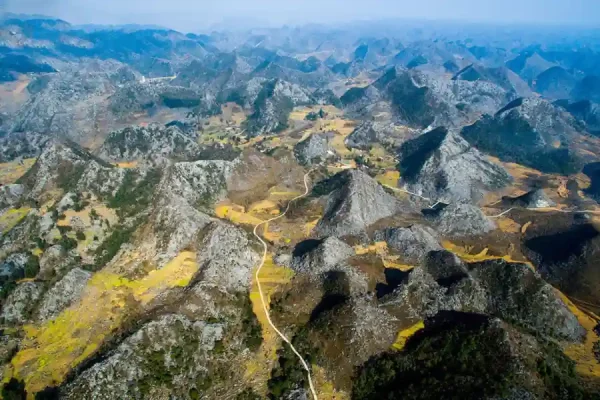
1:30pm — Begin Ma Pi Leng Pass. This is the one everyone talks about. A 20-kilometer traverse carved into sheer limestone cliffs, with the Nho Que River running 1,000+ meters below in a color that doesn’t look real — deep turquoise, almost chemical-looking from height. Walk the Ma Pi Leng Skywalk for the best unobstructed view into the canyon.
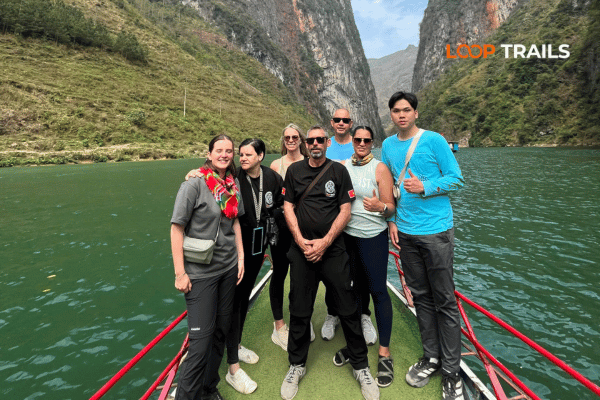
3:30pm — Boat tour on Nho Que River, through the narrowest section of Tu San Canyon — one of the deepest river canyons in Asia. The canyon walls rise vertically on both sides; the boat moves through them in near-silence.
Arrive in Meo Vac by 5pm for the second night. Meo Vac is the last proper town before the route goes genuinely remote.
Learn more: Explore just the Cao Bang Loop
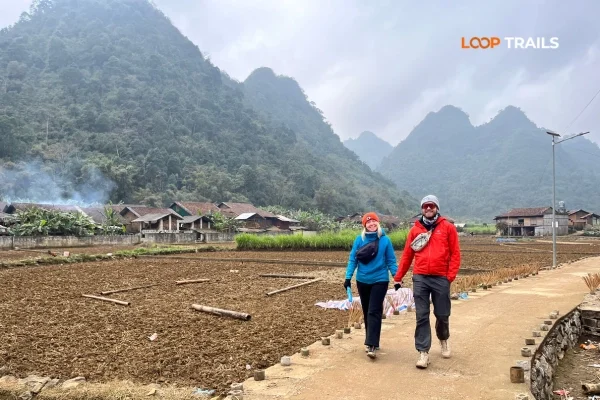
This is the day the route changes character. You leave the Dong Van Karst Plateau and push east toward Cao Bang, and the landscape transitions from the dramatic limestone spires of Ha Giang into something wider, wilder, and less traveled.
9:00am — Leave Meo Vac heading toward Bao Lac. The road here is mountain-honest: remote, spectacular, and not always predictable. This section rewards patience.
Lunch in Bao Lac — a relaxed town that sees a fraction of the tourist traffic of Dong Van. If you’re self-driving, Bao Lac is a good fuel and check point.
2:00pm — Khau Coc Cha Pass: 15 distinct switchbacks climbing to a ridge above Xuan Truong valley. Most travelers have no idea this pass exists, which is part of its appeal. The view from the top takes in a wide valley patchwork of fields, forest, and scattered Nung villages.
3:00pm — Xuan Truong valley — a quiet walk through the valley floor between villages.
4:00pm — Brief stop at Na Tenh Pass for another valley view.
Late afternoon — Pac Po cave and spring, Ha Quang. This is where Ho Chi Minh crossed from China back into Vietnam in February 1941 after 30 years in exile, establishing his base for the independence movement. The site includes the cave, a stone table where he reportedly worked, and the spring he named. For historically curious travelers, it’s unexpectedly moving. For everyone else, it’s a beautiful riverside walk regardless of the history.
Night at Me Farmstay — a working farm guesthouse that most travelers consider one of the highlights of the trip.
9:00am — Leave Me Farmstay.
10:00am — Pass through Tra Linh.
Lunch in Trung Khanh — a small town near the Chinese border with good local food and a relaxed pace.
1:00pm — Hike to Pi Pha viewpoint at Ngoc Con. The climb takes about 30–40 minutes and ends at a ridge with panoramic views across the Cao Bang plateau — a completely different landscape from anything on the Ha Giang side.
2:00pm — Take the back road through Trung Khanh’s countryside toward Ban Gioc — a quieter route that runs through village land rather than the main road.
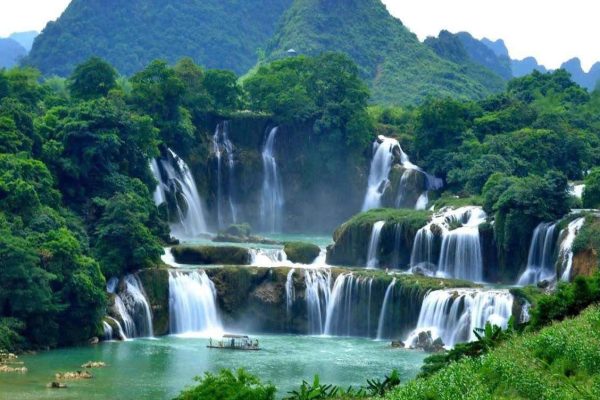
3:00pm — Ban Gioc Waterfall. It appears around a bend in the road without warning. The falls are wide — nearly 300 meters across at full flow — and split into multiple tiers across the Vietnam-China border. In the foreground, bamboo rafts pole through the mist. In the background, the Chinese side is clearly visible. It’s one of those places that’s hard to fully prepare for.
Optional: swim at the rock pools near the waterfall. The water is cold and clear.
Night at a guesthouse near Ban Gioc — staying close means you can walk back at sunrise before the tour groups arrive.
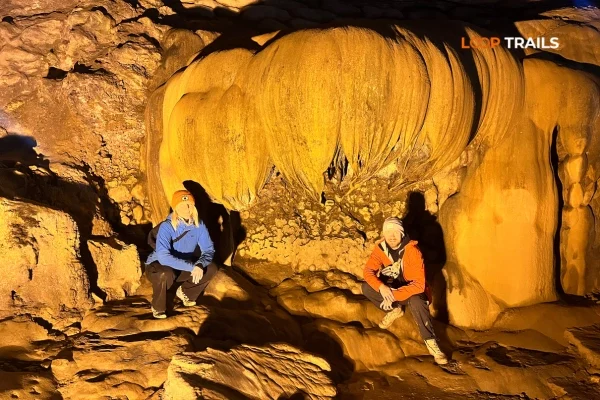
9:00am — Nguom Ngao Cave. This is the cave that surprises people most on the Cao Bang leg. It’s massive — the main passage runs for over 2 kilometers open to visitors — and the stalactite formations are dense and varied. Less crowded than the famous caves in Phong Nha, significantly more impressive than most travelers expect.
10:30am — Brief stop at Quay Son River near Ban Gioc for the full valley view.
1:00pm — Phuc Sen village: a Nung craft village famous for blacksmithing and, increasingly, traditional paper-making (Dia Tren paper factory). The paper is made from plant bark using techniques unchanged for centuries, and the finished sheets are used in ceremonial and decorative contexts. Worth 20 minutes even if you’re not typically a “craft village person.”
2:00pm — Phia Thap incense village: Nung women rolling incense sticks by hand, bundling them in bright-colored paper, stacking them in towers to dry. The smell hits before you park. A functional, working village — not a demonstration for tourists.
3:00pm — God’s Eye Mountain (Nui Mat Than): a karst peak with a circular lake in its summit crater that, from the right angle and altitude, looks like an eye. More interesting than it sounds.
4:30pm — Arrive in Cao Bang City. Check in, rest, and catch the overnight bus to Hanoi (or wherever you’re heading next).
Learn more: Lung Cu Flag Tower Guide
These are the Loop Trails prices for the guided 5-Day 4-Night Ha Giang–Cao Bang tour, including both jeep and motorbike (Easy Rider / self-drive) formats.
| Group Size | Total Price (VND) | Per Person |
|---|---|---|
| 2 people | 31,990,000 | ~15,995,000 |
| 3 people | 36,490,000 | ~12,163,000 |
| 4 people | 40,990,000 | ~10,248,000 |
Solo travelers: contact us for pricing — minimum group size is 2 for this tour.
| Tour Type | Price Per Person (VND) |
|---|---|
| Easy Rider (guide drives, you ride pillion) | 10,990,000 |
| Self-Drive (you ride your own bike) | 10,590,000 |
All prices include dorm accommodation, meals as per itinerary (B/L/D marked), guide or driver, transport, entrance fees, and all activities listed.
Not included: round-trip bus tickets to/from Ha Giang or Cao Bang, private room upgrades, personal drinks, travel insurance.
Learn more: Dong Van Old Quater
Included in the tour price:
Not included:

Learn more: Ha Giang Sleeper Bus
Getting to Ha Giang:
Overnight sleeper buses depart nightly from Hanoi (My Dinh Bus Station area) and arrive in Ha Giang in the early morning. Journey time is approximately 5–6 hours. Loop Trails can arrange bus tickets as part of your tour booking.
Bus options include:
Buses also run from Ha Long, Cat Ba, Ninh Binh, and Sapa to Ha Giang if you’re building a northern Vietnam circuit.
Getting home from Cao Bang:
The 5D4N tour ends in Cao Bang City. Overnight buses from Cao Bang → Hanoi depart in the evening. We can arrange this connection when you book your tour — just tell us your onward destination.

Learn more: Ha Giang Loop Easy Rider
This route is longer and more remote than a standard Ha Giang Loop. That changes the calculus slightly.
Your guide is the driver — you ride pillion, take photos, and focus entirely on the experience. No navigation, no road stress, full attention on the scenery. At 10,990,000 VND/person, this is the most immersive and social option. Good for solo travelers, couples who want to ride together (each on their own bike with separate guides), and anyone who wants the motorbike experience without the responsibility of riding mountain roads.
Best for: first-timers, solo travelers, anyone who wants to be fully present without riding fatigue.
Learn more: Ha Giang Loop Self-Drive & Motorbike Rental
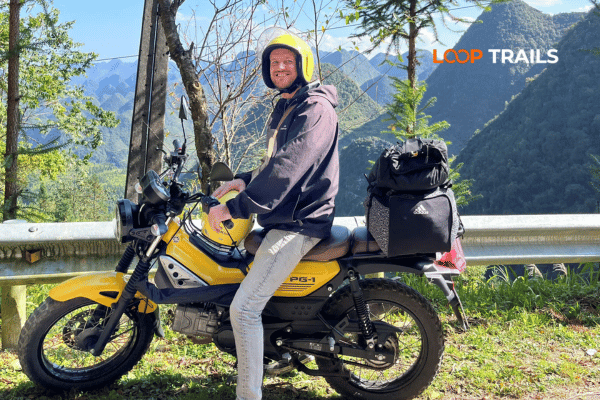
You’re in control. Navigate your own pace, stop whenever you want, take the corners at your own speed. At 10,590,000 VND/person, it’s slightly cheaper than Easy Rider — but the real draw is freedom. A guide still rides with the group; you’re not alone in the mountains.
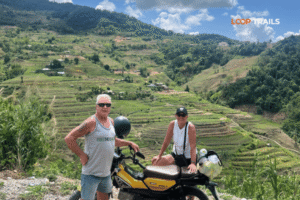
Important: Self-drive requires a valid motorbike license from your home country and an International Driving Permit (IDP 1968 — note that IDP 1949 is not valid in Vietnam). Without the correct documentation, you risk fines of 2,000,000–6,000,000 VND if stopped by traffic police. Rules can change — verify current requirements before you ride. → See our full self-drive licensing guide
Best for: experienced riders who want control, those who’ve done the Ha Giang Loop before and want more freedom on the Cao Bang extension.
Learn more: Ha Giang Loop for Families & Groups
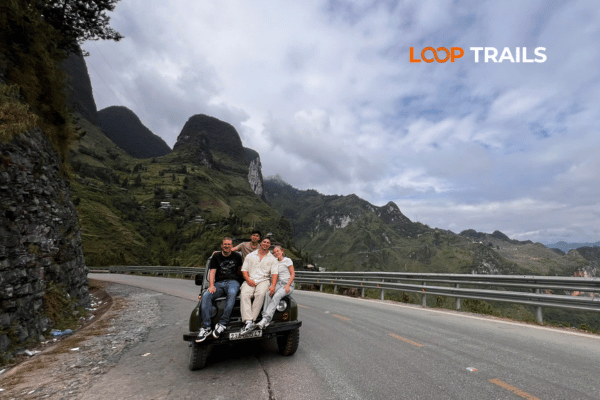
Travel in a 4WD jeep with a local driver and guide. Best for families, couples who’d prefer not to ride, older travelers, or groups of 2–4 who want a shared, comfortable experience. Per-person cost is higher for small groups but becomes competitive at 3–4 pax.
Best for: families with kids, couples, older travelers, those with physical limitations, anyone who wants comfort without sacrificing the route.
Still deciding? → Compare all Ha Giang–Cao Bang tour formats and book here
Learn more: Ha Giang Cao Bang Loop Jeep tour Guide
This comes up a lot: “If I’ve done Ha Giang, is Cao Bang worth it?”
The short answer is yes — but for different reasons.
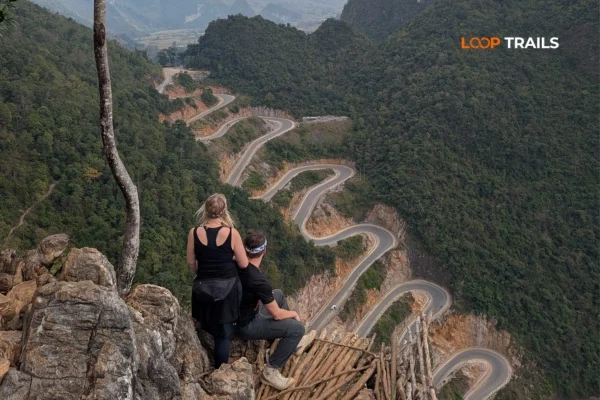
Ha Giang is vertical. It’s about altitude, sheer limestone, the sensation of being perched on the edge of something enormous. The Dong Van Karst Plateau is like being inside a geology textbook, and Ma Pi Leng Pass is one of the most viscerally impressive roads in Vietnam.
Cao Bang is horizontal. The valleys are wider. The forests are denser. The terrain feels more inhabited — there are more villages, more agricultural land visible from the road, more of the everyday rhythm of border-region life. The ethnic landscape shifts: Nung and Tay communities become more prominent, with distinct architecture and craft traditions.
And Ban Gioc is simply in a different category from anything in Ha Giang. It’s not a mountain viewpoint or a canyon — it’s a waterfall the width of three football fields, right on the Chinese border, in a setting that feels completely unlike the rest of northern Vietnam.
Travelers who do both provinces in one trip consistently say Cao Bang surprised them more. That’s not a knock on Ha Giang — it just means most people arrive with lower expectations and leave more impressed.
Learn more: Hmong Culture in Ha Giang
One of the things that sets this route apart from most Southeast Asian touring is the density and authenticity of ethnic minority culture along the way.
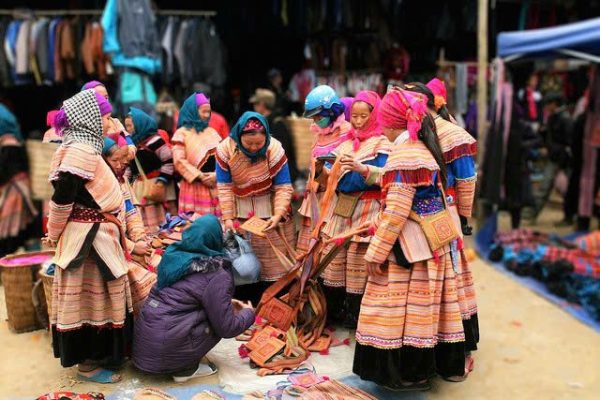
H’Mong people dominate the Ha Giang section — particularly the Black H’Mong and Flower H’Mong, recognizable by their distinctive indigo-dyed and embroidered clothing. Village architecture uses dry-stone walling techniques, and corn is the dominant crop on the steep slopes.
Lo Lo people are one of Vietnam’s smaller ethnic groups and are concentrated around Lung Cu near the Chinese border. Lo Lo Chai village is one of the most intact traditional villages in the north, with carved wooden facades and a preserved community structure that larger H’Mong settlements have largely lost.
Nung people become more visible in the Cao Bang section. Nung craft traditions include blacksmithing, incense-making (Phia Thap village), and paper-making (Phuc Sen village) — all of which are still practiced commercially, not just for tourists.
Tay people are Cao Bang’s largest ethnic group and have been settled farmers in the valley lowlands for centuries. Their stilt house architecture and wet-rice farming traditions are visible throughout the province.
A few notes on visiting villages respectfully:
Learn more: Ha Giang Packing List
Packing for 5 days:
Road conditions: Ha Giang roads are paved but mountain-honest. The section between Meo Vac and Bao Lac includes some stretches that can be affected by landslides after heavy rain. The Cao Bang roads are generally in reasonable condition but narrower and less traveled. Road conditions change seasonally — check with your guide or hostel before each day.
Best time to do this route:
Self-drive licensing: If riding your own bike, you need: a valid home-country motorbike license and an IDP 1968 (the 1949 version is not recognized in Vietnam). Without these, fines from traffic police range from 2,000,000–6,000,000 VND. Rules and enforcement vary — check the latest requirements before you travel. Joining a guided tour with your guide present can sometimes help with police negotiations if something comes up on the road, but it doesn’t exempt you from license requirements.
Travel insurance: Non-negotiable for a route like this. Make sure your policy covers motorbike riding and mountain activities.
Learn more: Ha Giang Loop 4 Days 3 Nights
Here’s the honest breakdown:
Do the full 5D4N Ha Giang + Cao Bang tour if: You have the time (5 full days plus travel days), want the complete picture of northern Vietnam’s far northeast, and don’t want to backtrack. The combination of Ha Giang’s drama and Cao Bang’s depth makes this one of the best multi-day routes in the country.
Do just the Ha Giang Loop (3D2N or 4D3N) if: You’re short on time, this is your first trip to northern Vietnam and you want to test the waters, or you’re planning to come back and do Cao Bang separately.
Choose Easy Rider for this route if: You want the motorbike experience without riding mountain roads yourself. Over 5 days and some of the more remote passes on the Cao Bang side, the Easy Rider format means your guide absorbs the road stress while you absorb the views.
Choose Self-Drive if: You’re an experienced rider with the right documentation. This route rewards confident riders — but the Meo Vac to Bao Lac section is not the place to discover your limits.
Choose the Jeep Tour if: You’re traveling with family, prefer comfort, or are in a group of 3–4 where the per-person jeep cost becomes competitive with motorbike options. The jeep format covers all the same stops and has a guide for everything.
→ View full Ha Giang–Cao Bang tour details and book here | → WhatsApp us your travel dates and group size
Learn more: Tu San Canyon & Nho Que River Boat Trip
The standard format is 5 days and 4 nights, starting with a night bus from Hanoi and ending in Cao Bang City. Add 1–2 extra days if you want more time at specific stops like Ban Gioc or the Dong Van Plateau.
No — and that’s one of the great advantages of this route. The tour ends in Cao Bang City, which has direct overnight bus connections to Hanoi. You make a complete circuit through the northeast without backtracking.
Yes for motorbike tours (Easy Rider or self-drive) — solo travelers are welcome and will join a group. The jeep tour requires a minimum of 2 people. Solo Easy Rider at 10,990,000 VND is the most practical option for solo travelers wanting the full 5-day experience.
Harder. The section between Meo Vac and Bao Lac is more remote and less traveled than the standard loop roads. You’re unlikely to have an issue, but help is further away if something goes wrong. Experienced riders won’t find it technically challenging — the passes are long rather than technical — but it’s a commitment of physical energy over 5 days.
You need your home-country motorbike license plus an International Driving Permit (IDP) type 1968. The 1949 IDP is not valid in Vietnam. Fines for riding without correct documentation range from 2,000,000–6,000,000 VND. Always check current regulations before your trip.
Almost universally yes, based on traveler feedback. It’s a different kind of spectacle from the mountain passes — wider, louder, wetter — and it tends to catch people off-guard with its scale. Best visited at the end of the wet season (October–November) when flow is at its peak.
From Cao Bang City, overnight buses run to Hanoi (most common) and to other major cities. Loop Trails can help arrange this connection — just tell us your onward destination when you book.
Yes — all meals marked on the itinerary (B=breakfast, L=lunch, D=dinner) are included in the tour price. Each day’s meal schedule is listed in the itinerary above.
Yes, but prepare for cold temperatures (near-freezing at altitude, especially in December–February) and possible fog on mountain passes. Winter has far fewer tourists and a stark, quiet beauty that some travelers prefer. Bring serious warm layers — a light jacket won’t be enough above 1,500 meters at night.
Mostly local homestays and guesthouses — basic but genuine. You sleep in dorm beds unless you upgrade to a private room (available at additional cost). The Me Farmstay on Day 3 is a highlight for many travelers. Accommodation is included in the tour price.
→ Book directly on the Loop Trails website or → send us a WhatsApp message with your dates, group size, and preferred tour format. We’ll confirm availability and walk you through the rest.
Contact information for Loop Trails
Website: Loop Trails Official Website
Email: looptrailshostel@gmail.com
Hotline & WhatSapp:
+84862379288
+84938988593
Social Media:
Facebook: Loop Trails Tours Ha Giang
Instagram: Loop Trails Tours Ha Giang
TikTok: Loop Trails
Office Address: 48 Nguyen Du, Ha Giang 1, Tuyen Quang
Address: 48 Nguyen Du, Ha Giang 1, Tuyen Quang
Facebook X Reddit Table of Contents If you are a UK traveler planning to ride a motorbike in Vietnam, the most important
Facebook Twitter LinkedIn Table of Contents Learn more: Ha Giang Loop Tours Most people planning the Ha Giang Loop focus entirely on
Facebook X Reddit Table of Contents Learn more: Ha Giang Loop Tours Most articles about the Ha Giang Loop assume everyone in