

Thúy Kiều (Grace) is a travel blogger and content contributor for Loop Trails Tours Ha Giang. She holds a bachelor’s degree in Sustainable Tourism from Vietnam National University, Hanoi, and has a strong passion for exploring and promoting responsible travel experiences in Vietnam’s northern highlands.

Learn more: Ha Giang Loop Tours
There’s a specific moment that most people remember from the Ha Giang Loop. You’re somewhere on the climb toward Ma Pi Leng Pass, the road dropping off sharply to your left with the Nho Que River a ribbon of turquoise far below, and there is nothing between you and that view except the wind and the sound of your engine. It’s the kind of moment that doesn’t translate in photos and certainly doesn’t happen from the back of someone else’s vehicle.
That’s the case for self-drive. And it’s a genuinely compelling one.
But renting a motorbike for the Ha Giang Loop is not a casual decision. The roads here are beautiful precisely because they’re remote, which means when something goes wrong — a breakdown, a wrong turn, a sudden rainstorm that turns a mountain pass into a skid risk — you’re dealing with it in the middle of nowhere with limited phone signal and no easy bailout. This guide exists so you make that decision with open eyes, rent the right bike from the right place, and ride the loop the way it deserves to be ridden.
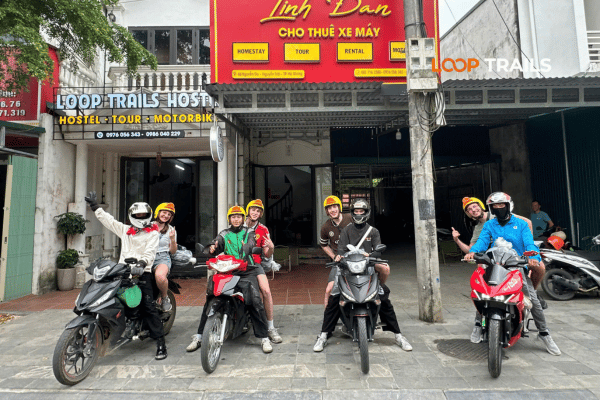
Learn more: Ha Giang Motorbike Rental
This question deserves an honest answer before anything else, because not everyone asking about motorbike rental in Ha Giang should actually be renting a motorbike.
The Ha Giang Loop is not a beginner riding circuit. The roads involve sustained mountain climbing, sharp hairpin corners, steep descents, occasional gravel patches or landslide debris, and sections where local trucks share narrow mountain lanes. If you’ve ridden extensively before on real roads, not just a beach resort scooter you’re in a reasonable position to consider self-drive. If your most recent riding experience was a 50cc scooter in Bali three years ago, that’s worth thinking carefully about.
The alternatives are worth understanding clearly:
Easy Rider (guided, you ride pillion): A local guide drives and you sit on the back. You cover the same route, see the same scenery, and gain the benefit of a driver who knows every turn, every fuel stop, and every family-run lunch spot. You also have someone to talk to about what you’re seeing, which turns out to be a bigger part of the experience than most people expect going in.
Jeep tour: A 4×4 vehicle covers the main loop highlights. More comfort, better for couples or small groups who want the views without the riding logistics, and genuinely useful if you’re combining Ha Giang with other regions.
Self-drive tour (with support vehicle): Some operators offer a format where you ride your own bike but with a guide vehicle following and logistics handled for you. Worth asking about specifically if you want the riding experience without full independence..
Run through this honestly:
The self-drive rental route in this guide assumes you’ve made that assessment and landed on genuine self-drive. Everything from here is written for that choice.
Not sure which format fits your trip? Loop Trails runs Ha Giang Loop tours in Easy Rider, Self-Drive, and Jeep formats with small groups and flexible scheduling. Check the tour options or send a WhatsApp message to talk it through — the team can help you figure out the right fit based on your riding background and itinerar
Learn more: Ha Giang Loop 2 Days 1 Night
The Ha Giang rental market has matured enough that you now have real options rather than just “whatever’s left.” Here’s how the main categories break down.
Automatic (scooter-style): Twist and go, no gears. Accessible for most riders, but genuinely less suited to mountain terrain. Automatics can overheat on long descents, have less engine braking on steep downhills, and generally offer less control in technical conditions. Many experienced riders avoid them for the loop specifically. If it’s your only riding experience, it’s not impossible, but you should know the limitations going in.
Semi-automatic (step-through with gears, no clutch): Bikes like the Honda Wave family fall into this category. More control than an automatic, manageable for intermediate riders. Common rental option and gets the job done for the loop if you’re comfortable with gear shifting.
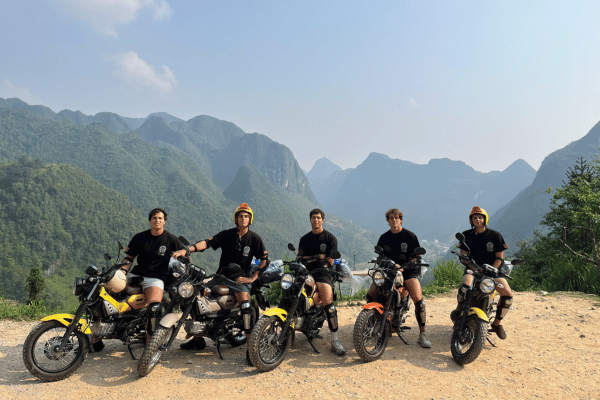
Manual (full clutch): Trail bikes and enduro-style bikes like the Honda XR150 or similar. Full clutch, gears, designed for varied terrain. These are the bikes experienced riders usually prefer for Ha Giang because the engine braking on descents is properly controllable and they handle rough road sections more confidently. Also generally better built for higher mileage over consecutive days.
The XR150 and similar trail bikes are the most commonly recommended option for the loop among experienced riders. If you’re renting from a reputable shop or operator like Loop Trails, you’ll have access to bikes in this category. Don’t let a rental place push you toward an automatic “because it’s easier” unless you’ve assessed that it genuinely suits your skill level.
Before you even get to the inspection checklist (that’s its own section below), think about these fundamentals when choosing a bike:

Learn more: Ha Giang Loop 3 Days 2 Nights
Rental prices in Ha Giang fluctuate based on bike type, season, rental duration, and the shop you’re dealing with. Rather than giving specific numbers that may be outdated by the time you read this, here’s the honest framework.
Daily rental rates for a basic semi-automatic are generally cheaper than for a trail bike or XR-type. Trail bikes command a premium because they’re more expensive to source and maintain. The price difference is usually meaningful but not dramatic — check current rates directly with rental shops or your tour operator when you’re planning.
Multi-day discounts are common. Most places will offer a better daily rate for a 4 or 5-day rental versus a single day. Ask explicitly.
What’s typically included in the rental price:
What’s often NOT included (and worth clarifying):
The deposit question: Most rental places take a deposit, either cash or holding your passport. Neither option is ideal. If a shop insists on holding your passport, understand the implications — your passport is your primary ID at accommodation checkpoints and police stops along the route. Some travelers use a photocopy plus a cash deposit as a negotiated middle ground, but the shop has to agree to this. Ask Loop Trails or your chosen operator about their specific deposit policy upfront.
Damage charges: This is where rental experiences go wrong most often. Always clarify in advance what counts as “normal wear” versus a damage claim, and photograph everything before you leave. More on this in the inspection section.

Learn more: Ha Giang Loop 4 Days 3 Nights
You have two main channels: independent rental shops in Ha Giang City, and tour operators who include bike rental as part of a self-drive package.
Independent rental shops offer more price flexibility and you can negotiate directly. The trade-off is that support infrastructure — what happens if your bike breaks down in Meo Vac — varies enormously by shop. Some have local mechanic contacts; others expect you to sort it yourself. Ask specifically what happens in a breakdown before you pay.
Tour operators with rental components (like Loop Trails’ self-drive format) typically charge a bit more but include clearer support structures, better-maintained bikes, and a contact you can reach when something goes wrong at 4pm on a mountain pass. For first-time loop riders, this structure is often worth the price difference.
Some travelers consider renting in Hanoi and riding to Ha Giang (roughly 300km from Hanoi). This is doable, but adds significant riding time before the actual loop, means you’re responsible for the bike on the highway stretch, and most Ha Giang-specific rental shops will have more recent knowledge of local road conditions than a Hanoi shop.
If you want to test your bike and riding confidence before the loop, the Hanoi-to-Ha Giang ride along Highway 2 is not the worst warm-up. Just account for it in your timeline and make sure your rental agreement covers the full route.
The cleaner logistics option for most travelers is to take the night bus from Hanoi to Ha Giang City and rent there. You arrive rested (relative to a 300km ride), the bike is already where you need it, and local rental shops know the specific terrain you’re about to tackle.
Learn more: Ha Giang Loop License
This section requires an honest caveat: Vietnam’s regulations around foreign driver’s licenses, required document types, and local enforcement practices can change and are not uniformly applied across all regions. What follows is a general orientation. Verify current requirements through official sources or your rental provider before your trip.
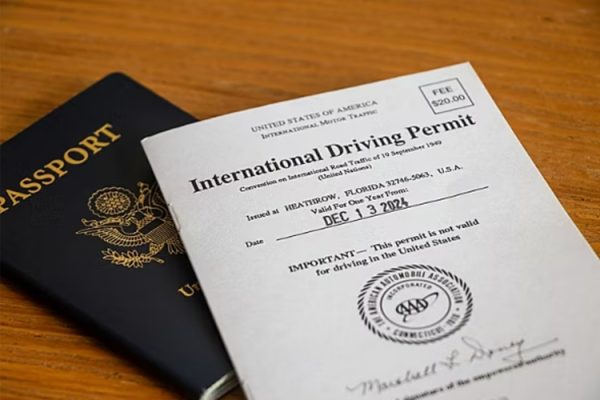
International Driving Permit (IDP): Vietnam officially recognizes International Driving Permits for certain license categories. If you hold a car or motorcycle license in your home country and obtain an IDP before traveling, this is the standard recommended approach for legal riding in Vietnam. Rules around what’s accepted can vary check the latest guidance from the Vietnamese embassy or a current expat/traveler resource close to your trip date.
Vietnamese license: Some long-term travelers obtain a Vietnamese license while in country. This is not a practical option for most short-stay visitors.
Unlicensed riding: The reality on the ground in Ha Giang is that many travelers ride without a recognized license and do so without incident. This does not make it legal or advisable. Police checks exist, and the financial and practical consequences of being stopped without proper documentation vary. This guide won’t tell you what risk to accept — it’s your call — but it’s better to know the situation honestly than to assume it’s fine because everyone does it.
What to carry while riding:
Ha Giang has checkpoints at certain entry points along the loop. Requirements and what’s checked can shift. Your rental shop or tour operator will have the most current practical knowledge of what you actually need at the specific points along your planned route.
Learn more: Ha Giang Photography Guide
This is not optional. Rental damage disputes are the single most common source of bad experiences in the Ha Giang motorbike rental world, and almost all of them are preventable with 10 minutes of careful attention before you ride away.
Your pre-ride inspection checklist:
Write down or take a photo of any pre-existing damage and show it to the rental staff. Get them to acknowledge it, ideally in writing. This one step prevents the vast majority of deposit disputes.

Learn more: Ha Giang Loop route and itinerary
The standard Ha Giang Loop starts and ends in Ha Giang City and covers the Dong Van Karst Plateau Geopark, passing through the major points of Quan Ba, Yen Minh, Dong Van, and Meo Vac, with Ma Pi Leng Pass as the visual centerpiece. The full circuit, ridden at a reasonable pace with stops, takes most riders four to five days.
Day 1: Ha Giang City to Yen Minh or Dong Van via Quan Ba Heaven Gate and Fairy Twin Mountains Day 2: Dong Van town, Lung Cu Flag Tower (the northernmost point of Vietnam), Dong Van Old Quarter Day 3: Dong Van to Meo Vac via Ma Pi Leng Pass — this is the day. Allow plenty of time and stop as much as you want. Day 4: Meo Vac to Du Gia, through the valley roads and rice terrace country Day 5: Du Gia back to Ha Giang City, or extend with a detour depending on time
This is a rough skeleton, not a fixed itinerary. The route has variation points and optional extensions. If you’re combining Ha Giang with Cao Bang (Ban Gioc Waterfall, Phia Oac mountain, Nguom Ngao Cave), that’s a separate multi-day extension worth planning separately.
A few honest notes on conditions:
Ma Pi Leng Pass is one of the most photographed roads in Vietnam for a reason. It’s also narrow, has steep drops with no barriers in places, and gets slick in rain. Ride it in the morning if possible — afternoon clouds often reduce visibility.
The Dong Van to Meo Vac section is technically the best riding of the loop. Take your time.
Du Gia and the valley sections south of Meo Vac are often underrated. The roads here are genuinely beautiful and less crowded than the northern plateau.
Road conditions in Ha Giang change seasonally. Landslide debris, road works, and surface deterioration after heavy rain are all real variables. Your rental shop or tour operator will have the most current information on any closures or problem sections at the time of your trip. Always ask the day before each leg.
Fuel stops: Fill up whenever you see a petrol station or local fuel seller (the 1-liter plastic bottle setup at small roadside shops). Don’t assume the next town will have fuel. Ha Giang is remote enough that running out is a genuine possibility if you’re not paying attention to the gauge.
If you’re planning a self-drive rental through Loop Trails, the team can help you map out a daily itinerary that fits your riding speed and priorities — including current road condition notes at the time of your departure. Check the motorbike rental page or send a WhatsApp message to get current availability and bike options.

Learn more: Ha Giang Packing list
Being prepared for a breakdown is not pessimism. It’s just math. You’re putting a rental motorbike through several hundred kilometers of mountain terrain over multiple days. Even well-maintained bikes develop issues. Here’s how to handle it.
Basic tools and spares to carry:
When you get a flat tire: In towns and larger villages along the loop route, there are almost always motorcycle repair shops (look for the stacks of old tires). In more remote sections, local villagers with a pump are more common than you’d expect. Don’t panic. Walk the bike to the nearest dwelling and ask.
When the engine won’t start or develops a serious fault: Contact your rental shop or tour operator immediately. Have the number saved before you leave. A good operator has a mechanic network or can get someone to your location. A bad operator will tell you to sort it yourself — this is useful information to extract before you pay a deposit.
Emergency cash: Always keep a reserve of cash on you that isn’t part of your daily budget. A repair, a mechanic fee, or an unplanned accommodation stop in a small village requires cash, and card payment is not a concept in remote Ha Giang.

Learn more: Ha Giang Loop for Beginners
Safety advice for Ha Giang often gets either dramatized into something terrifying or dismissed with a breezy “just be careful.” Neither is useful. Here’s the realistic picture.
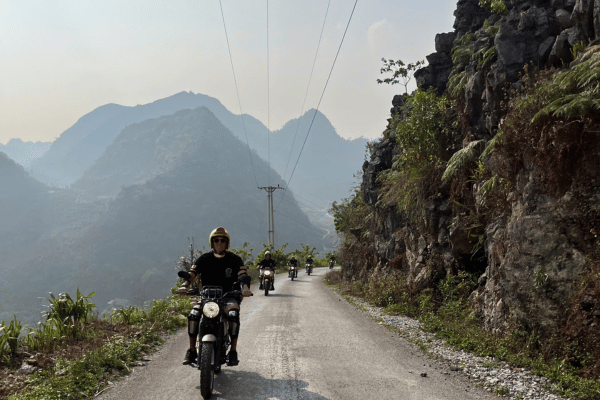
The roads are not the most technically difficult in Southeast Asia. Experienced riders from countries with mountain roads will find Ha Giang manageable. The primary hazards are: loose gravel or road debris (especially after rain), oncoming vehicles on narrow sections of Ma Pi Leng and similar passes, and rider fatigue from long days.
Rain changes everything. A road that’s straightforward in dry conditions becomes genuinely dangerous when wet. Mountain clay and loose rock surfaces lose traction fast. If you’re on the road when rain starts, pull over and wait. There is no view worth a wet-road crash on a mountain pass.
Start early each day. Leaving by 7am gives you the best light for photos, cooler temperatures, clearer roads, and buffer time if anything slows you down. Riders who start at 11am consistently have worse days.
Don’t ride fatigued. The loop looks short on a map. The actual riding hours per day, including stops, are longer than most people expect. If you’re getting tired, stop. Accommodation is available in every main town on the route.
Helmet quality matters more than people admit. The cheap thin-shell helmets available at some rental shops look like helmets but offer limited protection. A proper full-face or open-face with a decent shell is worth asking about specifically. If your rental doesn’t include one you trust, buy or rent one separately before you go.
Travel insurance: Ride with travel insurance that explicitly covers motorcycle riding. Many standard policies exclude it. Read yours before you go. This is not negotiable advice.
Learn more: Ha Giang Loop Mistake to Avoid
These come up repeatedly in traveler forums and feedback, and most of them are completely avoidable.
Signing a rental agreement without reading it. Even if the agreement is partly in Vietnamese, ask someone to translate the key clauses around damage, deposit return, and breakdown responsibility. Five minutes of attention here prevents major headaches later.
Not photographing the bike before departure. Covered in detail above. Do it. Every time. Without exception.
Choosing a bike based on price alone. The cheapest option in Ha Giang is cheap for a reason. Older, poorly maintained bikes break down at inconvenient times. A slightly higher daily rate for a reliably maintained trail bike is almost always the better value over a 5-day trip.
Renting from a shop with no contact number for emergencies. Before you take the bike, call or WhatsApp the shop number to confirm it works and someone answers. If they don’t respond during business hours before you’ve paid, that tells you something important about how they’ll respond when you need help on the road.
Underestimating daily riding time. The loop’s distances look manageable on a map. The actual road — hairpins, passes, photo stops, fuel hunts, lunch — consistently takes longer. Plan for it.
Not asking about road conditions at the time of your trip. Conditions on the Ha Giang Loop change with the season and with recent weather. What was fine two weeks ago might have a landslide blocking one section now. Ask your rental provider or tour operator before each major leg.
Carrying too much luggage. A full travel backpack on a trail bike is awkward, tiring, and affects handling. Pack a small dry bag for the loop and store your main luggage at your hostel in Ha Giang City. Most backpacker hostels offer this storage — confirm before you book your accommodation.

Learn more: Tu San Canyon & Nho Que River Boat Trip
Technically yes, Vietnam requires a valid license, and for foreign visitors an International Driving Permit covering motorbikes is the standard recommended option. Rules and enforcement can vary, so verify current requirements before your trip. Riding without a license is your choice but carries real legal and insurance risk.
Trail-style bikes in the 150cc range (like the Honda XR150 or similar) are the most consistently recommended by experienced loop riders. They handle mountain terrain well, have strong engine braking on descents, and hold up to multi-day use better than smaller automatics. Check what a specific rental provider has available and in what condition.
Prices change with season, bike type, and rental duration. Rather than quote a number that may be outdated, check directly with Ha Giang rental shops or Loop Trails at the time of booking. Trail bikes cost more per day than basic semi-automatics. Multi-day rates are usually better than daily rates.
Yes, and some experienced riders prefer this for the extended journey. Ha Giang is roughly 300km from Hanoi. The practical considerations are additional riding time, responsibility for the bike on the highway, and the fact that Ha Giang-based rental providers typically have better knowledge of local road conditions. Either approach works, it depends on your schedule and riding experience.
It depends entirely on who you rented from. Reputable operators and rental shops with support infrastructure will have a mechanic contact or assistance protocol. Less organized shops may leave you to sort it yourself. Ask this question explicitly before you pay your deposit it’s a useful filter for the quality of the provider.
Honestly, no not on a self-drive rental. The route involves sustained mountain roads, hairpin turns, and variable conditions that require real riding experience. If you’re a beginner or have limited recent experience, the Easy Rider format (where a local guide drives and you ride pillion) is the genuinely better option and still an extraordinary experience.
The standard loop takes four to five days at a comfortable pace. Three days is possible but means long daily distances and minimal stopping time. Rushing the loop is one of the most common regrets among travelers who’ve done it. Give it four days minimum.
Yes. Some travelers extend their route to include Ban Gioc Waterfall, Phia Oac mountain, and the Cao Bang region. This adds at least two to three days to your trip and requires a longer-term rental agreement. Check whether your rental agreement permits riding to Cao Bang some have geographic restrictions. Loop Trails also offers a dedicated Ha Giang and Cao Bang combine tour if you’d prefer guided logistics for the extended route.
Stay calm, get to safety, and contact your rental provider and your travel insurance company as soon as possible. Basic first aid knowledge before you go is genuinely useful. Travel insurance that covers motorbike riding is essential — confirm your policy explicitly covers it before departure.
September to November is peak season the buckwheat flowers (late October) and golden rice terraces draw the most visitors and offer the most photographed scenery. March to May is a quieter spring alternative with good weather. December to February is cold in the mountains but possible for prepared riders. July and August bring heavy rain that makes road conditions significantly more challenging. Whatever time of year, check the weather forecast before each riding day.
The most common direction is clockwise Ha Giang City to Quan Ba, Yen Minh, Dong Van, Meo Vac, Du Gia, and back. This means you approach Ma Pi Leng Pass from the Dong Van side, which most riders prefer. Counterclockwise is also possible and gives a different visual experience of the same route. Ask your rental provider or fellow travelers in Ha Giang for the current consensus based on road conditions.
Technically yes, and many people do. The practical considerations are: breakdowns are harder to manage alone, road emergencies are more serious without a partner, and you lose the natural safety net of riding in a small group. If you’re going solo, make sure you have working phone data, offline maps downloaded, and emergency numbers saved. Connecting with other riders at your hostel before departure is a genuinely good idea.
Contact information for Loop Trails
Website: Loop Trails Official Website
Email: looptrailshostel@gmail.com
Hotline & WhatSapp:
+84862379288
+84938988593
Social Media:
Facebook: Loop Trails Tours Ha Giang
Instagram: Loop Trails Tours Ha Giang
TikTok: Loop Trails
Office Address: 48 Nguyen Du, Ha Giang 1, Tuyen Quang
Address: 48 Nguyen Du, Ha Giang 1, Tuyen Quang
Facebook X Reddit Table of Contents Learn more: Ha Giang Loop Tours This is the question that sits in almost every Ha

Facebook X Reddit Table of Contents Learn more: Ha Giang Loop Tours Most people drive past the Quan Ba area twice on