
Thúy Kiều is a travel blogger and content contributor for Loop Trails Tours Ha Giang. She holds a bachelor’s degree in Sustainable Tourism from Vietnam National University, Hanoi, and has a strong passion for exploring and promoting responsible travel experiences in Vietnam’s northern highlands.
Most people come to Cao Bang for the waterfall. They leave talking about a family who fed them dinner, a blacksmith hammering out a knife blade by hand, or a market morning where nobody was selling anything to tourists.
Cao Bang is one of the most ethnically diverse provinces in Vietnam. The Tay and Nung are the two largest communities and in many valleys they are simply who lives there. Higher up, H’Mong and Dao communities farm ground that looks impossible to farm. Add San Chay and Lo Lo villages and you get a province where crossing one pass changes the houses, the clothing and the language you hear at the roadside.
This guide is about the people rather than the scenery: who’s who, where you’ll actually meet them, how to behave, and how to spend your money so it lands in the right hands.
Learn more: Ha Giang Loop Tours
Tay: usually listed as the largest ethnic minority group in Vietnam. Valley farmers, wooden stilt houses, wet rice, and the Then singing tradition performed with a long necked tinh lute.
Nung: closely related to the Tay in language and culture, with a more recent history of migration from southern China. In Cao Bang they’re strongly associated with craft villages: blacksmithing, incense, handmade paper.
H’Mong: highland communities farming corn on steep and stony ground, known for hemp cloth, indigo, batik work and some of the most striking traditional clothing in the north.
Dao: spread across many branches with different names and dress, found on mid and high slopes, known for embroidery, silver ornaments, herbal medicine and the ordination ceremony that marks adulthood for men.
You’ll meet Tay and Nung people constantly. H’Mong and Dao communities you’ll meet on the higher stretches and at markets, and the difference between passing them and actually meeting them is usually a homestay night or a market morning.
Learn more: Ha Giang Loop 2 Days 1 Night
Cao Bang sits against the Chinese border in the far northeast. The province kept its name through the 2025 administrative changes, though district and commune names have shifted in places, so old maps and new signs don’t always agree.
Where people live maps roughly onto altitude:
| Group | Typically found | You’ll notice |
|---|---|---|
| Tay | Valley floors, riverbanks, rice land | Wooden stilt houses, wet rice fields, large villages |
| Nung | Valleys and lower slopes, often beside Tay villages | Craft villages, indigo clothing, strong market presence |
| H’Mong | High slopes and remote uplands | Corn on steep stony land, houses on ridges, bright embroidery |
| Dao | Mid and high slopes, forest edges | Distinctive headwear, hillside terraces, herbal gardens |
| San Chay | Scattered hamlets, hill edges | Small communities, less visible to passing travelers |
| Lo Lo | A few specific villages, including near Bao Lac | Very small population, strong textile tradition |
That’s orientation, not identification. Families intermarry, people move for work, and plenty of villages are mixed. Use the table to understand the landscape, not to label the person in front of you.
Learn more: Ha Giang Loop 3 Days 2 Nights
Tay communities occupy the good land: flat valley floors along rivers where wet rice grows. Ride the countryside around Trung Khanh, Quang Uyen or Ha Quang and most villages you pass will be Tay.
The language belongs to the Tai family, related to Thai and Lao rather than Vietnamese, though almost everyone you meet also speaks Vietnamese. The classic house is wooden, raised on stilts, living space above and storage or animals below. New concrete houses are common now, but plenty of villages still have rows of traditional stilt homes, and many homestays are exactly these houses adapted for guests.
Life runs on the rice calendar. Early summer, the valleys are flooded and mirror bright. Late summer, deep green. Around harvest the whole valley turns gold and everyone is in the fields at once, which is the best time to be here if you want to see the countryside working rather than posing.
Then is the tradition most associated with the Tay, and with the Nung and Thai peoples too: sung narrative accompanied by the tinh, a long necked gourd lute, historically tied to ritual practice and now also performed at festivals and cultural events.
The practice of Then among these communities was inscribed by UNESCO on the Representative List of the Intangible Cultural Heritage of Humanity in 2019. Hearing it live is a matter of timing and luck rather than schedule. If something is happening while you’re in the area, go.
Long Tong, sometimes written Lồng Tồng, is the Tay and Nung spring festival marking the start of the farming year, held after the lunar new year with offerings, games and a lot of eating.
Dates vary by village and follow the lunar calendar, so they move against the western calendar every year. Ask locally, or ask us when you book, and expect the answer to stay approximate until close to the date.
Want the cultural side of Cao Bang rather than just the waterfall? Our Ha Giang and Cao Bang combine tour is built around villages and craft workshops as much as passes, with nights in family homestays instead of hotels. Not sure which route has the most village time? Message us on WhatsApp and ask.
Learn more: Ha Giang Loop 4 Days 3 Nights
The Nung are closely related to the Tay: similar language family, similar farming life, often in neighbouring villages or the same village. The usual distinction drawn is historical, with Nung communities generally arriving from southern China more recently, and keeping differences in dialect, dress and ritual practice.
There are subgroups with their own names, Nung An, Nung Inh and Nung Giang among them, and those distinctions matter locally even when they’re invisible to a visitor.
If you take one thing from this article, make it this: Cao Bang’s craft villages are the best cultural stop in the province, and they’re mostly Nung.
Phuc Sen blacksmiths. In the Quang Uyen area, Phuc Sen has forged knives and farm tools by hand for generations. You hear it before you see it: hammer on steel from open fronted workshops, the whole village working metal. The knives are genuinely good and make the best souvenir in northern Vietnam.
Phia Thap incense village. A Nung An village where families make incense sticks by hand from bamboo, bark and local plants. In good weather the drying racks turn whole yards into fans of colour. Watching a batch made, from splitting bamboo through rolling and drying, takes twenty minutes and explains more about rural economics than any museum.
Handmade paper. In the Phuc Sen area, families still make traditional paper from bark for ritual use. Quieter than the blacksmiths, and fascinating if you like process.
All three are on our Ha Giang and Cao Bang route on the final day, which is deliberate: a better last morning than a long silent drive to the bus.
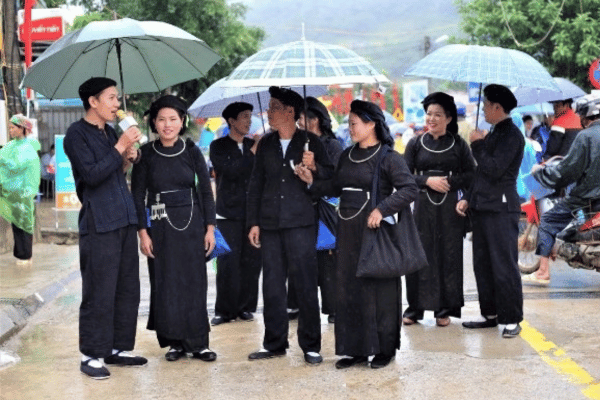
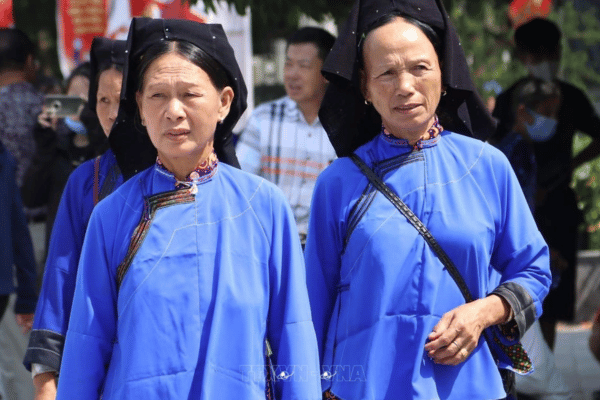
Indigo dyed clothing is the visual signature, worn by older generations day to day and more widely on market days and at festivals. Look for the deep blue black that only comes from repeated dyeing.
Nung families are a big presence at local markets, both selling produce and running the craft trade. Arrive hungry: sticky rice, smoked and braised pork, local sausage, river fish, bamboo shoots, and corn wine at dinner if the household is in the mood.

H’Mong communities in Cao Bang live mainly in the west and north, around Bao Lac, Bao Lam, Nguyen Binh and the Ha Quang uplands. They arrived in the region later than the Tay and Nung, and settled the land nobody else had taken: high, steep and stony.
That single fact explains most of what you’ll see. Corn instead of rice, because corn grows where rice can’t. Fields planted between limestone rocks. Houses on ridges and saddles rather than beside rivers. Water carried, piped or collected rather than running past the door.
There are several H’Mong subgroups in the north, often referred to by the dominant colours and patterns of their clothing, White and Flower H’Mong among them. Locals distinguish them easily. Visitors mostly can’t, and that’s fine.
If you’ve ridden the Ha Giang Loop before reaching Cao Bang, this will already be familiar: the plateau around Dong Van and Meo Vac is predominantly H’Mong country, and the communities continue across the provincial boundary.
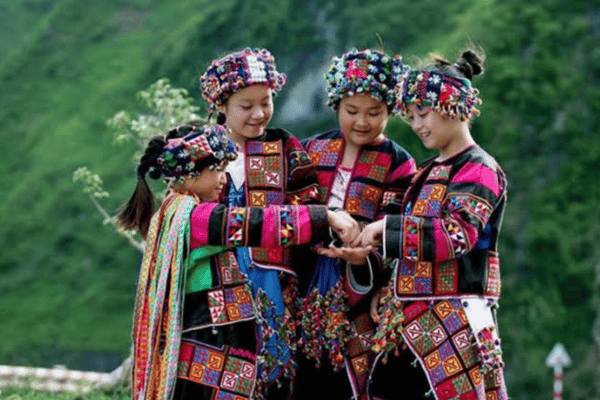
H’Mong textile work is some of the most labour intensive in Vietnam. Hemp is grown, stripped, spun, woven, dyed with indigo, and decorated by embroidery or by drawing patterns in hot beeswax before dyeing, so the waxed lines resist the dye and come out pale against a dark ground.
A single skirt can take months of intermittent work. When you see the price of a genuine handmade piece at a market, that’s what you’re paying for. Machine printed versions of the same patterns are everywhere and much cheaper, and there’s no shame in buying one, as long as you know which you’re buying
The khen, an upright bamboo pipe instrument, is the sound most associated with H’Mong culture, played at ceremonies and festivals and often accompanied by a dance step that turns the whole body with it.
Market days are where H’Mong communities come down from the hills in numbers, and they’re the most reliable place for a visitor to see this culture in ordinary life rather than on a stage.
H’Mong communities also celebrate their own new year, generally around the end of the harvest and separate from the Vietnamese lunar new year, with timing that varies by area. If you want to be there for it, ask locally well ahead rather than trusting a date you found online.
Learn more: Ha Giang Cao Bang 5 Days 4 Nights
The Dao are one of the most internally varied groups in Vietnam. What English speaking travelers call “the Dao” covers many branches, each with its own name, dialect, dress and customs: Dao Do, Dao Tien, Dao Quan Chet and others, spread across the northern provinces.
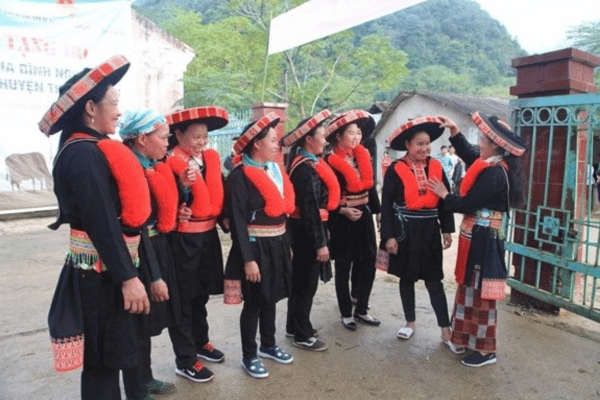
Dao communities in Cao Bang typically live on mid and high slopes, farming terraces and hill land, often with medicinal plants in the mix. Women’s clothing is the easiest marker, with elaborate embroidery, red or patterned headwear depending on the branch, and silver ornaments worn at festivals.
The Nguyen Binh area, up toward the Phia Oac forest, is where Dao Tien communities live, and it’s become one of the more interesting community tourism corners of the province.
Dao Tien textile work uses beeswax printing on indigo cloth, applied with metal stamps rather than drawn freehand, which gives the distinctive rings and geometric motifs. Some villages here host visitors and demonstrate the process from wax to dye to finished cloth.
This is off the standard Cao Bang circuit, which is exactly why it’s worth knowing about. If you’re building a longer or private trip and this interests you, say so when you plan it rather than hoping to stumble into it.
Two things come up again and again around Dao communities.
The first is herbal medicine. Many Dao households keep detailed knowledge of local plants, and herbal bathing traditions are well known across the north, though the specifics differ between branches and regions.
The second is the ordination ceremony that marks a Dao man’s passage into full adult standing in the community, an important ritual with many local variations. It’s a family and community event, not a performance, and if you’re ever invited to one, treat it accordingly.
Learn more: Ha Giang Cao Bang 6 Days 5 Nights
San Chay is an umbrella name covering the Cao Lan and San Chi communities, a much smaller population spread across several northern provinces, with villages in parts of Cao Bang including the Bao Lac area. They’re known for sung poetry traditions exchanged between groups at gatherings.
One detail that surprises people: the two communities don’t share a single language. Cao Lan speech is generally described as belonging to the Tai family, while San Chi speech is described as a southern Chinese variety.
There’s far less written about the San Chay in English than about the other groups here, and a lot of what circulates online is copied without sourcing. We’d rather say so than fill the space with confident detail we can’t stand behind. If this interests you, ask your guide on the ground.
The Lo Lo are one of the smallest ethnic groups in Vietnam, with a handful of villages in the Bao Lac area, including the Black Lo Lo community at Khuoi Khon. Their textile tradition is remarkable given the size of the population, and staying overnight in one of these villages is a genuinely different experience from a Tay or Nung homestay.
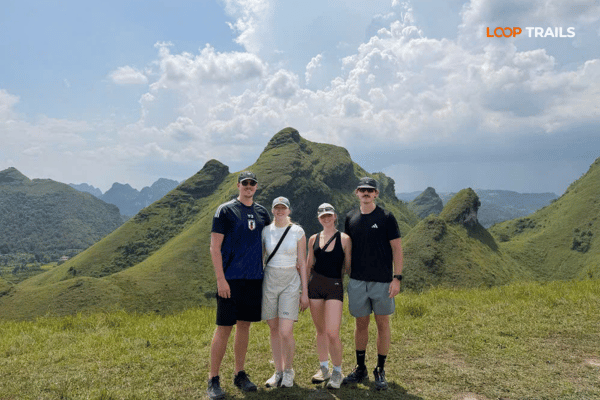
Learn more: Cao Bang Loop 3 Days best kept secret
Travelers often want a field guide: this headscarf means one group, those buttons mean another. In practice, guessing out loud is a bad idea.
Traditional dress is worn mainly by older people, on market days, at festivals and for ceremonies. On an ordinary Tuesday in a village, most people are in ordinary clothes. Distinctions that are obvious to locals are frequently invisible to visitors, and confidently mislabelling someone is a small insult with no upside.
Better approach: notice the details, ask your guide, and if you’re talking to someone directly, let them tell you. “Which village are you from?” is a much better opener than “which ethnic group are you?”
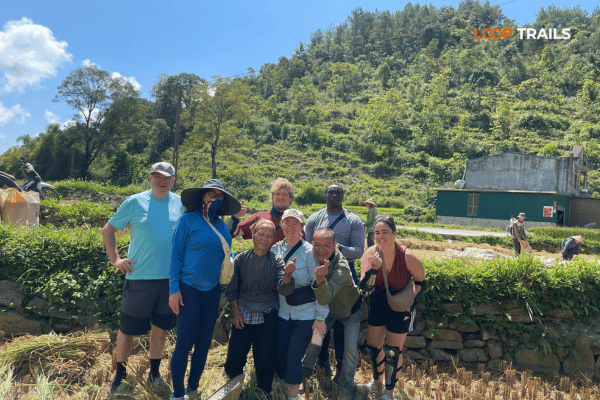
Learn more: Ha Giang Loop Photography Guide
Travelling overland from the Ha Giang Loop into Cao Bang, you leave H’Mong country on the plateau around Meo Vac, drop through the western valleys to Bao Lac, then cross toward Ha Quang and Pac Bo. That stretch takes you past Tay and Nung farming country on the valley floors, with H’Mong, Dao and Lo Lo communities in the hills above, and the Xuan Truong valley on the way.
The overnight stops matter more than the photo stops here. A night in a family homestay is where actual conversation happens.
Classic Tay valley landscape: stilt houses, rice, buffalo, river. The back roads around Ngoc Con and the countryside on the way to Ban Gioc are some of the prettiest rural riding in the province, and a world away from the crowds at the falls.
West of Cao Bang City, the Nguyen Binh area climbs into forest and old French era hill station country around Phia Oac, with Dao and H’Mong communities on the slopes. It’s cooler, quieter and less travelled than the Ban Gioc side, and it’s the part of the province to ask about if community tourism is your main interest.
Learn more: Best time to visit Cao Bang
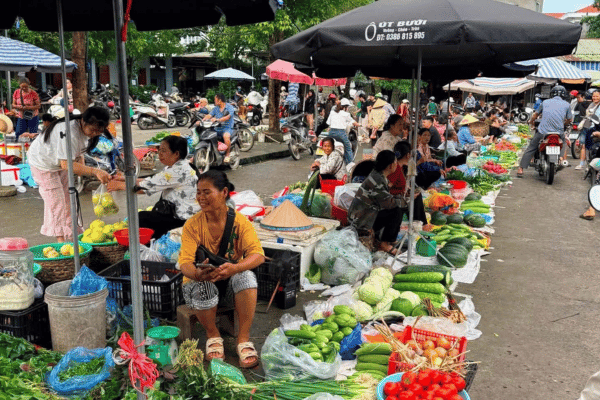
Markets in the northeast run on a rotating cycle rather than daily, often every five days on the lunar calendar, which means each town’s big day moves against the western week.
A market morning is the social life of a whole district compressed into a few hours: buying and selling, but also eating, drinking, arranging things, catching up. People come in from the hills at dawn and by early afternoon it’s over.
How to do it well:
Ask your guide or host which markets fall on which day while you’re around. It’s local knowledge that’s hard to look up and easy to ask for.
Learn more: Cao Bang Homestay
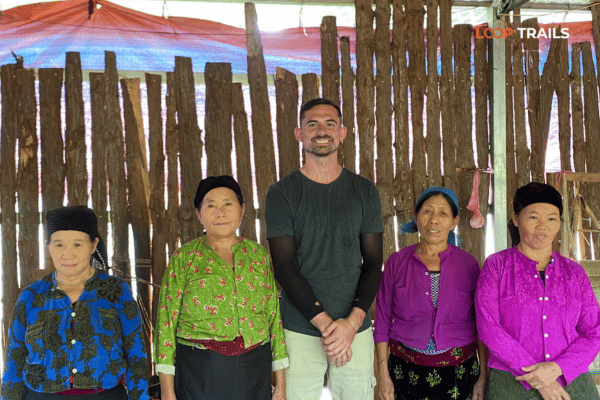
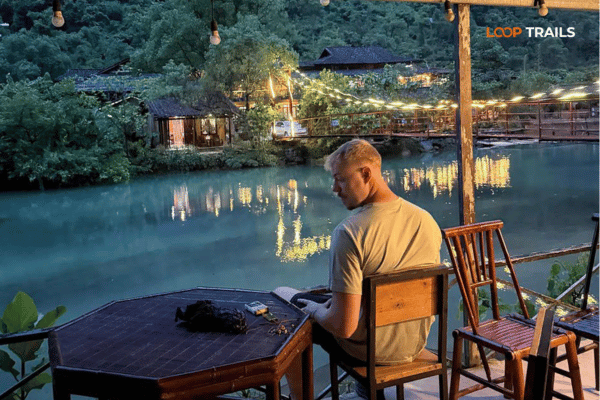
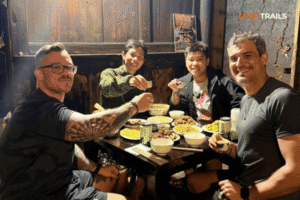
Homestays are why our itineraries stay in villages rather than towns. A typical evening: you arrive in the late afternoon, the household is cooking, dinner comes out in shared dishes, there’s rice wine if people are in the mood, and someone’s grandmother is quietly running the entire operation.
Expect simple facilities. Shared bathrooms, firm beds, thin walls, early mornings, roosters. Expect also the best food and the best conversation of your trip, conducted in a mix of Vietnamese, your guide’s translation and a lot of gesturing.
Money paid to a family homestay stays in the village. That’s the most direct form of useful tourism there is here.
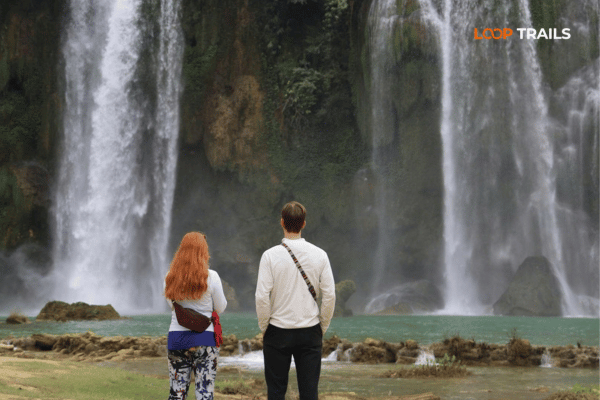
Learn more: Ban Gioc Waterfall
Ask first, every time. A gesture with the camera and a questioning look works fine when you share no language. If someone says no or turns away, that’s your answer.
Be especially careful with children, older women in traditional dress and anything ceremonial. Inside houses, ask before shooting. Altars and ancestral shrines are not photo backdrops.
Don’t hand out money, sweets or pens to children. It’s well intentioned and it builds begging patterns that damage villages over time. If you want to give something, ask your guide or host how to do it usefully, or simply spend your money locally instead.
Take your shoes off where the household does. Let older people start eating. Accept food graciously, at least a taste.
Corn or rice wine often appears at dinner, poured generously as hospitality. You can decline politely and a good host won’t push. If you’re riding in the morning, decline early rather than halfway through.
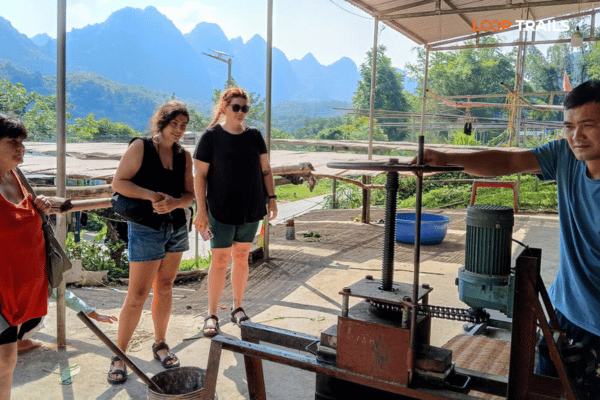
Learn more: Phia Thap Incense Village
General rule: buy where it’s made, from the person who made it, and don’t squeeze the last few thousand dong out of someone’s hands.
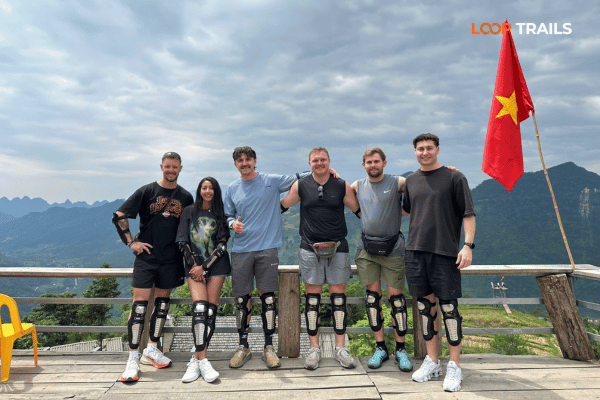
Learn more: Ha Giang Cao Bang Packing list
Vietnamese gets you most of the way, since nearly everyone you meet speaks it alongside their own language:
Tay, Nung, H’Mong and Dao greetings are worth picking up too, but pronunciation varies by area and branch, so learn them from your guide on the ground rather than from a blog post. Asking your driver to teach you a couple of words is also the easiest way to break the ice on a long riding day.
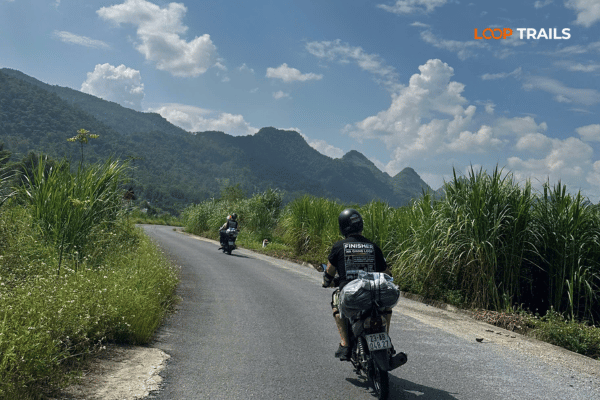
Learn more: Ha Giang Loop Self-Drive
| Period | What’s happening | Notes |
|---|---|---|
| After lunar new year, roughly February to March | Long Tong and other spring festivals | Dates follow the lunar calendar and vary by village |
| March to May | Planting, mild weather | Good riding conditions, green valleys |
| June to August | Rice growing, heavy rain | Lush but wet, landslide season in the mountains |
| September to November | Harvest, clear skies, autumn festivals | Best overall window for countryside and culture |
| December to February | Cold and misty, indoor season | Fewer visitors, H’Mong new year falls in this general period in some areas, market days still run |
Market days run all year and are the most reliable cultural experience whenever you come. Festival dates move, so confirm locally rather than building a whole trip around one.
Learn more: Ha Giang Loop Easy Rider
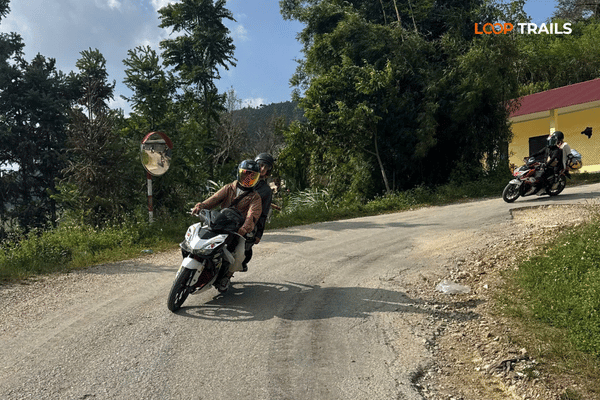
You ride on the back with a local driver. For a culture focused trip this is the option we recommend most, because your driver is also your translator, your introduction at the homestay and the person who knows which market is on tomorrow.
You ride your own bike following a guide. Good for confident riders who want independence, though you’ll spend more attention on the road and less on the villages.
You need your passport, your home motorcycle licence and an International Driving Permit under the 1968 convention. IDPs issued under the 1949 convention are not valid in Vietnam. Riding without the correct documents can mean fines, reported in the range of 2,000,000 to 6,000,000 VND, and can affect your insurance. Some ASEAN licences, including from Singapore and Malaysia, are recognised here under a regional agreement. Rules change, so check your own situation before travelling.
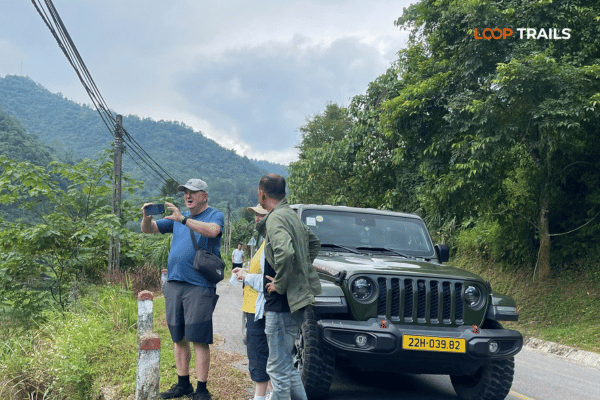
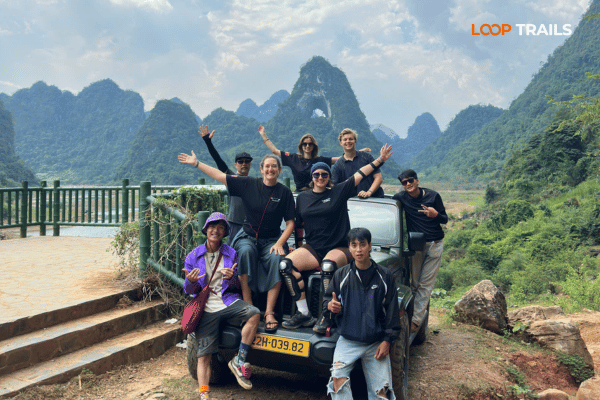
You travel in a Jeep Wrangler Rubicon with a driver. It suits families, older travelers and anyone who wants to arrive at a village with energy left for the evening. Jeep availability is limited, so most guests book one to three months ahead.
Jeep prices are the total for your group in one vehicle. Motorbike prices are per person. All tours include dorm accommodation and everything in the itinerary. Private room upgrades and bus tickets to and from the start or end point are extra.
| Tour | Jeep, 1 guest | Jeep, 2 guests | Jeep, 3 guests | Jeep, 4 guests | Easy Rider (per person) | Self Drive (per person) |
|---|---|---|---|---|---|---|
| Cao Bang Loop 3D2N | 14,990,000 VND | 19,990,000 VND | 24,990,000 VND | 31,990,000 VND | 6,490,000 VND | 5,990,000 VND |
| Ha Giang and Cao Bang 5D4N | 27,990,000 VND | 36,990,000 VND | 41,990,000 VND | 46,990,000 VND | 10,990,000 VND | 10,590,000 VND |
| Ha Giang and Cao Bang 6D5N | 36,990,000 VND | 44,990,000 VND | 49,990,000 VND | 54,990,000 VND | 13,990,000 VND | 13,490,000 VND |
| Ha Giang Loop 3D2N | 15,990,000 VND | 19,990,000 VND | 23,990,000 VND | 25,990,000 VND | 4,490,000 VND | 3,790,000 VND |
| Ha Giang Loop 4D3N | 19,990,000 VND | 25,990,000 VND | 30,990,000 VND | 34,990,000 VND | 5,890,000 VND | 4,990,000 VND |
Prices are in Vietnamese dong, so convert at the rate on the day. Jeep tours use a Jeep Wrangler Rubicon, except the Cao Bang Loop, which runs in an army style jeep.
Ready to plan it? The fullest cultural route is our Ha Giang and Cao Bang tour, which crosses H’Mong highlands, Tay valleys and finishes with the Nung craft villages around Phuc Sen and Phia Thap. Short on time and starting in Cao Bang? Take the Cao Bang Loop. Travelling with family? Look at the jeep option, or send us your dates on WhatsApp and we’ll tell you which route has the most village time.
Learn more: Ha Giang Loop by Wrangler Rubicon Jeep
We run motorbike and jeep tours through Ha Giang and Cao Bang that include village stays, craft villages and market stops where the timing works. Our guides are local and the homestays we use are family run.
What we don’t run: staged cultural performances, “ethnic village visits” arranged as a photo opportunity, or anything that treats a community as an attraction. If a market day or a festival falls while you’re with us, we’ll get you there. If it doesn’t, we won’t manufacture a substitute.
[OPERATOR TO CONFIRM: whether guides can arrange a Then music performance or a hands on craft session on request, whether market days can be built into a private itinerary, and whether a Dao Tien village visit around Nguyen Binh can be added to a private trip. If yes, one sentence here would convert well for culture focused travelers.]
Learn more: Ha Giang Motorbike Rental
Ban Gioc will be on your camera roll. The village evening probably won’t, and it’s the part you’ll describe when someone asks about the trip.
Cao Bang’s Tay, Nung, H’Mong and Dao communities aren’t a sightseeing item. They’re the people whose valleys you’re riding through, whose houses you’re sleeping in and whose knives you’re taking home. Turn up curious, ask before you photograph, spend your money where things were made, and the province opens up in a way no viewpoint does.
The largest are the Tay and Nung, with H’Mong and Dao communities on the higher slopes, plus smaller San Chay and Lo Lo populations. Tay and Nung people make up most of the rural population you’ll meet.
The Tay are usually listed as the largest ethnic minority group in Vietnam. They farm wet rice in valleys, traditionally live in wooden stilt houses, and are known for the Then singing tradition performed with a tinh lute.
They’re closely related in language and culture and often live side by side. The usual distinction is historical, with Nung communities generally arriving from southern China more recently, plus differences in dialect, dress and ritual detail.
Mainly on high ground in the west and north, around Bao Lac, Bao Lam, Nguyen Binh and the Ha Quang uplands. They farm corn on steep, stony land where rice won’t grow.
The Dao are a group of many branches with different names, dialects and clothing, living on mid and high slopes. In Cao Bang the Dao Tien of the Nguyen Binh area are the best known, with a distinctive beeswax printed indigo textile tradition.
The Trung Khanh and Ban Gioc countryside, the valleys around Quang Uyen, the Bao Lac area in the west, and the Nguyen Binh and Phia Oac uplands. Craft villages like Phuc Sen and Phia Thap are the most accessible cultural stops.
Hand forged knives and farm tools. Families there have worked metal for generations, and the knives are an excellent souvenir if you’re checking a bag.
Yes, and it’s the best way to experience village life. Expect simple facilities, shared meals and early starts. Our tours use family run homestays rather than hotels.
Ask first, every time. Be particularly careful with children, older people in traditional dress and anything ceremonial, and accept a no without pushing
Many local markets run on a rotating cycle, traditionally every five days on the lunar calendar, so the day shifts against the western week. Ask your guide or host which market is on while you’re there.
Usually you can’t, and it’s better not to guess out loud. Traditional dress mostly appears on market days and at festivals, and local distinctions are often invisible to visitors. Ask your guide instead.
Yes. Our Ha Giang and Cao Bang route visits the paper making and incense villages around Phuc Sen and Phia Thap on the final day, along with other stops in the Quang Uyen area
Contact information for Loop Trails
Website: Loop Trails Official Website
Email: looptrailshostel@gmail.com
Hotline & WhatSapp:
+84862379288
+84938988593
Social Media:
Facebook: Loop Trails Tours Ha Giang
Instagram: Loop Trails Tours Ha Giang
TikTok: Loop Trails
Office Address: 54A Tran Phu, Ha Giang 2, Tuyen Quang
Address: 54A Tran Phu, Ha Giang 2, Tuyen Quang

Facebook X Reddit Table of Contents Learn more: Ha Giang Loop Tours The Ha Giang Loop has a reputation problem with older
Facebook X Reddit Table of Contents The passes get the photos. The homestay nights get the stories. Ask anyone who’s done the