
Phong Nam Valley: Where to Go After Ban Gioc
Facebook X Reddit Table of Contents Ban Gioc is the photograph. It is on every poster, it is why most people come

Thúy Kiều (Grace) is a travel blogger and content contributor for Loop Trails Tours Ha Giang. She holds a bachelor’s degree in Sustainable Tourism from Vietnam National University, Hanoi, and has a strong passion for exploring and promoting responsible travel experiences in Vietnam’s northern highlands.
You have a trip booked, or you are about to book one, and you have just looked at a ten day forecast covered in rain icons. That is why you are here.
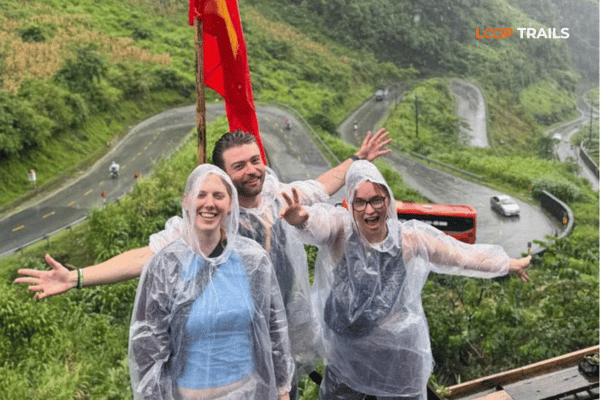
Here is the honest version, from people who run these roads through the wet season every year. Rain does not ruin this trip. It changes it, it makes some parts better, it makes two or three things worse, and in an open top jeep it is a great deal less of a problem than people assume.
What follows is what actually happens: what gets wet, what closes, what the road does, and the single weather condition that genuinely does spoil a day, which is not rain.
Learn more: Ha Giang Loop Tours
Learn more: Ha Giang Loop 2 Days 1 Night
The most useful thing on this page, and the reason most people worry more than they need to.
Mountain forecasts are unreliable beyond a couple of days. These provinces are folded, high and close to the Chinese border, and weather models handle that badly. A ten day forecast for Ha Giang is a rough climate average with icons on it, not a prediction.
A rain icon usually means a burst, not a day. Wet season rain in the northern mountains typically arrives in the afternoon, comes down hard for an hour or two, and clears. Mornings are frequently dry, and the light after the rain stops is often the best of the day.
Local knowledge beats an app. Your guide and your homestay host have watched this valley for years, and their read on the afternoon is more reliable than a forecast generated three thousand kilometres away.
What we would tell a guest: do not cancel a trip on a ten day forecast. Check again two days out, and then let the driver plan the day around what is actually happening.

Learn more: Ha Giang Loop 3 Days 2 Nights
The practical mechanics, because nobody describes them.
The top goes up. Most open vehicles here have a soft top and side curtains, and putting them on takes a few minutes. Usually this happens at a stop, occasionally at the roadside when the sky changes suddenly. It is a normal part of the day rather than an emergency.
Ask what your specific vehicle has. Soft top, side curtains, hard top, or nothing much. Vehicles vary and older ones vary more, so this is a fair question at the booking stage and a good operator will answer it plainly.
You are enclosed but not sealed. A closed soft top keeps the rain off you. It does not keep every drop out of the vehicle the way a modern car does. Expect a small amount of spray at the edges.
Windows fog up. This is the one nobody mentions. Older vehicles have limited demisting, and four damp people in a closed jeep produce a lot of condensation. The fix is a cracked window and a cloth, and your driver will already be doing both.
It gets quieter. Rain on a soft top is loud, but with the sides down the wind noise drops, so conversation is actually easier than on a dry day at speed.
It gets cosier. This sounds like spin and it is not. A closed jeep on a wet afternoon with the four of you inside, condensation on the glass and green mountains going past, is one of the better feelings on this trip.
Worried about your dates? Send us the forecast you are looking at and we will tell you what it actually means for those roads. If we think you should move your dates, we will say so. Message us rather than guessing from an app.
Learn more: Ha Giang Loop 4 Days 3 Nights
Your feet. The footwell is the least protected part of any open vehicle and wet feet for a full day is genuinely miserable. This is the single thing worth preparing for, and it is solved by a spare pair of socks and shoes you do not mind getting damp.
The edges of the seats, if you are sitting on the outside.
Anything left loose, including bags on the floor. Keep them on a seat or in a dry bag.
You, briefly, at every stop. The wetness on a rainy day comes mostly from getting in and out at viewpoints, not from the driving.
What stays dry: anything in a dry bag, anything in the middle of the vehicle, and you, mostly, as long as the top is up.
Compared with a motorbike, and this is the comparison that matters, it is not close. On a bike, rain means several hours of being properly wet and cold with your luggage in a poncho. In a jeep it means damp feet.
Learn more: Ha Giang Cao Bang 5 Days 4 Nights
If a day gets spoiled here, this is what does it.
Rain you can travel through. The road is still there, the villages are still there, the waterfall is bigger. Fog removes the thing you came for.
On the high passes, particularly Ma Pi Leng and the plateau, fog can reduce visibility to a few metres and stay for hours. You can be standing at one of the great viewpoints in Southeast Asia looking at a wall of white.
What helps:
Winter fog is more persistent than wet season fog, which surprises people. December to February is the foggiest period on the plateau, not the rainy months.
Learn more: Ha Giang Cao Bang 6 Days 5 Nights
Honest, because this is the safety part.
Sealed main roads are fine in rain. They are the same roads, slightly slower, with more standing water and more care needed on the corners. This covers almost all of both the Ha Giang and Cao Bang loops.
Loose material collects on bends after heavy rain, particularly where cut faces shed. This matters far more for motorbikes than for a vehicle.
Rough access tracks become difficult. The track towards God’s Eye Mountain in Cao Bang is dirt and stone and it is the one place on these routes that heavy rain genuinely changes. The road up Phia Oac is similar. In both cases the call is made on the day.
Landslides and rockfall happen in these provinces after sustained heavy rain. Roads are cleared, sometimes quickly and sometimes not. This is why your driver’s judgement matters more than your itinerary, and why any operator worth booking will change the route rather than push through.
River levels rise fast. This affects swimming, which becomes a bad idea, and it affects boat operations, covered next.
The rule: in a vehicle, wet roads are a matter of care rather than of risk. Let the driver decide, and if they say a track is not worth attempting today, that is the correct answer rather than an inconvenience.

Learn more: Cao Bang Loop 3 Days best kept secret
The practical list.
| In heavy rain | |
|---|---|
| Nguom Ngao Cave | Open. Completely unaffected, and cool inside |
| Craft villages | Open. People are working under roofs |
| Ban Gioc waterfall viewing area | Open, and the falls are at their most dramatic |
| Ban Gioc bamboo rafts | May be suspended. Weather dependent |
| Nho Que river boat | May be suspended. Weather dependent |
| Swimming, Du Gia and the Quay Son | Not advisable. Levels rise fast |
| God’s Eye Mountain access track | May not be worth attempting |
| Phia Oac summit road | Harder, and the moss forest is at its best in cloud |
| Markets | Open. They are markets, not attractions |
| Passes and viewpoints | Open, but see the fog section |
The cave is the key one. If a day looks bad, Nguom Ngao absorbs an hour and a half of it comfortably and is genuinely worth seeing. It is the reason Cao Bang handles rain better than most northern routes.
The rafts and the boat are the real losses. Both are highlights and both depend on conditions. If they are suspended and your itinerary has time, ask whether the day can be reordered to try again the following morning.

Learn more: Ha Giang Loop Photography Guide
Not a consolation section. These are real.
The waterfalls. Ban Gioc at full flow is a different sight from Ban Gioc in March, and so is Du Gia. If you came to see water, the wet season is when there is water.
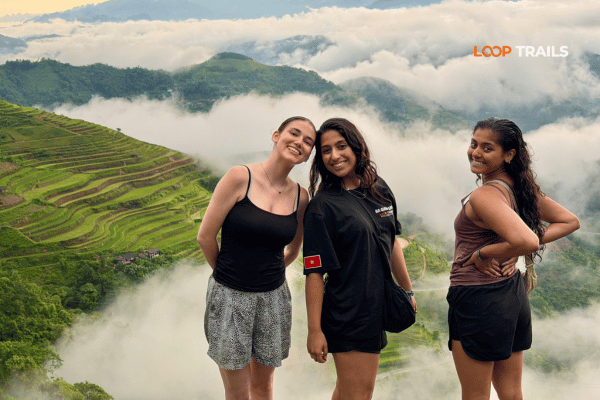
The rice. Green fields in the wet months are as good as gold ones in autumn and considerably less photographed.
The light. Broken cloud moving across valleys, shafts through gaps, mist rising off wet forest after a shower. Photographers plan trips around conditions like this, and you cannot get them in dry season haze.
The absence of everyone else. The wet months are low season. Viewpoints that have queues in October are empty in July, and homestays have space.
The temperature. Summer in northern Vietnam is hot, and rain is the thing that makes an afternoon comfortable.
The villages carry on. Nothing about rural life stops for weather, which means the working markets, the forges and the fields are all exactly as they are, just wetter.
Learn more: Ha Giang Loop Hidden Gems
No rainfall figures here, because averages tell you very little about the week you are actually travelling. What is useful is the pattern.
Roughly May and early June. The build up. Hot, humid, with afternoon storms that arrive fast and clear fast. Mornings are usually dry and the fields are turning green. One of the better months to travel and one nobody thinks of.
Roughly late June through August. The core of it. This is when rain is most likely and most sustained, and when landslides are most plausible after a run of heavy days. It is also when the waterfalls are at their absolute best and when you will have the place almost to yourself.
Roughly September. The transition, and the sweet spot a lot of people miss. Rain is easing, the rice is turning gold, the air is clearing and the crowds have not fully arrived. Storms are still possible.
Roughly October onwards. The wet season is over on the plateau, the roads dry out and the peak season begins.
The thing to understand: even in the wettest weeks, rain here is a feature of the afternoon rather than the whole day, and the mornings are frequently clear. A wet season trip is not a wet trip, it is a trip with wet parts.
Learn more: Ha Giang Motorbike Rental
Most of this page argues for the jeep, so here is the other side properly, because plenty of guests ride through the wet season and enjoy it.
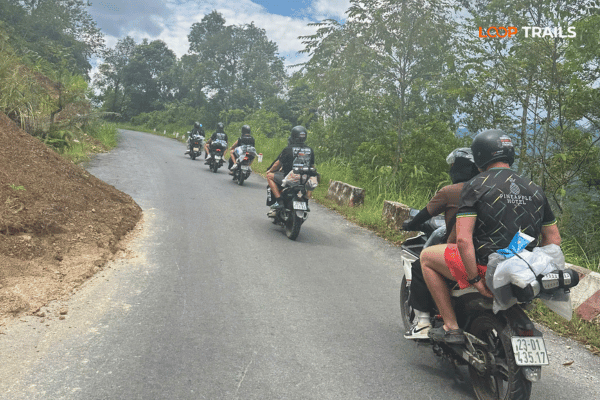
What it is actually like. You will be wet. Not damp, wet, and within twenty minutes of the rain starting. Wet gear helps and nothing keeps you dry over several hours on a bike in mountain rain. Once you accept that, a rainy riding day becomes surprisingly good: the road empties, the air cools, the valleys steam, and there is a particular satisfaction in arriving at a homestay soaked and being handed hot tea.
What makes it worse. Being cold as well as wet, which is a winter problem more than a summer one. Cheap plastic ponchos, which tear and flap. Wet feet, which is the misery that outlasts everything else.
What makes it fine. A proper waterproof jacket and trousers rather than a poncho. Waterproof gloves or a spare dry pair. A dry bag so your clothes at the homestay are dry even if you are not. Plastic bags over your socks inside your shoes, which is inelegant and works.
Who should not do it. Anyone riding themselves without real experience in wet conditions, and anyone who is already cold. The genuine safety issue on a bike in rain is reduced visibility combined with loose material on corners, and it compounds when you are cold and tired and pushing on to reach a homestay.
The compromise that works: ride when it is dry and take the vehicle on the days it is not. Mixed groups do this constantly and no operator will find the request unusual.
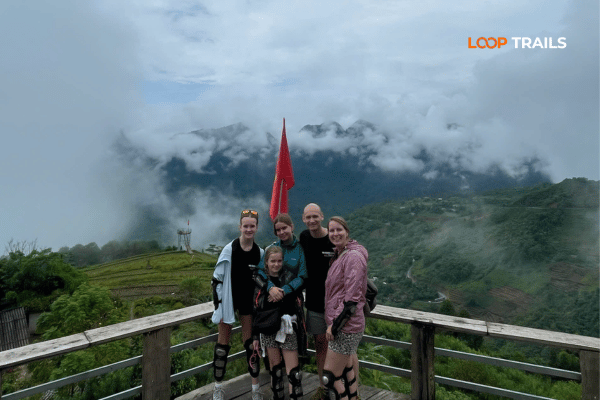
Learn more: Ha Giang Loop Easy Rider
What a good operator actually does, so you know what to expect.
The order changes, not the content. Cave and villages in the morning if the passes are fogged, viewpoints in the afternoon when it lifts. Most days can be reshuffled entirely and still cover everything.
Stops get shorter and more frequent. Nobody stands at a viewpoint for twenty minutes in the rain, so you cover the same ground with a different rhythm.
Lunch gets longer. Waiting out a heavy hour over food is a legitimate plan and often the best one available.
The driver makes weather calls on tracks, timing and routing. This is the part you are paying for and it is worth deferring to.
Say what you want. If you would rather sit somewhere warm for an hour than push on to a viewpoint that is fogged in, say so. Guides adjust for that constantly and cannot read your mind.
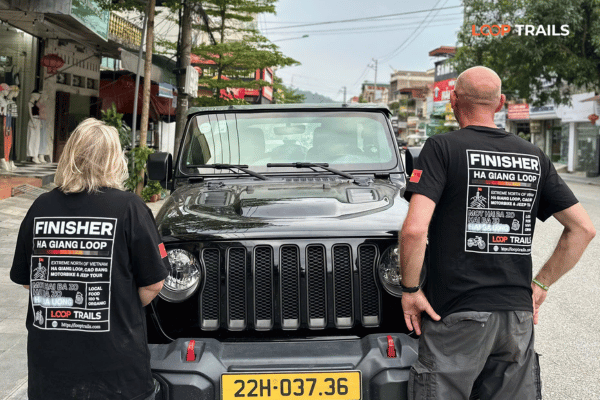
Learn more: What to wear on Ha Giang Loop?
Short list, all of it earned.
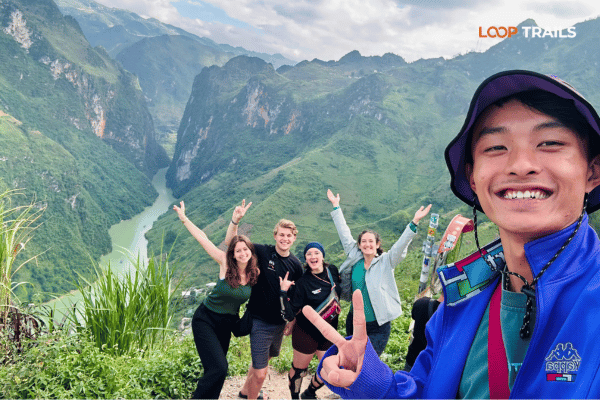
Learn more: Ha Giang Loop Mistake to Avoid
For anyone shooting on a wet day.
A dry bag is not optional. Not a plastic bag, an actual dry bag, because spray finds everything.
Change lenses inside the vehicle with the sides down, not at a viewpoint in drizzle.
Condensation is the real risk, more than water. Moving a cold camera into warm humid air fogs the lens and the sensor. Let gear come up to temperature inside a closed bag rather than opening it straight away.
Wet weather is good light. Bring the camera out. The frames from a clearing shower are the ones worth having, and there is more on shooting these routes in the photography guide.
Phones die faster in the cold and damp. Power bank.
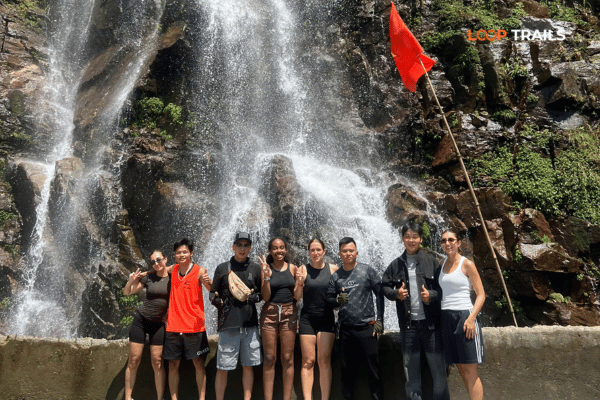
Learn more: Ha Giang Loop Coporate Retreat
Honest thresholds, because sometimes the answer is yes.
Not worth changing anything: a forecast showing rain, scattered showers, an afternoon of it, or a wet season month. That is normal and the trip works.
Worth a conversation: sustained heavy rain forecast across your whole trip, or a named storm system approaching the north. Both are genuine and both are visible a few days out rather than ten.
Worth changing: an active weather warning, flooding in the region, or roads already closed. In that situation any operator worth booking will contact you rather than wait for you to ask.
What we would say to a guest: two days out, not ten. And if the answer is that your dates look bad, we would rather move you than take you out in it, because a trip you did not enjoy is worse for us than an empty jeep.
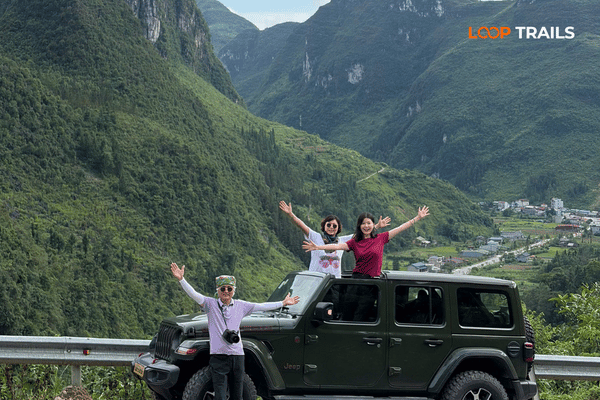
Learn more: Ha Giang Loop by Wrangler Rubicon Jeep
This is the one section of this cluster where the answer is not close.
A jeep is the clear choice in the wet season. You are enclosed, your luggage is dry, your gear is dry, you can stay out all day and you arrive at the homestay in dry clothes. Everything on the route is identical from a vehicle and the weather stops being a factor in your enjoyment. There is more on what a jeep day is like in the comfort guide.
Easy rider in the rain means several hours wet. Guides do this every day of the wet season and they are cheerful about it, and you will still be wet. Some people genuinely enjoy it and come off a rainy day grinning. Know which you are before you book.
Self drive in heavy rain on mountain roads is the option we would push back on hardest. Reduced visibility, loose material on corners, wet painted lines and manhole covers, and you doing your own risk management. It is manageable for experienced riders and it is not the week to find out whether you are one. The paperwork guide covers documents, and we handle motorbike rental in Ha Giang for riders whose situation checks out.
Mixed groups work. Riders in the rain and everyone else in the jeep is a completely normal arrangement, and on a wet trip it is often the one that keeps everybody happy.
Book once your dates are set. In the wet months availability is far easier than in autumn, which is one of the quieter advantages of travelling then.
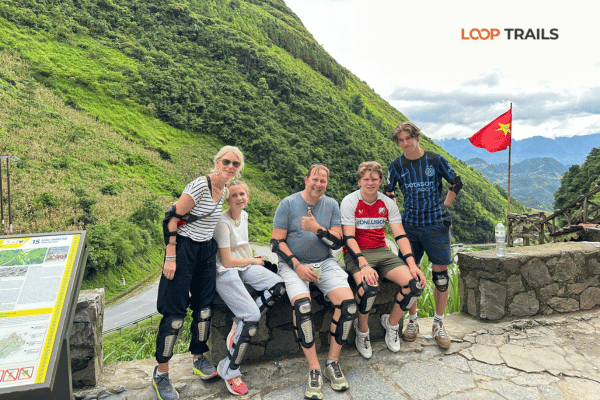
Learn more: Ha Giang Loop Self-Drive
Copy these into an enquiry. In the wet season the answers matter more than the price.
An operator with clear answers has run wet seasons before. Vague answers to these tell you what a bad day would look like.
Looking at a rainy forecast? Message us on WhatsApp with your dates and what you are seeing. We will tell you what it means for those specific roads, which parts of the itinerary it affects and whether we think you should move. We would rather give you a straight answer now than have you spend the trip wishing you had asked.
The soft top and side curtains go up, which takes a few minutes, and you carry on. You may get some spray at the edges and your feet can get damp, but you stay far drier than anyone on a motorbike and the itinerary usually continues with the order changed rather than the content.
Not in the way a modern car is. A closed soft top keeps the rain off you and a small amount of spray still finds the edges. Ask your operator exactly what the vehicle has, because older jeeps vary and it is a fair question at the booking stage
Yes, with a vehicle. The waterfalls are at full flow, the rice is at its greenest, the light is dramatic, it is far cooler than the dry heat and viewpoints that queue in October are empty. The trade offs are slippery roads and some weather dependent activities
It can. Boat operations and the bamboo rafts at Ban Gioc are both weather dependent and may be suspended in heavy rain or high water. If your itinerary has flexibility, ask whether the day can be reordered to try again the next morning
Yes, and Nguom Ngao is completely unaffected by weather. It is the best bad weather option on the Cao Bang route, absorbing an hour and a half comfortably, and it is cool inside, which is a relief on a humid day
The sealed main roads are a matter of care rather than risk in a vehicle: slower, with more standing water and more caution on corners. The rough access tracks, particularly towards God’s Eye Mountain, are what genuinely change, and the driver makes that call on the day.
Yes, and it is the thing that actually spoils a day. Rain you travel through, fog takes the view away. It often lifts by mid morning and it sits in bands, so dropping altitude or reordering the day frequently solves it
No. Mountain forecasts beyond a couple of days are unreliable, and a rain icon here usually means an afternoon burst rather than a day. Check again two days out, and only consider changing plans for a sustained system or an active warning
A proper rain jacket rather than a poncho, shoes you do not mind getting damp, a spare pair of socks in a bag and a warm layer. Wet feet for a full day is the only genuine misery available, and it is entirely avoidable
Yes, and the conditions are often better than a dry day. Broken cloud, shafts of light and mist rising off wet forest are what photographers plan trips around. Bring a real dry bag and let gear come up to temperature before opening it, since condensation is a bigger risk than water
Not bad, just wet. Easy rider guides ride through the wet season every year and plenty of guests enjoy a rainy day on a bike. You will be properly wet for several hours, so know whether that appeals before you book rather than after
Availability is much easier than in the September to November peak and homestays have space, which makes planning simpler and less pressured. Ask about current rates rather than assuming a discount, since prices are set by the season rather than by the forecast
Contact information for Loop Trails
Website: Loop Trails Official Website
Email: looptrailshostel@gmail.com
Hotline & WhatSapp:
+84862379288
+84938988593
Social Media:
Facebook: Loop Trails Tours Ha Giang
Instagram: Loop Trails Tours Ha Giang
TikTok: Loop Trails
Office Address: 54A Tran Phu, Ha Giang 2, Tuyen Quang
Address: 54A Tran Phu, Ha Giang 2, Tuyen Quang
Facebook X Reddit Table of Contents Ban Gioc is the photograph. It is on every poster, it is why most people come
Facebook X Reddit Table of Contents Learn more: Ha Giang Loop Tours Northern Vietnam is a long way from Europe and it
Facebook X Reddit Table of Contents Learn more: Ha Giang Loop Tours Every operator on the Ha Giang Loop says “small groups”.