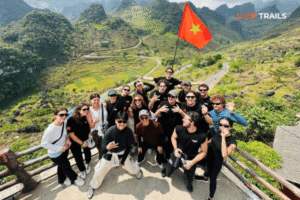


Thúy Kiều (Grace) is a travel blogger and content contributor for Loop Trails Tours Ha Giang. She holds a bachelor’s degree in Sustainable Tourism from Vietnam National University, Hanoi, and has a strong passion for exploring and promoting responsible travel experiences in Vietnam’s northern highlands.
Learn more: Ha Giang Loop Tours
Nobody books the Ha Giang Loop thinking about scraped knees and upset stomachs. You book it for the passes, the rice terraces, the night the homestay owner pours you a glass of corn wine and someone pulls out a speaker. But out here, a hundred kilometres of mountain road from the nearest proper hospital, the small stuff matters. A grazed palm from a slow tip over on gravel, a sunburn that creeps up on you at altitude, a dodgy bowl of something the night before a big riding day. None of it is dramatic. All of it is easier to handle when you packed for it.
This is the Ha Giang Loop first aid kit we wish every traveler carried, plus the basic know how to actually use it.
Quick honest note: we run tours, we are not doctors. Everything below is practical traveler advice, not medical advice. For anything specific, especially medication and doses, check with a pharmacist or your own doctor before you travel. If something feels serious on the road, treat it as serious and get real help.

Learn more: Ha Giang Loop 2 Days 1 Night
The Loop is not dangerous in the way scary headlines make it sound. Thousands of travelers ride or get driven around it every month and go home with nothing worse than a great tan and a phone full of photos. But the geography changes the math on small injuries.
Think about where you actually are. Between Ha Giang City and towns like Dong Van, Meo Vac or Du Gia, you are on winding mountain roads where the next pharmacy might be an hour or two away, and a hospital with real facilities is often back in the city or, for anything serious, in Hanoi. Phone signal drops in and out across the passes. Weather flips from hot sun to cold drizzle in the same afternoon. The roads are mostly good now, but you will still hit the odd patch of gravel, mud or loose rock, usually right where the view is best and your attention is worst.
None of that should put you off. It just means the responsibility curve is different. On a city trip, a blister or a cut is a five minute pharmacy stop. On the Loop, you might be the only pharmacy for the next 40 kilometres. A small, well stocked kit turns a trip ruining problem into a ten minute roadside fix, and lets you get back to the part you actually came for.
Learn more: Ha Giang Loop 3 Days 2 Nights
Forget the worst case scenarios for a second. Here is the honest list of what we actually see, roughly in order of how often it happens. Pack for these and you have covered the vast majority of real situations.
The most common one by far, and almost always undramatic. A foot slips at low speed in a gravel car park, someone misjudges a muddy patch, a slow tip over on a tight corner. The result is usually a grazed palm, elbow or knee. Road rash looks worse than it is, but it needs cleaning properly, because dirt and grit love to get in there, and an infected scrape on day two is a miserable way to spend the rest of the Loop.
People massively underestimate the sun up here. You are at altitude, often above the clouds, frequently with no shade for hours, and the wind on the bike hides how much you are cooking. We see sunburnt forearms, necks and the backs of hands constantly, plus the occasional headache and wobbliness from too much sun and not enough water.
Easy to ignore, because the mountain air feels cool and you are not obviously sweating buckets. But long days, sun, altitude and the odd celebratory drink add up fast. Mild dehydration shows up as headaches, tiredness and that foggy feeling, and it quietly makes everything else worse, including motion sickness and hangovers.
At some point the food, the water or just the change of routine catches up with someone. Most stomach trouble on the Loop is mild and passes in a day, but a bad bout the morning before a long riding day is no joke. Rehydration is the real hero here, more than any tablet.
This one surprises people, especially passengers on easy rider tours and anyone in the back of a jeep. Roads like the climb to Ma Pi Leng are gorgeous and relentlessly twisty. If you know you get carsick or seasick, assume the passes will find you, and sort it out before you feel green rather than after.
Hours of gripping handlebars, new boots, the long walk down to the Nho Que River boat or up to a viewpoint. Blisters on feet and hands are common and small, but they nag at you all day. Self drivers especially get sore, tired hands on the first day, before the muscles adjust.
Mosquitoes around homestays in the evening, the odd bee, and after rain you might pick up a small leech on a trek to somewhere like Lung Khuy Cave or a waterfall. None of it is dangerous, all of it is more comfortable if you can treat the itch and keep bites clean.
Even in warmer months, nights in Dong Van or up high can get genuinely cold, and a chill on top of a long day leaves people sniffly. And then there is the local corn wine, the famous “happy water” that appears at homestay dinners. It is part of the experience and it is genuinely fun, right up until you are nursing a thumping head at 8am with a full riding day ahead. Pace yourself, hydrate, and pack something for the headache.

Learn more: Ha Giang Loop 4 Days 3 Nights
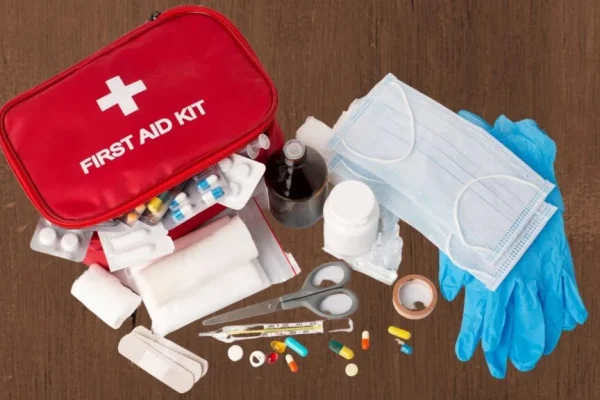
Here is the actual kit. You do not need a medical backpack, you need a small zip pouch or two that you can waterproof and forget about until you need it. Build it around four groups: wound and skin care, medications, tools and extras, and your personal items.
A quick reality check before the list. If you are on an easy rider or jeep tour with us, your guide already carries a basic first aid kit and knows the roads and the nearest help. This checklist is still worth having for your own minor stuff, but you are not on your own out there. Self drivers and independent riders, this matters more for you, because you are your own first responder.
This is the part you will use most.
Here is where we stay general on purpose. Bring what you and your doctor or pharmacist agree is right for you, in the doses on the packaging, and always carry enough of your own prescription medicines for the whole trip plus a few spare days. Common travel kit categories include:
Two honest rules on medication. First, we are not going to hand out doses in a blog, because the right amount depends on you, so read the packet and ask a pharmacist. Second, do not count on buying your specific medicine on the Loop. Pharmacies in Ha Giang City are decent, but stock in the small towns is limited and labels are often only in Vietnamese. Bring your own.

Learn more: Ha Giang Cao Bang 5 Days 4 Nights
A kit is only useful if it is dry and you can reach it. The Loop will test both.
Waterproof everything. Rain is part of the deal, especially May to September, and even a sunny day can throw a sudden downpour over a pass. Pack the whole kit inside a dry bag, or at least a couple of strong zip lock bags. Plasters and gauze are useless once they are soaked.
Split it into two. Keep a tiny grab pouch on you, in your jacket or the bike’s storage, with the things you might want fast: a few plasters, antiseptic wipes, painkillers, motion sickness tablets, hand sanitiser. Keep the bigger kit in your main luggage. On our easy rider and jeep tours, your main bag travels in the support vehicle, so the big kit rides with it while the small pouch stays on you. Self drivers, strap the small pouch somewhere you can reach without unpacking.
Keep it accessible, not buried. The moment you need a plaster is never the moment you want to dig through a packed dry bag at the bottom of a tail bag. Top of the bag, or a dedicated pocket.
Check and refill it. Before you leave, open the kit and actually look inside. Replace anything expired, top up plasters, make sure the sunscreen is not from three summers ago. After the trip, restock it while you still remember what you used.
Not sure you even want to be the one managing all this on the road? That is a completely fair question, and it is part of why a lot of travelers pick an easy rider tour, where an experienced local guide rides the bike and carries the kit, or a jeep tour, where you sit back and enjoy the passes while a driver and guide handle everything. More on choosing between them further down. If you would rather ride your own machine, our motorbike rental in Ha Giang sets you up with a well maintained bike to build your kit around.
Learn more: Ha Giang Cao Bang Ba Be Lake 6 Days 5 Nights
Owning a kit is half of it. Knowing roughly what to do with it is the other half. None of this replaces a doctor, and you do not need to be an expert. You just need to not freeze on a quiet mountain road.
Most road rash just needs to be cleaned well and kept covered. Rinse the area with clean water to flush out grit, clean around it with an antiseptic wipe, gently remove any obvious dirt with tweezers if you can, then cover it with a non stick dressing. Keep an eye on it over the next couple of days. Redness spreading outwards, increasing pain, heat or pus means it might be infecting, and that is your cue to get to a pharmacy or clinic rather than tough it out.
A small clean cut that stops bleeding with a bit of pressure is plaster territory. For a wound that keeps bleeding, press firmly with a clean dressing and keep the pressure on. If it is deep, gaping, will not stop bleeding after steady pressure, or is somewhere awkward like the face, that is a get it looked at properly situation, not a patch it and ride on one.
Get out of the sun, cool the skin with a damp cloth, drink water, and let aloe or an after sun lotion do its thing. If someone is dizzy, nauseous, has a pounding headache or stops sweating in the heat, treat it seriously: shade, rest, water, cool them down, and get help if they are not improving. Prevention is so much easier here, so cover up and reapply sunscreen long before you feel burnt.
For the usual mild stomach bug, the priority is fluids, not heroics. Sip water and use rehydration salts to replace what you are losing, rest where you can, and eat plain food once you feel up to it. Diarrhoea tablets can help you survive a long bus or riding day, but they manage symptoms rather than cure the cause, and rehydration matters far more. If there is high fever, blood, severe pain, or it drags on for days, see a doctor.
This is the most useful skill of all: telling small from serious. Get proper medical help, do not just self treat, for things like a head injury or any loss of consciousness after a fall, a wound you cannot clean or close, a possible broken bone, severe or spreading pain, a bad allergic reaction, chest pain or trouble breathing, or anything that simply feels beyond a sticking plaster. Your guide, if you are on a tour, knows the nearest options. If you are travelling independently, this is where your kit ends and the next section begins.
Learn more: Ha Giang Motorbike Rental
Let us set realistic expectations. The Ha Giang region has medical care, but it is not evenly spread, and it is not Hanoi. Knowing the lay of the land before you need it saves a lot of stress.
In Ha Giang City, you have the most options: several pharmacies and a general hospital. This is also where you should do any serious topping up of your kit before you head out, because the city is far better stocked than anywhere on the Loop itself.
Out on the Loop, towns like Yen Minh, Dong Van and Meo Vac generally have pharmacies and basic district health facilities that can handle minor issues and point you onwards. Hours and stock vary a lot, and smaller villages may have very little, so do not assume anything is open or available when you need it. Treat the towns as your refill and minor treatment points, and carry enough to get yourself between them. For anything serious, the realistic path is back to Ha Giang City or on to Hanoi, which is a long way, another reason the small stuff is worth handling yourself and the serious stuff is worth insuring against.
Save the emergency numbers, with a caveat. In Vietnam the general emergency numbers are 115 for ambulance and medical emergencies, 113 for police, and 114 for fire and rescue. Be realistic though: mobile signal comes and goes on the passes, and an ambulance reaching a remote stretch of mountain road can take a long time. In practice, your fastest real world help is often your guide and getting to the nearest town, so download offline maps before you go and note where the towns are. Numbers and services can change, so it is worth a quick check for the latest before you travel.
Bridge the language gap. Outside the city, English is limited. Have a translation app downloaded for offline use, and it helps to have a few key phrases or your symptoms written down. A photo of your insurance card and emergency contacts saved on your phone, plus a paper copy in your kit, covers you if your battery dies at the worst moment.
Learn more: Cao Bang Loop 3 Days best kept secret
Here is the unglamorous section that matters more than any plaster. If you take one thing from this guide beyond packing a kit, take this: get proper travel insurance, and make sure it actually covers what you are doing.
The catch with the Ha Giang Loop is motorbikes. A lot of standard travel policies either exclude motorbike riding or only cover it under specific conditions, and a very common condition is that you must hold a valid licence for the bike you are riding. For self drivers, that ties straight into the licensing situation in Vietnam, where riding without the correct licence and an International Driving Permit can leave you both fined and, crucially, uninsured if something happens. Licence and insurance rules can and do change, so read your policy’s small print on motorbikes and confirm the current local requirements before you ride rather than after.
A few things to actually check on your policy: that it covers motorbike riding at all, what engine size and licence conditions apply, whether medical evacuation is included given how remote the region is, and how to contact the insurer from abroad. None of this is exciting. All of it is the difference between a manageable problem and a financial disaster if a small spill turns into a hospital trip.
Worth knowing: this is one of the genuine advantages of an easy rider or jeep tour. When an experienced local guide is the one riding, or you are a passenger in a jeep, you are not the driver, which removes the personal licence requirement for riding and changes your insurance picture entirely. You still want your own travel and medical insurance, but you sidestep the trickiest part. If you do want to ride yourself, do it properly: correct licence, the right permit, a sensible policy, and a bike you trust.
Learn more: Ha Giang Loop Self-Drive
How much of this you carry, and how much you need to know, depends a lot on how you choose to ride the Loop. Here is the honest breakdown, so you can pick what fits you.
You ride your own motorbike, you set your own pace, and you are fully responsible for yourself. That freedom is the whole appeal for a lot of riders, and it is brilliant if you are confident on a bike. It also means you are your own first responder, you carry the full kit, and you need the correct licence, permit and insurance sorted. This is the route where everything in this guide matters most. Best for: experienced, confident riders who want total independence.
You ride as a passenger behind an experienced local guide who knows every corner of these roads. You still feel the wind, the passes and the freedom, minus the part where you are responsible for reading gravel on a cliffside. Your guide carries a first aid kit, knows the nearest help, and handles the logistics if anything goes wrong. You bring your own small kit for personal comfort, and that is about it. Best for: travelers who want the full riding experience without driving, nervous riders, and anyone who would rather soak in the view than watch the road.
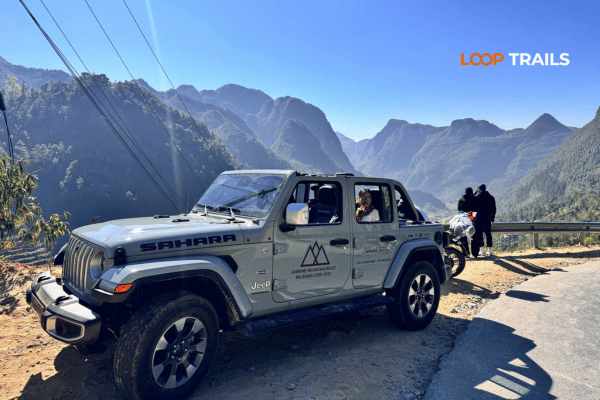
You travel in a vehicle with a driver and a guide, comfortable, weather proof, and with the lowest physical risk of the three. Same passes, same villages, same stops at Ma Pi Leng and the Nho Que River, just from the comfort of a seat with a roof for when the weather turns. The first aid burden on you is minimal, and it is the easiest option for families, older travelers, anyone not comfortable on two wheels, or groups with mixed confidence. Best for: families, couples who want comfort, travelers who do not ride, and anyone who wants the scenery without the exposure.
Which option is best for you? If you live for riding and you are confident on a bike, go self drive and pack thoroughly. If you want the freedom of the Loop without the responsibility of driving, easy rider is the sweet spot most travelers land on. If comfort, weather protection and peace of mind matter most, especially with family or non riders along, the jeep is the easy answer. There is no wrong choice here, just the one that matches how you want to experience these mountains.
Learn more: Ha Giang Safety Tips
The best first aid happens before you ever reach Ha Giang. A bit of prep at home makes the kit on the road almost an afterthought.
Tick these off and the actual Loop becomes what it should be: passes, villages, big skies and good company, with the safety net quietly handled in the background.

Learn more: Ha Giang Loop Wrangler Tour
Here is the thing nobody tells you: the travelers who pack a proper first aid kit are almost never the ones who have a bad time. Not because the kit is magic, but because the same person who thinks ahead about a scrape also drinks enough water, wears the sunscreen, paces the corn wine, and knows when to take it easy. The kit is really just a sign that you are riding the Loop with your eyes open.
So build the pouch, learn the basics, sort your insurance, and then genuinely forget about all of it. The Ha Giang Loop is one of the most beautiful rides on earth, and you came here for the passes and the people, not to worry. Handle the small stuff so the small stuff never gets in the way of the big stuff.
Ready to plan it properly? Take a look at our Ha Giang Loop tours to find the easy rider, self drive or jeep option that fits how you want to travel, or check our motorbike rental in Ha Giang if you want to ride your own. Thinking about going further into Cao Bang and Ban Gioc Waterfall? Our combined Ha Giang and Cao Bang tours stretch the adventure across both regions. However you do it, do it prepared, and then enjoy every kilometre. Questions about a specific tour or what to pack for your dates? Message us on WhatsApp and we will help you sort it out.
Learn more: Ha Giang Loop by Army Jeep Tours
Yes, at least a small one. Even on a guided tour where your guide carries a kit, having your own plasters, painkillers and sunscreen saves time for the little things. If you are riding self drive and independent, a proper kit is essential, because you are your own first responder out there.
Minor scrapes and road rash from low speed slips on gravel or mud are the most common by far, and they are rarely serious. After that it is sunburn, dehydration, mild stomach bugs, motion sickness on the twisty passes, and blisters. Pack for those and you have covered the vast majority of real situations.
Ha Giang City has the most pharmacies and a general hospital, so stock up there before you ride. Towns like Yen Minh, Dong Van and Meo Vac have pharmacies and basic health facilities for minor issues, though hours and stock vary. For anything serious the realistic path is back to the city or on to Hanoi, which is exactly why insurance and self sufficiency matter.
The general numbers are 115 for ambulance and medical emergencies, 113 for police, and 114 for fire and rescue. Be realistic about the mountains though, since signal drops on the passes and an ambulance can take a long time to reach remote roads. Your fastest help is often your guide and getting to the nearest town, so save offline maps and confirm current numbers before you travel.
If you know you get carsick or seasick, yes, and take it before you ride rather than once you already feel ill. The passes on the Loop, especially the climb to Ma Pi Leng, are stunning and very twisty, and they catch out a lot of passengers on easy rider tours and in jeeps. Ask a pharmacist which option suits you, and follow the packaging.
Carry oral rehydration salt sachets first and foremost, because replacing fluids matters more than anything. Diarrhoea tablets can help you get through a long bus or riding day, but they manage symptoms rather than cure the cause. If you have high fever, blood, severe pain or it lasts several days, see a doctor.
You can top up basics in Ha Giang City and, to a lesser extent, in the larger towns, but do not rely on it for anything specific. Stock is limited outside the city and labels are usually in Vietnamese only. Bring your own prescription medicines for the whole trip plus a few spare days, in their original packaging.
Strongly yes, and you need to check that it actually covers motorbike riding, since many standard policies exclude it or require a valid licence and the correct permit. Look for medical evacuation cover too, given how remote the region is. Licence and insurance rules can change, so read your policy and confirm current local requirements before you ride.
For most travelers, yes, thousands ride or get driven around it every month without incident. The roads are mostly good, but they are mountain roads with the occasional gravel, mud or loose rock, so a sensible pace and a basic kit go a long way. Choosing an easy rider or jeep tour lowers the risk further by putting an experienced local at the wheel.
Then you do not have to ride one, and you will not miss anything by not doing so. An easy rider tour lets you experience the whole Loop as a passenger behind a local guide, while a jeep tour gives you comfort, weather protection and the same stops with the lowest physical risk. Both are popular exactly because they remove the riding pressure while keeping the adventure.
Give yourself a couple of weeks before departure to see a doctor if needed, refill prescriptions, build and test your kit, and sort insurance. For jeep tours in particular, booking one to three months ahead is wise, because availability is more limited than motorbikes. The packing itself is quick once the kit is assembled.
Serious altitude sickness is not a typical concern here, as the elevations are moderate rather than extreme. What does catch people is the combination of strong sun, cool air that hides how much you are sweating, and long days, which adds up to dehydration and sunburn. Drink water, cover up and reapply sunscreen, and you will feel the difference.
Contact information for Loop Trails
Website: Loop Trails Official Website
Email: looptrailshostel@gmail.com
Hotline & WhatSapp:
+84862379288
+84938988593
Social Media:
Facebook: Loop Trails Tours Ha Giang
Instagram: Loop Trails Tours Ha Giang
TikTok: Loop Trails
Office Address: 48 Nguyen Du, Ha Giang 1, Tuyen Quang
Address: 48 Nguyen Du, Ha Giang 1, Tuyen Quang

Facebook X Reddit Table of Contents Learn more: Ha Giang Loop Tours Most people drive past the Quan Ba area twice on

Facebook X Reddit Table of Contents Learn more: Ha Giang Loop Tours The Ha Giang Loop has a reputation problem with older