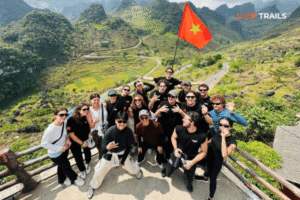


Thúy Kiều (Grace) is a travel blogger and content contributor for Loop Trails Tours Ha Giang. She holds a bachelor’s degree in Sustainable Tourism from Vietnam National University, Hanoi, and has a strong passion for exploring and promoting responsible travel experiences in Vietnam’s northern highlands.
Learn more: Ha Giang Loop Tours
There is a moment on the Ha Giang Loop that photos never quite catch. The bikes are off, dinner is done, and someone kills the last light. You look up, and the whole sky is just sitting there, thick with stars, close enough that you go quiet for a second.
That is the version of Ha Giang Loop camping most people are chasing, and it is real. But getting there takes a little more thought than rolling out a sleeping bag wherever you feel like it. This guide covers where you can actually sleep under the stars up here, what the nights are really like, what to bring, and the honest trade offs between doing it yourself and letting someone arrange it for you.
Learn more: Ha Giang Loop 2 Days 1 Night
Here is the first thing to get straight, because it saves a lot of disappointment: the Loop is built around homestays, not campsites. For most of its history this region has hosted travelers in family run guesthouses and stilt house homestays, and that is still where the vast majority of people sleep. You will not find a string of official campgrounds with marked pitches and shower blocks the way you might in parts of Europe or the US.
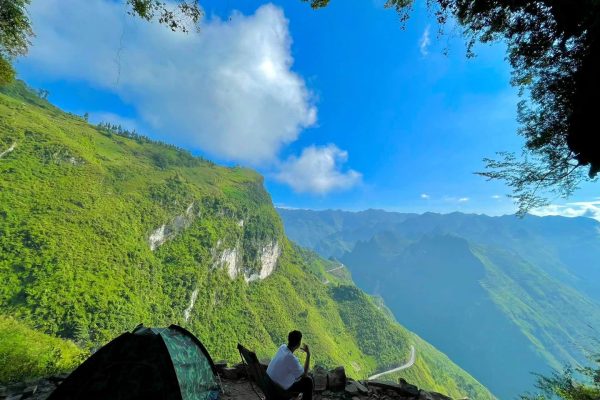
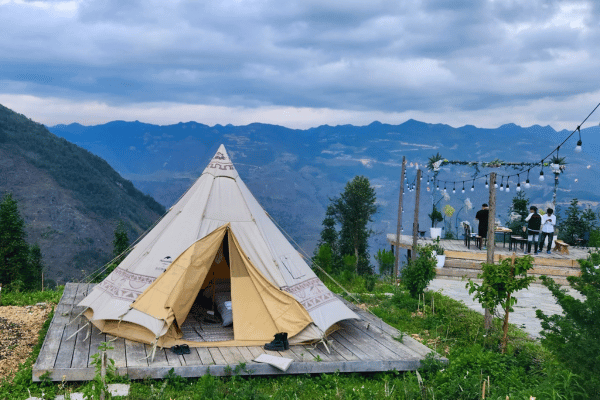
What you will find is a growing handful of places that let you sleep outdoors on purpose. Some homestays have rooftop or terrace space. Some operators set up tents at a viewpoint for the night. A few riverside and lakeside spots have leaned into the camping idea. Part of it is closer to glamping, a tent already pitched with a real mattress inside, and part of it is genuinely rough. The scene changes fast, so a spot that was busy last season might be quiet this one, and new ones open all the time.
So yes, camping on the Loop is a thing. It is just a smaller, less polished thing than the homestay scene around it, and that is exactly why it feels special when you do it.
Learn more: Ha Giang Loop 3 Days 2 Nights
“Camping” covers a lot of ground in Ha Giang, and the word means different things to different operators. Knowing the options helps you ask for the right thing.
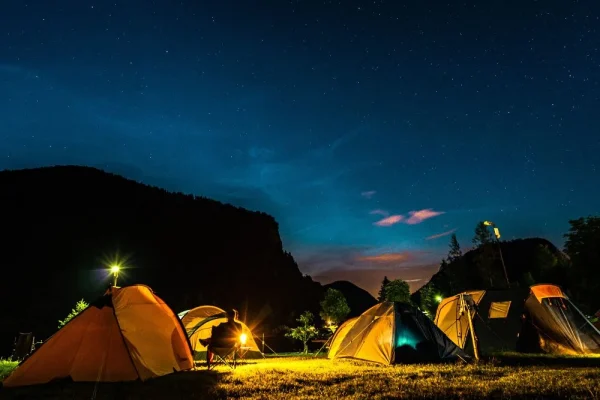
This is the most common way people end up sleeping outside on the Loop. A tour or a homestay handles the tent, often the mattress and bedding, dinner, and the spot itself. You turn up, the hard parts are sorted, and you get the night under the stars without hauling gear across the country. For most travelers this is the version that actually happens, and it is the one we set up for guests who ask.
Plenty of homestays sit on slopes or ridges with a flat roof or a wide terrace facing the valley. Some are happy to let you sleep up there under the open sky on a clear night, mattress out, bag on top. It is camping in spirit if not in tent, and it gives you the stars with a warm room a few steps away if the temperature drops or the weather turns. A good middle ground if you like the idea but want a safety net.
Can you just pitch a tent anywhere you like the look of? In practice, no, and there are good reasons. Those green slopes are rarely empty even when they look it. Most of that land is farmland, grazing ground, or village land, so the polite and sensible move is to ask before camping near a settlement. More importantly, Ha Giang sits right against the Chinese border, and some areas near the frontier have restrictions. Permits have been required for certain border zones in the past, and rules in these areas can change, so this is one part of the trip where you really do not want to guess. If you are set on camping somewhere remote, go with a guide who knows which spots are fine and which are off limits, or check current local rules before you commit.
Learn more: Ha Giang Loop 4 Days 3 Nights
You can build a night out almost anywhere quiet and legal, but a few areas stand out for the view, the sky, or the mood. Here is where people gravitate, and what each one is actually like after dark.
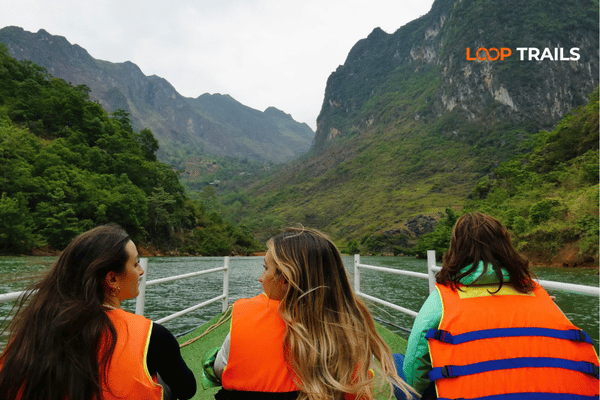
Ma Pi Leng is the pass everyone comes for, a thin ribbon of road carved high above the Nho Que River. The water down in the gorge is an unreal shade of green, and the canyon it runs through, Tu San, is one of the deepest in the region. Spending a night up high near the pass means you wake up to that view instead of just stopping for ten minutes and a photo.
A few homestays and viewpoint spots along the Ma Pi Leng stretch have started offering tents or terrace sleeping. Down by the water, near where the Nho Que boat tours launch, there are also basic options if you want to be closer to the river. Just know that nights up on the pass are colder and windier than down in the valley. This is the spot where your warm layers earn their keep.
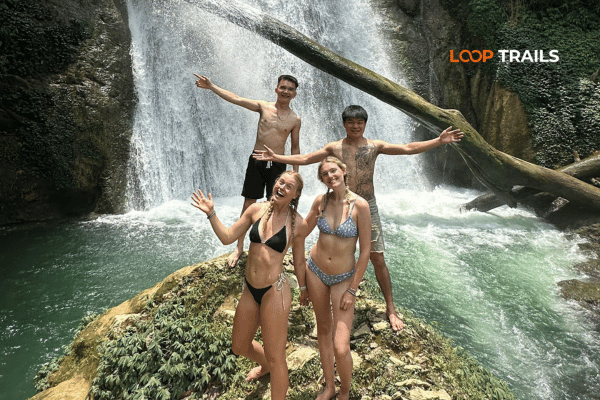
Du Gia has a reputation as the Loop’s social stop, a small village with a waterfall, a swimming hole, and a cluster of homestays that fill up with travelers swapping stories. It sits greener and lower than the high plateau, which makes for milder nights, and several places here are relaxed about letting you sleep on a terrace or outside. If you want stars without the bite of high altitude cold, Du Gia is an easy call, and the waterfall in the morning is a nice bonus.
Dong Van sits in the heart of the Dong Van Karst Plateau Geopark, a UNESCO listed landscape of jagged limestone that looks almost lunar in places. The old town is worth a slow wander in the evening, and the surrounding plateau has some of the darkest skies on the whole route once you get away from the few streetlights. This is high country, though, so plan for cold nights, especially from late autumn through winter. The reward is a sky with very little light to compete with.
Away from the headline passes, the quieter valleys and the odd reservoir give you calm water, fewer engines, and big open sky. These spots rarely show up on a rushed 3 days itinerary, which is exactly why they stay peaceful. They suit travelers who would happily trade one famous viewpoint for a night where it is just them, the water, and the dark. If you have more time and want to string Ha Giang together with the waterfalls and caves further east, a Ha Giang and Cao Bang tour or a Cao Bang loop opens up even more quiet country to sleep under.
One caveat across all of these: which exact spots are running, and which are off limits near the border, shifts from season to season. Treat the areas above as a guide to where to look, not a fixed list, and confirm what is actually open before you build a night around it.
Learn more: Ha Giang Cao Bang 5 Days 4 Nights
Timing matters more for camping than for almost anything else on the Loop, because you are at the mercy of two things: cloud and cold. Here is the rough shape of the year.
| Time of year | What the nights are like | Camping verdict |
|---|---|---|
| October to November | Drier spell, cooler air, clearer skies | One of the best windows |
| December to February | Cold, sometimes near freezing up high | Great stars, only if you pack for it |
| March to April | Warming up, generally drier, green returning | Another strong window |
| May to September | Wet season, heavy rain, mud, leeches | Hard to recommend for camping |
Clear skies are far more likely in the drier months, roughly October to April, and that is the difference between a sky full of stars and a tent drumming with rain. If the stars themselves are the whole point, check the moon phase before you lock in a date. A full moon washes out the fainter stars, while a night near the new moon, away from town lights, is when the Milky Way really shows up.
Do not underestimate how cold the high plateau gets after dark. Daytime can be pleasant and you ride in shirtsleeves, then the sun drops behind the karst and the temperature falls fast. In the depths of winter the highest points can sit in the single digits Celsius or colder overnight, and frost is not unheard of at the top of the passes. People get caught out by this every year because the afternoon felt warm. If you want help picking the right month for your trip and your tolerance for cold, our guide on the best time to visit Ha Giang goes deeper on the seasons.
Not sure you want to wrangle all of this yourself? You do not have to. We can build a camping or stargazing night into a Ha Giang Loop tour and handle the gear, the spot, and the logistics, so all you do is show up and look up. More on the different ways to do that just below.

Learn more: Ha Giang Cao Bang Ba Be Lake 6 Days 5 Nights
If you are arranging your own camp, packing for the cold is where most people slip up. The afternoon sun lies to you. Here is a practical checklist, and a note further down on what changes if you book a camping night through a tour. For the full kit list across the whole trip, see our Ha Giang packing list.
If you book a camping night through a tour, most of the bulky gear is sorted for you, which is honestly half the appeal. Carrying a full sleep system across Vietnam for one or two nights is a lot of weight for the payoff.
Learn more: Cao Bang Loop 3 Days best kept secret
There is no single right way to camp the Loop. It comes down to how much you want to drive, how much gear you want to carry, and how much of the planning you want to own. Here are the three realistic routes.
This is the easy way to do it. You ride or get ridden, someone else has scouted the spot, sorted any permits where they are needed, packed the tents, and cooked dinner. If you are short on time, do not want to haul camping gear across the country, or just want the experience without the admin, this is the obvious pick. Tell us you want a night under the stars and we will work it into a 3 days or 4 days Loop tour.
If you want full freedom and you are comfortable on a bike, renting and going self drive lets you stop where you like and camp on your own schedule. You take on more of the planning, the gear, and the responsibility for reading the weather and the rules, especially near border areas. Plenty of experienced travelers love this version, and it is the most flexible by a mile. Just go in clear eyed about the cold and the logistics. If this is your plan, you will need a reliable bike, and our motorbike rental in Ha Giang is set up for exactly this kind of trip.
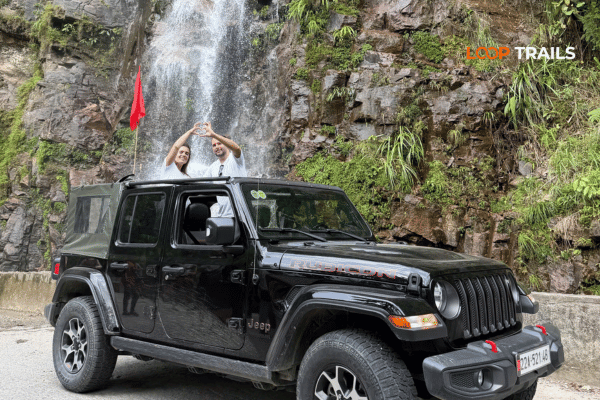
Want the stars but not the driving? An easy rider tour puts you on the back of an experienced local driver’s bike, and a camping night can be added to that too. You get the views and the night out without ever touching the handlebars, which is a real relief on the steepest, most exposed sections of the Loop. It is also a good option if your group has mixed confidence on a bike.
Still not sure which fits? Message us on WhatsApp with your dates and group size and we will tell you honestly what makes the most sense, including whether camping is even worth it for your particular week of weather.
Learn more: Ha Giang Loop Photography Guide
If you go the guided route, here is roughly what tends to be covered, so you know what to ask about. It varies between operators, so always confirm the details rather than assume.
The main thing to clarify upfront is warmth. Ask what bedding is provided and how cold it tends to get at that specific spot in that month, then decide whether you want to bring an extra layer of your own. Nobody enjoys the stars much when they are shivering.
Learn more: Ha Giang Loop Coporate Retreat
The risks here are not dramatic. There are no bears waiting in the dark. The real hazards are cold, weather, and not respecting where you are.
None of this is meant to scare you off. Camping up here is wonderfully safe when you treat the cold and the weather seriously and go with someone who knows the ground.
Learn more: Ha Giang Loop by Army Jeep Tours
A few patterns come up again and again. Avoid these and you are most of the way to a good night.
Learn more: Ha Giang Motorbike Rental
Picture a normal evening of it. You roll into the spot in the late afternoon, light still gold on the karst. The tents are already up, or you pitch yours while there is still warmth in the air. Someone gets a simple dinner going, rice, a hot soup, maybe a bit of the local corn wine doing the rounds. The temperature starts to fall the second the sun is gone, so the fleece comes out, then the jacket.
Then the sky does its thing. First a few bright stars, then more, then that faint band of the Milky Way if the moon is cooperating. It gets quiet. People stop talking and just look. You sleep colder than you would in a homestay, you wake up a bit stiff, and you would do it again in a heartbeat. That, in one evening, is camping on the Loop.
Learn more: Ha Giang Loop Hidden Gems
Camping on the Ha Giang Loop is not the polished, pitch and shower kind. It is a little raw, weather dependent, and it rewards people who plan for the cold and respect the rules. Do that, pick a clear night near a new moon, and you get one of the best skies in Vietnam plus a story better than any homestay night.
If you want the experience without the logistics, that is exactly what we do. We can fold a camping or stargazing night into a Ha Giang Loop tour, sort the gear and the spot, and keep it safe and simple. Browse the tours, grab a rental if you would rather go your own way, or just message us on WhatsApp and tell us what you are picturing. We will help you make it happen.
Yes, but it is not the main way people sleep here. Most accommodation is homestays, with a smaller number of spots offering tents, terrace sleeping, or glamping style setups. Wild camping is possible in places but comes with weather, land, and border considerations, so organized camping is the simpler and safer route for most travelers.
Popular areas include the Ma Pi Leng Pass and Nho Que River area, Du Gia for milder nights, and the high plateau around Dong Van for the darkest skies. Quieter valleys and reservoirs are good if you want fewer people. Specific spots open and close often, so check what is currently running before you commit.
It is a grey area. Much of the land is farmland or village land, so you should ask before camping near settlements. Ha Giang also borders China, and some frontier areas have restrictions or permit requirements that can change. If you want to camp somewhere remote, go with a guide who knows the rules or check locally first.
The drier months, roughly October to April, give you the best chance of clear skies. October to November and March to April are comfortable windows. Deep winter has great stars but cold nights. The wet season from May to September brings heavy rain and mud and is hard to recommend for camping.
It varies a lot by season and altitude. The high plateau can be pleasant by day and then drop fast after sunset. In winter the highest points can sit in the single digits Celsius or colder overnight, with occasional frost. Even in milder months, pack a warm layer, because nights up high are cooler than the afternoons suggest.
Not if you book a camping night through a tour, where the tents and most of the bulky gear are usually provided. If you go self drive and arrange your own camp, you will need your own sleep system, warm layers, and the rest of the kit. Carrying full camping gear across Vietnam is a lot, which is part of why guided camping nights are popular.
On a clear, moonless night away from town lights, yes. The skies up here are genuinely dark and the Milky Way is often visible. Cloud and a bright moon are the two things that ruin it, so aim for the drier months and a date near the new moon for the best chance.
The main risk is the cold, not wildlife, so the biggest safety step is packing properly for low temperatures. Beyond that, avoid camping where heavy rain could trap you, respect border zone restrictions, and do not ride at night or while tired to reach a spot. Going with an experienced guide removes a lot of the guesswork.
Yes. You can do a camping night as part of an easy rider tour, where a local driver handles the bike, or as part of a jeep based trip. Either way you get the stars and the experience without having to drive the mountain roads yourself.
Often, yes. Many travelers do a standard homestay based Loop and swap one night for camping or a stargazing setup. Tell us your dates and what you are picturing, and we can build it into a 3 days or 4 days Ha Giang Loop tour.
Contact information for Loop Trails
Website: Loop Trails Official Website
Email: looptrailshostel@gmail.com
Hotline & WhatSapp:
+84862379288
+84938988593
Social Media:
Facebook: Loop Trails Tours Ha Giang
Instagram: Loop Trails Tours Ha Giang
TikTok: Loop Trails
Office Address: 48 Nguyen Du, Ha Giang 1, Tuyen Quang
Address: 48 Nguyen Du, Ha Giang 1, Tuyen Quang
Facebook X Reddit Table of Contents Learn more: Ha Giang Loop Tours Most people drive past the Quan Ba area twice on
Facebook X Reddit Table of Contents Learn more: Ha Giang Loop Tours The Ha Giang Loop has a reputation problem with older