

Cao Bang in 2 Days from Hanoi: Is It Enough?
Facebook X Reddit Table of Contents Short answer: mostly no, and it depends entirely on what you mean by two days. That
Thúy Kiều (Grace) is a travel blogger and content contributor for Loop Trails Tours Ha Giang. She holds a bachelor’s degree in Sustainable Tourism from Vietnam National University, Hanoi, and has a strong passion for exploring and promoting responsible travel experiences in Vietnam’s northern highlands.
Two of the best landscapes in northern Vietnam sit about a province apart, and most people see one of them.
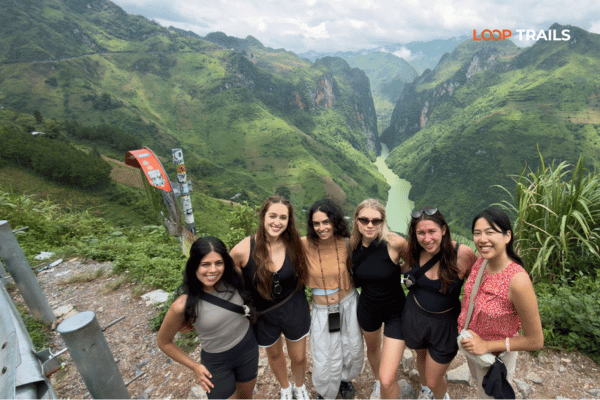
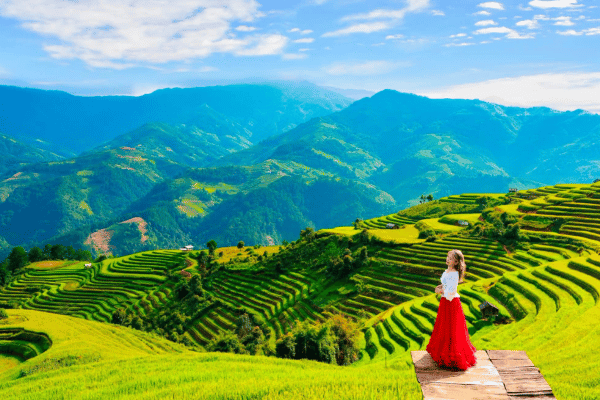
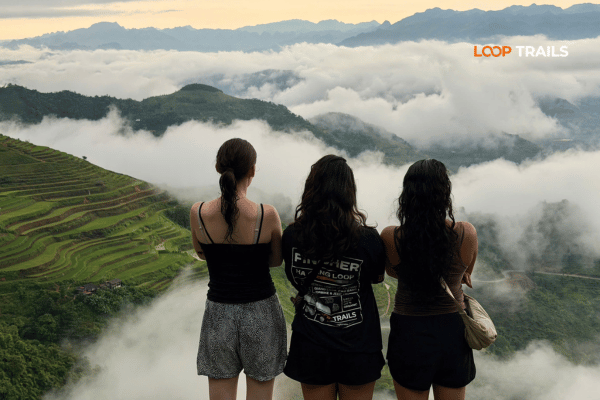
Mu Cang Chai is terraced rice built up mountainsides over generations, stacked in curves that follow the contour of the slope, and in the right fortnight it is as good as anything in Asia. Ha Giang is the limestone plateau: grey rock, a gorge, and a road cut into a cliff wall.
They are not the same kind of beautiful and that is the argument for doing both. What almost nobody tells you is that their best weeks do not line up, which changes everything about when you book.
We run trips in Ha Giang and we do not operate in Mu Cang Chai, so that half of this page tells you how to do it rather than selling you anything.
Learn more: Ha Giang Loop Tours
They are genuinely different. Mu Cang Chai is soft: curved terraces, green or gold, villages in valleys. Ha Giang is hard: grey limestone spikes, vertical rock, a gorge with a river at the bottom. Seeing both in one trip is not repetition, it is contrast.
They are both in the north and reachable from each other without going back to Hanoi, which is the thing that makes the pairing sensible rather than ambitious.
For riders, there is a specific reason, covered further down: Khau Pha and Ma Pi Leng are two of the four passes Vietnamese riders call the great ones, and this trip puts both in the same week.
And the crowds are different. Mu Cang Chai fills with Vietnamese photographers in harvest season and is quiet the rest of the year. Ha Giang fills with international riders in autumn. They peak at slightly different times, which you can use.

Learn more: Ha Giang Loop 2 Days 1 Night
Here is the fact that should decide your dates, and almost every article pairing these two ignores it.
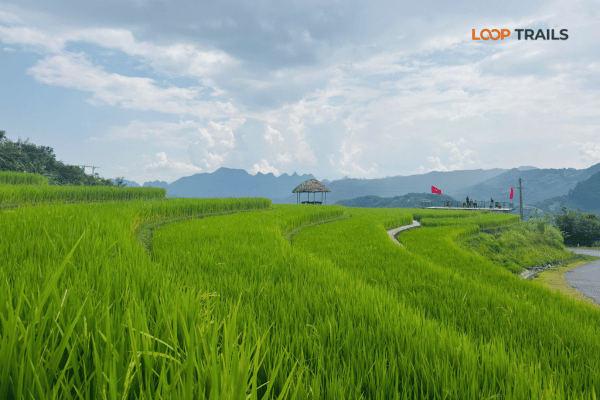
Mu Cang Chai’s terraces turn gold from roughly mid September into early October. That is the famous photograph and it is a narrow window that moves with the weather each year.
Ha Giang’s buckwheat flowers come out from roughly late October into November. That is Ha Giang’s signature season and it is also a few weeks later.
Those windows do not overlap. They are separated by several weeks, and no amount of planning closes the gap.
So you are choosing:
| If you go | Mu Cang Chai | Ha Giang |
|---|---|---|
| Mid to late September | Gold terraces at their peak | Green plateau, rice turning, no buckwheat |
| Early October | Tail of the harvest, some cut | Clear air, buckwheat barely starting |
| Late October to November | Harvested, brown, bare | Buckwheat at its best, peak season |
| May to June | Flooded terraces, reflections | Green, warm, pre monsoon |
Our recommendation if terraces are the point: go in mid to late September. Mu Cang Chai is the more seasonal of the two, its window is narrower, and Ha Giang is excellent in September regardless of whether the buckwheat has arrived.
If buckwheat is the point: go in November, accept that Mu Cang Chai will be cut, and go for the shape of the terraces rather than the colour, which is still worth seeing.
Early October is the compromise and it is a real one: you get the end of one season and the start of the other, with neither at full strength. Plenty of people take it and are happy.
Learn more: Ha Giang Loop 3 Days 2 Nights
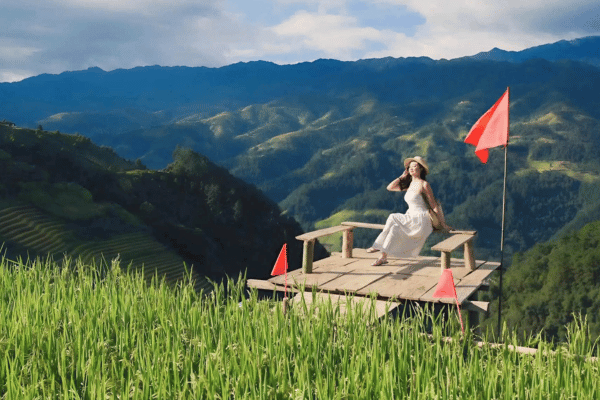
Yen Bai province, in the northwest, and the terraces are the whole reason to go.
The famous communes are La Pan Tan, Che Cu Nha and De Xu Phinh, where the terracing is steepest and most dramatic. The terraces there have national heritage recognition, which tells you something about how Vietnam regards them.
The Raspberry Hill at La Pan Tan, a cone shaped hill wrapped in terraces, is the single most photographed spot and it deserves the attention. There is a walk up to it and it is busy in harvest season.
The Horseshoe terraces are the other well known formation, a curve of terracing shaped exactly as the name suggests.
Tu Le, the valley before the pass, is worth a stop for its sticky rice and its hot springs, and it is where a lot of people break the journey.
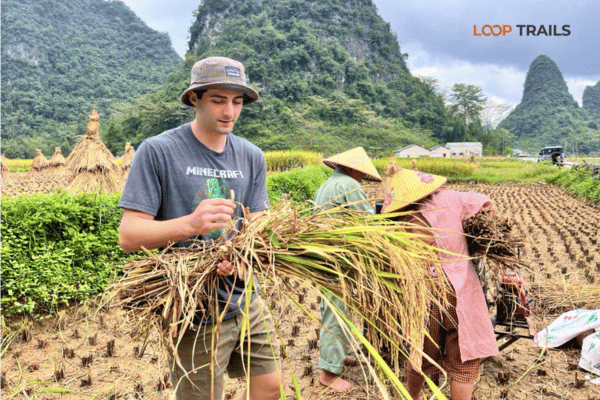
The people here are largely H’Mong, and the terraces are working farmland built and maintained by hand over generations rather than a landscape feature. That is worth holding in mind when you are standing in somebody’s field with a camera.
What it is not: a town with things to do. Mu Cang Chai is a valley, a road and terraces. If you need a destination with restaurants and a scene, this is not it, and that is the appeal.
Planning the Ha Giang half? The two regions are a few days apart and the route between them is the part that needs thinking about. Have a look at the Ha Giang Loop tours and send us your dates, and we will tell you honestly whether the traverse works for your timing or whether you should do them as separate trips.
Learn more: Ha Giang Loop 4 Days 3 Nights
The contrast, and it is why the pairing works.
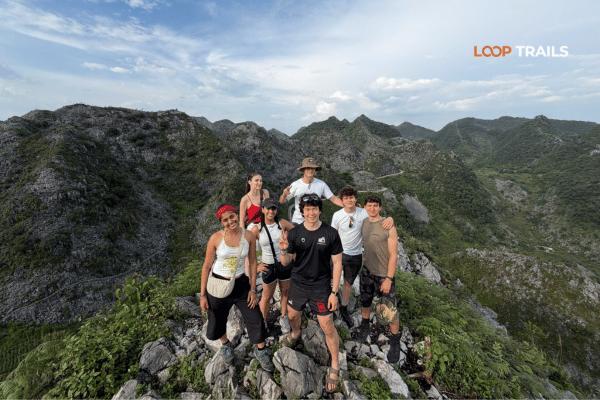
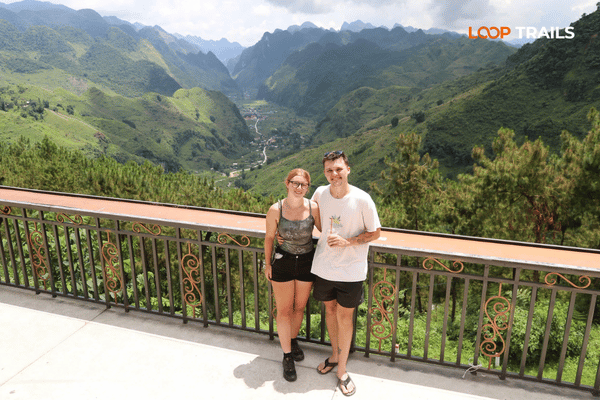
The Dong Van karst plateau is a UNESCO Global Geopark and it looks nothing like Mu Cang Chai: grey limestone spikes to the horizon, villages balanced on bare ridges, and almost no soil. Where Mu Cang Chai is about what people built on a mountain, the plateau is about people living on rock.
Ma Pi Leng is a road cut into a cliff wall above the Nho Que river, and the boat trip through the Tu San canyon underneath it.
The markets, which are working weekly markets rather than displays, and which have no equivalent in Mu Cang Chai.
Hoang Su Phi, in western Ha Giang, is the bridge between the two: terraces on the Mu Cang Chai scale, in Ha Giang province, and almost nobody rides there. If you are travelling for terraces, this is the one most itineraries miss and it is on your route.
The buckwheat, in late October and November, which is Ha Giang’s own seasonal event and the thing the plateau does that nowhere else does.
Learn more: Ha Giang Cao Bang 5 Days 4 Nights
For riders specifically, and it is the best argument for combining these two regions.
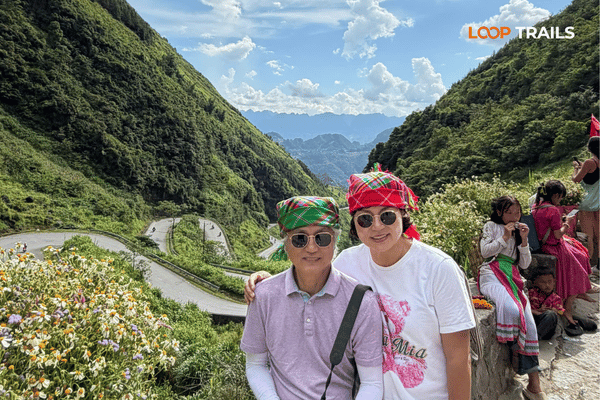
Vietnamese riders traditionally name four great passes in the north. Khau Pha, on the road into Mu Cang Chai, and Ma Pi Leng, in Ha Giang, are two of them. O Quy Ho, between Sapa and Lai Chau, sits roughly on the route between the two if you take the northern traverse.
Doing two of the four in one trip is a real thing to have done, and taking the Lao Cai route puts a third within reach.
Khau Pha is a long climb through forest and terraces with the Mu Cang Chai valley opening out below it. It is also the paragliding site, with an annual flying event around the harvest, when pilots fly over the gold terraces.
Ma Pi Leng is a different kind of road entirely: cut into vertical limestone with the gorge dropping away beside you.
They are worth riding for opposite reasons and putting them in the same week is the sort of thing riders remember.
Learn more: Ha Giang Cao Bang 6 Days 5 Nights
Honest, because this is where a good idea becomes a logistics question.
The sensible overland route runs northwest then east: out of Mu Cang Chai towards Than Uyen, up to the Lao Cai area, then east through Bac Ha and Xin Man into Hoang Su Phi, and on to Ha Giang City.
That traverse is good riding and it takes real days rather than an afternoon. It also runs through Hoang Su Phi, which means terraces again, and through Bac Ha, which has one of the best Sunday markets in the north.
The alternative is going back through Hanoi, which is simpler to arrange and costs you two days for nothing. We would not.
What to plan for:
If you have not ridden in Vietnam before, the traverse is not the place to start. Do Mu Cang Chai as its own trip, then do Ha Giang properly, and combine them on a second visit.

Learn more: Cao Bang Loop 3 Days best kept secret
The route between the two regions is underwritten everywhere and it is not just a connector.
Bac Ha has one of the best Sunday markets in northern Vietnam, where Flower H’Mong communities come in to trade and the clothing alone justifies timing your traverse to land there on a Sunday. If your dates allow it, plan the crossing around that day rather than around distance.
O Quy Ho, if you route via Sapa, is the third of the four great passes and the longest of them. Taking it means three of the four on one trip, which is the sort of thing riders plan around.
Xin Man is quieter than anywhere else on this route and has markets where trade is the point rather than the performance.
Sapa you can skip without regret if you have seen photographs of it and want the version you were imagining. The town itself has changed a great deal. The valleys around it have not, and a day walking them is well spent if you have it.
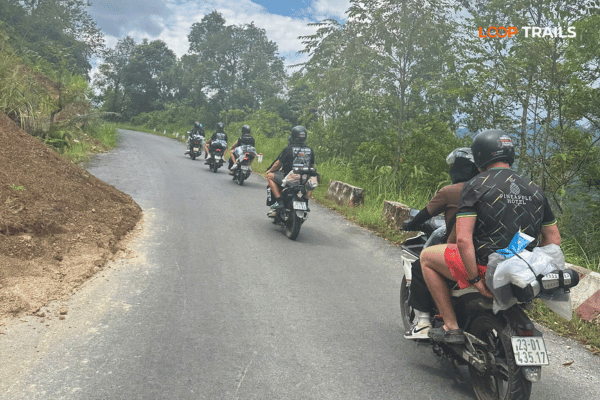
The road itself through this stretch is the sort of riding people come to Vietnam for: long, quiet, and through country that sees very few foreign faces between the known stops.
The practical point: treat the traverse as two or three days of the trip rather than as travel between the good bits. Budget accommodation for it properly and you get a third region for free.
Learn more: Ha Giang Motorbike Rental
An honest choice, since plenty of readers will not have eleven days.
Choose Mu Cang Chai if rice terraces are specifically what you came for, your dates fall in mid to late September or in May and June, and you want a shorter trip. It is closer to Hanoi than Ha Giang, it needs fewer days, and in its fortnight it is as good as terraced landscape gets in Asia.
Choose Ha Giang if you want a loop rather than a destination, you are travelling outside the terrace windows, you want big passes and a gorge rather than farmland, or you want somewhere that is excellent in most months rather than brilliant in two.
The deciding question: are you going to look at one thing properly, or to ride for several days through changing country? Mu Cang Chai is the first. Ha Giang is the second.
Our honest bias, stated so you can discount it: we run Ha Giang and not Mu Cang Chai. With that on the table, if your dates land in the harvest fortnight and terraces are the reason you are coming north, go to Mu Cang Chai and do Ha Giang another time.
Learn more: Ha Giang in September & October
Mid to late September. Terraces at peak, plateau green. The best choice if rice is the point. It is also when Mu Cang Chai is busiest with Vietnamese photographers, so book accommodation early.
Early October. The compromise. Harvest ending, air clearing, buckwheat barely started. Fewer people than either peak and nothing at full strength.
Late October into November. Ha Giang at its absolute best, Mu Cang Chai harvested and bare. Choose this if the plateau is the priority and Mu Cang Chai is a stop on the way rather than the reason.
Avoid the middle of the year for terraces specifically, since July and August are green and wet with the heaviest rain, and the traverse is at its least reliable.
Learn more: Ha Giang Loop Hidden Gems
May and June, the water pouring season.
Before the rice is planted, the terraces are flooded, and a hillside of flooded terraces reflecting the sky is arguably a better photograph than the gold version. Vietnamese photographers know this. Foreign visitors almost universally do not.
What you get: mirrored terraces at Mu Cang Chai, green and warm in Ha Giang before the monsoon properly arrives, comfortable riding weather and almost no other visitors.
What you give up: the gold, the buckwheat and the postcard.
What to watch: the rains begin through this period, so build in slack and expect afternoon storms. The traverse is still fine in early season rain and gets harder as the summer goes on.
If you have seen the harvest photographs and want something different, or if your dates are fixed to early summer, this is a genuinely good trip rather than a consolation.
Learn more: Du Gia Waterfall
Adjust to your own days. This assumes riding rather than buses, because the traverse is the point.
| Days | Where |
|---|---|
| 1 | Hanoi to Nghia Lo or Tu Le |
| 2 | Over Khau Pha into Mu Cang Chai |
| 3 | Mu Cang Chai: La Pan Tan, the terraces, a full day |
| 4 | Northwest towards Than Uyen and the Lao Cai area |
| 5 | East through Bac Ha and Xin Man |
| 6 | Hoang Su Phi, terraces again, on to Ha Giang City |
| 7 to 10 | The Ha Giang Loop, three or four days |
| 11 | Night bus back to Hanoi |
That is a substantial trip and it wants around eleven or twelve days including travel at each end. If you have less, do one region properly rather than both badly.
A shorter version: fly or bus to Mu Cang Chai, two nights there, then back to Hanoi and up to Ha Giang by night bus. Less good, considerably simpler, and it works in about a week.
Learn more: Ha Giang Loop Photography Guide
Specific, because this is why most people come.
Light is everything and the terraces are directional. Low sun early and late rakes across the steps and makes them read as three dimensional. Midday flattens a hillside into a texture.
Get above them. Terraces photograph as shape rather than as subject, and shape needs elevation. That usually means a climb on foot.
People give it scale. A farmer working a terrace tells you how big the hillside is in a way an empty frame never does. Ask first, always.
In water pouring season, shoot the reflections rather than the terraces themselves. The subject is the sky in the water.
At harvest, get there early. The famous spots have crowds of Vietnamese photographers in the gold fortnight and the good positions go first.
A drone is the obvious tool and the complicated one. Vietnam requires permission for drone flights and the rules are strict, so arrange it properly rather than launching and hoping. There is more on this in our photography guide.
Learn more: Ha Giang Homestay Guide
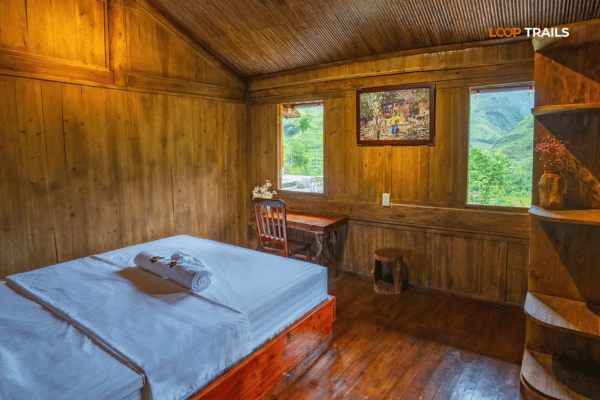
In Mu Cang Chai, homestays in and around the terraced communes, plus guesthouses in the town. Book well ahead in the harvest fortnight, because this is when the region fills.
In Tu Le, a good place to break the journey, with hot springs.
Around Hoang Su Phi, homestays among the terraces, and it is quieter than Mu Cang Chai at the same time of year.
In Ha Giang, homestays on the loop, which is the standard.
Everywhere on this route: cash, small notes, and no reliable card acceptance outside the towns.
Learn more: Best Adventure Activities in Vietnam
Practical, and some of it is about behaviour.
These are working fields. Do not walk into a terrace to get a photograph. Footprints in a paddy are somebody’s repair job, and the terrace walls are fragile.
Ask before photographing people, and get an adult’s permission before photographing children.
Some viewpoints charge a small local fee, collected by the community whose land it is. Pay it without negotiating.
The roads within the commune areas are steep and rough in places, and considerably harder after rain than the main road suggests.
Weather changes fast and cloud can sit on the terraces for a day. Build in more than one morning if you can.
It is cold at night in the harvest season, more than people expect from a photograph of gold fields in sunshine.

Learn more: Ha Giang Loop by Wrangler Rubicon Jeep
For the Ha Giang half, since that is what we run.
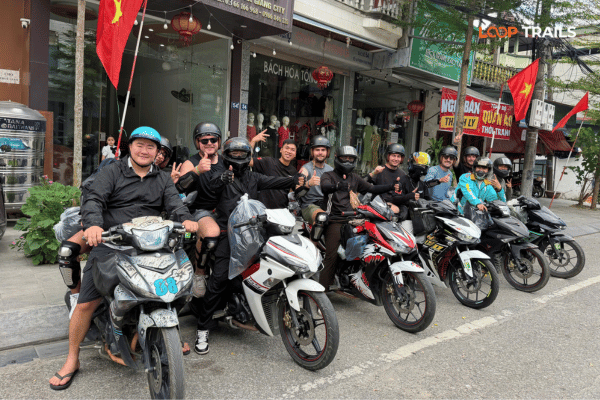
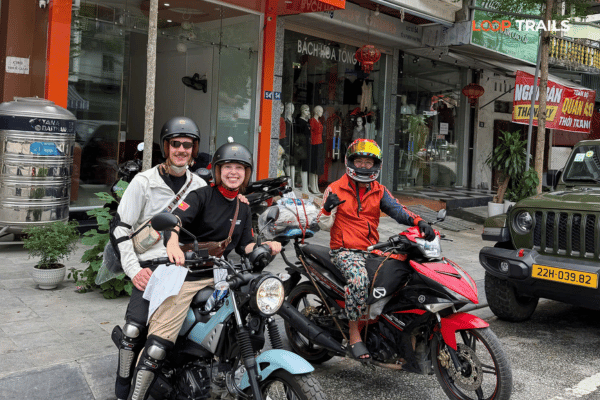
Self drive if you ride at home and your documents work: passport, a motorbike licence from home and an International Driving Permit issued under the 1968 Vienna Convention. The 1949 style permit is not recognised in Vietnam. The paperwork guide covers it and we handle motorbike rental in Ha Giang if you want a bike without a tour. If you are riding the traverse from Mu Cang Chai, you will be self driving that part regardless.
Easy rider if you want to be on a bike without being responsible for one. You ride pillion behind an experienced local rider, no licence needed, and on a plateau day with Ma Pi Leng in it you actually get to look at the road rather than concentrate on it.
A jeep if you are travelling with anyone who does not ride, with camera gear, or in wet weather. Everything on the loop is identical from a vehicle and the price covers the whole vehicle rather than a seat. There is more in the comfort guide.
If you have the days, the Ha Giang and Cao Bang combined route extends the trip east into a third landscape again, which is the version people come back talking about.
Book the Ha Giang half once your dates are set. September through November fills first and the harvest fortnight fills earliest of all.
Learn more: Ha Giang Loop Self-Drive
Assuming both peaks are possible. They are weeks apart, and this is the mistake that produces disappointed photographers.
Going back through Hanoi between the two. Two days lost for nothing when the traverse exists.
Booking the harvest fortnight late. Mu Cang Chai fills with Vietnamese photographers and the good homestays go first.
Treating the traverse as a transfer. It is several days of mountain riding and it needs proper planning, fuel stops and overnight bookings.
Skipping Hoang Su Phi. It is terraces, it is on the route, and almost nobody goes.
Riding the traverse as a first Vietnam trip. Do the regions separately first.
Shooting terraces at midday. Flat light turns a hillside into wallpaper.
Walking into the fields. Somebody has to repair that.
Want help with the dates? Message us on WhatsApp with when you can travel and whether terraces or the plateau matters more to you. That one answer decides your month, and we will be straight about the half of this trip we do not run.
Learn more: Ha Giang Loop Easy Rider
Yes, and the overland route between them through Lao Cai, Bac Ha and Hoang Su Phi is good riding in its own right. It needs around eleven or twelve days including travel, and going back through Hanoi instead costs two days for nothing
Roughly mid September into early October, and the exact window moves each year with the weather. It is a narrow season, so ask locally a couple of weeks ahead rather than planning a whole trip around a photograph with a date on it
No. Mu Cang Chai peaks in mid to late September and Ha Giang’s buckwheat comes out from late October into November. The windows are weeks apart, so you choose which one your trip is built around
Mid to late September if terraces are the point, since Mu Cang Chai’s season is the narrower of the two and Ha Giang is excellent regardless. November if the plateau and the buckwheat matter more. Early October is a real compromise with neither at peak
Around May and June, when the terraces are flooded before planting and reflect the sky. It is arguably a better photograph than the gold version, Vietnamese photographers know it and foreign visitors mostly do not, and there are almost no crowds
Northwest towards Than Uyen and the Lao Cai area, then east through Bac Ha and Xin Man into Hoang Su Phi and on to Ha Giang City. It takes real days rather than an afternoon, and road conditions are worth checking close to your dates
Yes, and it is one of the four passes Vietnamese riders traditionally call the great ones, along with Ma Pi Leng in Ha Giang. Doing two of the four in one trip is one of the better reasons to combine these regions.
No. It is terraces on the Mu Cang Chai scale, it sits in Ha Giang province on the route between the two regions, and almost nobody rides there. If you are travelling for terraces it is the one most itineraries miss
Yes, with Vietnamese photographers rather than international tourists. The famous viewpoints have crowds in the gold fortnight and accommodation books out, so reserve early and get to the good positions at first light
Nội dung thu gọn
Contact information for Loop Trails
Website: Loop Trails Official Website
Email: looptrailshostel@gmail.com
Hotline & WhatSapp:
+84862379288
+84938988593
Social Media:
Facebook: Loop Trails Tours Ha Giang
Instagram: Loop Trails Tours Ha Giang
TikTok: Loop Trails
Office Address: 54A Tran Phu, Ha Giang 2, Tuyen Quang
Address: 54A Tran Phu, Ha Giang 2, Tuyen Quang
Facebook X Reddit Table of Contents Short answer: mostly no, and it depends entirely on what you mean by two days. That
Facebook X Reddit Table of Contents Twelve days is the length at which northern Vietnam stops being a highlights tour and starts

Facebook X Reddit Table of Contents Two hours in the air, no visa to apply for, and no time difference at all.